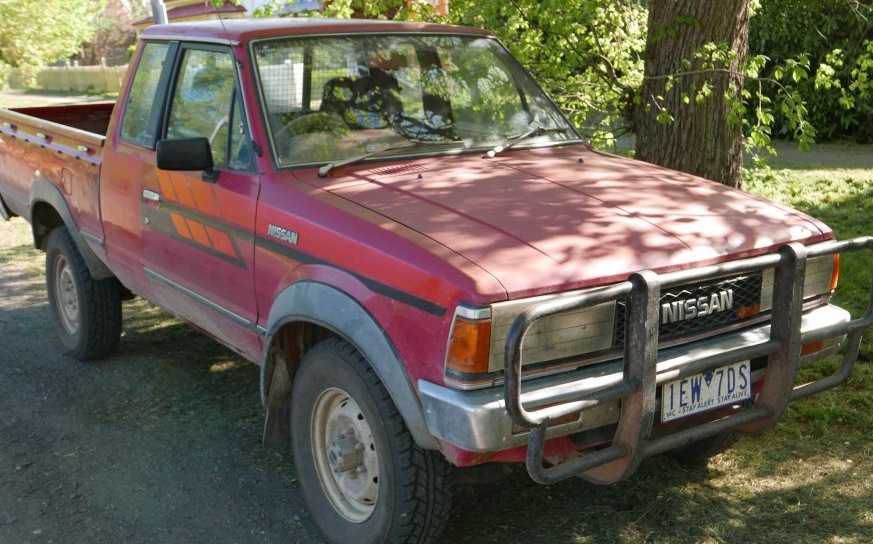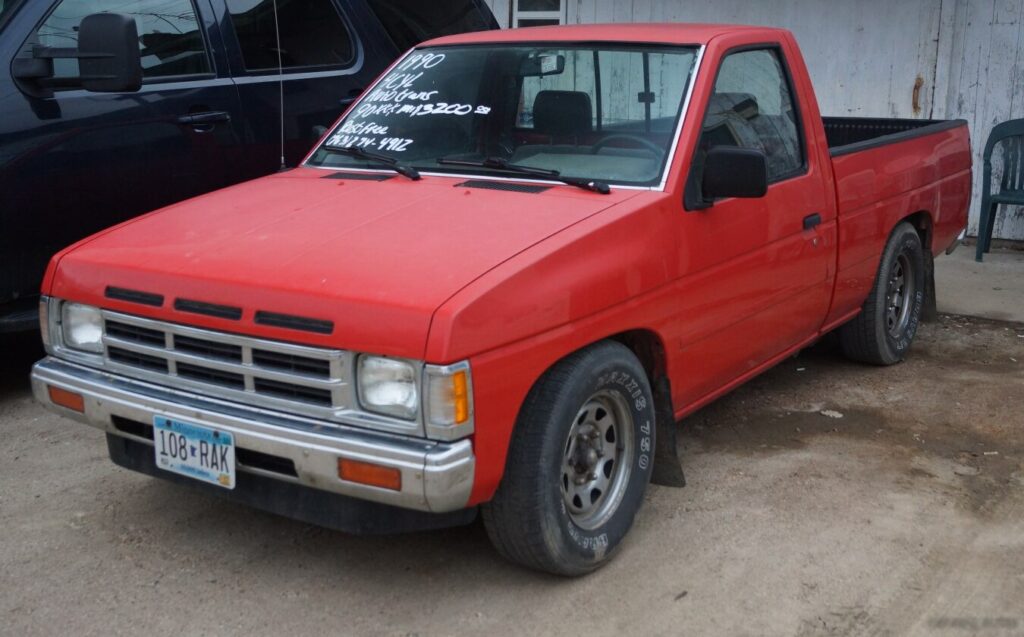
The Nissan D21, marketed as the Nissan Pickup in North America, represented a significant step forward for Nissan’s light-duty truck offerings. Produced from 1986 to 1997 (with the D21 series spanning 1986-1997, and the facelifted “Hardbody” from 1990-1997), it replaced the aging Datsun 620 and 720 pickups. The 2.4 i (101 hp) 4WD variant, produced from 1988 to 1992, occupied a crucial middle ground in the D21 lineup, offering a balance of capability, affordability, and fuel efficiency for buyers needing a versatile work truck or weekend hauler. This model was particularly popular in the United States and Canada, where the demand for compact 4×4 pickups was high.
Technical Specifications
| Brand | Nissan |
| Model | Pick UP (D21) |
| Generation | Pick UP (D21) |
| Type (Engine) | 2.4 i (101 Hp) 4WD |
| Start of production | 1988 |
| End of production | 1992 |
| Powertrain Architecture | Internal Combustion Engine |
| Body type | Pick-up |
| Fuel Type | Petrol (Gasoline) |
| Power | 101 Hp |
| Engine aspiration | Naturally aspirated engine |
Powertrain & Engine Architecture
The 2.4 i variant of the D21 utilized the Nissan KA24E engine, a 2.4-liter inline-four cylinder powerplant. This engine was a significant departure from the older Z-series engines previously used in Nissan pickups. The KA24E featured a cast iron block and an aluminum cylinder head, contributing to its durability and relatively lightweight construction. It employed a single overhead camshaft (SOHC) design with two valves per cylinder. Fuel delivery was managed by Nissan’s electronic fuel injection (EFI) system, improving efficiency and reducing emissions compared to carbureted predecessors. The engine produced 101 horsepower at 4,800 rpm and 137 lb-ft of torque at 3,600 rpm.
Paired with the KA24E in this configuration was a four-speed automatic transmission. This transmission, while not known for its sporty performance, provided smooth and reliable operation, making it a popular choice for drivers prioritizing ease of use. The 4WD system was a part-time system, engaged via a lever located on the floor. When engaged, power was split 50/50 between the front and rear axles, providing enhanced traction in off-road or slippery conditions. The transfer case featured a low-range gear for tackling more challenging terrain.
Driving Characteristics
The 101 hp and automatic transmission combination in the D21 2.4 i 4WD resulted in a driving experience geared towards practicality rather than performance. Acceleration was adequate for everyday driving, but not particularly brisk. The automatic transmission, with its relatively wide gear ratios, prioritized fuel economy and smooth cruising over quick shifts. Compared to the five-speed manual transmission option, the automatic noticeably reduced responsiveness. However, the automatic was favored by many buyers who preferred the convenience, especially in urban environments or when towing lighter loads. The 4WD system provided confident traction on loose surfaces, making the truck capable of handling moderate off-road conditions. The suspension, while simple (leaf springs in the rear and independent coil springs in the front), offered a comfortable ride for a pickup truck, even when lightly loaded. The truck’s unladen ride could be somewhat bouncy, a characteristic of many body-on-frame vehicles of the era.
Equipment & Trim Levels
The 1988-1992 Nissan D21 2.4 i 4WD typically came with a fairly basic level of standard equipment. Generally, it included a vinyl bench seat, basic instrumentation (speedometer, fuel gauge, temperature gauge), and a simple AM/FM radio. Power steering was often standard, but air conditioning was frequently an optional extra. The interior trim was utilitarian, designed for durability rather than luxury.
Optional extras included air conditioning, a cassette player, upgraded upholstery (cloth bench or bucket seats), and a sliding rear window. Higher trim levels, such as the SE (Sport Edition), offered additional features like alloy wheels, color-matched bumpers, and a more upscale interior. However, the 2.4 i 4WD was generally positioned as a work-oriented trim, so these more luxurious options were less common.
Chassis & Braking
The D21 utilized a traditional body-on-frame construction, providing a robust and durable platform. The chassis was designed to withstand the rigors of hauling and off-road use. The front suspension consisted of independent coil springs and double wishbone control arms, while the rear suspension employed leaf springs and a solid axle. This setup provided a good balance of ride comfort and load-carrying capacity.
Braking duties were handled by disc brakes in the front and drum brakes in the rear. While adequate for the truck’s weight and performance, the drum brakes in the rear were a point of criticism compared to all-disc brake setups found on some competitors. The braking system was not particularly powerful by modern standards, and required a firm pedal input to achieve effective stopping power. A stabilizer bar was included in the front suspension to reduce body roll during cornering.
Market Reception & Comparison
The Nissan D21 2.4 i 4WD was generally well-received by critics and consumers alike. It was praised for its reliability, durability, and affordability. However, the 101 hp engine and automatic transmission combination were often criticized for being underpowered, especially when compared to competitors like the Ford Ranger or Chevrolet S-10 with larger engines or manual transmissions. Fuel economy was respectable for the time, averaging around 18 mpg city and 22 mpg highway.
Compared to the 2.5-liter four-cylinder manual transmission version of the D21, the 2.4 i automatic offered less performance but greater convenience. The 2.4 i also differed from the later V6-powered D21s, which provided significantly more power but came at a higher price point. The 2.4 i 4WD appealed to buyers who needed a capable and reliable pickup truck for everyday use, but didn’t require the extra power or performance of the more expensive trims.
Legacy
The Nissan D21, particularly the 2.4 i 4WD variant, has developed a strong following among enthusiasts and collectors. The KA24E engine is known for its longevity and relative simplicity, making it a relatively easy engine to maintain and repair. While not without its flaws, the D21 remains a popular choice for restoration projects and off-road builds.
In the used car market today, well-maintained D21s command a premium, especially those with low mileage and minimal rust. The 2.4 i 4WD variant is often sought after by buyers looking for a classic pickup truck that is both reliable and affordable. Its enduring popularity is a testament to the D21’s solid engineering and its role as a dependable workhorse for a generation of truck owners.