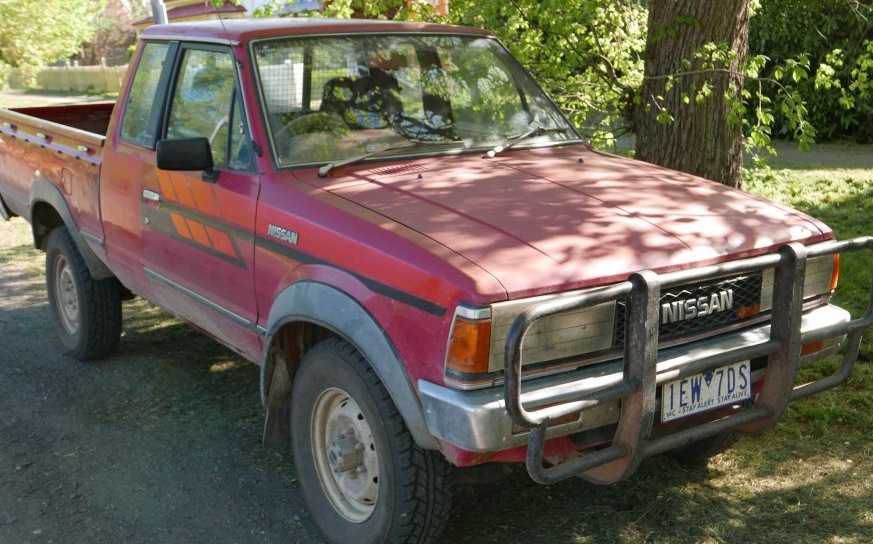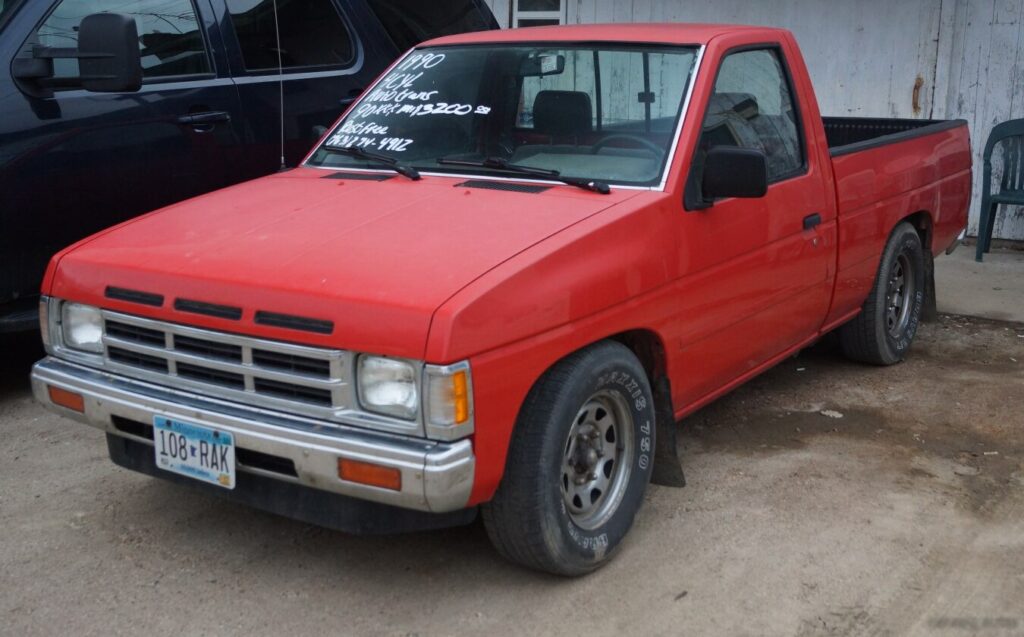
The Nissan D21, marketed as the Nissan Pickup in North America, represented Nissan’s entry into the increasingly popular compact pickup truck segment. Produced from 1986 to 1997 (with significant updates occurring in 1992), the D21 aimed to provide a reliable and affordable work truck. The 2.4 i 12V variant, introduced in 1992 and continuing through 1998, was a key offering in the lineup, positioned as a balance between affordability and capability. This version, producing 124 horsepower, served as a step up from the base 2.0-liter engine, offering increased torque for hauling and towing while remaining relatively fuel-efficient. It was a common sight on American roads, fulfilling roles ranging from farm work to daily commuting.
Technical Specifications
| Brand | Nissan |
| Model | Pick UP |
| Generation | Pick UP (D21) |
| Type (Engine) | 2.4 i 12V (124 Hp) |
| Start of production | 1992 |
| End of production | 1998 |
| Powertrain Architecture | Internal Combustion engine |
| Body type | Pick-up |
| Seats | 3 |
| Doors | 2 |
| Fuel consumption (urban) | 12 l/100 km (19.6 US mpg) |
| Fuel consumption (extra urban) | 9 l/100 km (26.1 US mpg) |
| Fuel Type | Petrol (Gasoline) |
| Weight-to-power ratio | 9.7 kg/Hp |
| Weight-to-torque ratio | 7.8 kg/Nm |
| Power | 124 Hp @ 5200 rpm |
| Power per litre | 51.9 Hp/l |
| Torque | 154 Nm (113.58 lb.-ft.) |
| Engine displacement | 2389 cm3 (145.79 cu. in.) |
| Number of cylinders | 4 |
| Engine configuration | Inline |
| Number of valves per cylinder | 3 |
| Fuel injection system | Multi-port manifold injection |
| Engine aspiration | Naturally aspirated engine |
| Kerb Weight | 1200 kg (2645.55 lbs.) |
| Fuel tank capacity | 60 l (15.85 US gal) |
| Drivetrain Architecture | Rear wheel drive |
| Drive wheel | Rear wheel drive |
| Number of gears and type of gearbox | 5 gears, manual transmission |
| Front brakes | Disc |
| Rear brakes | Drum |
Powertrain & Engine Architecture
The heart of the 1992-1998 Nissan Pickup 2.4 i 12V was the KA24E engine, a 2.4-liter inline-four cylinder powerplant. This engine utilized a cast iron block and an aluminum cylinder head, a common configuration for durability and weight reduction. The “12V” designation refers to the engine’s three valves per cylinder (two intake, one exhaust) configuration, contributing to improved volumetric efficiency compared to older two-valve designs. Fuel delivery was managed by a multi-port fuel injection system, providing precise fuel metering for optimal combustion and emissions control. The KA24E was a naturally aspirated engine, meaning it did not employ forced induction like a turbocharger or supercharger. This resulted in a relatively linear power delivery, prioritizing reliability and ease of maintenance over outright performance. The five-speed manual transmission was the standard offering, providing drivers with full control over gear selection. The transmission was chosen for its robustness and suitability for the truck’s intended use.
Driving Characteristics
The 2.4-liter engine in the D21 Pickup provided a noticeable step up in performance compared to the base 2.0-liter engine. While not a performance truck by any means, the 124 horsepower and 154 Nm (113.58 lb-ft) of torque allowed for confident acceleration and the ability to carry moderate loads. The five-speed manual transmission allowed drivers to keep the engine in its optimal power band, maximizing efficiency and responsiveness. The gear ratios were fairly conservative, geared towards providing ample torque for hauling and towing rather than quick acceleration. Compared to later, more powerful D21 variants, the 2.4 i 12V offered a more economical and approachable driving experience. It wasn’t as quick off the line, but it provided a smoother, more predictable power delivery, making it well-suited for everyday driving and light-duty work.
Equipment & Trim Levels
The 2.4 i 12V trim of the Nissan Pickup was typically positioned as a mid-range offering. Standard equipment generally included a basic AM/FM radio, vinyl upholstery, and a relatively spartan interior focused on functionality. Power steering was often included, but air conditioning was frequently an optional extra. Depending on the year and regional market, features like a tilt steering wheel, upgraded sound systems, and even cruise control could be added as options. The exterior typically featured black plastic bumpers and side moldings, with steel wheels being standard. Higher trim levels offered features like color-matched bumpers, alloy wheels, and upgraded interior appointments. The focus remained on providing a durable and practical truck, rather than luxury or extensive features.
Chassis & Braking
The D21 Pickup utilized a body-on-frame construction, a traditional design for pickup trucks that prioritized strength and durability. The suspension consisted of independent front suspension with coil springs and a leaf spring rear suspension. This setup provided a comfortable ride for a truck, while also offering sufficient load-carrying capacity. The front brakes were disc brakes, providing adequate stopping power, while the rear brakes were drum brakes, a cost-saving measure common in this class of vehicle. The steering was typically a recirculating ball system, offering a direct and responsive feel. Stabilizer bars were often included on the front suspension to reduce body roll during cornering.
Market Reception & Comparison
The Nissan D21 Pickup, particularly the 2.4 i 12V variant, was generally well-received by critics and consumers alike. It was praised for its reliability, affordability, and overall practicality. Compared to competitors like the Toyota Pickup and Ford Ranger, the D21 offered a competitive price point and a reputation for durability. Fuel economy was considered reasonable for a pickup truck of its size and class. However, some critics noted that the interior was somewhat basic and lacked the refinement of some competitors. The 2.4-liter engine offered a good balance between power and fuel efficiency, making it a popular choice for buyers who needed a capable work truck without breaking the bank. Compared to the more powerful V6 options available in some competing trucks, the 2.4 i 12V prioritized reliability and lower running costs.
Legacy
The Nissan D21 Pickup, and specifically the 2.4 i 12V variant, has earned a reputation as a remarkably durable and long-lasting vehicle. Many examples are still on the road today, a testament to the quality of its construction and the reliability of the KA24E engine. The KA24E is known for its ability to withstand high mileage with proper maintenance. In the used car market, D21 Pickups in good condition command reasonable prices, particularly those that have been well-maintained and haven’t been subjected to heavy abuse. While not a collector’s item in the same vein as some classic trucks, the D21 remains a popular choice for those seeking a simple, reliable, and affordable pickup truck. Its enduring legacy is a testament to Nissan’s commitment to building durable and practical vehicles.