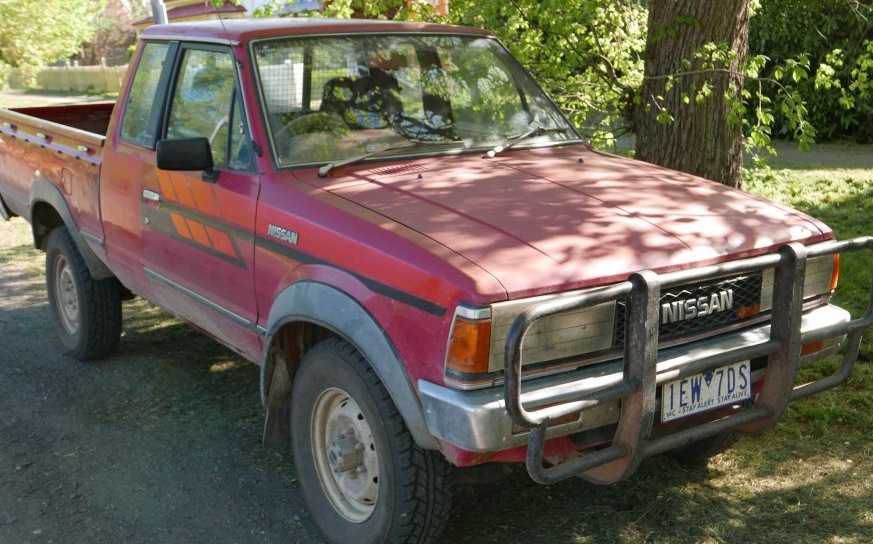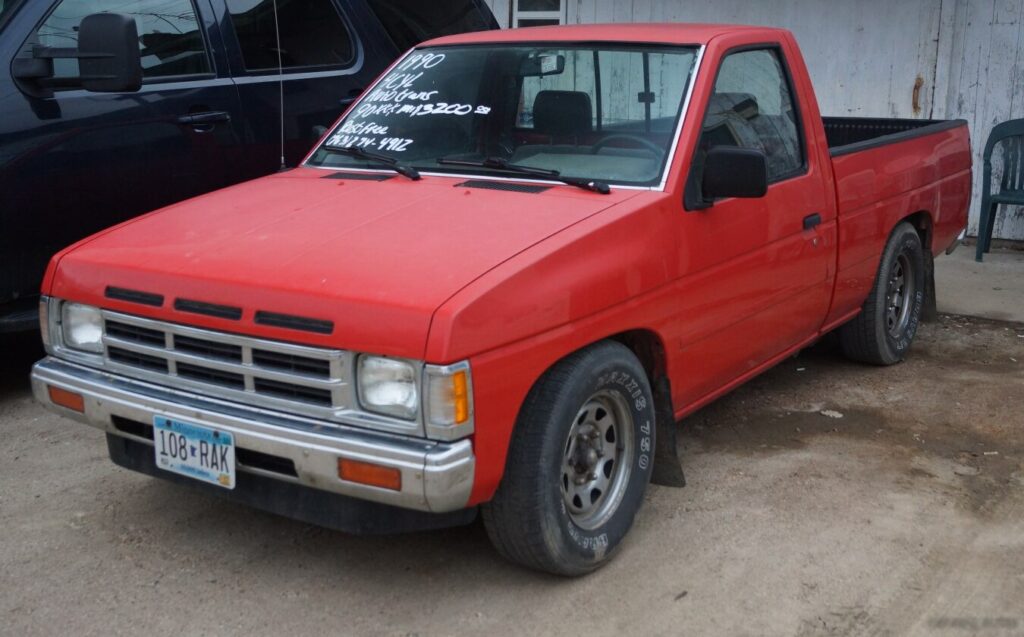
The Nissan D21, marketed as the Nissan Pickup in North America, represented a significant step forward for Nissan’s compact truck offerings. Produced from 1986 to 1997 (with the D21 series spanning multiple updates), the 2.4 i 12V (124 hp) 4WD variant, specifically those built between 1992 and 1998, occupied a crucial middle ground in the lineup. It offered a balance between affordability, capability, and fuel efficiency, appealing to a broad range of buyers from rural workers to weekend adventurers. This version aimed to provide a robust and reliable workhorse without the higher price tag of the larger, more powerful options available.
Technical Specifications
| Brand | Nissan |
| Model | Pick UP |
| Generation | Pick UP (D21) |
| Type (Engine) | 2.4 i 12V (124 Hp) 4WD |
| Start of production | 1992 |
| End of production | 1998 |
| Powertrain Architecture | Internal Combustion engine |
| Body type | Pick-up |
| Fuel Type | Petrol (Gasoline) |
| Power | 124 Hp |
| Engine aspiration | Naturally aspirated engine |
Powertrain & Engine Architecture
The heart of the 1992-1998 Nissan D21 2.4 i 4WD is the KA24E engine, a 2.4-liter inline-four cylinder powerplant. This engine utilizes a single overhead camshaft (SOHC) design with 12 valves (two per cylinder). The KA24E is known for its durability and relatively simple design, contributing to its longevity. Fuel delivery is managed by a multi-point fuel injection system, improving efficiency and reducing emissions compared to earlier carbureted models. The engine produces 124 horsepower at approximately 4,800 rpm and 148 lb-ft of torque at 3,600 rpm.
Paired with the KA24E is a four-speed automatic transmission. This transmission, while not particularly sophisticated by modern standards, was chosen for its reliability and ease of use. It provided smooth, if not particularly quick, shifts. The 4WD system is a part-time system, typically engaged via a lever located on the floor. This system allows the driver to switch between two-wheel drive (2WD) for normal road conditions and four-wheel drive (4WD) for increased traction in off-road or inclement weather situations. A low-range gear selection is also available within the 4WD system, providing even greater torque multiplication for challenging terrain.
Driving Characteristics
The 2.4-liter engine and four-speed automatic combination in the D21 delivers adequate, but not exhilarating, performance. Acceleration is modest, with 0-60 mph times estimated around 11-13 seconds. The automatic transmission prioritizes smooth operation over aggressive shifting, resulting in a relaxed driving experience. The gear ratios are tuned for utility and fuel economy rather than outright speed.
Compared to the five-speed manual transmission option, the automatic version sacrifices some responsiveness and fuel efficiency. The manual transmission allows for more control over gear selection, particularly when towing or navigating challenging terrain. However, the automatic provides a more convenient driving experience, especially in stop-and-go traffic. Compared to the larger 3.0-liter V6 engine offered in some D21 models, the 2.4-liter engine provides significantly less power, but also offers better fuel economy and a lower purchase price.
Equipment & Trim Levels
The 1992-1998 Nissan D21 2.4 i 4WD typically came standard with a fairly basic set of features. Standard equipment generally included a vinyl or cloth interior, an AM/FM radio, and manual windows and locks. Air conditioning was a popular option, as was a cassette player. Higher trim levels, such as the XE, offered additional features like power windows and locks, upgraded interior trim, and alloy wheels.
The bed of the pickup was typically equipped with a standard bed liner, and options included a sliding rear window and a towing package. The interior design was functional and utilitarian, prioritizing durability over luxury. Dashboard layout was straightforward, with easy-to-read gauges and simple controls.
Chassis & Braking
The D21 utilizes a body-on-frame construction, providing a robust and durable platform. The front suspension consists of independent double wishbones with coil springs and shock absorbers. The rear suspension employs a leaf spring setup, which is well-suited for carrying heavy loads.
Braking duties are handled by disc brakes in the front and drum brakes in the rear. Power steering was standard equipment, making the truck relatively easy to maneuver. The chassis was designed to provide a comfortable ride while maintaining good handling characteristics. Stabilizer bars were often included, particularly in higher trim levels, to reduce body roll during cornering. Tire size was typically 215/75R15, providing a good balance between on-road comfort and off-road capability.
Market Reception & Comparison
The Nissan D21 2.4 i 4WD was generally well-received by critics and consumers alike. It was praised for its reliability, durability, and affordability. Fuel economy was considered reasonable for a pickup truck of its size and capability, averaging around 18-22 mpg in combined driving conditions.
Compared to competitors like the Ford Ranger, Chevrolet S-10, and Toyota Tacoma, the D21 offered a competitive package. The Tacoma, in particular, began to gain popularity during this period, offering a more refined driving experience and a reputation for exceptional reliability. However, the D21 remained a popular choice for buyers seeking a dependable and affordable pickup truck. The automatic transmission, while convenient, was sometimes criticized for its lack of responsiveness compared to the manual transmission.
Legacy
The Nissan D21, particularly the 2.4 i 4WD variant, has developed a strong following among enthusiasts and collectors. The KA24E engine is known for its longevity and relatively simple maintenance requirements. While not immune to age-related issues, these trucks are generally considered to be very reliable.
Today, well-maintained D21s are becoming increasingly rare and valuable. They are often sought after by those looking for a classic pickup truck that is both capable and affordable. The D21’s simple design and robust construction make it a popular choice for restoration projects and off-road modifications. The 1992-1998 models, with their fuel injection and improved features, are particularly desirable in the used car market.