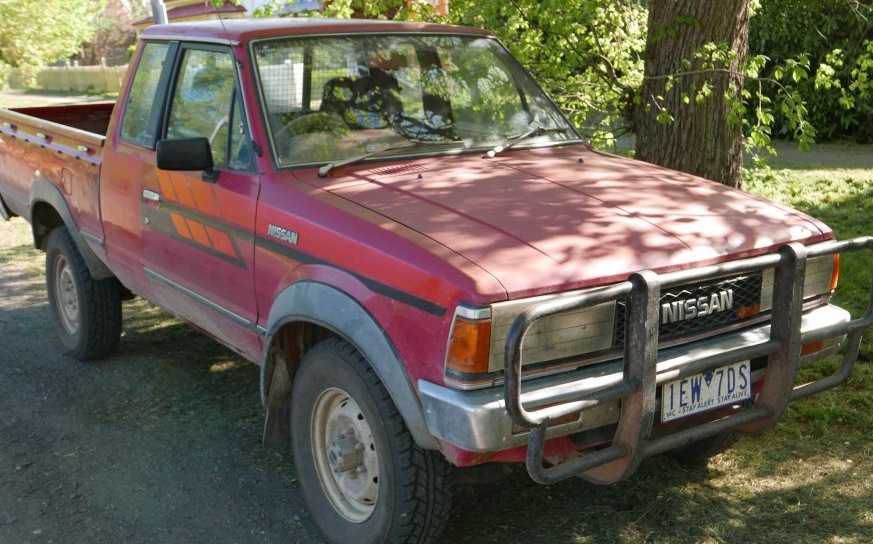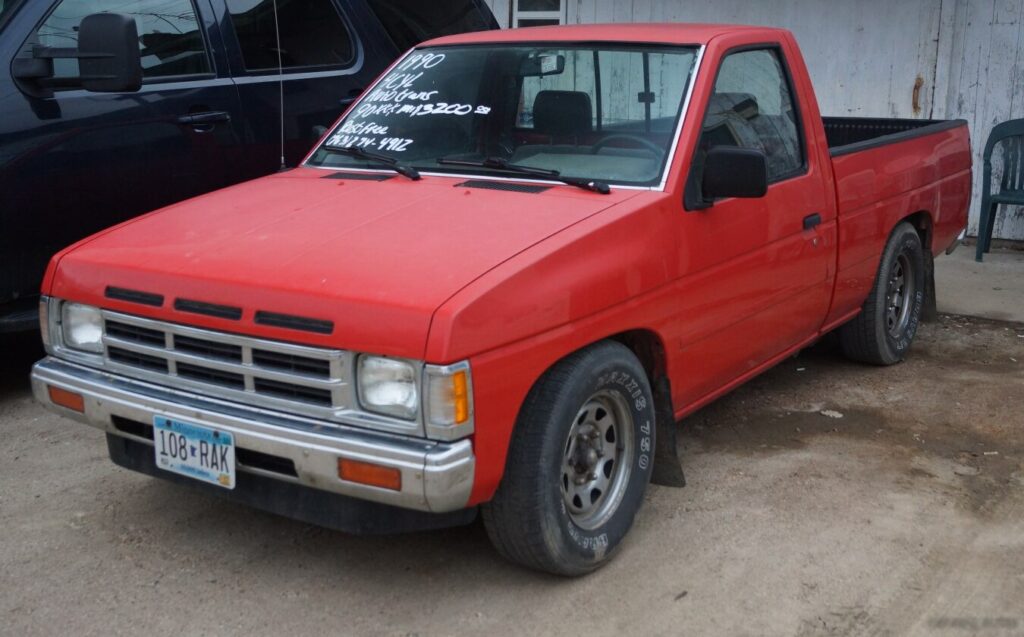
The Nissan D21, marketed as the Nissan Pickup in North America, was a compact pickup truck produced from 1986 to 1997 (with some production continuing until 1998 in certain markets). The 2.7-liter diesel (99 horsepower) four-wheel drive variant, produced from 1987 to 1998, represented a work-oriented configuration within the D21 lineup, aimed at buyers prioritizing durability and fuel economy over outright performance. This model occupied a niche between the base gasoline engines and the more powerful, though less common, V6 options. It was particularly popular in regions where diesel fuel was readily available and valued for its torque characteristics in demanding applications like farming, ranching, and light construction.
Technical Specifications
| Brand | Nissan |
| Model | Pick UP (D21) |
| Generation | Pick UP (D21) |
| Type (Engine) | 2.7 D (99 Hp) 4WD |
| Start of production | 1987 |
| End of production | 1998 |
| Powertrain Architecture | Internal Combustion engine |
| Body type | Pick-up, 4 Doors |
| Fuel Type | Diesel |
| Power | 99 Hp |
| Engine aspiration | Naturally aspirated engine |
Powertrain & Engine Architecture
The heart of the D21 2.7 D 4WD is the Nissan SD27 diesel engine, a 2.7-liter inline-four cylinder powerplant. This engine is a naturally aspirated, indirect injection diesel, utilizing a Bosch rotary injection pump. The SD27 is known for its robust construction and relative simplicity, contributing to its longevity and ease of maintenance. Unlike many modern diesels, it lacks a turbocharger or intercooler, resulting in a lower power output but also increased reliability. The engine features a cast iron block and head, further enhancing its durability. The 99 horsepower output is achieved at approximately 3,600 rpm, while peak torque, around 160 lb-ft, is available at a low 2,000 rpm. This low-end torque is a key characteristic of the engine, making it well-suited for hauling and towing. The transmission paired with the SD27 is typically a five-speed manual, however a four-speed automatic transmission was also available, though less common. The automatic transmission, while offering convenience, does reduce available power to the wheels and impacts fuel economy.
Driving Characteristics
The driving experience in a D21 2.7 D 4WD is characterized by its utilitarian nature. Acceleration is modest, particularly with the automatic transmission. The engine’s strength lies in its ability to maintain steady speeds while carrying a load or navigating challenging terrain. The four-wheel drive system, typically part-time with manual engagement, provides enhanced traction in off-road conditions. The suspension, consisting of double wishbones at the front and leaf springs at the rear, is tuned for durability rather than comfort. This results in a firm ride, especially when unladen. Compared to the gasoline-powered D21s, the diesel offers significantly better fuel economy, but at the expense of responsiveness. The manual transmission versions provide more control and better utilize the engine’s torque, while the automatic feels somewhat sluggish, especially when climbing hills or accelerating to pass. The gear ratios in the automatic are spaced to prioritize fuel efficiency and towing capacity, rather than spirited driving.
Equipment & Trim Levels
The D21 2.7 D 4WD was generally offered in a fairly basic trim level, reflecting its work-truck focus. Standard equipment typically included a vinyl or cloth interior, a basic AM/FM radio, and manual windows and locks. Air conditioning was often an optional extra, as were power steering and upgraded audio systems. The dashboard layout is functional and straightforward, with clearly labeled controls. Higher trim levels, if available, might include features like a tilt steering wheel, upgraded upholstery, and chrome exterior trim. However, the 2.7 D 4WD was rarely equipped with luxury features, as its target audience prioritized practicality and affordability. Bed options included standard length and extended cab configurations, with the extended cab offering limited rear seating.
Chassis & Braking
The D21 chassis is a body-on-frame construction, providing a robust and durable platform. The front suspension utilizes independent double wishbones, while the rear features leaf springs. This setup is designed to handle heavy loads and rough terrain. Braking systems varied depending on the year and market. Earlier models typically featured drum brakes on all four wheels, while later models often included front disc brakes for improved stopping power. Power steering was an optional extra, and many models were equipped with manual steering. The 4WD system utilizes a transfer case to engage the front axle, providing on-demand four-wheel drive capability. Stabilizer bars were not typically standard equipment on the 2.7 D 4WD, contributing to a slightly more pronounced body roll in corners.
Market Reception & Comparison
The D21 2.7 D 4WD received generally positive reviews for its durability, fuel economy, and off-road capability. Critics praised its robust engine and simple mechanical design, making it relatively easy to maintain and repair. However, its lack of power and refinement were often noted. Compared to the gasoline-powered D21s, the diesel offered superior fuel economy and torque, but at the expense of acceleration and overall driving enjoyment. Compared to other compact pickups of the era, such as the Toyota Hilux and the Ford Ranger, the D21 offered a competitive combination of price, durability, and fuel efficiency. The diesel engine, while not as powerful as some of its competitors, provided a reliable and economical option for buyers who prioritized practicality over performance.
Legacy
The Nissan D21 2.7 D 4WD has developed a reputation for longevity and reliability. Many examples are still on the road today, testament to the robust construction of the engine and chassis. The SD27 diesel engine, while not known for its high performance, is highly regarded for its durability and simplicity. Parts availability remains relatively good, although some components may be becoming increasingly difficult to find. In the used car market, these trucks are often sought after by enthusiasts and those looking for a dependable and affordable work vehicle. The D21’s simple design and robust construction make it a popular choice for restoration projects and off-road modifications. While not a collector’s item in the same vein as some classic trucks, the D21 2.7 D 4WD holds a significant place in the history of Nissan pickups and remains a capable and reliable vehicle for those who appreciate its utilitarian charm.