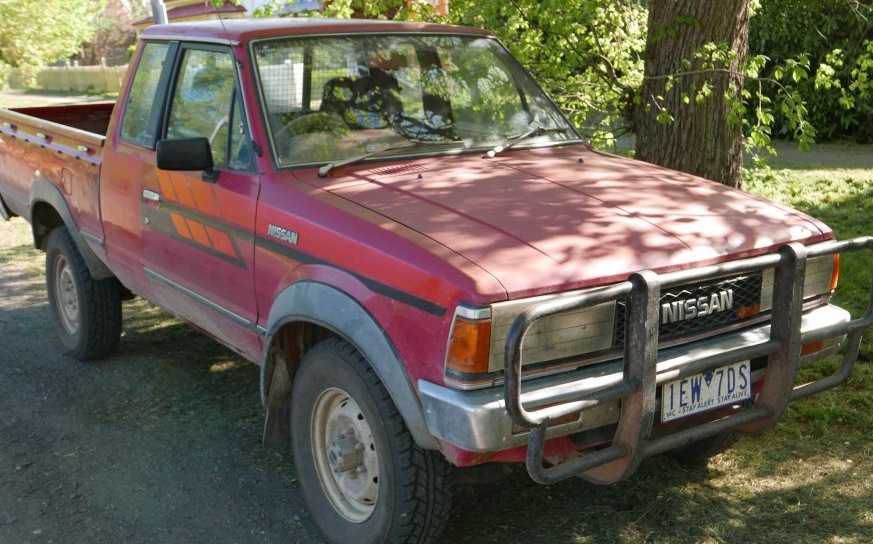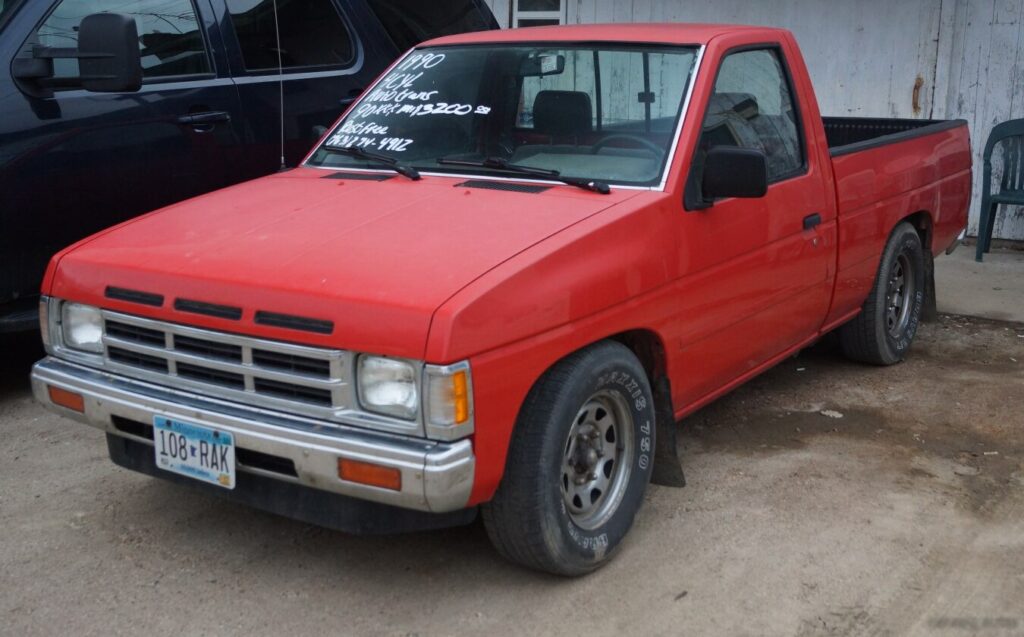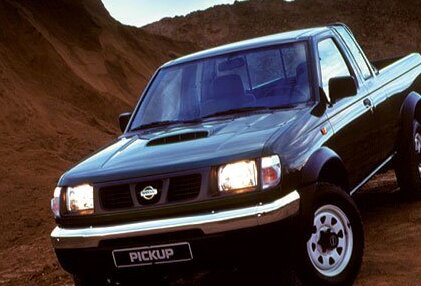
The Nissan Pickup (D22) 2.5 Di 2WD Double Cab, producing 133 horsepower, was a mid-range offering in the broader D22 series, manufactured from 2000 to 2007. The D22 generation represented Nissan’s entry into the increasingly competitive mid-size pickup truck market, primarily aimed at buyers in Asia, Australia, Latin America, and Europe. While not officially sold in the United States during this generation, the D22 was designed to offer a balance of utility, affordability, and practicality, competing with models like the Toyota Hilux and Isuzu D-Max. This particular 2.5 Di variant, with its rear-wheel drive configuration and double cab body style, catered to customers needing both workhorse capability and passenger space.
Technical Specifications
| Brand | Nissan |
| Model | Pick UP |
| Generation | Pick UP (D22) |
| Type | 2.5 Di 2WD Double Cab (133 Hp) |
| Start of production | 2000 year |
| End of production | 2007 year |
| Powertrain Architecture | Internal Combustion engine |
| Body type | Pick-up |
| Seats | 4 |
| Doors | 4 |
| Fuel Type | Diesel |
| Acceleration 0 – 100 km/h | 13 sec |
| Acceleration 0 – 62 mph | 13 sec |
| Acceleration 0 – 60 mph | 12.4 sec |
| Maximum speed | 160 km/h (99.42 mph) |
| Weight-to-power ratio | 13.2 kg/Hp, 75.6 Hp/tonne |
| Weight-to-torque ratio | 5.8 kg/Nm, 172.7 Nm/tonne |
| Power | 133 Hp @ 4000 rpm |
| Power per litre | 53.5 Hp/l |
| Torque | 304 Nm @ 2000 rpm (224.22 lb.-ft. @ 2000 rpm) |
| Engine layout | Front, Longitudinal |
| Engine Model/Code | YD25DDTi |
| Engine displacement | 2488 cm3 (151.83 cu. in.) |
| Number of cylinders | 4 |
| Engine configuration | Inline |
| Number of valves per cylinder | 4 |
| Fuel injection system | Diesel Commonrail |
| Engine aspiration | Turbocharger |
| Valvetrain | DOHC |
| Engine oil capacity | 4.3 l (4.54 US qt | 3.78 UK qt) |
| Coolant | 8.6 l (9.09 US qt | 7.57 UK qt) |
| Kerb Weight | 1760 kg (3880.14 lbs) |
| Max. weight | 2810 kg (6194.99 lbs) |
| Max load | 1050 kg (2314.85 lbs) |
| Fuel tank capacity | 75 l (19.81 US gal | 16.5 UK gal) |
| Length | 5080 mm (200 in) |
| Width | 1825 mm (71.85 in) |
| Height | 1705 mm (67.13 in) |
| Wheelbase | 2950 mm (116.14 in) |
| Front track | 1525 mm (60.04 in) |
| Rear track | 1505 mm (59.25 in) |
| Drivetrain Architecture | Rear wheel drive |
| Number of gears | 5 gears, manual transmission |
| Front suspension | Coil spring |
| Rear suspension | Coil spring |
| Front brakes | Disc |
| Rear brakes | Disc |
| Tires size | 255/70 R16 |
Powertrain & Engine Architecture
The heart of the D22 2.5 Di was the YD25DDTi engine, a 2.5-liter inline-four cylinder diesel. This engine utilized a common rail direct injection system, a significant advancement over older diesel technologies, allowing for more precise fuel delivery, reduced noise, and improved efficiency. The ‘DDTi’ designation stands for ‘Direct Diesel Turbo Injection’, highlighting the presence of a turbocharger which boosted power output to 133 hp at 4000 rpm and 304 Nm (224 lb-ft) of torque at 2000 rpm. The engine featured a double overhead camshaft (DOHC) valvetrain, contributing to improved breathing and overall performance. The five-speed manual transmission was the standard offering for this variant, providing a relatively direct connection between the engine and the rear wheels.
Driving Characteristics
The 2.5 Di 2WD Double Cab offered a practical, if not particularly exhilarating, driving experience. The 133 hp output and 224 lb-ft of torque provided adequate power for everyday driving and moderate hauling duties. Acceleration to 60 mph took around 12.4 seconds, and top speed was limited to approximately 99 mph. The rear-wheel drive configuration meant that traction could be a concern on slippery surfaces, especially when loaded. Compared to the more powerful variants, such as those equipped with larger engines, the 2.5 Di felt less responsive, particularly when accelerating or climbing hills. However, the lower power output also translated to better fuel economy, making it a more economical choice for those prioritizing efficiency over outright performance. The five-speed manual transmission offered a reasonable spread of gears, allowing the driver to keep the engine in its optimal torque band.
Equipment & Trim Levels
The 2.5 Di 2WD Double Cab typically came with a fairly basic level of equipment, reflecting its position as a work-oriented vehicle. Standard features generally included power steering, central locking, and a basic audio system. The interior was typically finished with durable, easy-to-clean materials. The double cab configuration provided seating for four passengers, with a relatively spacious rear seat for a mid-size pickup. Optional extras could include air conditioning, power windows, and upgraded audio systems. Trim levels varied depending on the specific market, but generally focused on adding convenience features rather than significantly altering the vehicle’s mechanical specifications.
Chassis & Braking
The D22 Pickup utilized a body-on-frame construction, providing a robust and durable platform. The front suspension consisted of coil springs, while the rear also employed coil springs, offering a reasonable ride quality for a pickup truck. Braking duties were handled by disc brakes on all four wheels, providing adequate stopping power for the vehicle’s weight. The rear-wheel drive configuration meant that the vehicle lacked the all-weather capability of four-wheel drive models. The track width was moderate, contributing to a stable, if not particularly sporty, handling characteristic.
Market Reception & Comparison
The Nissan Pickup D22 2.5 Di 2WD Double Cab was generally well-received as a practical and affordable work truck. Critics praised its durability, fuel efficiency, and spacious double cab configuration. However, some reviewers noted that the engine lacked refinement compared to some of its competitors, and the rear-wheel drive configuration limited its appeal in regions with harsh winters. Compared to higher-output variants within the D22 range, the 2.5 Di offered a more economical option, but at the expense of performance. It was often seen as a good choice for those who primarily used their pickup for work and didn’t require the extra power or all-wheel drive capability of more expensive models.
Legacy
The YD25DDTi engine, while not without its quirks, proved to be a relatively reliable powerplant when properly maintained. Common issues included turbocharger failure and injector problems, but these were often preventable with regular servicing. Today, the D22 2.5 Di 2WD Double Cab can be found on the used car market at relatively affordable prices. It remains a popular choice for those seeking a durable and practical pickup truck for work or recreational purposes. Its simplicity and relatively low running costs make it an attractive option for those who prioritize functionality over luxury. The D22 generation, and this variant in particular, helped establish Nissan as a significant player in the global mid-size pickup truck market.