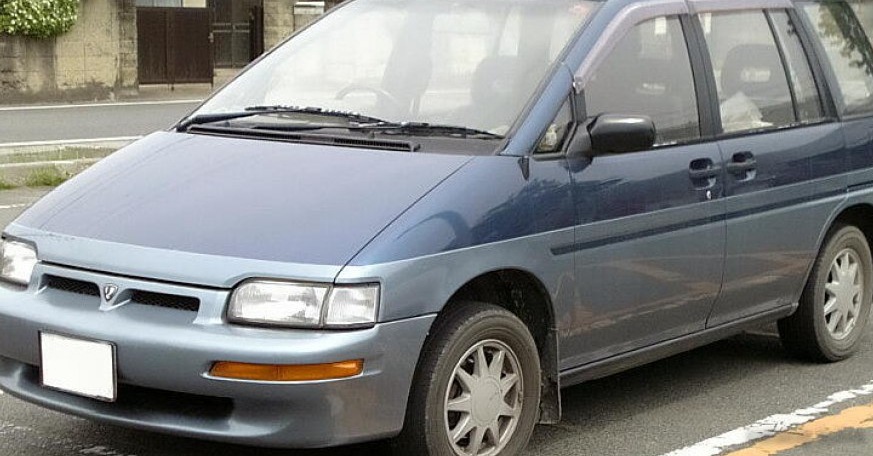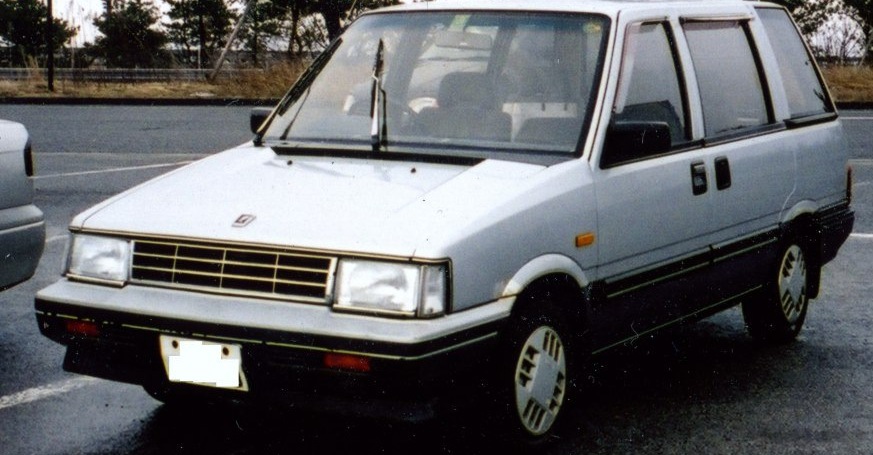
The Nissan Prairie (M10, and subsequently NM10) was a compact minivan produced by Nissan from 1982 to 1990. The model, particularly the 1.8 SGL variant introduced in 1985, represented Nissan’s entry into the burgeoning compact MPV (Multi-Purpose Vehicle) segment. This generation Prairie, built on the B11 chassis, aimed to provide practical and affordable family transportation, primarily targeting the Japanese domestic market (JDM) and select export markets. The 1.8 SGL, powered by the CA18S engine and typically paired with a 5-speed manual transmission, occupied a mid-range position within the Prairie lineup, offering a balance between performance and economy. This article will focus specifically on the 1.8 SGL (M10) configuration with the 90 horsepower output.
Technical Specifications
| Brand | Nissan |
| Model | Prairie |
| Generation | Prairie (M10,NM10) |
| Type | 1.8 SGL (M10) (90 Hp) |
| Start of production | 1985 |
| End of production | 1987 |
| Powertrain Architecture | Internal Combustion engine |
| Body type | Minivan |
| Seats | 5 |
| Doors | 5 |
| Fuel consumption (urban) | 9.4 l/100 km (25 US mpg, 30.1 UK mpg) |
| Fuel consumption (extra urban) | 6.5 l/100 km (36.2 US mpg, 43.5 UK mpg) |
| Fuel Type | Petrol (Gasoline) |
| Maximum speed | 160 km/h (99.42 mph) |
| Weight-to-power ratio | 12.1 kg/Hp |
| Weight-to-torque ratio | 7.3 kg/Nm |
| Power | 90 Hp @ 5200 rpm |
| Power per litre | 45.6 Hp/l |
| Torque | 150 Nm @ 3200 rpm (110.63 lb.-ft. @ 3200 rpm) |
| Engine layout | Front, Transverse |
| Engine Model/Code | CA18S |
| Engine displacement | 1974 cm3 (120.46 cu. in.) |
| Number of cylinders | 4 |
| Engine configuration | Inline |
| Cylinder Bore | 84.5 mm (3.33 in.) |
| Piston Stroke | 88 mm (3.46 in.) |
| Compression ratio | 9.4:1 |
| Number of valves per cylinder | 2 |
| Fuel injection system | Carburettor |
| Engine aspiration | Naturally aspirated |
| Engine oil capacity | 3.9 l (4.12 US qt | 3.43 UK qt) |
| Kerb Weight | 1090 kg (2403.04 lbs.) |
| Max. weight | 1570 kg (3461.26 lbs.) |
| Max load | 480 kg (1058.22 lbs.) |
| Fuel tank capacity | 50 l (13.21 US gal | 11 UK gal) |
| Length | 4090 mm (161.02 in.) |
| Width | 1660 mm (65.35 in.) |
| Height | 1650 mm (64.96 in.) |
| Wheelbase | 2510 mm (98.82 in.) |
| Front track | 1430 mm (56.3 in.) |
| Rear track | 1390 mm (54.72 in.) |
| Minimum turning circle | 10.8 m (35.43 ft.) |
| Drivetrain | Front wheel drive |
| Number of gears | 5 gears, manual transmission |
| Front suspension | Independent, McPherson with coil spring and anti-roll bar |
| Rear suspension | Wishbone, Torsion |
| Front brakes | Ventilated discs |
| Rear brakes | Disc |
| Steering type | Steering rack and pinion |
| Tires size | 185/70 R13 |
| Wheel rims size | 5J x 13 |
Powertrain & Engine Architecture
The heart of the 1.8 SGL was the Nissan CA18S engine, a 1.8-liter (1974 cc) inline-four cylinder gasoline engine. This engine utilized a single overhead camshaft (SOHC) valvetrain with two valves per cylinder. Crucially, the CA18S in this application employed a carburetor for fuel delivery, a common feature for vehicles of this era and market segment. This carburetor setup, while simpler than fuel injection, contributed to the engine’s relatively straightforward maintenance. The engine produced 90 horsepower at 5200 rpm and 150 Nm (110.63 lb-ft) of torque at 3200 rpm. The engine’s transverse mounting and front-wheel drive configuration were typical for compact, space-efficient vehicles. The 5-speed manual transmission provided a reasonable spread of gears, allowing for both efficient highway cruising and adequate acceleration.
Driving Characteristics
The 1.8 SGL, with its 90 hp output, offered modest but adequate performance for its intended purpose. Acceleration was not brisk, but sufficient for everyday driving and highway merging. The carburetor’s response could sometimes feel slightly less immediate compared to fuel-injected engines, particularly during quick acceleration. The 5-speed manual transmission allowed drivers to keep the engine in its optimal power band. Compared to potential higher-output variants (which were not commonly available in this model), the 1.8 SGL prioritized fuel economy and ease of driving over outright performance. The front-wheel drive configuration provided predictable handling, although it wasn’t particularly sporty. The suspension, tuned for comfort, absorbed bumps reasonably well, making it a pleasant vehicle for daily commutes.
Equipment & Trim Levels
The 1.8 SGL trim level represented a step up from the base Prairie models. Standard features typically included cloth upholstery, a basic instrument cluster, and manual windows and door locks. The SGL designation usually indicated some additional comfort and convenience features, such as a more comprehensive dashboard layout, a basic audio system (often AM/FM radio), and potentially upgraded interior trim. Optional extras could include power windows, a sunroof, and upgraded audio systems. The interior design was functional and practical, prioritizing space and usability over luxury.
Chassis & Braking
The Prairie M10 utilized a McPherson strut independent suspension setup at the front, providing a comfortable ride and reasonable handling. The rear suspension employed a torsion beam arrangement, a cost-effective and space-saving solution. Braking duties were handled by ventilated discs at the front and discs at the rear, offering adequate stopping power for the vehicle’s weight and performance. The steering system was a rack and pinion setup, providing precise and responsive steering feel. The tires, typically 185/70 R13, were chosen for a balance of comfort, grip, and fuel efficiency.
Market Reception & Comparison
The Nissan Prairie, and specifically the 1.8 SGL variant, was generally well-received in the Japanese market as a practical and affordable family vehicle. Critics praised its spacious interior, comfortable ride, and reasonable fuel economy. However, the carburetor-equipped engine was sometimes criticized for its slightly sluggish performance compared to competitors offering fuel injection. Compared to other compact MPVs of the time, such as the Toyota Corolla Wagon or the Mitsubishi Space Wagon, the Prairie offered a competitive package in terms of price, space, and features. The 1.8 SGL’s fuel economy was generally comparable to other similarly sized and powered vehicles in its class.
Legacy
The Nissan Prairie M10, while not a groundbreaking vehicle, played a significant role in popularizing the compact MPV segment. The CA18S engine, while not known for exceptional performance, proved to be relatively reliable and durable. Today, the Prairie M10 is becoming increasingly sought after by collectors and enthusiasts, particularly those interested in JDM vehicles. The 1.8 SGL variant, with its manual transmission, is often preferred by those who appreciate a more engaging driving experience. Finding well-maintained examples can be challenging, but the Prairie M10 remains a testament to Nissan’s ability to produce practical and affordable vehicles that met the needs of families in the 1980s.