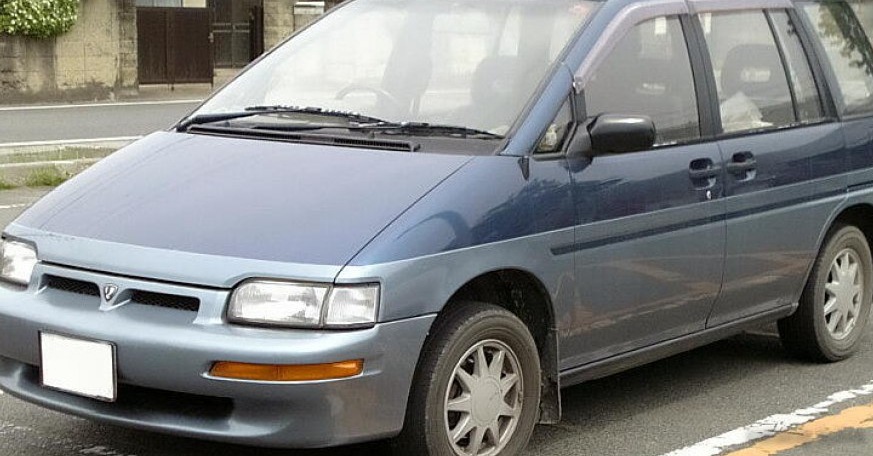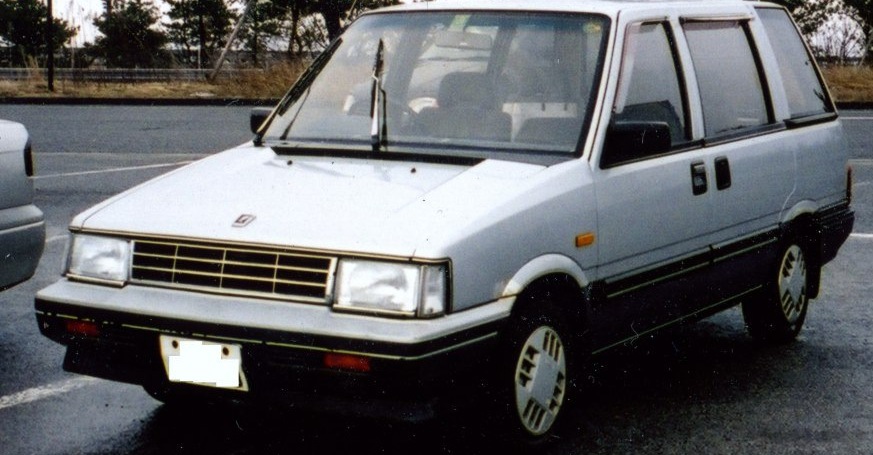
The Nissan Prairie (M10, NM10) 2.0 4×4, produced between 1986 and 1988, represents a unique offering from Nissan during the late 1980s. Falling within the first generation of the Prairie line, the NM10 variant distinguished itself with its all-wheel drive capability and 2.0-liter engine. Positioned as a versatile family vehicle, the Prairie aimed to provide a spacious and practical alternative to traditional sedans, particularly appealing to those needing occasional four-wheel drive functionality. It was primarily marketed in Japan and select export markets, offering a blend of comfort, utility, and a relatively affordable price point.
Technical Specifications
| Brand | Nissan |
| Model | Prairie |
| Generation | Prairie (M10, NM10) |
| Type | 2.0 4×4 (NM10) (97 Hp) |
| Start of production | 1986 |
| End of production | 1988 |
| Powertrain Architecture | Internal Combustion engine |
| Body type | Minivan |
| Seats | 5 |
| Doors | 5 |
| Fuel Type | Petrol (Gasoline) |
| Maximum speed | 160 km/h (99.42 mph) |
| Weight-to-power ratio | 14 kg/Hp, 71.3 Hp/tonne |
| Weight-to-torque ratio | 8.8 kg/Nm, 113.2 Nm/tonne |
| Power | 97 Hp @ 5200 rpm |
| Power per litre | 49.1 Hp/l |
| Torque | 154 Nm @ 3600 rpm (113.58 lb.-ft. @ 3600 rpm) |
| Engine layout | Front, Transverse |
| Engine Model/Code | CA20S |
| Engine displacement | 1974 cm3 (120.46 cu. in.) |
| Number of cylinders | 4 |
| Engine configuration | Inline |
| Cylinder Bore | 84.5 mm (3.33 in.) |
| Piston Stroke | 88 mm (3.46 in.) |
| Compression ratio | 9.4:1 |
| Number of valves per cylinder | 2 |
| Fuel injection system | Carburettor |
| Engine aspiration | Naturally aspirated engine |
| Valvetrain | SOHC |
| Engine oil capacity | 3.5 l (3.7 US qt | 3.08 UK qt) |
| Kerb Weight | 1360 kg (2998.29 lbs.) |
| Max. weight | 1860 kg (4100.6 lbs.) |
| Max load | 500 kg (1102.31 lbs.) |
| Fuel tank capacity | 50 l (13.21 US gal | 11 UK gal) |
| Max. roof load | 75 kg (165.35 lbs.) |
| Permitted trailer load with brakes (12%) | 1000 kg (2204.62 lbs.) |
| Permitted trailer load without brakes | 500 kg (1102.31 lbs.) |
| Permitted towbar download | 50 kg (110.23 lbs.) |
| Length | 4230 mm (166.54 in.) |
| Width | 1665 mm (65.55 in.) |
| Height | 1685 mm (66.34 in.) |
| Wheelbase | 2525 mm (99.41 in.) |
| Front track | 1430 mm (56.3 in.) |
| Rear (Back) track | 1375 mm (54.13 in.) |
| Minimum turning circle (turning diameter) | 11.2 m (36.75 ft.) |
| Drivetrain Architecture | The Internal combustion engine (ICE) drives permanently the four wheels of the vehicle. |
| Drive wheel | All wheel drive (4×4) |
| Number of gears and type of gearbox | 5 gears, manual transmission |
| Front suspension | Independent, type McPherson with coil spring and anti-roll bar |
| Rear suspension | Wishbone, Transverse stabilizer |
| Front brakes | Disc |
| Rear brakes | Drum |
| Assisting systems | ABS (Anti-lock braking system) |
| Steering type | Steering rack and pinion |
| Power steering | Hydraulic Steering |
| Tires size | Front wheel tires: 185/70 R14Rear wheel tires: 185/70 R14 |
| Wheel rims size | Front wheel rims: 5J x 14Rear wheel rims: 5J x 14 |
INTRODUCTION
The Nissan Prairie NM10, produced from 1986 to 1988, was a five-door minivan designed to offer a practical and spacious alternative to conventional passenger cars. Built on Nissan’s M10 platform, it represented the first generation of the Prairie model. The 2.0 4×4 variant, powered by the CA20S engine, was a notable trim level, offering all-wheel drive capability which was relatively uncommon in minivans of the era. This feature, combined with its comfortable interior and reasonable price, aimed to attract families and individuals seeking a versatile vehicle for both daily commuting and occasional off-road adventures. The Prairie was primarily sold in the Japanese domestic market, with limited exports to other regions.
Powertrain & Engine Architecture
The heart of the Prairie 2.0 4×4 is the CA20S engine, a 1.974-liter inline-four cylinder gasoline engine. This engine utilizes a single overhead camshaft (SOHC) valvetrain with two valves per cylinder. Fuel delivery is managed by a carburetor, a common feature for engines of this period, though less efficient than fuel injection. The CA20S produces 97 horsepower at 5200 rpm and 154 Nm (113.58 lb-ft) of torque at 3600 rpm. The engine’s transverse mounting and front-wheel drive bias, coupled with the all-wheel drive system, contribute to its handling characteristics. The NM10 was exclusively offered with a five-speed manual transmission, providing drivers with direct control over the engine’s power delivery. The all-wheel drive system is a part-time system, engaging the rear wheels when traction is needed, enhancing stability in slippery conditions.
Driving Characteristics
The Prairie 2.0 4×4, with its 97 horsepower and five-speed manual transmission, offered a reasonably engaging driving experience for its class. Acceleration was adequate for everyday driving, but not particularly sporty. The 0-60 mph time was estimated to be around 12-13 seconds. The manual transmission allowed for precise gear selection, maximizing the engine’s available torque. The all-wheel drive system provided enhanced traction, particularly on loose surfaces, making it suitable for light off-road use and inclement weather. Compared to other Prairie trims with less powerful engines, the 2.0 4×4 offered a noticeable performance advantage. However, it didn’t match the responsiveness of sportier vehicles available at the time. The suspension, tuned for comfort, provided a relatively smooth ride, but body roll was noticeable during cornering.
Equipment & Trim Levels
The Prairie 2.0 4×4, while not a luxury vehicle, offered a respectable level of equipment for its price point. Standard features typically included cloth upholstery, a basic audio system, and manual windows and locks. Air conditioning was often an optional extra. The interior design was functional and focused on maximizing space. The dashboard layout was straightforward, with easy-to-read gauges. Optional extras could include upgraded audio systems, power windows, and central locking. The trim level was generally considered mid-range within the Prairie lineup, offering a balance between affordability and features. The focus was on practicality and durability rather than lavish appointments.
Chassis & Braking
The Prairie NM10 utilized a McPherson strut front suspension with coil springs and an anti-roll bar, providing a comfortable ride and reasonable handling. The rear suspension employed a wishbone setup with a transverse stabilizer. The braking system consisted of disc brakes on the front wheels and drum brakes on the rear. Power-assisted steering was standard, making maneuvering easier, especially at low speeds. The all-wheel drive system added to the vehicle’s weight, but also enhanced its stability and traction. The tires were typically 185/70 R14, providing a good balance between ride comfort and grip. ABS (Anti-lock braking system) was available as an option, improving braking performance in emergency situations.
Market Reception & Comparison
The Nissan Prairie 2.0 4×4 received mixed reviews from automotive critics. It was praised for its spacious interior, practical design, and all-wheel drive capability. However, some critics found the engine to be underpowered, and the carburetor-based fuel system was considered outdated. Compared to other minivans of the era, such as the Toyota Estima (Previa) and the Honda Shuttle, the Prairie offered a more affordable entry point, but lacked some of the advanced features and refinement of its competitors. Fuel economy was average for a vehicle of its size and class, typically around 25-30 mpg. Reliability was generally good, but maintenance costs could be higher due to the carburetor and the complexity of the all-wheel drive system.
Legacy
The Nissan Prairie, particularly the 2.0 4×4 variant, holds a niche appeal among enthusiasts of Japanese domestic market (JDM) vehicles. While not a high-performance model, its unique combination of all-wheel drive, spaciousness, and affordability has made it a sought-after vehicle in the used car market. The CA20S engine, while not known for its exceptional power, is generally considered reliable and relatively easy to maintain. However, finding replacement parts can be challenging, particularly outside of Japan. Today, well-maintained examples of the Prairie 2.0 4×4 are becoming increasingly rare, and are often valued by collectors and enthusiasts who appreciate its distinctive character and practicality.