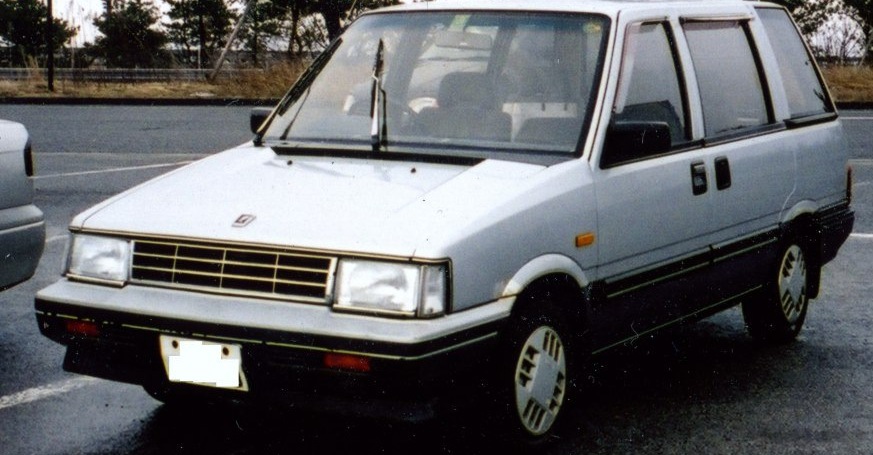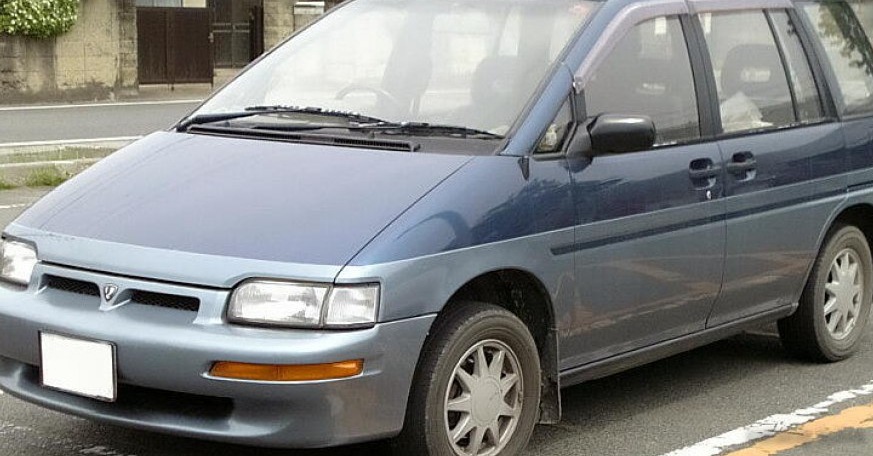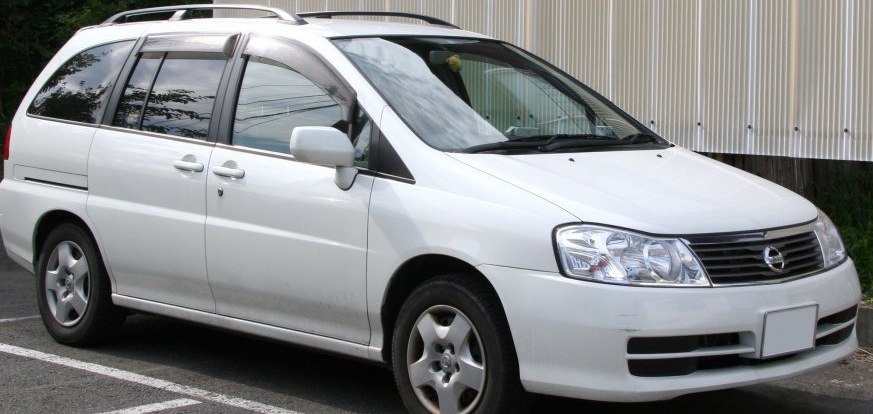
The Nissan Prairie (M12), produced between 1998 and 2004, represented Nissan’s second-generation entry into the mid-size minivan segment, primarily aimed at the Japanese domestic market (JDM) and select export markets. This generation, built on the Nissan Sunny/Sentra B14 platform, offered a more refined and spacious interior compared to its predecessor. The 2.0 i 16V (140 Hp) 4×4 variant occupied a mid-to-upper position within the M12 lineup, offering all-wheel drive capability and a relatively potent engine for its class. It catered to families seeking a practical and versatile vehicle with enhanced traction for varied weather conditions.
Technical Specifications
| Brand | Nissan |
| Model | Prairie |
| Generation | Prairie (M12) |
| Type (Engine) | 2.0 i 16V (140 Hp) 4×4 |
| Start of production | 1998 |
| End of production | 2004 |
| Powertrain Architecture | Internal Combustion engine |
| Body type | Minivan |
| Seats | 5 |
| Doors | 4 |
| Fuel consumption (urban) | 14 l/100 km (16.8 US mpg, 20.2 UK mpg, 7.1 km/l) |
| Fuel consumption (extra urban) | 8 l/100 km (29.4 US mpg, 35.3 UK mpg, 12.5 km/l) |
| Fuel Type | Petrol (Gasoline) |
| Maximum speed | 160 km/h (99.42 mph) |
| Weight-to-power ratio | 11.4 kg/Hp, 88.1 Hp/tonne |
| Weight-to-torque ratio | 8.8 kg/Nm, 113.8 Nm/tonne |
| Power | 140 Hp @ 5800 rpm |
| Power per litre | 70.1 Hp/l |
| Torque | 181 Nm @ 4800 rpm (133.5 lb.-ft. @ 4800 rpm) |
| Engine layout | Front, Transverse |
| Engine displacement | 1998 cm3 (121.93 cu. in.) |
| Number of cylinders | 4 |
| Engine configuration | Inline |
| Cylinder Bore | 86 mm (3.39 in.) |
| Piston Stroke | 86 mm (3.39 in.) |
| Compression ratio | 10:1 |
| Number of valves per cylinder | 4 |
| Fuel injection system | Multi-port manifold injection |
| Engine aspiration | Naturally aspirated engine |
| Valvetrain | DOHC |
| Kerb Weight | 1590 kg (3505.35 lbs.) |
| Fuel tank capacity | 60 l (15.85 US gal | 13.2 UK gal) |
| Length | 4650 mm (183.07 in.) |
| Width | 1695 mm (66.73 in.) |
| Height | 1400 mm (55.12 in.) |
| Wheelbase | 2600 mm (102.36 in.) |
| Front track | 1470 mm (57.87 in.) |
| Rear track | 1460 mm (57.48 in.) |
| Drive wheel | All wheel drive (4×4) |
| Number of gears and type of gearbox | 4 gears, automatic transmission |
| Front suspension | Coil spring |
| Rear suspension | Coil spring |
| Front brakes | Ventilated discs |
| Rear brakes | Drum |
| Assisting systems | ABS (Anti-lock braking system) |
| Steering type | Steering rack and pinion |
| Power steering | Hydraulic Steering |
| Tires size | 195/65 R15 |
Powertrain & Engine Architecture
The heart of the Prairie 2.0 i 16V 4×4 is the Nissan SR20DE engine. This 1998cc, inline-four cylinder engine utilizes a double overhead camshaft (DOHC) valvetrain with four valves per cylinder, contributing to its relatively high output for a naturally aspirated engine of its displacement. The SR20DE employs multi-point fuel injection, delivering fuel directly to each intake port for optimized combustion. The engine’s 10:1 compression ratio strikes a balance between performance and fuel efficiency. The 4-speed automatic transmission, while providing convenience, was a conventional torque converter type, known for its smoothness but not necessarily its efficiency compared to more modern transmissions. The all-wheel drive system was typically a part-time system, engaging the rear wheels when traction was needed, enhancing stability in slippery conditions.
Driving Characteristics
The 140 horsepower and 181 Nm (133.5 lb-ft) of torque delivered by the SR20DE, coupled with the four-speed automatic, resulted in adequate, but not exhilarating, performance. Acceleration was respectable for everyday driving, but the automatic transmission’s gear ratios were geared more towards fuel economy than outright speed. Compared to the manual transmission versions of the Prairie, the automatic suffered a noticeable performance deficit. The 4×4 system provided enhanced grip, particularly on loose surfaces, making it a more confident vehicle in inclement weather. However, the added weight of the all-wheel drive components did slightly impact fuel economy and handling responsiveness compared to front-wheel drive models.
Equipment & Trim Levels
The 2.0 i 16V 4×4 trim typically included features such as power windows, power door locks, air conditioning, and an AM/FM radio with a cassette player (depending on the year and market). Higher-spec versions could be equipped with optional extras like alloy wheels, a sunroof, and upgraded audio systems. Interior upholstery was generally cloth, with higher trims offering optional leather seating. The dashboard layout was functional and straightforward, prioritizing usability over stylistic flair. The Prairie aimed for a comfortable and practical interior, rather than a luxurious one.
Chassis & Braking
The Prairie M12 utilized a relatively simple chassis design, featuring coil springs and independent suspension at the front and a coil spring setup at the rear. The front brakes were ventilated discs, providing adequate stopping power, while the rear brakes were drums, a cost-saving measure common in this class of vehicle. Anti-lock Braking System (ABS) was standard, enhancing safety by preventing wheel lockup during hard braking. Steering was rack and pinion with hydraulic power assistance, offering a reasonable level of driver feedback. The suspension tuning prioritized ride comfort over sporty handling, making it a pleasant vehicle for long journeys.
Market Reception & Comparison
The Nissan Prairie M12, and specifically the 2.0 i 16V 4×4 variant, was generally well-received in its target markets. Critics praised its spacious interior, practical design, and the added security of all-wheel drive. However, the automatic transmission was sometimes criticized for its lack of responsiveness compared to the manual option. Fuel economy, while acceptable, wasn’t a standout feature. Compared to other minivans in its class, such as the Toyota Estima (Previa) or Honda Odyssey, the Prairie offered a more affordable entry point, but lacked some of the more advanced features and refined driving experience of its competitors. The 1.8L front-wheel drive models were more fuel efficient and cheaper to purchase, appealing to budget-conscious buyers, while the 2.0L 4×4 offered a more capable and versatile option for those needing all-weather traction.
Legacy
The Nissan Prairie M12, while not a groundbreaking vehicle, served as a reliable and practical family transport option for many owners. The SR20DE engine is known for its durability and relatively straightforward maintenance. The 4-speed automatic transmission, while not the most technologically advanced, proved to be reasonably reliable with proper servicing. Today, the Prairie M12 is becoming increasingly rare, particularly in well-maintained condition. The 2.0 i 16V 4×4 variant, with its all-wheel drive capability, is sought after by enthusiasts looking for a unique and capable JDM vehicle. Parts availability can be a challenge, but the SR20DE engine’s widespread use in other Nissan models means that many components are still readily accessible. The Prairie M12 represents a solid, if unspectacular, example of late 1990s/early 2000s Japanese minivan engineering.