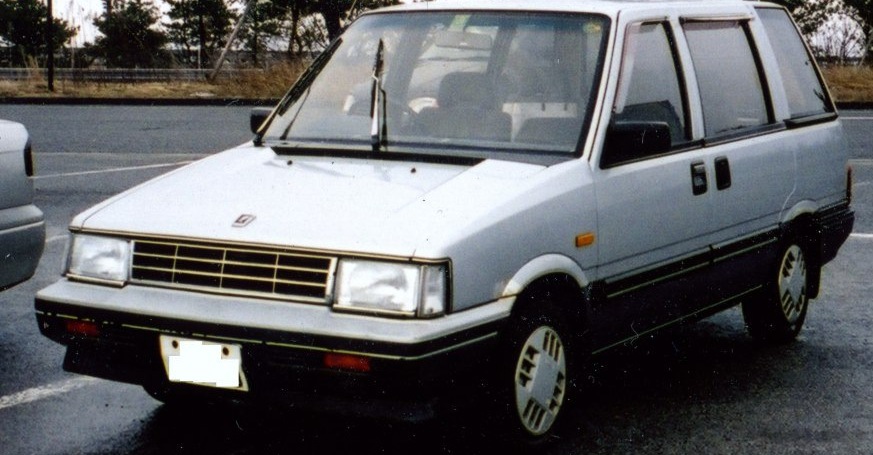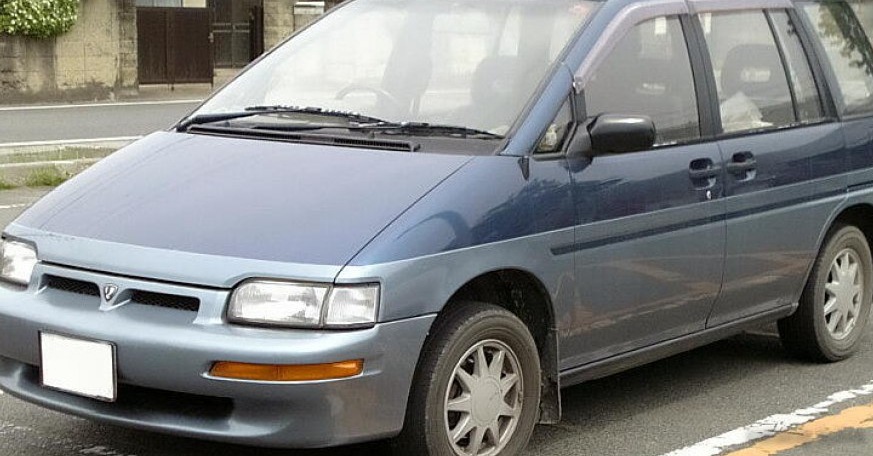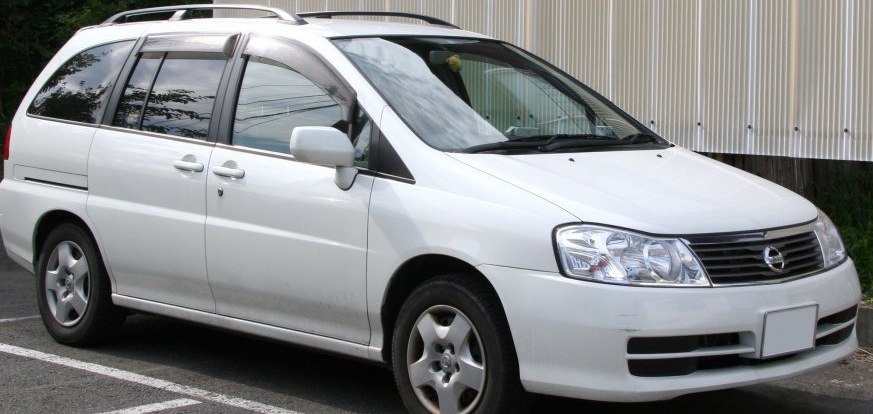
The Nissan Prairie (M12), produced between 2002 and 2004, represented a continuation of Nissan’s compact MPV (Multi-Purpose Vehicle) line, primarily aimed at the Japanese domestic market and select export regions. This generation, the second for the Prairie nameplate, built upon the success of its predecessor by offering increased space, improved comfort, and a range of engine options. The 2.0 i 16V variant, producing 147 horsepower, occupied a mid-range position within the M12 lineup, offering a balance between performance and fuel efficiency. It was positioned above the lower-powered 1.6L engine options and below the more performance-oriented, though less common, variants.
Technical Specifications
| Brand | Nissan |
| Model | Prairie |
| Generation | Prairie (M12) |
| Type (Engine) | 2.0 i 16V (147 Hp) |
| Start of production | 2002 |
| End of production | 2004 |
| Powertrain Architecture | Internal Combustion engine |
| Body type | Minivan |
| Seats | 5 |
| Doors | 4 |
| Fuel consumption (combined) | 7.7 l/100 km (30.5 US mpg, 36.7 UK mpg, 13 km/l) |
| Fuel Type | Petrol (Gasoline) |
| Weight-to-power ratio | 10.1 kg/Hp, 98.7 Hp/tonne |
| Weight-to-torque ratio | 7.5 kg/Nm, 132.9 Nm/tonne |
| Power | 147 Hp @ 6000 rpm |
| Power per litre | 73.6 Hp/l |
| Torque | 198 Nm @ 4000 rpm (146.04 lb.-ft. @ 4000 rpm) |
| Engine layout | Front, Transverse |
| Engine displacement | 1998 cm3 (121.93 cu. in.) |
| Number of cylinders | 4 |
| Engine configuration | Inline |
| Cylinder Bore | 89 mm (3.5 in.) |
| Piston Stroke | 80.3 mm (3.16 in.) |
| Compression ratio | 9.9:1 |
| Number of valves per cylinder | 4 |
| Fuel injection system | Multi-port manifold injection |
| Engine aspiration | Naturally aspirated engine |
| Kerb Weight | 1490 kg (3284.89 lbs.) |
| Fuel tank capacity | 60 l (15.85 US gal | 13.2 UK gal) |
| Length | 4575 mm (180.12 in.) |
| Width | 1695 mm (66.73 in.) |
| Height | 1630 mm (64.17 in.) |
| Wheelbase | 2690 mm (105.91 in.) |
| Front track | 1470 mm (57.87 in.) |
| Rear track | 1470 mm (57.87 in.) |
| Drivetrain Architecture | The Internal combustion engine (ICE) drives the front wheels of the vehicle. |
| Drive wheel | Front wheel drive |
| Number of gears and type of gearbox | 4 gears, automatic transmission |
| Front suspension | Coil spring |
| Rear suspension | Coil spring |
| Front brakes | Ventilated discs |
| Rear brakes | Drum |
| Assisting systems | ABS (Anti-lock braking system) |
| Steering type | Steering rack and pinion |
| Power steering | Hydraulic Steering |
| Tires size | 195/65 R15 |
Powertrain & Engine Architecture
The heart of the Prairie 2.0 i 16V is Nissan’s QR20DE engine, a 1998cc inline-four cylinder powerplant. This engine utilizes a cast iron block with an aluminum cylinder head, a common configuration for balancing durability and weight. The “16V” designation indicates the engine features four valves per cylinder, enhancing volumetric efficiency and contributing to its power output. Fuel delivery is managed by a multi-port fuel injection system, providing precise fuel metering for optimal combustion. The QR20DE is a naturally aspirated engine, meaning it doesn’t employ forced induction like a turbocharger or supercharger. The engine’s 9.9:1 compression ratio is a moderate figure, balancing performance and fuel economy. Paired with this engine is a four-speed automatic transmission, a fairly standard offering for this class of vehicle in the early 2000s. This transmission was designed for smooth operation and ease of use, prioritizing comfort over outright performance.
Driving Characteristics
The 147 horsepower and 198 Nm (146 lb-ft) of torque produced by the QR20DE engine, when coupled with the four-speed automatic transmission, resulted in adequate, but not particularly exhilarating, performance. Acceleration was sufficient for everyday driving, but overtaking maneuvers required planning. The automatic transmission’s gear ratios were tuned for fuel efficiency and smooth transitions, rather than aggressive acceleration. Compared to the manual transmission versions of the Prairie 2.0, the automatic offered less driver engagement and slightly slower acceleration times. The automatic also diminished some of the engine’s responsiveness. However, it provided a more relaxed driving experience, particularly in urban environments.
Equipment & Trim Levels
The 2.0 i 16V trim of the Nissan Prairie typically included features such as air conditioning, power windows, power door locks, and a basic audio system. Interior upholstery was generally cloth, with options for upgraded materials available. Dashboard configuration was functional and straightforward, prioritizing usability over stylistic flair. Optional extras included alloy wheels, a sunroof, and a more advanced audio system with a CD player. Higher trim levels, though less common, added features like woodgrain interior trim and automatic climate control.
Chassis & Braking
The Prairie M12 utilized a front-engine, front-wheel-drive layout. Suspension consisted of coil springs on all four wheels, providing a comfortable ride quality. The front suspension incorporated a MacPherson strut design, while the rear utilized a torsion beam setup. Braking duties were handled by ventilated discs on the front wheels and drum brakes on the rear. This configuration was typical for vehicles in this price range and weight class at the time. Anti-lock Braking System (ABS) was standard, enhancing safety by preventing wheel lockup during hard braking.
Market Reception & Comparison
The Nissan Prairie 2.0 i 16V automatic was generally well-received as a practical and comfortable family vehicle. Critics praised its spacious interior and ease of driving. However, some reviewers noted that the automatic transmission dulled the engine’s performance compared to the manual versions. Fuel economy was considered average for its class. Compared to other MPVs available at the time, such as the Toyota Wish or Honda Stream, the Prairie offered a competitive level of space and practicality, but lacked the brand prestige of its Japanese rivals. The 1.8L versions offered slightly better fuel economy, while the higher-output engines provided more spirited performance, but at a higher price point.
Legacy
The Nissan Prairie M12, while not a groundbreaking vehicle, served as a reliable and practical MPV for many families. The QR20DE engine, in particular, proved to be a durable and relatively trouble-free powerplant. Today, the Prairie M12 is becoming increasingly rare, particularly in well-maintained condition. The 2.0 i 16V automatic variant is generally considered a good value on the used car market, offering a comfortable and spacious vehicle at an affordable price. However, potential buyers should be aware of the age-related issues common to vehicles of this era, such as wear and tear on suspension components and potential corrosion. The simplicity of the engine and transmission makes it relatively easy and affordable to maintain, contributing to its continued appeal among budget-conscious buyers.