
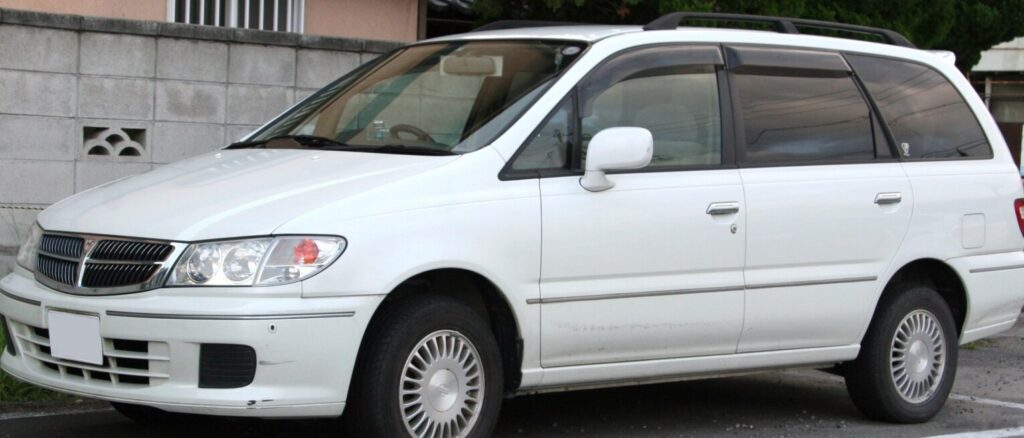
The Nissan Presage 3.0i V6 24V, produced between 2000 and 2006, represents Nissan’s entry into the eight-passenger minivan segment, primarily targeted towards the Japanese domestic market (JDM) and export markets like Australia and parts of Asia. While not officially sold in the United States, the Presage offered a spacious and well-equipped alternative to established North American minivans. This particular variant, powered by the VQ30DE engine and a four-speed automatic transmission, occupied a mid-to-upper position within the Presage lineup, offering a balance of performance and convenience. It was positioned above the lower-trim models with smaller engines, but below any potential luxury or performance-oriented packages.
Technical Specifications
| Brand | Nissan |
| Model | Presage |
| Generation | Presage |
| Type (Engine) | 3.0 i V6 24V (220 Hp) |
| Start of production | 2000 year |
| End of production | 2006 year |
| Powertrain Architecture | Internal Combustion engine |
| Body type | Minivan |
| Seats | 8 |
| Doors | 5 |
| Fuel Type | Petrol (Gasoline) |
| Maximum speed | 180 km/h (111.85 mph) |
| Weight-to-power ratio | 7.4 kg/Hp, 135 Hp/tonne |
| Weight-to-torque ratio | 5.8 kg/Nm, 171.2 Nm/tonne |
| Power | 220 Hp @ 6400 rpm |
| Power per litre | 73.7 Hp/l |
| Torque | 279 Nm @ 4400 rpm (205.78 lb.-ft. @ 4400 rpm) |
| Engine layout | Front, Transverse |
| Engine Model/Code | VQ30DE |
| Engine displacement | 2987 cm3 (182.28 cu. in.) |
| Number of cylinders | 6 |
| Engine configuration | V-engine |
| Cylinder Bore | 93 mm (3.66 in.) |
| Piston Stroke | 73.3 mm (2.89 in.) |
| Compression ratio | 10:1 |
| Number of valves per cylinder | 4 |
| Fuel injection system | Multi-port manifold injection |
| Engine aspiration | Naturally aspirated engine |
| Valvetrain | DOHC |
| Engine oil capacity | 4 l (4.23 US qt | 3.52 UK qt) |
| Kerb Weight | 1630 kg (3593.53 lbs.) |
| Max. weight | 2070 kg (4563.57 lbs.) |
| Max load | 440 kg (970.03 lbs.) |
| Fuel tank capacity | 65 l (17.17 US gal | 14.3 UK gal) |
| Length | 4755 mm (187.2 in.) |
| Width | 1770 mm (69.69 in.) |
| Height | 1725 mm (67.91 in.) |
| Wheelbase | 2800 mm (110.24 in.) |
| Front track | 1535 mm (60.43 in.) |
| Rear (Back) track | 1520 mm (59.84 in.) |
| Drivetrain Architecture | The Internal combustion engine (ICE) drives the front wheels of the vehicle. |
| Drive wheel | Front wheel drive |
| Number of gears and type of gearbox | 4 gears, automatic transmission |
| Front suspension | Coil spring |
| Rear suspension | Coil spring |
| Front brakes | Ventilated discs |
| Rear brakes | Drum |
| Assisting systems | ABS (Anti-lock braking system) |
| Steering type | Steering rack and pinion |
| Power steering | Hydraulic Steering |
| Tires size | 215/60 R16 |
Powertrain & Engine Architecture
The heart of the Presage 3.0i is the Nissan VQ30DE engine, a 3.0-liter, naturally aspirated V6. This engine is a member of Nissan’s highly regarded VQ engine family, known for its smooth operation, reliability, and relatively high output for its displacement. The VQ30DE features a 60-degree V-angle, dual overhead camshafts (DOHC), and four valves per cylinder. It utilizes a multi-port fuel injection system, delivering fuel directly into the intake ports. The engine produces 220 horsepower at 6400 rpm and 279 Nm (205.78 lb-ft) of torque at 4400 rpm. This power is then channeled through a four-speed automatic transmission, a common choice for minivans prioritizing comfort and ease of use over outright performance. The transmission is electronically controlled, offering adaptive shift patterns based on driving conditions.
Driving Characteristics
The combination of the VQ30DE engine and the four-speed automatic transmission provides adequate, though not particularly sporty, performance. Acceleration is sufficient for everyday driving and highway merging, but the Presage isn’t designed for quick sprints. The automatic transmission’s gear ratios are tuned for fuel efficiency and smooth cruising, rather than aggressive acceleration. Compared to manual transmission versions (available in some markets), the automatic sacrifices some responsiveness. The 3.0i offers a noticeable step up in performance compared to the lower-displacement 2.0-liter and 2.4-liter engine options available in the Presage range. However, it doesn’t match the performance of larger displacement engines found in some competing minivans.
Equipment & Trim Levels
The 3.0i trim level typically included features such as power windows, power locks, air conditioning, and an upgraded audio system. Higher-spec versions often added features like leather upholstery, woodgrain interior trim, and a sunroof. The Presage generally offered a comfortable and well-equipped interior, focusing on practicality and family-friendliness. Optional extras could include navigation systems, rear entertainment systems, and upgraded sound systems. The interior layout prioritized space and accessibility, with sliding rear doors for easy entry and exit.
Chassis & Braking
The Presage utilizes a front-engine, front-wheel-drive layout. Suspension consists of coil springs all around, providing a comfortable ride quality. The front suspension features MacPherson struts, while the rear utilizes a multi-link setup. Braking duties are handled by ventilated discs at the front and drum brakes at the rear. Anti-lock Braking System (ABS) is standard, enhancing safety during emergency braking situations. Steering is rack-and-pinion with hydraulic power assistance, offering a reasonably light and responsive feel.
Market Reception & Comparison
The Nissan Presage was generally well-received in markets where it was sold, praised for its spacious interior, comfortable ride, and reliable engine. Critics noted that the four-speed automatic transmission felt somewhat dated compared to the five or six-speed automatics becoming increasingly common in other vehicles. Fuel economy was considered average for its class. Compared to other trims in the Presage lineup, the 3.0i offered a significant performance advantage, making it a popular choice for buyers who needed to carry a full load of passengers or frequently travel on highways. It provided a good balance between performance, fuel economy, and price.
Legacy
The Nissan VQ30DE engine has proven to be remarkably durable and reliable, with many examples exceeding 200,000 miles with proper maintenance. The Presage, while not a common sight in North America, has developed a following among enthusiasts who appreciate its practicality and reliability. On the used car market, the 3.0i variant generally commands a slightly higher price than lower-trim models due to its superior performance. The Presage’s legacy lies in its contribution to Nissan’s minivan offerings and the enduring reputation of the VQ engine family.
