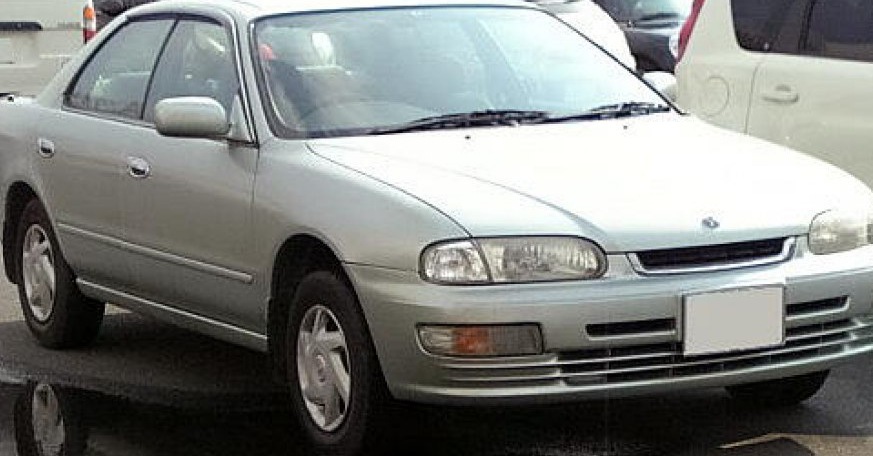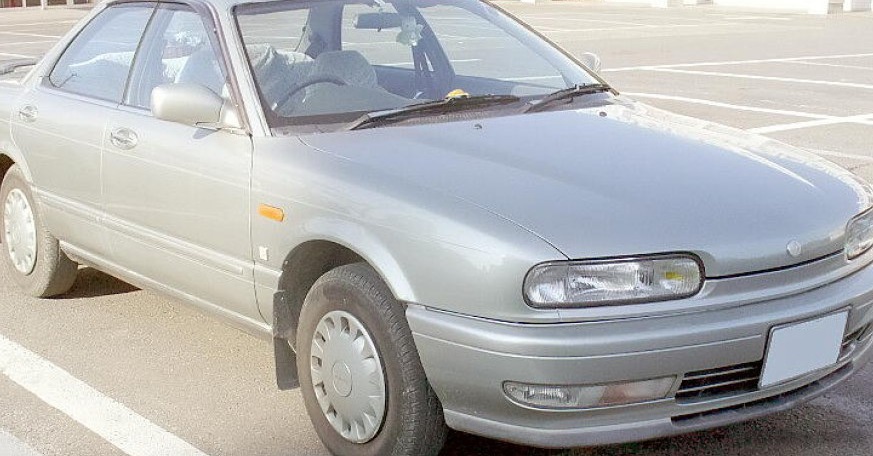
The Nissan Presea 1.5 16V, producing 94 horsepower, was a compact sedan manufactured by Nissan between 1990 and 1994. Positioned as an entry-level offering within Nissan’s lineup, the Presea aimed to provide affordable and practical transportation, primarily targeting the Japanese domestic market. It was based on the Nissan B11 platform, sharing components with other Nissan models of the era, such as the Sunny and Liberta. The Presea occupied a niche between the more basic offerings and the slightly more upscale Sentra, offering a balance of features and economy.
Technical Specifications
| Brand | Nissan |
| Model | Presea |
| Generation | Presea |
| Type (Engine) | 1.5 16V (94 Hp) |
| Start of production | 1990 |
| End of production | 1994 |
| Powertrain Architecture | Internal Combustion engine |
| Body type | Sedan |
| Seats | 5 |
| Doors | 4 |
| Fuel consumption (urban) | 11 l/100 km (21.4 US mpg) |
| Fuel consumption (extra urban) | 6 l/100 km (39.2 US mpg) |
| Fuel Type | Petrol (Gasoline) |
| Maximum speed | 170 km/h (105.63 mph) |
| Weight-to-power ratio | 10.5 kg/Hp |
| Weight-to-torque ratio | 7.9 kg/Nm |
| Power | 94 Hp @ 6000 rpm |
| Power per litre | 62.8 Hp/l |
| Torque | 126 Nm @ 3600 rpm (92.93 lb.-ft. @ 3600 rpm) |
| Engine layout | Front, Transverse |
| Engine displacement | 1497 cm3 (91.35 cu. in.) |
| Number of cylinders | 4 |
| Engine configuration | Inline |
| Cylinder Bore | 73.6 mm (2.9 in.) |
| Piston Stroke | 88 mm (3.46 in.) |
| Compression ratio | 9.5:1 |
| Number of valves per cylinder | 4 |
| Fuel injection system | Carburettor |
| Engine aspiration | Naturally aspirated engine |
| Valvetrain | DOHC |
| Kerb Weight | 990 kg (2182.58 lbs.) |
| Fuel tank capacity | 50 l (13.21 US gal | 11 UK gal) |
| Length | 4390 mm (172.83 in.) |
| Width | 1690 mm (66.54 in.) |
| Height | 1320 mm (51.97 in.) |
| Wheelbase | 2500 mm (98.43 in.) |
| Front track | 1445 mm (56.89 in.) |
| Rear track | 1425 mm (56.1 in.) |
| Drivetrain Architecture | Front wheel drive |
| Drive wheel | Front wheel drive |
| Number of gears and type of gearbox | 5 gears, manual transmission |
| Front suspension | Wishbone |
| Rear suspension | Coil spring |
| Front brakes | Ventilated discs |
| Rear brakes | Drum |
| Assisting systems | ABS (Anti-lock braking system) |
| Steering type | Steering rack and pinion |
| Tires size | 165/80 R13 |
Powertrain & Engine Architecture
The Presea 1.5 16V was powered by Nissan’s GA15DE engine, a 1.5-liter inline-four cylinder engine. While the specification lists a carburettor, later models within the production run transitioned to multi-point fuel injection, improving efficiency and emissions. The “16V” designation refers to the engine’s dual overhead camshaft (DOHC) valvetrain, which featured four valves per cylinder. This configuration allowed for improved breathing and higher engine speeds compared to engines with two valves per cylinder. The engine produced 94 horsepower at 6000 rpm and 126 Nm (93 lb-ft) of torque at 3600 rpm. The engine was transversely mounted in the front of the vehicle, driving the front wheels. The standard transmission was a five-speed manual, although a three-speed automatic transmission was also available, albeit impacting performance.
Driving Characteristics
The 1.5-liter engine in the Presea, particularly when paired with the five-speed manual transmission, provided adequate performance for everyday driving. Acceleration was modest, but the engine felt responsive enough for navigating city streets and merging onto highways. The automatic transmission, while offering convenience, noticeably reduced acceleration and increased fuel consumption. The gear ratios were tuned for economy rather than outright performance. Handling was generally predictable, with the wishbone front suspension and coil spring rear suspension providing a comfortable ride. However, the Presea wasn’t designed for spirited driving; body roll was noticeable in corners, and the steering lacked significant feedback.
Equipment & Trim Levels
The Nissan Presea 1.5 16V was typically equipped with basic amenities. Standard features included cloth upholstery, a simple dashboard layout, and manual windows and door locks. Air conditioning was often an optional extra. Higher trim levels might have included features like a radio/cassette player, upgraded interior trim, and power windows. The Presea was designed to be a practical and affordable vehicle, so luxury features were generally limited. The interior space was adequate for five passengers, but rear legroom was somewhat limited.
Chassis & Braking
The Presea utilized a front-engine, front-wheel-drive layout. The front suspension consisted of wishbone arms, while the rear suspension employed a coil spring setup. Braking duties were handled by ventilated discs at the front and drum brakes at the rear. Anti-lock braking system (ABS) was available on some models, enhancing safety by preventing wheel lockup during hard braking. The tires were typically 165/80 R13, providing a balance of comfort and grip. The chassis was relatively lightweight, contributing to the car’s fuel efficiency.
Market Reception & Comparison
The Nissan Presea was generally well-received in the Japanese market as an affordable and reliable compact sedan. Critics praised its fuel efficiency and practicality, but noted its lack of performance and refinement compared to more expensive rivals. Compared to other Nissan models, such as the Sentra, the Presea offered a more budget-friendly option. The 1.5-liter engine provided reasonable fuel economy, but the automatic transmission significantly reduced efficiency. The Presea’s simple design and robust mechanicals contributed to its reputation for reliability.
Legacy
The Nissan Presea, while not a particularly iconic model, remains a relatively common sight on Japanese used car markets. The GA15DE engine is known for its durability and relatively low maintenance costs. Parts availability is generally good, making it an affordable option for those seeking a basic and reliable compact sedan. The Presea’s simple design and robust construction have contributed to its longevity, and many examples are still on the road today. While it may not offer the performance or features of more modern vehicles, the Presea represents a practical and economical transportation solution from the early 1990s.