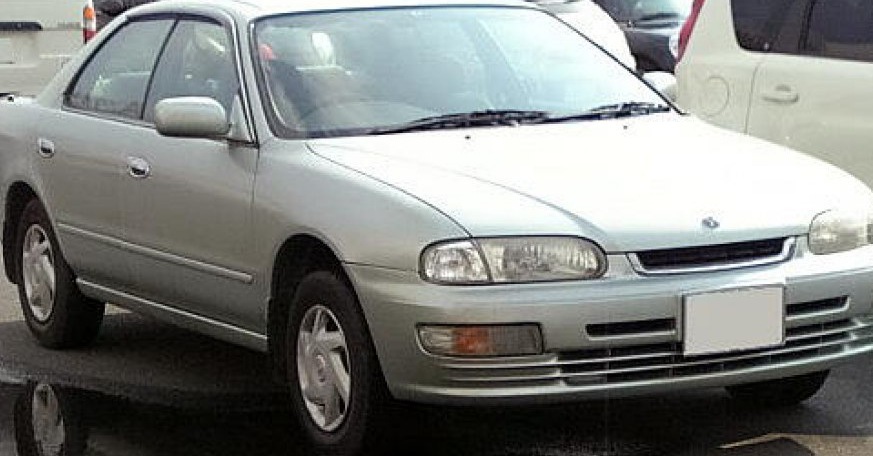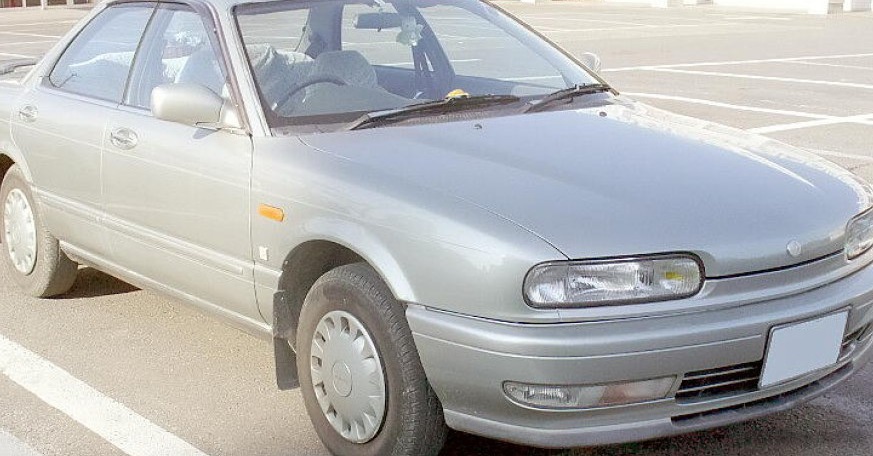
The Nissan Presea 1.8 16V, manufactured between 1990 and 1994, occupied a mid-range position within the Presea model series. Designed as a comfortable and practical compact sedan, it aimed to strike a balance between performance and fuel economy for the Japanese domestic market. The Presea itself was a relatively short-lived model, created to bridge the gap between the smaller Nissan Sentra and the larger Nissan Bluebird. This 1.8-liter variant, producing 110 horsepower, was intended to appeal to buyers desiring more refinement and power than the base models, while remaining more affordable than the higher-end trims.
Technical Specifications
| Brand | Nissan |
| Model | Presea |
| Generation | Presea |
| Type (Engine) | 1.8 16V (110 Hp) |
| Start of production | 1990 |
| End of production | 1994 |
| Powertrain Architecture | Internal Combustion engine |
| Body type | Sedan |
| Seats | 5 |
| Doors | 4 |
| Fuel consumption (urban) | 13 l/100 km (18.1 US mpg, 21.7 UK mpg) |
| Fuel consumption (extra urban) | 7 l/100 km (33.6 US mpg, 40.4 UK mpg) |
| Fuel Type | Petrol (Gasoline) |
| Maximum speed | 180 km/h (111.85 mph) |
| Weight-to-power ratio | 9.5 kg/Hp |
| Weight-to-torque ratio | 7 kg/Nm |
| Power | 110 Hp @ 6000 rpm |
| Power per litre | 59.8 Hp/l |
| Torque | 150 Nm @ 4000 rpm (110.63 lb.-ft. @ 4000 rpm) |
| Engine layout | Front, Transverse |
| Engine Model/Code | SR18Di |
| Engine displacement | 1838 cm3 (112.16 cu. in.) |
| Number of cylinders | 4 |
| Engine configuration | Inline |
| Cylinder Bore | 82.5 mm (3.25 in.) |
| Piston Stroke | 86 mm (3.39 in.) |
| Compression ratio | 9.5:1 |
| Number of valves per cylinder | 4 |
| Fuel injection system | Single-point injection |
| Engine aspiration | Naturally aspirated engine |
| Valvetrain | DOHC |
| Kerb Weight | 1050 kg (2314.85 lbs.) |
| Fuel tank capacity | 50 l (13.21 US gal | 11 UK gal) |
| Length | 4390 mm (172.83 in.) |
| Width | 1690 mm (66.54 in.) |
| Height | 1320 mm (51.97 in.) |
| Wheelbase | 2500 mm (98.43 in.) |
| Front track | 1445 mm (56.89 in.) |
| Rear track | 1425 mm (56.1 in.) |
| Drivetrain Architecture | Front wheel drive |
| Drive wheel | Front wheel drive |
| Number of gears and type of gearbox | 5 gears, manual transmission |
| Front suspension | Wishbone |
| Rear suspension | Coil spring |
| Front brakes | Ventilated discs |
| Rear brakes | Drum |
| Assisting systems | ABS (Anti-lock braking system) |
| Steering type | Steering rack and pinion |
| Tires size | 185/70 R13 |
Powertrain & Engine Architecture
The Nissan Presea 1.8 16V’s engine is the SR18Di, an 1.8-liter inline-four cylinder engine. This engine employed a single-point fuel injection system, a common feature during its production era, delivering fuel to the intake manifold instead of directly into the combustion chambers. The ‘Di’ in the engine code denotes this distribution injection system. The engine featured a double overhead camshaft (DOHC) valvetrain, operating four valves per cylinder, which enhanced airflow and contributed to the engine’s 110 horsepower output at 6000 rpm and 150 Nm (110.63 lb.-ft.) of torque at 4000 rpm. The engine was mounted transversely at the front of the vehicle, powering the front wheels. A five-speed manual transmission was the standard configuration, providing a relatively direct connection between the engine and the drivetrain.
Driving Characteristics
The 1.8-liter engine offered a noticeable performance improvement compared to the smaller engine options available in the Presea range. While not a performance-oriented vehicle, the 110 hp engine provided sufficient acceleration for daily driving and highway travel. The five-speed manual transmission allowed drivers to maintain the engine within its optimal power band, resulting in a more engaging driving experience than an automatic transmission would offer. The gear ratios were fairly conventional for the period, prioritizing fuel efficiency and smooth operation over outright speed. Compared to a hypothetical higher-output version, the 1.8 16V prioritized usability and refinement. The relatively light curb weight of 1050 kg (2314.85 lbs) helped to offset the modest horsepower figure.
Equipment & Trim Levels
The Presea 1.8 16V typically included features considered standard for a mid-range Japanese sedan in the early 1990s. These included power steering, a basic audio system, and cloth upholstery. Air conditioning was often standard, though it could be optional depending on the specific sub-trim level. The interior design was functional and straightforward, emphasizing practicality over luxury. Optional extras could include upgraded audio systems, alloy wheels, and power windows. The dashboard layout was typical of Japanese cars of the time, featuring a clear and concise instrument cluster.
Chassis & Braking
The Presea 1.8 16V utilized a relatively simple chassis design. The front suspension employed a wishbone setup, while the rear suspension featured a coil spring arrangement. This configuration provided a comfortable ride, although it wasn’t particularly sporty. The braking system consisted of ventilated discs on the front wheels and drum brakes on the rear. An anti-lock braking system (ABS) was included as a standard safety feature, improving braking performance and stability, particularly on slippery surfaces. The tires were typically 185/70 R13, a common size for compact cars of the era.
Market Reception & Comparison
The Nissan Presea 1.8 16V was generally well-received in the Japanese market as a practical and reliable family sedan. Critics praised its comfortable ride and fuel efficiency, but noted that its performance wasn’t particularly exciting. Compared to other trims in the Presea lineup, the 1.8 16V offered a noticeable improvement in acceleration and highway passing power. It was positioned as an upgrade from the base 1.5-liter models, offering a more refined driving experience. Fuel economy was respectable for its class, averaging around 7 l/100 km (33.6 US mpg) on the extra urban cycle.
Legacy
The Nissan Presea was discontinued after a relatively short production run. However, the SR18Di engine proved to be a durable and reliable unit. Today, well-maintained examples of the Presea 1.8 16V are becoming increasingly sought after by collectors and enthusiasts of Japanese domestic market (JDM) cars. The engine’s simplicity and robust construction contribute to its longevity. While parts availability can be challenging, the SR18Di is generally considered a relatively easy engine to maintain and repair. The Presea 1.8 16V represents a snapshot of early 1990s Japanese automotive engineering, offering a blend of practicality, reliability, and understated style.