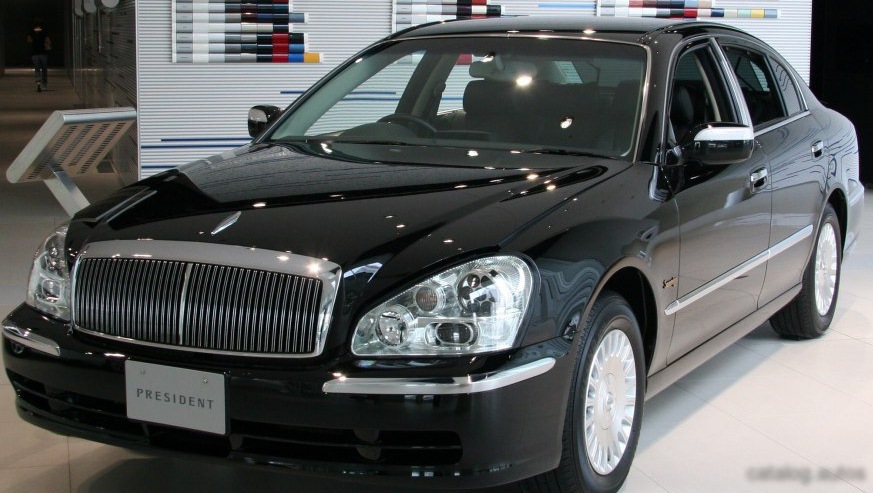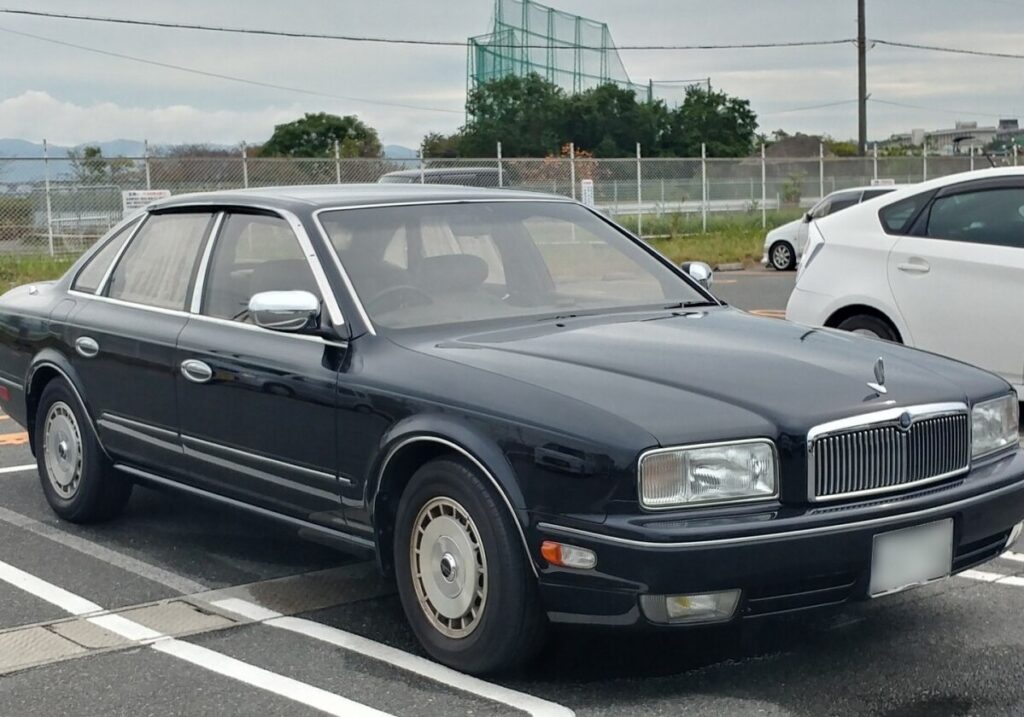
The Nissan President (HG50) 4.5i V8 32V Type L, produced from 1990 to 2002, represents the third generation of Nissan’s flagship luxury sedan. Positioned as the ultimate in Japanese automotive prestige, the HG50 President was primarily aimed at the domestic Japanese market, serving as transportation for executives, government officials, and other high-profile individuals. It continued the President’s long-standing tradition of offering a supremely comfortable and refined driving experience, emphasizing rear-seat passenger comfort and a smooth, powerful powertrain. This specific 4.5-liter V8 variant, designated “Type L”, sat at the top of the HG50 lineup, offering the most potent engine option and a comprehensive suite of luxury features.
Technical Specifications
| Brand | Nissan |
| Model | President |
| Generation | President (HG50) |
| Type (Engine) | 4.5 i V8 32V Type L (270 Hp) |
| Start of production | 1990 |
| End of production | 2002 |
| Powertrain Architecture | Internal Combustion engine |
| Body type | Sedan |
| Seats | 5 |
| Doors | 4 |
| Fuel consumption (urban) | 15.6 l/100 km (15.1 US mpg, 18.1 UK mpg, 6.4 km/l) |
| Fuel consumption (extra urban) | 8.2 l/100 km (28.7 US mpg, 34.4 UK mpg, 12.2 km/l) |
| Fuel Type | Petrol (Gasoline) |
| Weight-to-power ratio | 7 kg/Hp, 142.1 Hp/tonne |
| Weight-to-torque ratio | 4.8 kg/Nm, 207.4 Nm/tonne |
| Power | 270 Hp @ 5600 rpm |
| Power per litre | 60.1 Hp/l |
| Torque | 394 Nm @ 4000 rpm (290.6 lb.-ft. @ 4000 rpm) |
| Engine layout | Front, Longitudinal |
| Engine displacement | 4494 cm3 (274.24 cu. in.) |
| Number of cylinders | 8 |
| Engine configuration | V-engine |
| Cylinder Bore | 93 mm (3.66 in.) |
| Piston Stroke | 82.7 mm (3.26 in.) |
| Compression ratio | 10.2:1 |
| Number of valves per cylinder | 4 |
| Fuel injection system | Multi-port manifold injection |
| Engine aspiration | Naturally aspirated engine |
| Valvetrain | DOHC |
| Kerb Weight | 1900 kg (4188.78 lbs.) |
| Max. weight | 2175 kg (4795.05 lbs.) |
| Max load | 275 kg (606.27 lbs.) |
| Fuel tank capacity | 85 l (22.45 US gal, 18.7 UK gal) |
| Length | 5075 mm (199.8 in.) |
| Width | 1830 mm (72.05 in.) |
| Height | 1425 mm (56.1 in.) |
| Wheelbase | 2880 mm (113.39 in.) |
| Front track | 1570 mm (61.81 in.) |
| Rear track | 1570 mm (61.81 in.) |
| Drivetrain Architecture | Rear wheel drive |
| Drive wheel | Rear wheel drive |
| Number of gears | 4 |
| Gearbox type | Automatic transmission |
| Front suspension | Coil spring |
| Rear suspension | Coil spring |
| Front brakes | Ventilated discs |
| Rear brakes | Disc |
| Assisting systems | ABS (Anti-lock braking system), Hydraulic Power Steering |
| Tires size | 215/65 R15 S |
Powertrain & Engine Architecture
The heart of the President Type L is the VH45DE engine, a 4.5-liter (4494 cc) naturally aspirated V8. This engine utilizes a 60-degree V-angle and features a double overhead camshaft (DOHC) valvetrain with four valves per cylinder. The VH45DE employs multi-port fuel injection, delivering fuel directly to each cylinder for optimized combustion. The engine’s robust construction and sophisticated design contribute to its smooth power delivery and relatively high output for its era. Paired with the engine is a 4-speed automatic transmission, designed for seamless shifts and a comfortable driving experience. This transmission was specifically tuned to complement the V8’s torque curve, prioritizing smooth acceleration rather than outright performance.
Driving Characteristics
The HG50 President 4.5i with the automatic transmission delivers a driving experience focused on refinement and comfort. While 270 horsepower is substantial, the car’s considerable weight (approximately 4,189 lbs) means acceleration is brisk rather than explosive. The automatic transmission, while smooth, isn’t particularly quick to downshift, and lacks the responsiveness of a manual gearbox. The gear ratios are optimized for cruising, making it an excellent grand tourer. Compared to other HG50 variants, such as those with the smaller 3.0-liter engine, the 4.5i offers significantly more power and torque, resulting in effortless highway passing and a more relaxed driving experience. However, the larger engine does come with a penalty in fuel economy.
Equipment & Trim Levels
The “Type L” trim level represented the pinnacle of luxury for the HG50 President. Standard features included premium leather upholstery, power-adjustable front seats with memory function, woodgrain interior trim, a high-quality audio system, automatic climate control, and power windows and locks. Optional extras often included a rear-seat entertainment system, upgraded audio components, and a sunroof. The emphasis was on creating a luxurious and comfortable environment for both the driver and passengers, particularly those in the rear seats. The interior design was conservative and elegant, reflecting the car’s intended clientele.
Chassis & Braking
The HG50 President utilizes a traditional body-on-frame construction, prioritizing ride comfort and durability. The suspension consists of coil springs all around, with independent suspension in the front and a solid rear axle. This setup provides a smooth and comfortable ride, absorbing bumps and imperfections in the road effectively. Braking duties are handled by ventilated discs in the front and solid discs in the rear, supplemented by an Anti-lock Braking System (ABS) for enhanced safety. The steering is hydraulically assisted, providing a light and effortless steering feel.
Market Reception & Comparison
The Nissan President HG50 was highly regarded in Japan for its luxurious appointments, smooth ride, and powerful engine. Critics praised its build quality and attention to detail. However, it was often criticized for its relatively high price and somewhat dated technology compared to European luxury sedans. Compared to the 3.0-liter variants, the 4.5i offered a significant performance upgrade, but at a higher cost and with reduced fuel economy. The 4.5i appealed to buyers who prioritized power and prestige above all else. Reliability was generally good, although maintenance costs could be high due to the complexity of the V8 engine and the availability of parts.
Legacy
The Nissan President HG50 remains a highly sought-after classic car in Japan, representing a bygone era of Japanese automotive luxury. The VH45DE engine, while not known for being particularly fuel-efficient, is generally considered to be a robust and reliable powerplant when properly maintained. Today, well-maintained examples of the HG50 President 4.5i command premium prices in the used car market, appealing to collectors and enthusiasts who appreciate its unique blend of luxury, power, and Japanese craftsmanship. The HG50 solidified the President’s reputation as the ultimate Japanese luxury sedan, and its legacy continues to influence Nissan’s approach to building high-end vehicles.