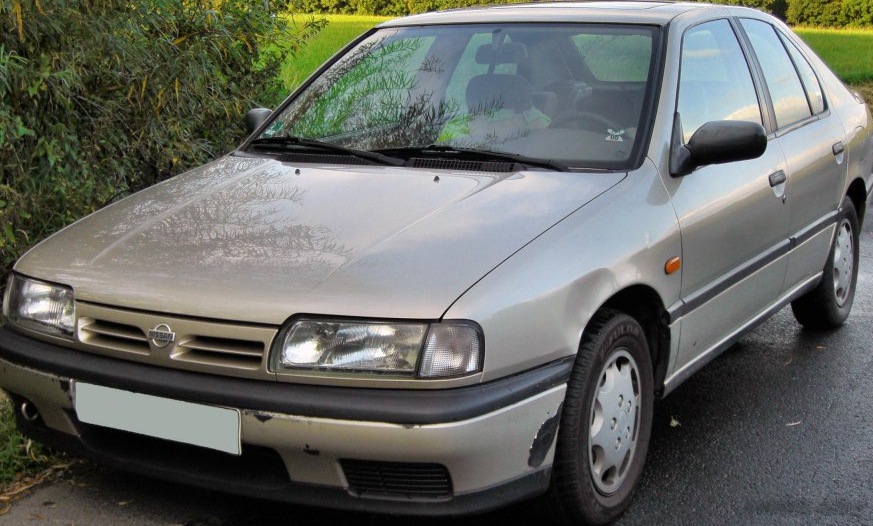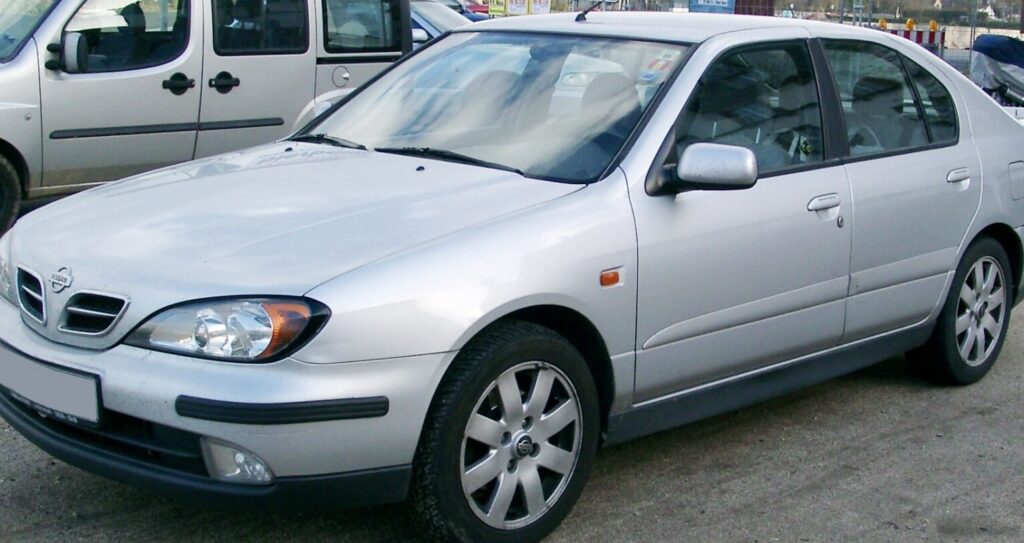
The Nissan Primera (P11) 2.0 TD, producing 90 horsepower, was a diesel-powered variant of the second-generation Primera, manufactured between 1996 and 2002. Positioned as an economy-focused option within the P11 lineup, it catered to drivers prioritizing fuel efficiency and practicality over outright performance. The P11 Primera represented Nissan’s entry into the competitive European mid-size family car segment, aiming to challenge established models like the Ford Mondeo and Volkswagen Passat. This particular 2.0 TD model was primarily sold in Europe, where diesel engines enjoyed significant popularity due to favorable taxation and fuel costs.
Technical Specifications
| Brand | Nissan |
| Model | Primera |
| Generation | Primera Hatch (P11) |
| Type (Engine) | 2.0 TD (90 Hp) |
| Start of production | 1996 |
| End of production | 2002 |
| Powertrain Architecture | Internal Combustion engine |
| Body type | Hatchback |
| Seats | 5 |
| Doors | 5 |
| Fuel consumption (urban) | 8.4 l/100 km (28 US mpg) |
| Fuel consumption (extra urban) | 5.5 l/100 km (42.8 US mpg) |
| Fuel Type | Diesel |
| Acceleration 0 – 100 km/h | 14 sec |
| Acceleration 0 – 62 mph | 14 sec |
| Acceleration 0 – 60 mph | 13.3 sec |
| Maximum speed | 175 km/h (108.74 mph) |
| Weight-to-power ratio | 14.8 kg/Hp |
| Weight-to-torque ratio | 7.5 kg/Nm |
| Power | 90 Hp @ 4400 rpm |
| Power per litre | 45.6 Hp/l |
| Torque | 177 Nm @ 2400 rpm (130.55 lb.-ft. @ 2400 rpm) |
| Engine layout | Front, Transverse |
| Engine Model/Code | CD20T |
| Engine displacement | 1974 cm3 (120.46 cu. in.) |
| Number of cylinders | 4 |
| Engine configuration | Inline |
| Cylinder Bore | 84.5 mm (3.33 in.) |
| Piston Stroke | 88 mm (3.46 in.) |
| Compression ratio | 22.2:1 |
| Number of valves per cylinder | 4 |
| Fuel injection system | Precombustion chamber injection |
| Engine aspiration | Turbocharger |
| Valvetrain | OHC |
| Engine oil capacity | 5 l (5.28 US qt | 4.4 UK qt) |
| Coolant | 6.4 l (6.76 US qt | 5.63 UK qt) |
| Kerb Weight | 1335 kg (2943.17 lbs.) |
| Max. weight | 1795 kg (3957.3 lbs.) |
| Max load | 460 kg (1014.13 lbs.) |
| Trunk (boot) space – minimum | 505 l (17.83 cu. ft.) |
| Trunk (boot) space – maximum | 1357 l (47.92 cu. ft.) |
| Fuel tank capacity | 60 l (15.85 US gal | 13.2 UK gal) |
| Length | 4522 mm (178.03 in.) |
| Width | 1715 mm (67.52 in.) |
| Height | 1410 mm (55.51 in.) |
| Wheelbase | 2600 mm (102.36 in.) |
| Front track | 1465 mm (57.68 in.) |
| Rear (Back) track | 1454 mm (57.24 in.) |
| Drivetrain Architecture | Front wheel drive |
| Number of gears and type of gearbox | 5 gears, manual transmission |
| Front suspension | Spring-loaded rack |
| Rear suspension | Rigid axle suspension |
| Front brakes | Disc |
| Rear brakes | Drum |
| Assisting systems | ABS (Anti-lock braking system) |
| Steering type | Steering rack and pinion |
| Power steering | Hydraulic Steering |
| Tires size | 185/65 R 14 |
Powertrain & Engine Architecture
The Primera 2.0 TD utilized the CD20T engine, a 1.974-liter inline-four cylinder diesel engine. This engine employed precombustion chamber injection, a system common in European diesels of the era. This system involved injecting fuel into a precombustion chamber connected to the main cylinder, promoting more complete combustion and reducing noise. The CD20T was turbocharged, boosting power output to 90 horsepower and 177 Nm (130.55 lb-ft) of torque. The engine featured an overhead camshaft (OHC) valvetrain. The transmission was a five-speed manual, chosen for its efficiency and cost-effectiveness. While an automatic transmission was available on other Primera models, it wasn’t typically paired with the 2.0 TD engine due to the lower power output and the desire to maximize fuel economy.
Driving Characteristics
The 2.0 TD Primera offered modest performance. Acceleration from 0 to 60 mph took around 13.3 seconds, and top speed was approximately 108.74 mph. The engine’s torque peak at 2400 rpm provided reasonable pulling power for everyday driving, but it lacked the responsiveness of higher-output gasoline engines or even more powerful diesel variants. The five-speed manual transmission was well-matched to the engine’s characteristics, allowing drivers to keep the engine in its optimal power band. Compared to the 1.6L gasoline Primera, the 2.0 TD offered significantly better fuel economy, but at the expense of acceleration. Against the more powerful 2.0L gasoline versions, the diesel provided superior torque and fuel efficiency, but felt slower in most driving situations.
Equipment & Trim Levels
The 2.0 TD Primera typically came with a fairly basic level of equipment, reflecting its position as an entry-level or mid-range model. Standard features generally included power steering, central locking, electric front windows, and an anti-lock braking system (ABS). Interior upholstery was typically cloth, and the dashboard featured a functional, if somewhat utilitarian, design. Optional extras included air conditioning, alloy wheels, and a radio/cassette player. Higher trim levels, available with other engine options, offered features like leather upholstery, climate control, and upgraded audio systems, but these were rarely fitted to the 2.0 TD.
Chassis & Braking
The Primera P11 featured a front-wheel-drive layout with a spring-loaded rack front suspension and a rigid axle rear suspension. The front brakes were discs, providing adequate stopping power, while the rear brakes were drums, a cost-saving measure common in this class of vehicle. The suspension setup prioritized ride comfort over sporty handling, making the Primera a comfortable cruiser. Stabilizer bars were fitted to both the front and rear axles to reduce body roll during cornering. The relatively modest power output of the 2.0 TD engine meant that the braking system was generally sufficient for the vehicle’s weight and performance.
Market Reception & Comparison
The Nissan Primera 2.0 TD was generally well-received by critics as a practical and economical family car. Its fuel efficiency was a major selling point, particularly in Europe where diesel fuel was cheaper than gasoline. However, some reviewers criticized its lack of performance and its somewhat basic interior. Compared to other diesel-powered rivals like the Ford Mondeo TD and Volkswagen Passat TDI, the Primera offered a competitive level of fuel economy and practicality, but lacked the refinement and driving dynamics of some of its competitors. Reliability was generally good, although some owners reported issues with the turbocharger and fuel injection system.
Legacy
The Nissan Primera P11 2.0 TD has become a relatively affordable and reliable used car. The CD20T engine, while not particularly powerful, is known for its durability and longevity when properly maintained. Parts availability is generally good, although some components may be becoming increasingly difficult to find. Today, these Primeras are often sought after by drivers looking for a practical and economical vehicle for commuting or family use. While it may not offer the excitement of more modern cars, the P11 2.0 TD remains a testament to Nissan’s commitment to building reliable and fuel-efficient vehicles.