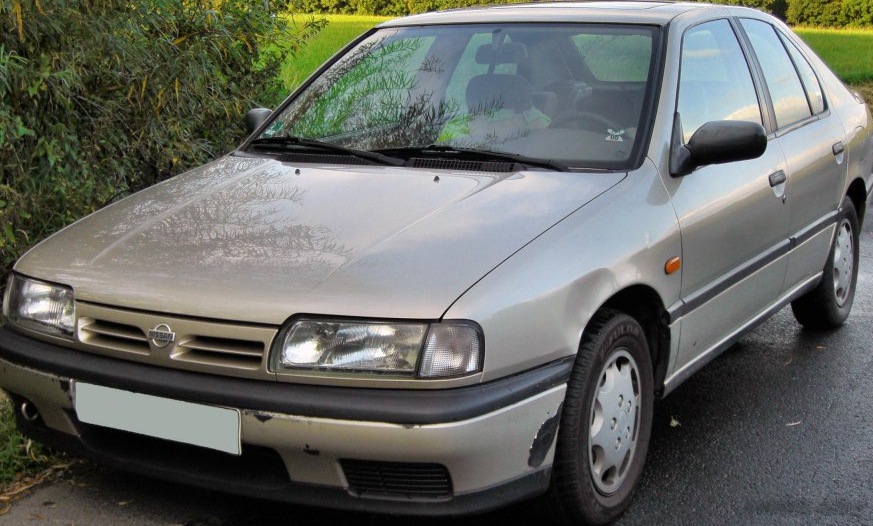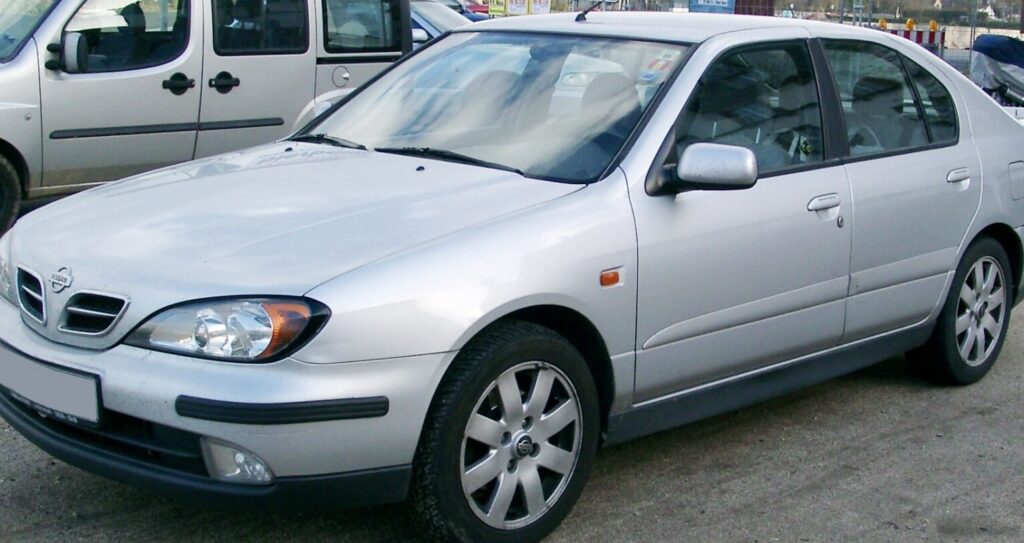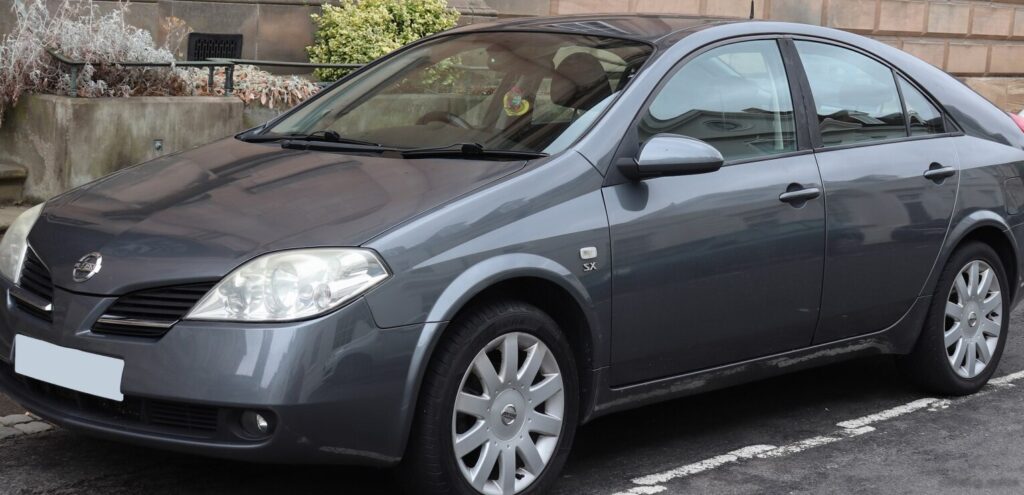
The Nissan Primera (P12) 1.8 i 16V, produced from April 2002 to March 2007, represented a key offering in Nissan’s European D-segment lineup. This hatchback variant, part of the second generation of the Primera, aimed to provide a comfortable and practical family car with a balance of efficiency and performance. Positioned as a mid-range trim, the 1.8L engine with a four-speed automatic transmission offered a more accessible entry point into the Primera range compared to the more powerful 2.0L models, while still providing a reasonable level of equipment. It competed directly with vehicles like the Ford Mondeo, Vauxhall/Opel Vectra, and Peugeot 406.
Technical Specifications
| Brand | Nissan |
| Model | Primera |
| Generation | Primera Hatch (P12) |
| Type (Engine) | 1.8 i 16V (116 Hp) |
| Start of production | April, 2002 |
| End of production | March, 2007 |
| Powertrain Architecture | Internal Combustion engine |
| Body type | Hatchback |
| Seats | 5 |
| Doors | 5 |
| Fuel consumption (urban) | 9.6 l/100 km (24.5 US mpg) |
| Fuel consumption (extra urban) | 6.1 l/100 km (38.6 US mpg) |
| Fuel consumption (combined) | 7.4 l/100 km (31.8 US mpg) |
| Fuel Type | Petrol (Gasoline) |
| Acceleration 0 – 100 km/h | 11.9 sec |
| Acceleration 0 – 62 mph | 11.9 sec |
| Acceleration 0 – 60 mph | 11.3 sec |
| Maximum speed | 194 km/h (120.55 mph) |
| Weight-to-power ratio | 11.2 kg/Hp |
| Weight-to-torque ratio | 8 kg/Nm |
| Power | 116 Hp @ 5600 rpm |
| Torque | 163 Nm @ 4000 rpm (120.22 lb.-ft. @ 4000 rpm) |
| Engine layout | Front, Transverse |
| Engine Model/Code | QG18DE |
| Engine displacement | 1769 cm3 (107.95 cu. in.) |
| Number of cylinders | 4 |
| Engine configuration | Inline |
| Cylinder Bore | 80 mm (3.15 in.) |
| Piston Stroke | 88 mm (3.46 in.) |
| Compression ratio | 9.5:1 |
| Number of valves per cylinder | 4 |
| Fuel injection system | Multi-port manifold injection |
| Engine aspiration | Naturally aspirated engine |
| Valvetrain | DOHC |
| Engine oil capacity | 2.9 l (3.06 US qt | 2.55 UK qt) |
| Coolant capacity | 6.7 l (7.08 US qt | 5.9 UK qt) |
| Kerb Weight | 1300 kg (2866.01 lbs.) |
| Max. weight | 1810 kg (3990.37 lbs.) |
| Max load | 510 kg (1124.36 lbs.) |
| Trunk (boot) space – minimum | 450 l (15.89 cu. ft.) |
| Trunk (boot) space – maximum | 1812 l (63.99 cu. ft.) |
| Fuel tank capacity | 62 l (16.38 US gal | 13.64 UK gal) |
| Length | 4565 mm (179.72 in.) |
| Width | 1760 mm (69.29 in.) |
| Height | 1480 mm (58.27 in.) |
| Wheelbase | 2680 mm (105.51 in.) |
| Front track | 1530 mm (60.24 in.) |
| Rear track | 1535 mm (60.43 in.) |
| Drivetrain Architecture | Front wheel drive |
| Number of gears | 4 (automatic transmission) |
| Front suspension | Double wishbone |
| Rear suspension | Coil spring |
| Front brakes | Ventilated discs |
| Rear brakes | Disc |
| Steering type | Steering rack and pinion |
| Power steering | Hydraulic |
| Tires size | 205/60 R16 |
INTRODUCTION
The P12 Primera, launched in 2002, represented a significant step forward for Nissan in the European market. Moving away from the more conservative styling of its predecessor, the P12 adopted a more modern and dynamic design, particularly in its hatchback form. The 1.8 i 16V variant, equipped with a four-speed automatic transmission, was designed to appeal to buyers seeking a comfortable and convenient daily driver. It sat in the middle of the range, offering a compromise between the more affordable 1.6L models and the higher-performance 2.0L variants. The P12 platform, also underpinning the Almera Tino, aimed to deliver a refined driving experience and a spacious interior.
Powertrain & Engine Architecture
The heart of the Primera 1.8 i 16V is the QG18DE engine, a 1.8-liter inline-four cylinder powerplant. This engine utilizes a cast iron block with an aluminum cylinder head, a common configuration for balancing durability and weight. The ‘DE’ designation signifies Nissan’s Dual Energy system, incorporating continuously variable valve timing (CVTCS) on both the intake and exhaust camshafts. This system optimizes valve timing for improved performance and fuel efficiency across the rev range. Fuel delivery is managed by a multi-port fuel injection system, providing precise fuel metering. The four-speed automatic transmission, while not the most modern unit by today’s standards, was known for its smooth operation and reliability. It featured electronically controlled torque converter lock-up for improved fuel economy at cruising speeds. The QG18DE engine is a non-interference engine, meaning that even if the timing belt breaks, the pistons will not collide with the valves, preventing catastrophic engine damage.
Driving Characteristics
The 1.8L automatic Primera offered a comfortable, if not particularly sporty, driving experience. With 116 horsepower and 163 Nm of torque, acceleration was adequate for everyday driving, but it wasn’t a particularly quick car. The 0-60 mph time of around 11.3 seconds reflects this. The four-speed automatic transmission, while smooth, could sometimes feel a bit sluggish, especially when attempting quick overtaking maneuvers. Gear ratios were tuned for fuel efficiency rather than outright performance. Compared to the manual transmission version, the automatic offered less driver engagement but greater convenience. The 2.0L models, with their higher output, provided noticeably more responsive acceleration, but at the expense of fuel economy. The Primera’s suspension provided a comfortable ride, absorbing bumps and imperfections in the road well. Steering was light and precise, making it easy to maneuver in urban environments.
Equipment & Trim Levels
The 1.8 i 16V Primera typically came equipped with a reasonable level of standard features. These included air conditioning, power windows, central locking, an integrated stereo system, and alloy wheels. Higher trim levels, often denoted by ‘SE’ or ‘S’ designations, added features such as climate control, upgraded upholstery, and a sunroof. Interior upholstery was typically cloth, with options for leather available on higher-spec models. The dashboard layout was functional and user-friendly, with clearly labeled controls. Optional extras included a CD changer, navigation system, and parking sensors.
Chassis & Braking
The Primera P12 utilized a front-wheel-drive layout with independent double wishbone suspension at the front and a coil spring setup at the rear. This suspension configuration provided a good balance of ride comfort and handling. Braking duties were handled by ventilated discs at the front and solid discs at the rear. Anti-lock Braking System (ABS) was standard, enhancing safety by preventing wheel lock-up during hard braking. The chassis was designed to provide a stable and predictable driving experience, with a focus on comfort rather than outright sportiness. Stabilizer bars were fitted to both the front and rear axles to reduce body roll during cornering.
Market Reception & Comparison
The Nissan Primera P12 1.8 i 16V was generally well-received by automotive critics as a practical and comfortable family car. However, some reviewers noted that the automatic transmission could feel a bit dated compared to newer units offered by competitors. Fuel economy was considered respectable, but not class-leading. Compared to the 2.0L models, the 1.8L offered a lower purchase price and slightly better fuel efficiency, making it an attractive option for budget-conscious buyers. Reliability was generally good, although some owners reported minor issues with electrical components. The Primera faced stiff competition from established rivals like the Ford Mondeo and Vauxhall/Opel Vectra, which offered similar levels of practicality and performance.
Legacy
The Nissan Primera P12, including the 1.8 i 16V variant, has proven to be a relatively reliable and durable vehicle. The QG18DE engine is known for its longevity, and the automatic transmission, while not the most advanced, has generally held up well over time. In the used car market, the Primera P12 represents a good value proposition for buyers seeking an affordable and practical family car. Parts availability is generally good, and maintenance costs are reasonable. While it may not offer the same level of refinement or technology as more modern vehicles, the Primera P12 remains a capable and dependable choice for those seeking a comfortable and reliable mode of transportation.