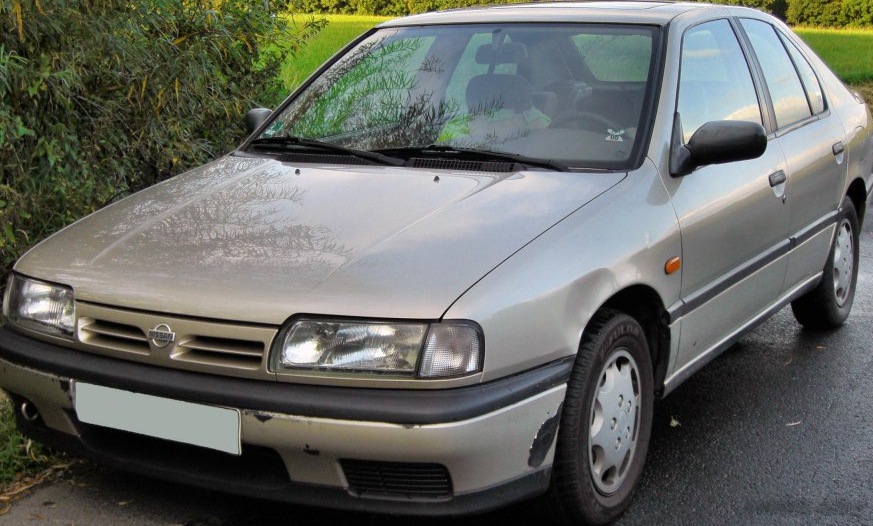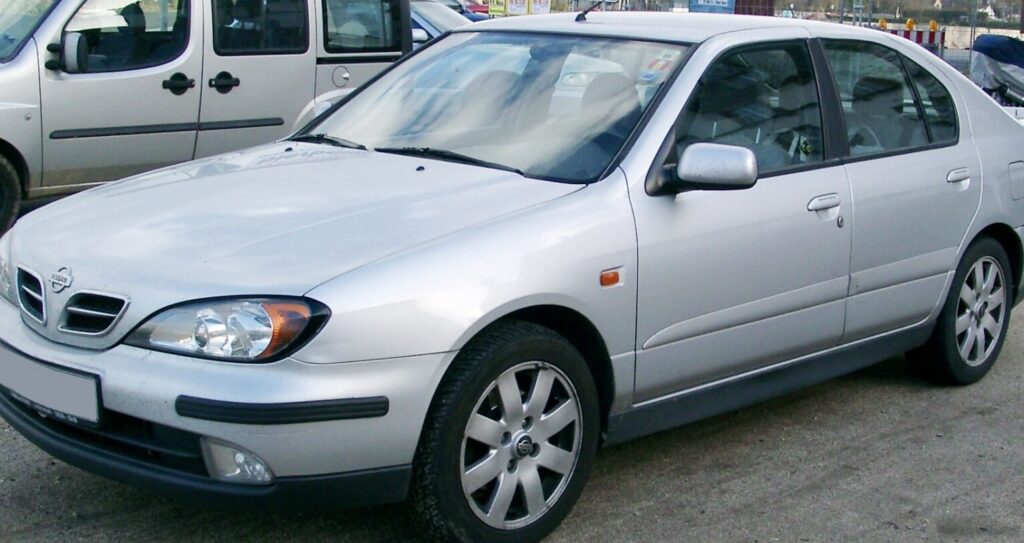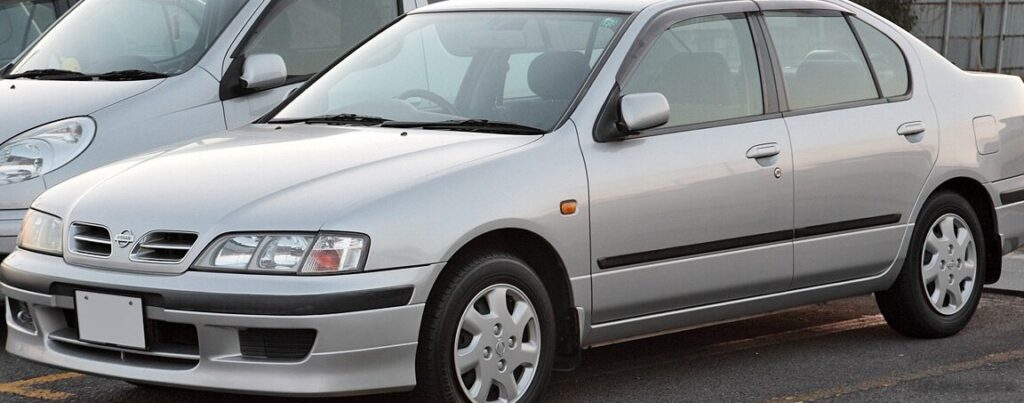
The Nissan Primera (P11) 2.0 16V, produced between 1996 and 2000, represented a significant step forward for Nissan’s mid-size family sedan. Part of the P11 chassis generation, this variant occupied a middle ground in the Primera lineup, offering a balance between performance and affordability. It was primarily marketed in Europe, Australia, and parts of Asia, aiming to compete with established rivals like the Ford Mondeo and Volkswagen Passat. The P11 Primera was notable for its relatively spacious interior, comfortable ride, and a focus on practicality for family use. This specific 2.0-liter, 16-valve engine paired with a 5-speed manual transmission was a popular choice for drivers seeking a more engaging driving experience than the base models offered.
Technical Specifications
| Brand | Nissan |
| Model | Primera |
| Generation | Primera (P11) |
| Type (Engine) | 2.0 16V (115 Hp) |
| Start of production | 1996 |
| End of production | 2000 |
| Powertrain Architecture | Internal Combustion engine |
| Body type | Sedan |
| Seats | 5 |
| Doors | 4 |
| Fuel consumption (urban) | 10.7 l/100 km (22 US mpg, 26.4 UK mpg, 9.3 km/l) |
| Fuel consumption (extra urban) | 6.3 l/100 km (37.3 US mpg, 44.8 UK mpg, 15.9 km/l) |
| Fuel Type | Petrol (Gasoline) |
| Acceleration 0 – 100 km/h | 9.6 sec |
| Acceleration 0 – 62 mph | 9.6 sec |
| Acceleration 0 – 60 mph | 9.1 sec |
| Maximum speed | 205 km/h (127.38 mph) |
| Weight-to-power ratio | 10.5 kg/Hp, 95.4 Hp/tonne |
| Weight-to-torque ratio | 7.3 kg/Nm, 137.8 Nm/tonne |
| Power | 115 Hp @ 6000 rpm |
| Power per litre | 57.6 Hp/l |
| Torque | 166 Nm @ 4800 rpm (122.44 lb.-ft. @ 4800 rpm) |
| Engine layout | Front, Transverse |
| Engine Model/Code | SR20DE |
| Engine displacement | 1998 cm3 (121.93 cu. in.) |
| Number of cylinders | 4 |
| Engine configuration | Inline |
| Cylinder Bore | 86 mm (3.39 in.) |
| Piston Stroke | 86 mm (3.39 in.) |
| Compression ratio | 9.5:1 |
| Number of valves per cylinder | 4 |
| Fuel injection system | Multi-port manifold injection |
| Engine aspiration | Naturally aspirated engine |
| Valvetrain | DOHC |
| Engine oil capacity | 3.7 l (3.91 US qt | 3.26 UK qt) |
| Coolant capacity | 6.6 l (6.97 US qt | 5.81 UK qt) |
| Kerb Weight | 1205 kg (2656.57 lbs.) |
| Max. weight | 1740 kg (3836.04 lbs.) |
| Max load | 535 kg (1179.47 lbs.) |
| Trunk (boot) space – minimum | 490 l (17.3 cu. ft.) |
| Fuel tank capacity | 60 l (15.85 US gal | 13.2 UK gal) |
| Length | 4430 mm (174.41 in.) |
| Width | 1715 mm (67.52 in.) |
| Height | 1410 mm (55.51 in.) |
| Wheelbase | 2600 mm (102.36 in.) |
| Front track | 1465 mm (57.68 in.) |
| Rear (Back) track | 1454 mm (57.24 in.) |
| Drivetrain Architecture | The Internal combustion engine (ICE) drives the front wheels of the vehicle. |
| Drive wheel | Front wheel drive |
| Number of gears and type of gearbox | 5 gears, manual transmission |
| Front suspension | Spring-loaded rack |
| Rear suspension | Spring-loaded rack |
| Front brakes | Ventilated discs |
| Rear brakes | Disc |
| Assisting systems | ABS (Anti-lock braking system) |
| Steering type | Steering rack and pinion |
| Power steering | Hydraulic Steering |
| Tires size | 185/65 R14 |
Powertrain & Engine Architecture
The heart of the Primera 2.0 16V is the SR20DE engine, a 1.998-liter inline-four cylinder powerplant. This engine utilizes a double overhead camshaft (DOHC) valvetrain with four valves per cylinder, contributing to its respectable power output for its displacement. The SR20DE featured multi-port fuel injection, delivering fuel directly into the intake ports for improved combustion efficiency. The engine’s design prioritized smooth operation and reliability over outright performance. The 5-speed manual transmission offered precise shifts and allowed drivers to fully utilize the engine’s powerband. This transmission was chosen to provide a more engaging driving experience compared to the available automatic option.
Driving Characteristics
The 115 horsepower and 122 lb-ft of torque produced by the SR20DE, when coupled with the 5-speed manual, provided the Primera with adequate performance for everyday driving. Acceleration from 0-60 mph took approximately 9.1 seconds, and it could reach a top speed of around 127 mph. While not a sports sedan, the Primera 2.0 16V offered a responsive feel, particularly when compared to the lower-powered 1.6-liter variants. The gear ratios were well-matched, providing good acceleration in each gear. The manual transmission allowed for greater control and driver involvement, making it a preferred choice for those who enjoyed a more dynamic driving experience. Compared to the automatic version, the manual offered slightly improved fuel economy and a more direct connection to the engine.
Equipment & Trim Levels
The Primera 2.0 16V typically came equipped with features such as power windows, central locking, power steering, and an anti-lock braking system (ABS). Interior upholstery was generally cloth, with options for upgraded materials available on higher trim levels. Air conditioning was a common feature, and some models included a CD player and electric mirrors. The dashboard layout was functional and straightforward, prioritizing ease of use. Optional extras included a sunroof, alloy wheels, and upgraded audio systems. The 2.0 16V trim often served as a stepping stone between the base models and the more luxurious trims, offering a good balance of features and price.
Chassis & Braking
The Primera P11 utilized a spring-loaded rack and pinion suspension system at both the front and rear. This setup provided a comfortable ride while maintaining reasonable handling characteristics. The front brakes were ventilated discs, offering good stopping power, while the rear brakes were solid discs. ABS was standard, enhancing safety by preventing wheel lockup during hard braking. The chassis was designed to provide a stable and predictable driving experience, prioritizing comfort and safety over sporty handling. The suspension tuning was geared towards absorbing bumps and providing a smooth ride for passengers.
Market Reception & Comparison
The Nissan Primera 2.0 16V was generally well-received by automotive critics. It was praised for its spacious interior, comfortable ride, and good value for money. However, some critics noted that its styling was somewhat conservative compared to its rivals. Compared to the 1.6-liter Primera, the 2.0 16V offered significantly improved performance. It also provided a more refined driving experience than some of its competitors, such as the Vauxhall/Opel Vectra. Fuel economy was respectable, averaging around 37 mpg on the highway. Reliability was generally good, although some owners reported minor issues with the electrical system.
Legacy
The Nissan Primera P11, particularly the 2.0 16V variant, has developed a reputation for being a reliable and practical family car. The SR20DE engine is known for its durability and longevity, and many examples are still on the road today. In the used car market, the Primera 2.0 16V represents a good value proposition for buyers seeking an affordable and dependable sedan. While it may not be as sought-after as some of its more iconic rivals, it remains a popular choice for those who appreciate its practicality and reliability. The P11 generation Primera marked a significant improvement for Nissan in the mid-size segment, and the 2.0 16V variant played a key role in its success.