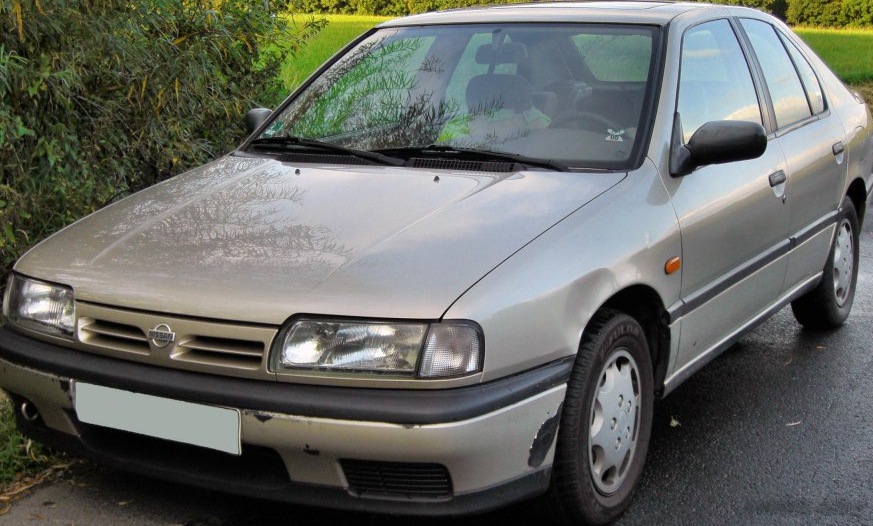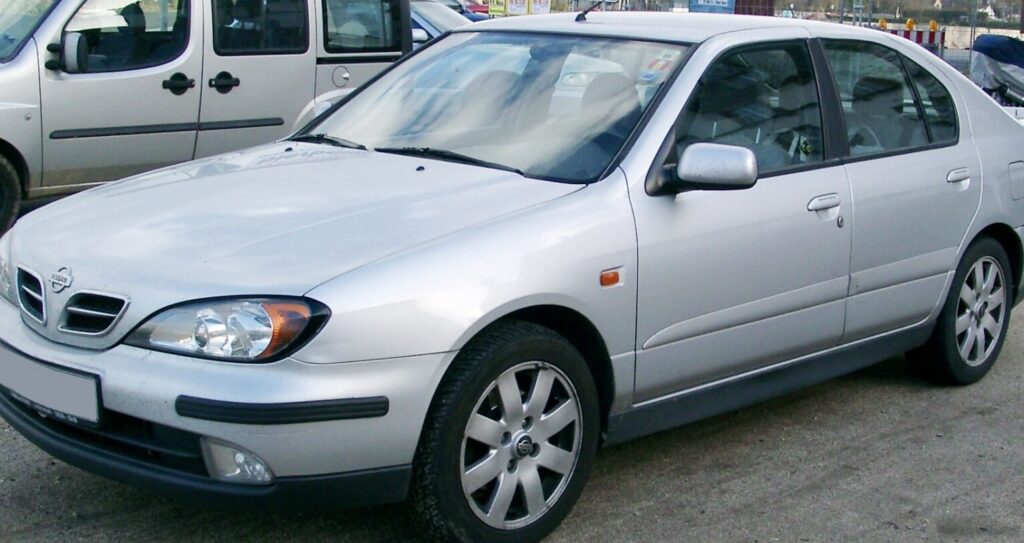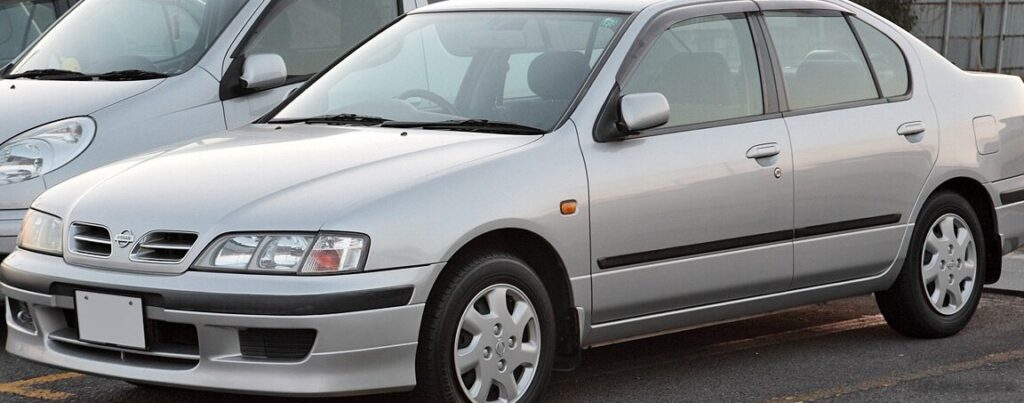
The Nissan Primera (P11) 2.0 16V, produced between 1996 and 2000, represented a significant step forward for Nissan’s mid-size family sedan. Positioned as a more premium offering within the P11 Primera range, this variant aimed to provide a balance of performance and refinement, appealing to buyers seeking a comfortable and capable vehicle. The P11 generation, replacing the earlier L510 series, was a crucial model for Nissan in the European market, competing directly with established rivals like the Ford Mondeo and Vauxhall/Opel Vectra. This 2.0-liter model served as a strong alternative to the base 1.6L engine, offering a noticeable power increase without the added cost of the flagship 2.2-liter variants.
Technical Specifications
| Brand | Nissan |
| Model | Primera |
| Generation | Primera (P11) |
| Type (Engine) | 2.0 16V (130 Hp) |
| Start of production | 1996 |
| End of production | 2000 |
| Powertrain Architecture | Internal Combustion engine |
| Body type | Sedan |
| Seats | 5 |
| Doors | 4 |
| Fuel consumption (urban) | 10.7 l/100 km (22 US mpg, 26.4 UK mpg, 9.3 km/l) |
| Fuel consumption (extra urban) | 6.3 l/100 km (37.3 US mpg, 44.8 UK mpg, 15.9 km/l) |
| Fuel Type | Petrol (Gasoline) |
| Acceleration 0 – 100 km/h | 9.6 sec |
| Acceleration 0 – 62 mph | 9.6 sec |
| Acceleration 0 – 60 mph | 9.1 sec |
| Maximum speed | 205 km/h (127.38 mph) |
| Weight-to-power ratio | 9.3 kg/Hp, 107.9 Hp/tonne |
| Weight-to-torque ratio | 7 kg/Nm, 143.6 Nm/tonne |
| Power | 130 Hp @ 5600 rpm |
| Power per litre | 65.1 Hp/l |
| Torque | 173 Nm @ 4800 rpm (127.6 lb.-ft. @ 4800 rpm) |
| Engine layout | Front, Transverse |
| Engine Model/Code | SR20DE |
| Engine displacement | 1998 cm3 (121.93 cu. in.) |
| Number of cylinders | 4 |
| Engine configuration | Inline |
| Cylinder Bore | 86 mm (3.39 in.) |
| Piston Stroke | 86 mm (3.39 in.) |
| Compression ratio | 10:1 |
| Number of valves per cylinder | 4 |
| Fuel injection system | Multi-port manifold injection |
| Engine aspiration | Naturally aspirated engine |
| Valvetrain | DOHC |
| Engine oil capacity | 3.7 l (3.91 US qt | 3.26 UK qt) |
| Coolant | 6.6 l (6.97 US qt | 5.81 UK qt) |
| Kerb Weight | 1205 kg (2656.57 lbs.) |
| Max. weight | 1740 kg (3836.04 lbs.) |
| Max load | 535 kg (1179.47 lbs.) |
| Trunk (boot) space – minimum | 490 l (17.3 cu. ft.) |
| Fuel tank capacity | 60 l (15.85 US gal | 13.2 UK gal) |
| Length | 4430 mm (174.41 in.) |
| Width | 1715 mm (67.52 in.) |
| Height | 1410 mm (55.51 in.) |
| Wheelbase | 2600 mm (102.36 in.) |
| Front track | 1465 mm (57.68 in.) |
| Rear (Back) track | 1454 mm (57.24 in.) |
| Drivetrain Architecture | The Internal combustion engine (ICE) drives the front wheels of the vehicle. |
| Drive wheel | Front wheel drive |
| Number of gears and type of gearbox | 5 gears, manual transmission |
| Front suspension | Spring-loaded rack |
| Rear suspension | Spring-loaded rack |
| Front brakes | Ventilated discs |
| Rear brakes | Disc |
| Assisting systems | ABS (Anti-lock braking system) |
| Steering type | Steering rack and pinion |
| Power steering | Hydraulic Steering |
| Tires size | 195/60 R15 |
Powertrain & Engine Architecture
The heart of the Primera 2.0 16V is the SR20DE engine, a 1998cc inline-four cylinder powerplant. This engine is a naturally aspirated design, utilizing multi-port fuel injection and a double overhead camshaft (DOHC) valvetrain. The SR20DE was known for its relatively smooth operation and decent power output for its displacement. The 16-valve configuration, with four valves per cylinder, contributed to improved breathing and higher-end power. The engine’s 10:1 compression ratio was a standard figure for the time, balancing performance and fuel efficiency. The five-speed manual transmission was the standard offering, providing a direct connection between the engine and the front wheels. The gearbox was well-regarded for its smooth shifts and relatively precise feel.
Driving Characteristics
The 130 horsepower and 127.6 lb-ft of torque delivered by the SR20DE engine provided the Primera 2.0 16V with respectable, if not exhilarating, performance. Acceleration from 0-60 mph took around 9.1 seconds, and it could achieve a top speed of 127.38 mph. Compared to the base 1.6L Primera, the 2.0L offered a noticeable improvement in responsiveness, particularly during overtaking maneuvers. However, it didn’t possess the outright punch of the 2.2L models. The five-speed manual transmission allowed drivers to effectively utilize the engine’s powerband, while the gear ratios were well-suited for both city driving and highway cruising. The steering was light and precise, making the Primera easy to maneuver, although some drivers found it lacked a certain amount of feel.
Equipment & Trim Levels
The 2.0 16V Primera typically came equipped with a reasonable level of standard features. These included power steering, central locking, electric front windows, and an AM/FM radio. Higher trim levels, often denoted by ‘SE’ or ‘GS’ designations, added features such as alloy wheels, air conditioning, a sunroof, and upgraded interior trim. Interior upholstery was typically cloth, with options for leather available on higher-spec models. The dashboard layout was functional and straightforward, prioritizing usability over outright style. Optional extras included a CD player, upgraded sound system, and metallic paint finishes.
Chassis & Braking
The Primera P11 utilized a MacPherson strut front suspension and a spring-loaded rack rear suspension. This setup provided a comfortable ride quality, absorbing bumps and imperfections in the road surface effectively. The chassis was relatively lightweight, contributing to the car’s nimble handling. Braking duties were handled by ventilated discs at the front and solid discs at the rear. Anti-lock Braking System (ABS) was standard, enhancing safety and control during emergency braking situations. The braking system was generally considered adequate for the car’s performance, providing sufficient stopping power in most conditions.
Market Reception & Comparison
The Nissan Primera 2.0 16V was generally well-received by automotive critics. It was praised for its comfortable ride, spacious interior, and reliable engine. However, some reviewers noted that its styling was somewhat conservative compared to rivals. In terms of fuel economy, the 2.0L model offered a good balance between performance and efficiency, achieving around 22 mpg in urban driving and 37.3 mpg on the highway. Compared to the 1.6L Primera, the 2.0L offered a significant performance upgrade, while remaining more affordable than the 2.2L models. The Ford Mondeo and Vauxhall/Opel Vectra were its primary competitors, offering similar levels of practicality and performance.
Legacy
The SR20DE engine, found in the Primera 2.0 16V, is known for its durability and reliability. With proper maintenance, these engines can easily exceed 200,000 miles. Today, the P11 Primera is becoming increasingly sought after by enthusiasts and collectors, particularly well-maintained examples. The 2.0 16V variant offers a good balance of performance and affordability, making it a popular choice in the used car market. While not a particularly rare or valuable classic, the Primera 2.0 16V represents a solid and dependable family sedan from the 1990s, offering a comfortable and enjoyable driving experience.