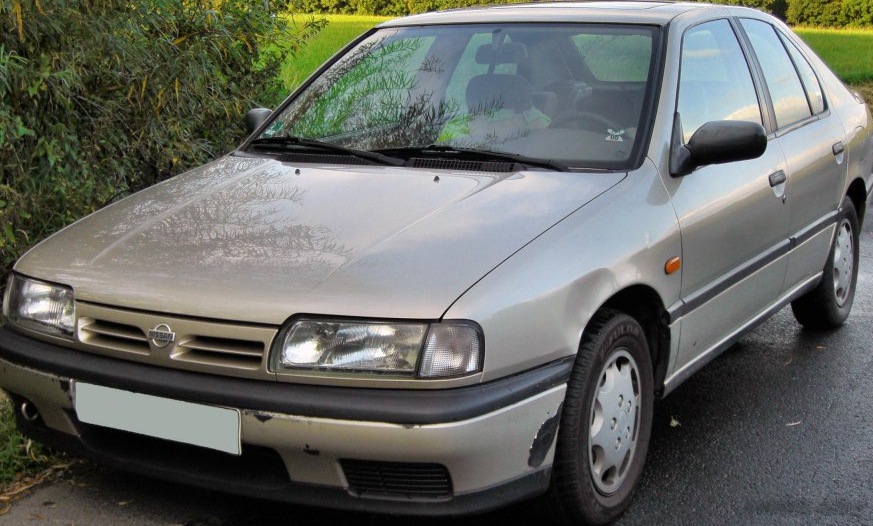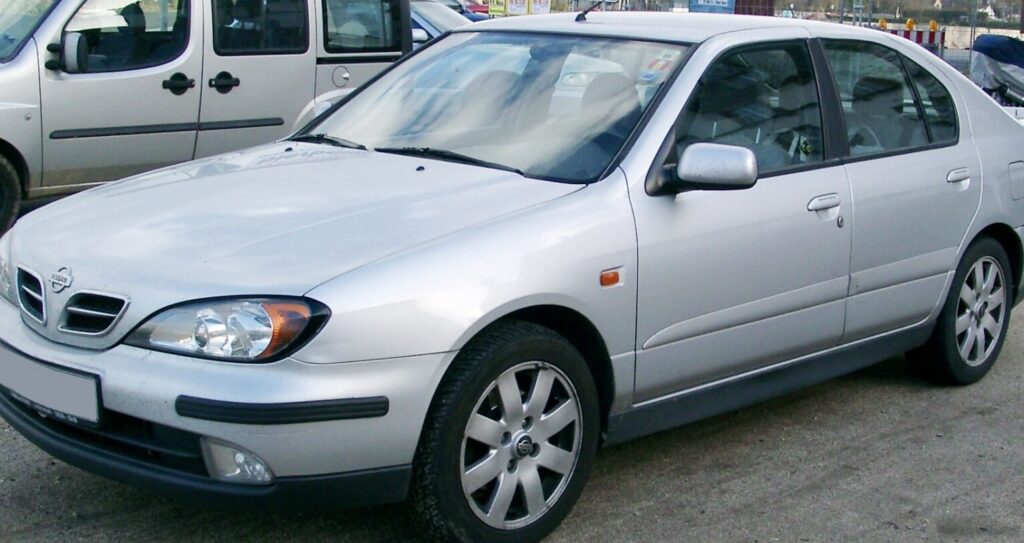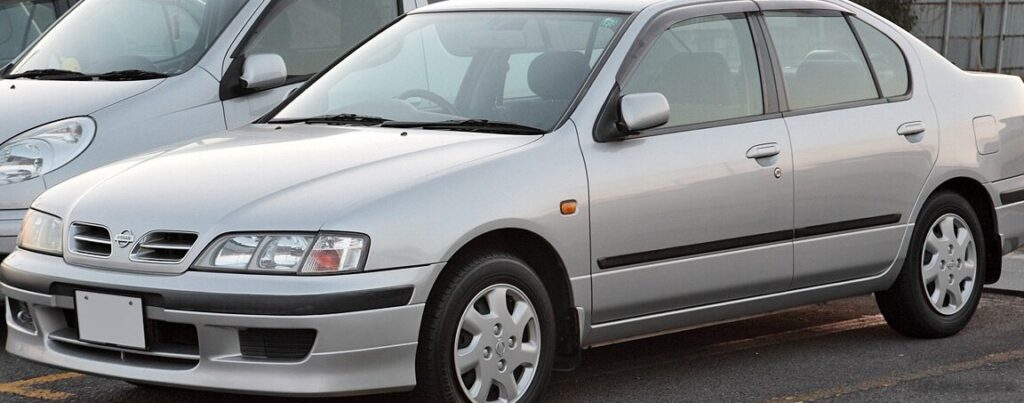
The Nissan Primera (P11) 2.0 TD, producing 90 horsepower, was a diesel-powered variant of the popular P11 Primera line, manufactured between 1996 and 2002. Positioned as an economy-focused option within the range, it catered to drivers prioritizing fuel efficiency and lower running costs. The P11 generation Primera, built on Nissan’s ‘FF-L’ platform, represented a significant step forward in terms of refinement and technology for the brand in the European market, where it was primarily sold. This model aimed to compete with established family saloons like the Ford Mondeo and Vauxhall/Opel Vectra.
Technical Specifications
| Brand | Nissan |
| Model | Primera |
| Generation | Primera (P11) |
| Type (Engine) | 2.0 TD (90 Hp) |
| Start of production | 1996 |
| End of production | 2002 |
| Powertrain Architecture | Internal Combustion engine |
| Body type | Sedan |
| Seats | 5 |
| Doors | 4 |
| Fuel consumption (urban) | 8.6 l/100 km (27.4 US mpg) |
| Fuel consumption (extra urban) | 5.7 l/100 km (41.3 US mpg) |
| Fuel Type | Diesel |
| Acceleration 0 – 100 km/h | 14 sec |
| Acceleration 0 – 62 mph | 14 sec |
| Acceleration 0 – 60 mph | 13.3 sec |
| Maximum speed | 175 km/h (108.74 mph) |
| Weight-to-power ratio | 14 kg/Hp |
| Weight-to-torque ratio | 7.1 kg/Nm |
| Power | 90 Hp @ 4400 rpm |
| Power per litre | 45.6 Hp/l |
| Torque | 177 Nm @ 2400 rpm (130.55 lb.-ft. @ 2400 rpm) |
| Engine layout | Front, Transverse |
| Engine Model/Code | CD20T |
| Engine displacement | 1974 cm3 (120.46 cu. in.) |
| Number of cylinders | 4 |
| Engine configuration | Inline |
| Cylinder Bore | 84.5 mm (3.33 in.) |
| Piston Stroke | 88 mm (3.46 in.) |
| Compression ratio | 22.2:1 |
| Number of valves per cylinder | 4 |
| Fuel injection system | Precombustion chamber injection |
| Engine aspiration | Turbocharger |
| Valvetrain | OHC |
| Engine oil capacity | 5 l (5.28 US qt | 4.4 UK qt) |
| Coolant | 6.4 l (6.76 US qt | 5.63 UK qt) |
| Kerb Weight | 1260 kg (2777.82 lbs.) |
| Max. weight | 1735 kg (3825.02 lbs.) |
| Max load | 475 kg (1047.2 lbs.) |
| Trunk (boot) space – maximum | 490 l (17.3 cu. ft.) |
| Fuel tank capacity | 60 l (15.85 US gal | 13.2 UK gal) |
| Length | 4430 mm (174.41 in.) |
| Width | 1715 mm (67.52 in.) |
| Height | 1410 mm (55.51 in.) |
| Wheelbase | 2600 mm (102.36 in.) |
| Front track | 1465 mm (57.68 in.) |
| Rear (Back) track | 1454 mm (57.24 in.) |
| Drivetrain Architecture | The Internal combustion engine (ICE) drives the front wheels of the vehicle. |
| Drive wheel | Front wheel drive |
| Number of gears and type of gearbox | 5 gears, manual transmission |
| Front suspension | Spring-loaded rack |
| Rear suspension | Rigid axle suspension |
| Front brakes | Disc |
| Rear brakes | Drum |
| Assisting systems | ABS (Anti-lock braking system) |
| Steering type | Steering rack and pinion |
| Power steering | Hydraulic Steering |
| Tires size | 185/65 R14 |
INTRODUCTION
The Nissan Primera P11 2.0 TD, launched in 1996, represented Nissan’s attempt to capture a larger share of the European mid-size family car market. The P11 series, replacing the outgoing JDM-focused N10 Primera, was designed with European tastes in mind, offering a more refined driving experience and a wider range of engine options. The 2.0 TD variant, powered by the CD20T engine, was specifically aimed at buyers seeking low running costs and reasonable performance for long-distance commuting and family transport. It sat towards the lower end of the Primera range, below the more powerful 2.0 petrol models and positioned as a direct competitor to diesel offerings from Peugeot, Citroen, and Ford.
Powertrain & Engine Architecture
The heart of the Primera 2.0 TD is the CD20T engine, a 1974cc inline-four cylinder diesel. This engine utilizes a precombustion chamber injection system, a common technology in European diesels of the era. This system involves injecting fuel into a small pre-chamber within the cylinder head, where it partially combusts before igniting the main charge. This design aids in smoother combustion and reduced engine noise compared to direct injection systems. The CD20T is turbocharged, boosting power output to 90 horsepower at 4400 rpm and 177 Nm (130.55 lb-ft) of torque at 2400 rpm. The engine features a single overhead camshaft (OHC) valvetrain operating four valves per cylinder. The transmission offered was a 5-speed manual, as an automatic transmission was not available with this engine configuration.
Driving Characteristics
The Primera 2.0 TD, with its 90 horsepower and 177 Nm of torque, offered adequate, but not exhilarating, performance. Acceleration from 0-60 mph took around 13.3 seconds, and top speed was approximately 108.74 mph. The engine’s torque delivery was relatively flat, providing reasonable pulling power for overtaking and climbing hills. Compared to the more powerful 2.0 petrol versions, the diesel felt noticeably slower, particularly at higher engine speeds. However, the diesel’s superior fuel economy and lower-revving nature made it a more relaxed and economical choice for everyday driving. The 5-speed manual transmission was well-matched to the engine, offering smooth gear changes and a usable spread of ratios. The gear ratios were optimized for fuel efficiency rather than outright performance.
Equipment & Trim Levels
The 2.0 TD Primera typically came with a reasonable level of standard equipment, reflecting its position as a mainstream family car. Standard features generally included central locking, power steering, electric front windows, and an adjustable steering column. Interior upholstery was typically cloth, with a functional, if somewhat understated, dashboard design. Optional extras included air conditioning, alloy wheels, a sunroof, and a CD player. Higher trim levels, such as the SE and S models, added features like upgraded upholstery, more comprehensive trim, and additional convenience items. The overall interior ambiance was focused on practicality and durability rather than luxury.
Chassis & Braking
The Primera P11 featured a front-wheel-drive layout with a MacPherson strut front suspension and a rigid axle rear suspension. This suspension setup provided a comfortable ride quality, although it wasn’t particularly sporty in handling. The front brakes were ventilated discs, while the rear brakes were drums. Anti-lock Braking System (ABS) was standard, enhancing safety. The steering was a rack and pinion system with hydraulic power assistance, providing light and precise steering feel. The tires were typically 185/65 R14, offering a good balance of comfort and grip.
Market Reception & Comparison
The Nissan Primera 2.0 TD received generally positive reviews for its fuel economy, comfortable ride, and practicality. Critics noted that the engine was relatively noisy compared to some of its competitors, but its low running costs and reliability were appreciated. Compared to the petrol-powered Primera models, the 2.0 TD offered significantly better fuel economy, making it a popular choice for high-mileage drivers. However, it lacked the performance and refinement of the petrol engines. Against rivals like the Ford Mondeo TD and Vauxhall/Opel Vectra CDTi, the Primera 2.0 TD offered a competitive package, although it didn’t necessarily excel in any one area.
Legacy
The Nissan Primera P11 2.0 TD has proven to be a relatively reliable and durable vehicle. The CD20T engine, while not known for being particularly high-tech, is generally robust and capable of covering high mileages with proper maintenance. Today, these cars are increasingly rare, but well-maintained examples can still be found. They represent an affordable and practical option for those seeking a classic 1990s/early 2000s family saloon. Parts availability can be a challenge, but many components are still available through specialist suppliers and online marketplaces. The Primera P11 2.0 TD remains a testament to Nissan’s commitment to building reliable and economical vehicles for the European market.