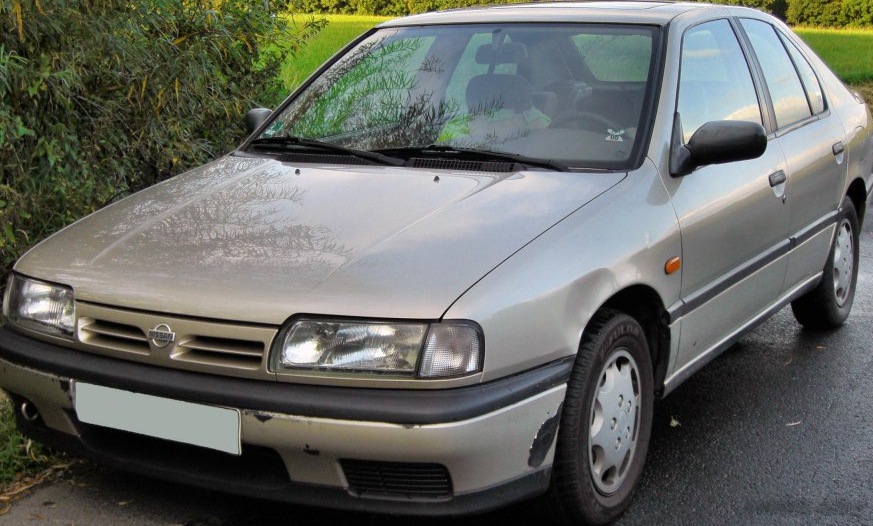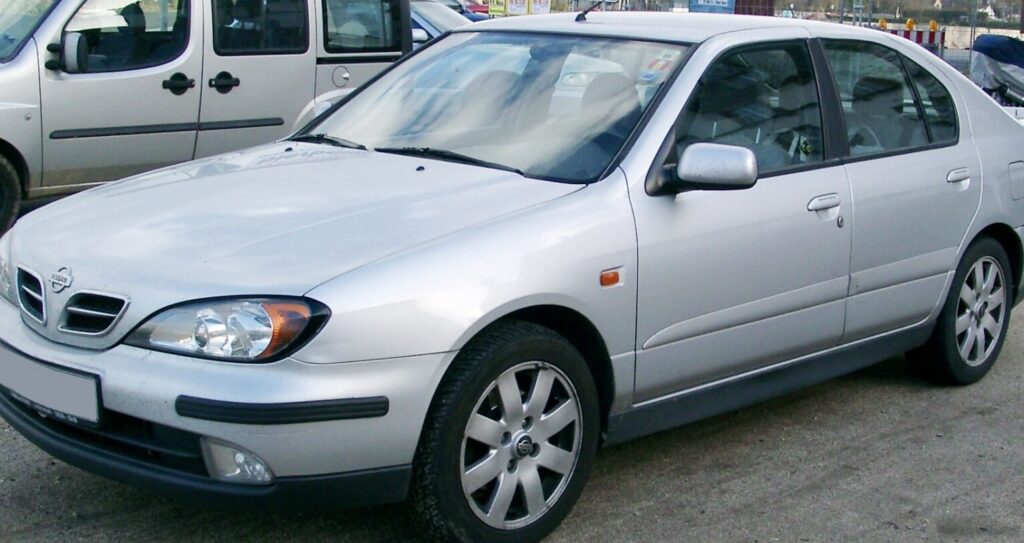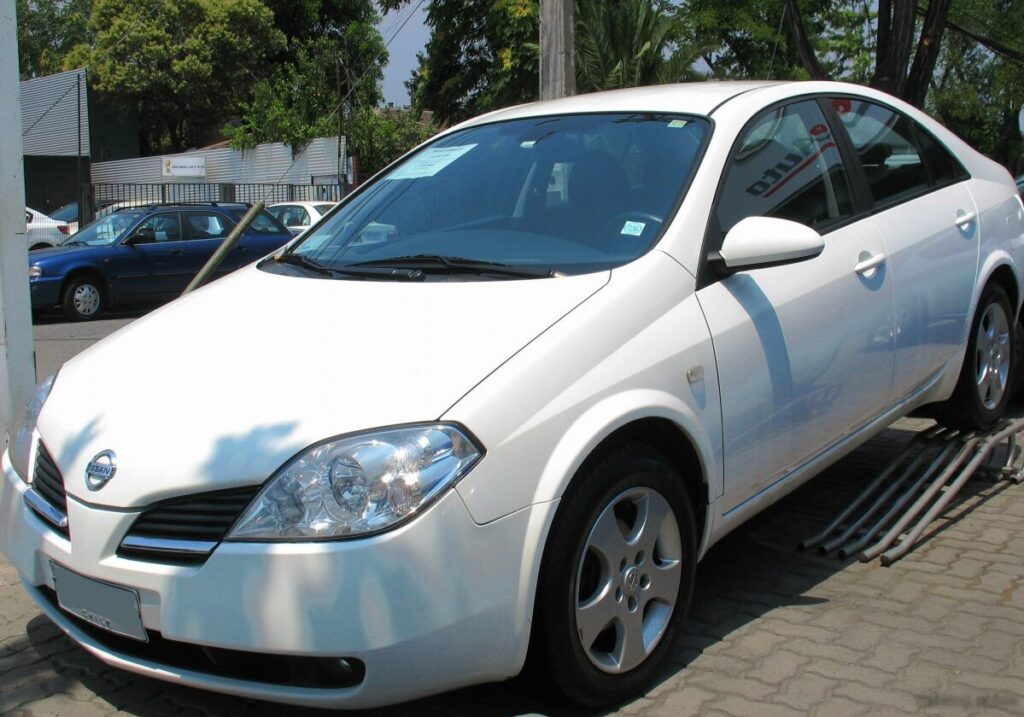
The Nissan Primera (P12) 2.5 i 16V, produced between 2002 and 2006, represented a significant step up in refinement and performance for Nissan’s mid-size offering. Positioned as a near-premium alternative to mainstream competitors like the Ford Mondeo and Vauxhall Vectra in the European market, the P12 Primera aimed to deliver a more sophisticated driving experience. This 2.5-liter variant, generating 170 horsepower, served as the flagship engine option for the range, offering a balance of power and relatively good fuel economy. It was primarily sold in Europe and select international markets, not being offered in North America.
Technical Specifications
| Brand | Nissan |
| Model | Primera |
| Generation | Primera (P12) |
| Type (Engine) | 2.5 i 16V (170 Hp) |
| Start of production | 2002 |
| End of production | 2006 |
| Powertrain Architecture | Internal Combustion engine |
| Body type | Sedan |
| Seats | 5 |
| Doors | 4 |
| Fuel consumption (combined) | 7.7 l/100 km (30.5 US mpg, 36.7 UK mpg, 13 km/l) |
| Fuel Type | Petrol (Gasoline) |
| Maximum speed | 220 km/h (136.7 mph) |
| Weight-to-power ratio | 7.9 kg/Hp, 126.9 Hp/tonne |
| Weight-to-torque ratio | 5.5 kg/Nm, 182.8 Nm/tonne |
| Power | 170 Hp @ 5600 rpm |
| Power per litre | 68.3 Hp/l |
| Torque | 245 Nm @ 4000 rpm (180.7 lb.-ft. @ 4000 rpm) |
| Engine layout | Front, Transverse |
| Engine Model/Code | QR25DD |
| Engine displacement | 2488 cm3 (151.83 cu. in.) |
| Number of cylinders | 4 |
| Engine configuration | Inline |
| Cylinder Bore | 89 mm (3.5 in.) |
| Piston Stroke | 100 mm (3.94 in.) |
| Compression ratio | 10.5:1 |
| Number of valves per cylinder | 4 |
| Fuel injection system | Multi-port manifold injection |
| Engine aspiration | Naturally aspirated engine |
| Valvetrain | DOHC |
| Engine oil capacity | 5.1 l (5.39 US qt | 4.49 UK qt) |
| Kerb Weight | 1340 kg (2954.19 lbs.) |
| Max. weight | 1615 kg (3560.47 lbs.) |
| Max load | 275 kg (606.27 lbs.) |
| Trunk (boot) space – minimum | 450 l (15.89 cu. ft.) |
| Fuel tank capacity | 62 l (16.38 US gal | 13.64 UK gal) |
| Length | 4565 mm (179.72 in.) |
| Width | 1760 mm (69.29 in.) |
| Height | 1480 mm (58.27 in.) |
| Wheelbase | 2680 mm (105.51 in.) |
| Front track | 1530 mm (60.24 in.) |
| Rear (Back) track | 1535 mm (60.43 in.) |
| Drivetrain Architecture | The Internal combustion engine (ICE) drives the front wheels of the vehicle. |
| Drive wheel | Front wheel drive |
| Front suspension | Double wishbone |
| Rear suspension | Coil spring |
| Front brakes | Ventilated discs |
| Rear brakes | Disc |
| Assisting systems | ABS (Anti-lock braking system) |
| Steering type | Steering rack and pinion |
| Power steering | Hydraulic Steering |
| Tires size | 205/60 R16 |
INTRODUCTION
The P12 Primera, launched in 2002, represented Nissan’s second attempt at a genuinely competitive mid-size family car for the European market. Building on the foundations of the P11-148, the P12 offered improved styling, a more spacious interior, and a wider range of engines. The 2.5 i 16V model, with its QR25DD engine, was positioned as the premium offering, aimed at buyers who desired a more powerful and refined driving experience. It sat above the 1.6L and 1.8L petrol variants, and the popular 2.2 dCi diesel, in terms of both price and performance.
Powertrain & Engine Architecture
The heart of the Primera 2.5 i 16V is the QR25DD, a 2.5-liter inline-four cylinder engine. This engine is a naturally aspirated unit featuring multi-port fuel injection and a double overhead camshaft (DOHC) valvetrain. The QR series engines were known for their relatively smooth operation and decent power output. The QR25DD produces 170 horsepower at 5600 rpm and 245 Nm (180.7 lb-ft) of torque at 4000 rpm. The engine’s design prioritized refinement and driveability over outright performance. The engine is paired with a four-speed automatic transmission, which, while adequate, wasn’t as sophisticated as some of the newer automatic gearboxes emerging at the time. The transmission was chosen to provide smooth, comfortable shifts, aligning with the Primera’s overall focus on refinement.
Driving Characteristics
The Primera 2.5 i 16V offered a comfortable and composed driving experience. The 170 hp engine provided sufficient power for relaxed cruising and overtaking, although it wasn’t particularly sporty. The four-speed automatic transmission, while smooth, could feel somewhat sluggish compared to the manual gearbox options available on lower-spec models. Gear ratios were tuned for fuel efficiency and comfort rather than outright acceleration. Compared to the 1.8L variants, the 2.5L offered noticeably more punch, especially at higher speeds. However, it lacked the low-end torque of the 2.2 dCi diesel. The steering was light and precise, making the car easy to maneuver in urban environments, but lacking in feedback for more enthusiastic driving.
Equipment & Trim Levels
The 2.5 i 16V typically came well-equipped, reflecting its position as the range-topping model. Standard features often included climate control, electric windows and mirrors, a CD stereo, and alloy wheels. Higher trim levels added features such as leather upholstery, a sunroof, and upgraded audio systems. Safety features like ABS and front airbags were standard across the range. Optional extras included satellite navigation and parking sensors. Interior materials were of a good quality, contributing to the Primera’s perceived sense of refinement.
Chassis & Braking
The Primera P12 utilized a front-wheel-drive layout with independent double wishbone suspension at the front and a coil spring setup at the rear. This suspension configuration provided a comfortable ride, absorbing bumps and imperfections in the road surface effectively. The 2.5 i 16V models were equipped with ventilated disc brakes at the front and solid disc brakes at the rear, providing adequate stopping power for the car’s weight and performance. ABS (Anti-lock Braking System) was standard, enhancing safety during emergency braking situations.
Market Reception & Comparison
The Nissan Primera P12 2.5 i 16V received generally positive reviews from automotive critics. It was praised for its comfortable ride, spacious interior, and refined engine. However, some critics noted that the four-speed automatic transmission felt dated compared to the newer five and six-speed automatics offered by competitors. Fuel economy was considered reasonable for a car of its size and performance, averaging around 30.5 US mpg. Compared to the 1.8L models, the 2.5L offered a significant performance upgrade, but at a higher price point. The 2.2 dCi diesel provided better fuel economy and similar performance, making it a popular choice for high-mileage drivers.
Legacy
The Nissan Primera P12, while not a runaway sales success, established Nissan as a credible player in the European mid-size family car segment. The QR25DD engine proved to be a reliable unit, with few major issues reported. Today, the Primera P12 2.5 i 16V can be found on the used car market at affordable prices. While it may lack the modern features of newer cars, it remains a comfortable and reliable option for those seeking a spacious and well-equipped family saloon. Maintenance costs are generally reasonable, and parts availability is still good, making it a practical choice for budget-conscious buyers. The car represents a transitional period in automotive design, blending traditional saloon styling with emerging technologies.