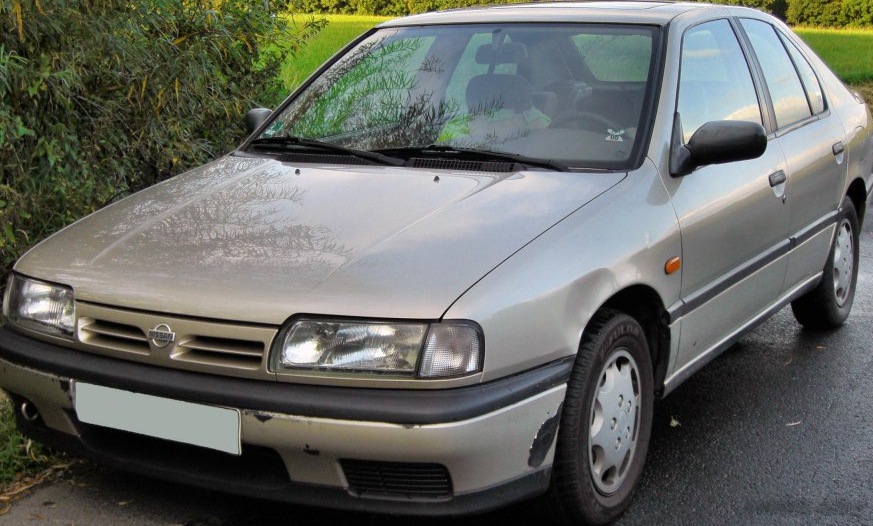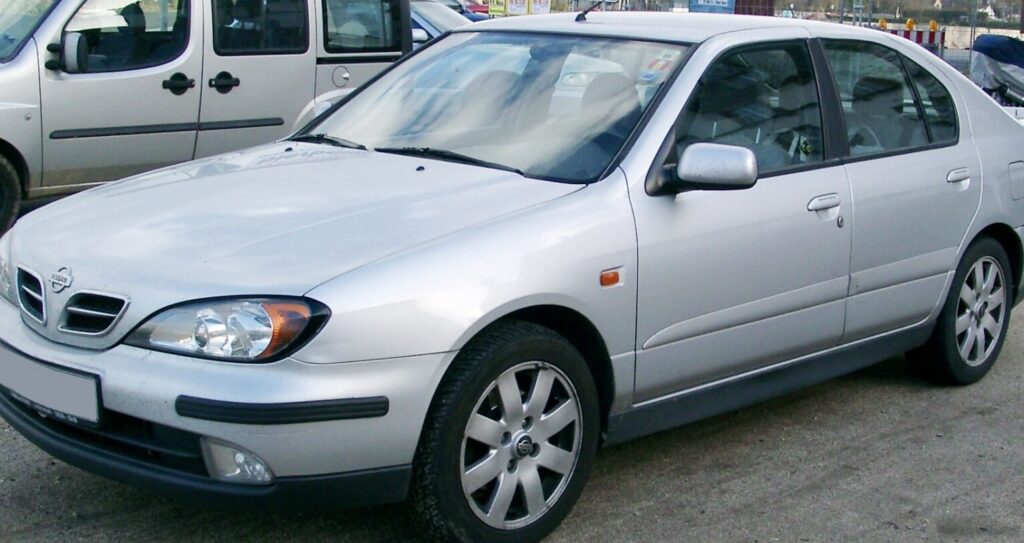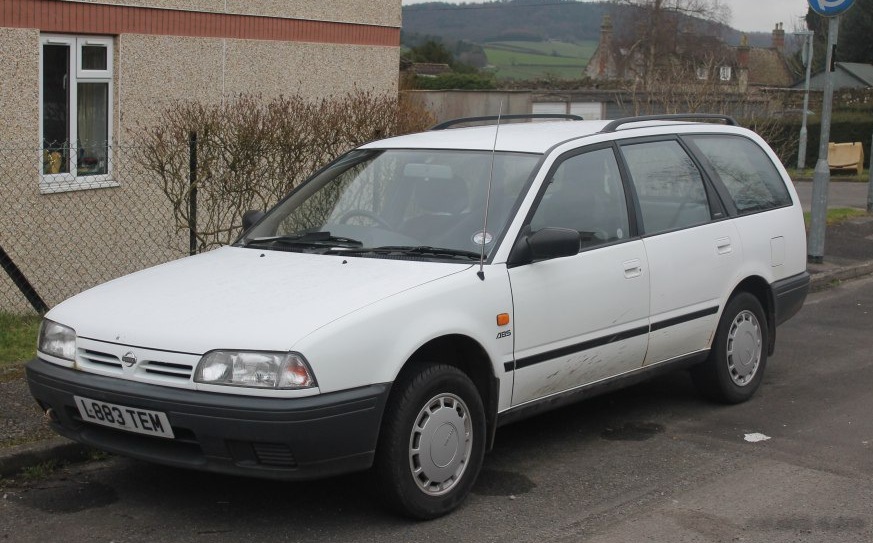
The Nissan Primera Wagon (P10) 1.6i, producing 90 horsepower, was a mainstay of the Primera range in Europe and other international markets from 1993 to 1998. Positioned as the entry-level engine option within the P10 wagon body style, it offered a practical and economical choice for families and those seeking a spacious vehicle. Built on the Nissan H platform (also known as the 1HX0), the P10 Primera represented Nissan’s attempt to compete directly with established European and Japanese rivals in the mid-size family car segment. This variant, with its 1.6-liter engine and automatic transmission, aimed to provide a balance between affordability, fuel efficiency, and ease of driving.
Technical Specifications
| Brand | Nissan |
| Model | Primera |
| Generation | Primera Wagon (P10) |
| Type (Engine) | 1.6 i (90 Hp) |
| Start of production | 1993 |
| End of production | 1998 |
| Powertrain Architecture | Internal Combustion engine |
| Body type | Station wagon (estate) |
| Seats | 5 |
| Doors | 5 |
| Fuel consumption (combined) | 7.5 l/100 km |
| Fuel consumption (US mpg) | 31.4 US mpg |
| Fuel consumption (UK mpg) | 37.7 UK mpg |
| Fuel consumption (km/l) | 13.3 km/l |
| Fuel Type | Petrol (Gasoline) |
| Acceleration 0 – 100 km/h | 11.9 sec |
| Acceleration 0 – 62 mph | 11.9 sec |
| Acceleration 0 – 60 mph | 11.3 sec |
| Maximum speed | 171 km/h (106.25 mph) |
| Weight-to-power ratio | 13.1 kg/Hp |
| Weight-to-torque ratio | 8.6 kg/Nm |
| Power | 90 Hp @ 6000 rpm |
| Power per litre | 56.4 Hp/l |
| Torque | 136 Nm @ 4000 rpm (100.31 lb.-ft. @ 4000 rpm) |
| Engine layout | Front, Transverse |
| Engine Model/Code | GA16DS |
| Engine displacement | 1597 cm3 (97.45 cu. in.) |
| Number of cylinders | 4 |
| Engine configuration | Inline |
| Cylinder Bore | 76 mm (2.99 in.) |
| Piston Stroke | 88 mm (3.46 in.) |
| Compression ratio | 9.8:1 |
| Number of valves per cylinder | 4 |
| Fuel injection system | Multi-port manifold injection |
| Engine aspiration | Naturally aspirated engine |
| Valvetrain | DOHC |
| Engine oil capacity | 3.2 l (3.38 US qt | 2.82 UK qt) |
| Coolant capacity | 6.4 l (6.76 US qt | 5.63 UK qt) |
| Kerb Weight | 1175 kg (2590.43 lbs.) |
| Max. weight | 1780 kg (3924.23 lbs.) |
| Max load | 605 kg (1333.8 lbs.) |
| Trunk (boot) space – minimum | 460 l (16.24 cu. ft.) |
| Trunk (boot) space – maximum | 1700 l (60.03 cu. ft.) |
| Fuel tank capacity | 60 l (15.85 US gal | 13.2 UK gal) |
| Length | 4460 mm (175.59 in.) |
| Width | 1695 mm (66.73 in.) |
| Height | 1500 mm (59.06 in.) |
| Wheelbase | 2550 mm (100.39 in.) |
| Front track | 1460 mm (57.48 in.) |
| Rear track | 1460 mm (57.48 in.) |
| Drivetrain Architecture | Front wheel drive |
| Number of gears | 5 |
| Gearbox type | Automatic transmission |
| Front suspension | Coil spring |
| Rear suspension | Coil spring |
| Front brakes | Ventilated discs |
| Rear brakes | Drum |
| Assisting systems | ABS (Anti-lock braking system) |
| Steering type | Steering rack and pinion |
| Power steering | Hydraulic Steering |
| Tires size | 165/80 R13 |
INTRODUCTION
The Nissan Primera Wagon (P10) 1.6i, launched in 1993, represented Nissan’s foray into the competitive European station wagon market. The P10 series, replacing the earlier Bluebird, aimed to offer a more modern and refined experience than its predecessor. The 1.6i variant, equipped with an automatic transmission, was specifically targeted at buyers prioritizing comfort and convenience over outright performance. It occupied the lower end of the Primera wagon lineup, offering a more affordable entry point compared to the 2.0L models. The P10 Primera was a significant model for Nissan in Europe, establishing a foothold in a segment dominated by established manufacturers like Ford, Vauxhall/Opel, and Volkswagen.
Powertrain & Engine Architecture
The heart of the Primera 1.6i was the GA16DS engine, a 1.6-liter inline-four cylinder gasoline engine. This engine featured a double overhead camshaft (DOHC) valvetrain and multi-point fuel injection. The GA16DS was known for its relatively simple design and reasonable reliability. The automatic transmission paired with this engine was typically a four-speed unit, designed for smooth and comfortable shifts. While not particularly sporty, the transmission was well-suited to the engine’s torque characteristics. The engine’s 90 horsepower output at 6000 rpm and 136 Nm (100.31 lb-ft) of torque at 4000 rpm were adequate for everyday driving, but didn’t offer significant acceleration. The engine’s design prioritized fuel efficiency and low emissions, aligning with the growing environmental concerns of the time.
Driving Characteristics
The Primera 1.6i Automatic offered a comfortable, if not exhilarating, driving experience. Acceleration was modest, with a 0-60 mph time of around 11.3 seconds. The automatic transmission, while smooth, could feel somewhat sluggish, particularly when attempting to overtake or climb hills. Compared to the five-speed manual version of the 1.6i, the automatic suffered a slight performance penalty. The gear ratios were optimized for fuel economy rather than outright speed. The suspension provided a reasonably comfortable ride, absorbing bumps and imperfections in the road surface effectively. However, the handling wasn’t particularly sharp, and the car exhibited noticeable body roll in corners. Overall, the driving experience was geared towards practicality and ease of use.
Equipment & Trim Levels
The 1.6i automatic typically came with a reasonable level of standard equipment. This included central locking, power steering, electric front windows, and an AM/FM radio. Higher trim levels, often denoted by ‘S’ or ‘SE’ designations, added features such as alloy wheels, air conditioning, and upgraded interior trim. Interior upholstery was typically cloth, with a relatively simple dashboard layout. Optional extras included a sunroof, upgraded sound system, and metallic paint finishes. The interior space was a key selling point, offering ample room for passengers and luggage, particularly with the rear seats folded down.
Chassis & Braking
The Primera Wagon featured a front-wheel-drive layout with independent coil spring suspension at the front and a coil spring rear suspension. The front brakes were ventilated discs, providing adequate stopping power, while the rear brakes were drums. Anti-lock Braking System (ABS) was standard equipment, enhancing safety. The chassis was designed to provide a balance between comfort and handling. Stabilizer bars were fitted to both the front and rear axles to reduce body roll. The steering was rack and pinion, providing precise and responsive control. The tires were typically 165/80 R13, chosen for their balance of grip and fuel efficiency.
Market Reception & Comparison
The Nissan Primera 1.6i Automatic was generally well-received by critics as a practical and affordable family car. However, it wasn’t considered a standout performer in its class. Compared to rivals like the Ford Mondeo and Vauxhall/Opel Vectra, the Primera offered a slightly less engaging driving experience. However, it was praised for its spacious interior, comfortable ride, and relatively good fuel economy (around 31.4 US mpg). The automatic transmission was seen as a convenient feature, but some reviewers noted its lack of responsiveness. The 1.6i variant was often seen as a sensible choice for those prioritizing practicality and affordability over performance, while the 2.0L models appealed to drivers seeking more power.
Legacy
The Nissan Primera P10, including the 1.6i automatic variant, has proven to be a relatively reliable vehicle in the long term. The GA16DS engine is known for its durability, and the automatic transmission, while not particularly sophisticated, is generally robust. Today, these cars are relatively affordable to purchase on the used car market, but finding well-maintained examples can be challenging. Parts availability is generally good, although some specific trim pieces may be difficult to source. The P10 Primera represents a significant chapter in Nissan’s European history, demonstrating the company’s commitment to providing practical and reliable vehicles to a discerning customer base. While not a performance icon, the 1.6i automatic remains a viable option for those seeking a spacious, economical, and comfortable family wagon.