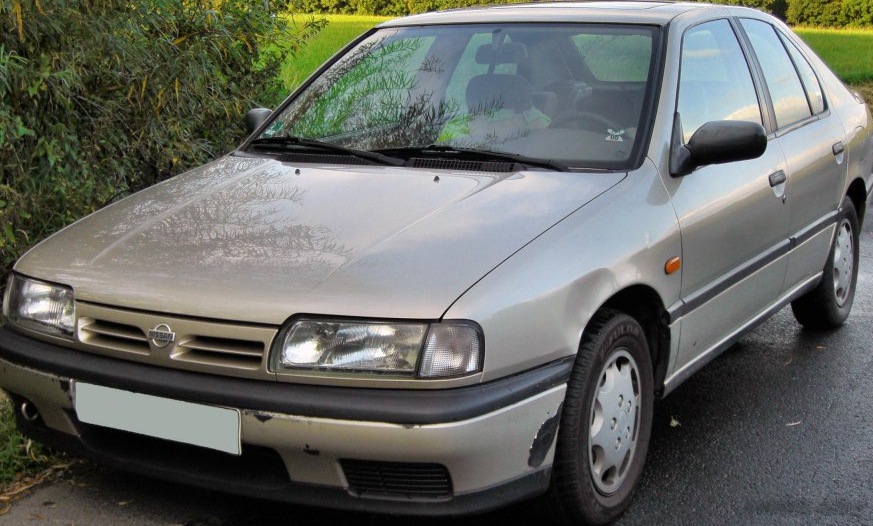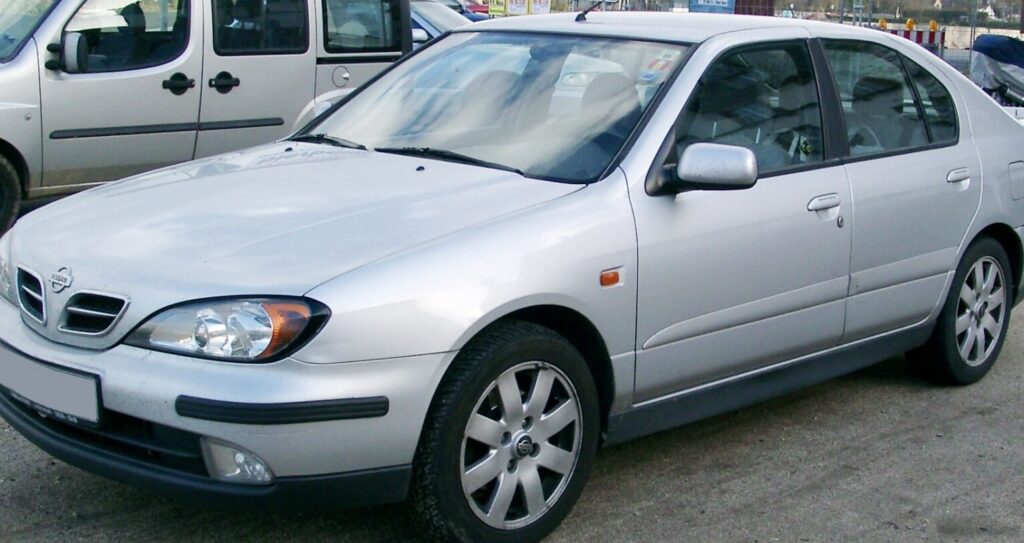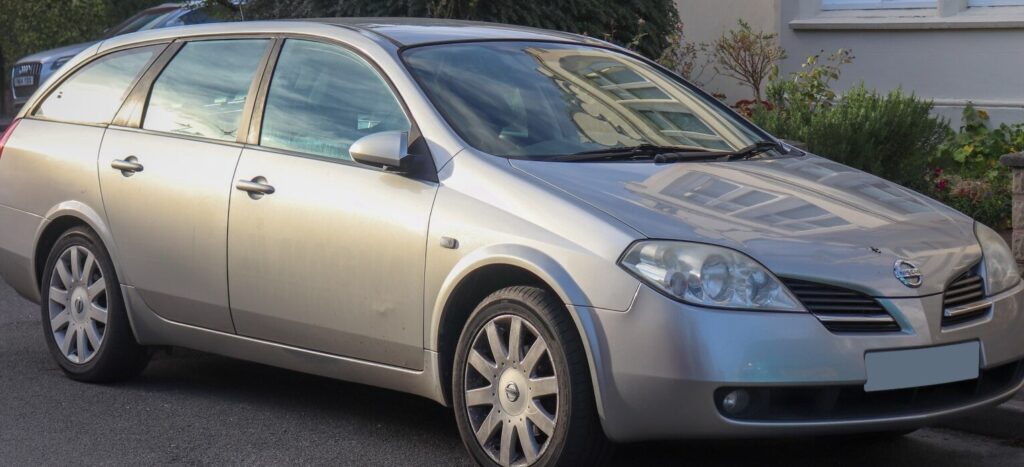
The Nissan Primera Wagon (P12) 1.6 i 16V, produced between 2002 and 2007, represented a practical and relatively affordable entry point into Nissan’s European-market wagon lineup. Positioned as a family-oriented vehicle, it offered a spacious interior and a sizable cargo area within the P12 Primera series, which itself was a significant model for Nissan in Europe. This variant, equipped with the QG16DE engine and a five-speed manual transmission, aimed to balance fuel efficiency with adequate performance for everyday driving needs. It served as a counterpoint to the more powerful and often more expensive engine options available in the Primera range.
Technical Specifications
| Brand | Nissan |
| Model | Primera |
| Generation | Primera Wagon (P12) |
| Type (Engine) | 1.6 i 16V (109 Hp) |
| Start of production | 2002 |
| End of production | 2007 |
| Powertrain Architecture | Internal Combustion engine |
| Body type | Station wagon (estate) |
| Seats | 5 |
| Doors | 5 |
| Fuel consumption (urban) | 9.3 l/100 km (25.3 US mpg) |
| Fuel consumption (extra urban) | 6 l/100 km (39.2 US mpg) |
| Fuel consumption (combined) | 7.2 l/100 km (32.7 US mpg) |
| Fuel Type | Petrol (Gasoline) |
| Acceleration 0 – 100 km/h | 12.6 sec |
| Acceleration 0 – 62 mph | 12.6 sec |
| Acceleration 0 – 60 mph | 12 sec |
| Maximum speed | 190 km/h (118.06 mph) |
| Weight-to-power ratio | 12.2 kg/Hp |
| Weight-to-torque ratio | 9.1 kg/Nm |
| Power | 109 Hp @ 6000 rpm |
| Torque | 146 Nm @ 4000 rpm (107.68 lb.-ft. @ 4000 rpm) |
| Engine layout | Front, Transverse |
| Engine Model/Code | QG16DE |
| Engine displacement | 1596 cm3 (97.39 cu. in.) |
| Number of cylinders | 4 |
| Engine configuration | Inline |
| Cylinder Bore | 76 mm (2.99 in.) |
| Piston Stroke | 88 mm (3.46 in.) |
| Compression ratio | 9.8:1 |
| Number of valves per cylinder | 4 |
| Fuel injection system | Multi-port manifold injection |
| Engine aspiration | Naturally aspirated engine |
| Valvetrain | DOHC |
| Engine oil capacity | 2.9 l (3.06 US qt | 2.55 UK qt) |
| Coolant capacity | 6.7 l (7.08 US qt | 5.9 UK qt) |
| Kerb Weight | 1325 kg (2921.12 lbs.) |
| Max. weight | 1840 kg (4056.51 lbs.) |
| Max load | 515 kg (1135.38 lbs.) |
| Trunk (boot) space – minimum | 465 l (16.42 cu. ft.) |
| Trunk (boot) space – maximum | 1670 l (58.98 cu. ft.) |
| Fuel tank capacity | 62 l (16.38 US gal | 13.64 UK gal) |
| Length | 4675 mm (184.06 in.) |
| Width | 1760 mm (69.29 in.) |
| Height | 1480 mm (58.27 in.) |
| Wheelbase | 2680 mm (105.51 in.) |
| Front track | 1530 mm (60.24 in.) |
| Rear track | 1535 mm (60.43 in.) |
| Drivetrain Architecture | Front wheel drive |
| Number of gears | 5 |
| Gearbox type | Manual transmission |
| Front suspension | Double wishbone |
| Rear suspension | Coil spring |
| Front brakes | Ventilated discs |
| Rear brakes | Disc |
| Assisting systems | ABS (Anti-lock braking system) |
| Steering type | Steering rack and pinion |
| Power steering | Hydraulic Steering |
| Tires size | 205/60 R16 |
INTRODUCTION
The P12 Primera Wagon, launched in 2002, was Nissan’s attempt to capture a larger share of the European family car market. The wagon body style was particularly popular in Europe, and the Primera offered a compelling alternative to established rivals like the Ford Focus Estate and Volkswagen Passat Variant. The 1.6 i 16V variant, producing 109 horsepower, was positioned as the entry-level engine option for the wagon, offering a balance of affordability and practicality. It was designed for buyers prioritizing fuel economy and everyday usability over outright performance. The P12 platform represented a significant step forward for Nissan in terms of refinement and build quality compared to its predecessors.
Powertrain & Engine Architecture
At the heart of the Primera Wagon 1.6 i 16V lies the QG16DE engine, a 1.6-liter inline-four cylinder powerplant. This engine is a member of Nissan’s QG series, known for its relatively simple design and reliability. The QG16DE features a cast iron block and an aluminum cylinder head, incorporating a double overhead camshaft (DOHC) valvetrain with four valves per cylinder. This configuration contributes to good breathing and a reasonably broad powerband. Fuel delivery is managed by a multi-port fuel injection system, providing precise fuel metering for optimal combustion. The engine’s 9.8:1 compression ratio strikes a balance between efficiency and performance. Paired with this engine is a five-speed manual transmission, offering a traditional driving experience. The transmission’s gear ratios are tuned for fuel efficiency and smooth acceleration, rather than outright sporty performance.
Driving Characteristics
The 1.6-liter engine in the Primera Wagon, while not particularly powerful, provides adequate performance for typical driving conditions. Acceleration from 0-60 mph takes around 12 seconds, and the top speed is approximately 118 mph. The engine feels most comfortable in the mid-range, offering sufficient torque for overtaking maneuvers on the highway. However, it can feel strained when fully loaded or climbing steep hills. The five-speed manual transmission allows drivers to maintain optimal engine speed for efficiency or performance. Compared to the higher-output 2.0-liter variants, the 1.6L feels noticeably less responsive, but it compensates with improved fuel economy. The gear ratios are spaced to prioritize fuel efficiency, meaning the engine doesn’t rev as freely as some competitors.
Equipment & Trim Levels
The Primera Wagon 1.6 i 16V typically came equipped with a reasonable level of standard features. These generally included power steering, central locking, electric front windows, and an air conditioning system. Safety features such as ABS (Anti-lock Braking System) and driver and passenger airbags were also standard. Interior upholstery was typically cloth, with a functional and durable design. Optional extras included alloy wheels, a CD player, and upgraded trim levels with features like climate control and leather upholstery. The trim level often dictated the availability of features like rear electric windows and a trip computer.
Chassis & Braking
The Primera Wagon’s chassis features a double wishbone suspension setup at the front and a coil spring arrangement at the rear. This configuration provides a comfortable ride quality, absorbing bumps and imperfections in the road surface effectively. The steering is hydraulic power-assisted, offering a light and responsive feel. Braking duties are handled by ventilated discs at the front and solid discs at the rear, providing adequate stopping power for the vehicle’s weight. The ABS system helps to prevent wheel lockup during emergency braking, enhancing stability and control.
Market Reception & Comparison
The Nissan Primera Wagon 1.6 i 16V was generally well-received by automotive critics as a practical and affordable family car. It was praised for its spacious interior, comfortable ride, and good fuel economy. However, some critics noted that the 1.6-liter engine lacked the punch of its larger counterparts. Compared to the 2.0-liter Primera Wagon, the 1.6L offered significantly better fuel economy (around 32.7 US mpg combined) but at the cost of performance. Against rivals like the Ford Focus Estate and Volkswagen Passat Variant, the Primera Wagon offered a competitive package, particularly in terms of value for money. Reliability was generally considered good, although some owners reported minor issues with electrical components.
Legacy
The Nissan Primera Wagon 1.6 i 16V has proven to be a relatively reliable and durable vehicle in the used car market. The QG16DE engine is known for its longevity, and with regular maintenance, it can provide many years of trouble-free service. While not a particularly sought-after model by enthusiasts, it remains a practical and affordable option for buyers seeking a spacious and economical family wagon. Parts availability is generally good, and maintenance costs are relatively low. Today, these vehicles are often found as affordable transportation for families or as workhorses for those needing a reliable and spacious vehicle.