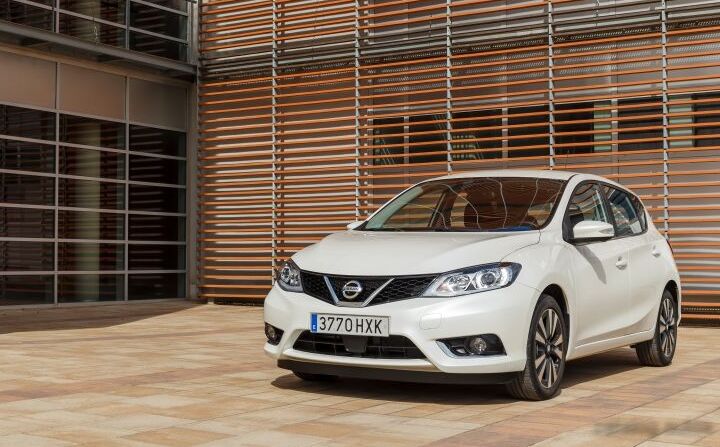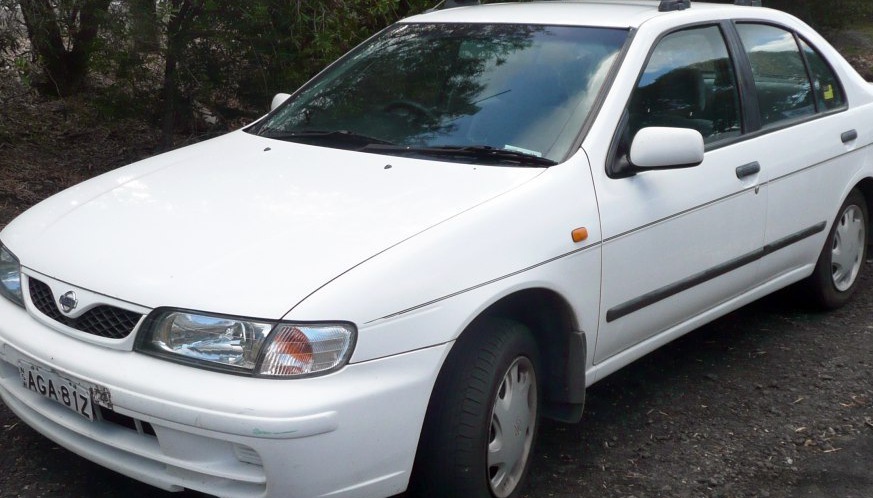
The Nissan Pulsar N14, produced between 1990 and 1995, represented a significant step forward for Nissan’s compact offerings in Europe and other international markets. This generation, designated N14, aimed to provide a blend of practicality, affordability, and a touch of sporty styling. Within the N14 range, the 1.6 i 16V X1 R (5-door) variant, producing 110 horsepower, occupied a middle ground, offering a balance between economy and performance. It was positioned as a step up from the base 1.4 models, appealing to buyers seeking a more engaging driving experience without the higher costs associated with the GTI or turbocharged variants.
Technical Specifications
| Brand | Nissan |
| Model | Pulsar |
| Generation | Pulsar (N14) |
| Type | 1.6 i 16V X1 R (5 dr) (110 Hp) |
| Start of production | 1990 |
| End of production | 1995 |
| Powertrain Architecture | Internal Combustion engine |
| Body type | Hatchback |
| Seats | 5 |
| Doors | 5 |
| Fuel consumption (combined) | 6.4 l/100 km (36.8 US mpg, 44.1 UK mpg, 15.6 km/l) |
| Fuel Type | Petrol (Gasoline) |
| Weight-to-power ratio | 9.7 kg/Hp, 102.8 Hp/tonne |
| Weight-to-torque ratio | 7.3 kg/Nm, 137.4 Nm/tonne |
| Power | 110 Hp @ 6000 rpm |
| Power per litre | 68.9 Hp/l |
| Torque | 147 Nm @ 4000 rpm (108.42 lb.-ft. @ 4000 rpm) |
| Engine layout | Front, Transverse |
| Engine displacement | 1596 cm3 (97.39 cu. in.) |
| Number of cylinders | 4 |
| Engine configuration | Inline |
| Cylinder Bore | 76 mm (2.99 in.) |
| Piston Stroke | 88 mm (3.46 in.) |
| Compression ratio | 9.5:1 |
| Number of valves per cylinder | 4 |
| Fuel injection system | Multi-port manifold injection |
| Engine aspiration | Naturally aspirated engine |
| Valvetrain | DOHC |
| Kerb Weight | 1070 kg (2358.95 lbs.) |
| Max. weight | 1345 kg (2965.22 lbs.) |
| Max load | 275 kg (606.27 lbs.) |
| Fuel tank capacity | 50 l (13.21 US gal | 11 UK gal) |
| Length | 4145 mm (163.19 in.) |
| Width | 1670 mm (65.75 in.) |
| Height | 1385 mm (54.53 in.) |
| Wheelbase | 2430 mm (95.67 in.) |
| Front track | 1435 mm (56.5 in.) |
| Rear track | 1435 mm (56.5 in.) |
| Drivetrain Architecture | Front wheel drive |
| Number of gears and type of gearbox | 5 gears, manual transmission |
| Front suspension | Spring Strut |
| Rear suspension | Coil spring |
| Front brakes | Ventilated discs |
| Rear brakes | Drum |
| Assisting systems | ABS (Anti-lock braking system) |
| Steering type | Steering rack and pinion |
| Power steering | Hydraulic Steering |
| Tires size | 175/65 R14 H |
Powertrain & Engine Architecture
The heart of the 1.6 i 16V X1 R was the GA16DE engine, a 1.6-liter inline-four cylinder powerplant. This engine featured a double overhead camshaft (DOHC) valvetrain operating 16 valves, contributing to its relatively high output for its displacement. The GA16DE utilized multi-port fuel injection, a common technology at the time, for precise fuel delivery. The engine’s 9.5:1 compression ratio was a compromise between performance and fuel efficiency. The 110 horsepower peak was achieved at 6000 rpm, while the 147 Nm (108.42 lb-ft) of torque was available at 4000 rpm. This engine was paired with a five-speed manual transmission, providing drivers with good control over the power delivery. The transmission was known for its relatively smooth shifts, though not particularly sporty feel.
Driving Characteristics
The 1.6L engine and five-speed manual transmission combination in the Pulsar N14 offered a reasonably engaging driving experience. While not a performance car, the 110 hp engine provided adequate power for everyday driving and even some spirited maneuvers. Acceleration was respectable, though not brisk, and the car felt comfortable at highway speeds. The gear ratios were well-chosen for a balance of fuel economy and responsiveness. Compared to the base 1.4L models, the 1.6L offered noticeably more power, making overtaking and hill climbing easier. However, it didn’t possess the punch of the GTI or turbocharged versions. The front-wheel-drive layout provided predictable handling, but could exhibit some understeer when pushed hard.
Equipment & Trim Levels
The X1 R trim level represented a mid-range offering within the N14 Pulsar lineup. Standard equipment typically included power steering, central locking, electric front windows, and an AM/FM radio. The interior featured cloth upholstery, and the dashboard layout was functional and straightforward. Optional extras could include air conditioning, a sunroof, and upgraded audio systems. The X1 R trim aimed to provide a good level of comfort and convenience without the premium price tag of the higher-spec models.
Chassis & Braking
The Pulsar N14 utilized a relatively simple chassis design. Front suspension consisted of MacPherson strut coil springs, while the rear employed a coil spring setup. This configuration provided a comfortable ride, though it wasn’t particularly sporty. The front brakes were ventilated discs, offering good stopping power, while the rear brakes were drums, a cost-saving measure common in this class of vehicle. An Anti-lock Braking System (ABS) was included as a standard safety feature, enhancing braking performance in slippery conditions. The steering was rack and pinion, providing precise and responsive control.
Market Reception & Comparison
The Nissan Pulsar N14 1.6 i 16V X1 R was generally well-received by automotive critics as a practical and reliable family car. It was praised for its fuel efficiency, comfortable ride, and reasonable price. However, some critics noted that the interior was somewhat basic and that the handling wasn’t as sharp as some of its competitors. Compared to other trims in the lineup, the 1.6L offered a good balance between performance and economy. The 1.4L models were more affordable but lacked power, while the GTI and turbocharged versions were more expensive and focused on performance. Fuel economy was a strong point, averaging around 36.8 US mpg in combined driving.
Legacy
The Nissan Pulsar N14, particularly the 1.6 i 16V variants, has proven to be a durable and reliable vehicle. The GA16DE engine is known for its longevity, and with proper maintenance, can withstand high mileage. Today, these cars are relatively affordable on the used car market, making them attractive options for budget-conscious buyers. While not particularly collectible, well-maintained examples are appreciated by enthusiasts for their simplicity, reliability, and nostalgic appeal. Parts availability is generally good, though some trim-specific components may be harder to find. The N14 Pulsar represents a solid and dependable compact car from a bygone era.