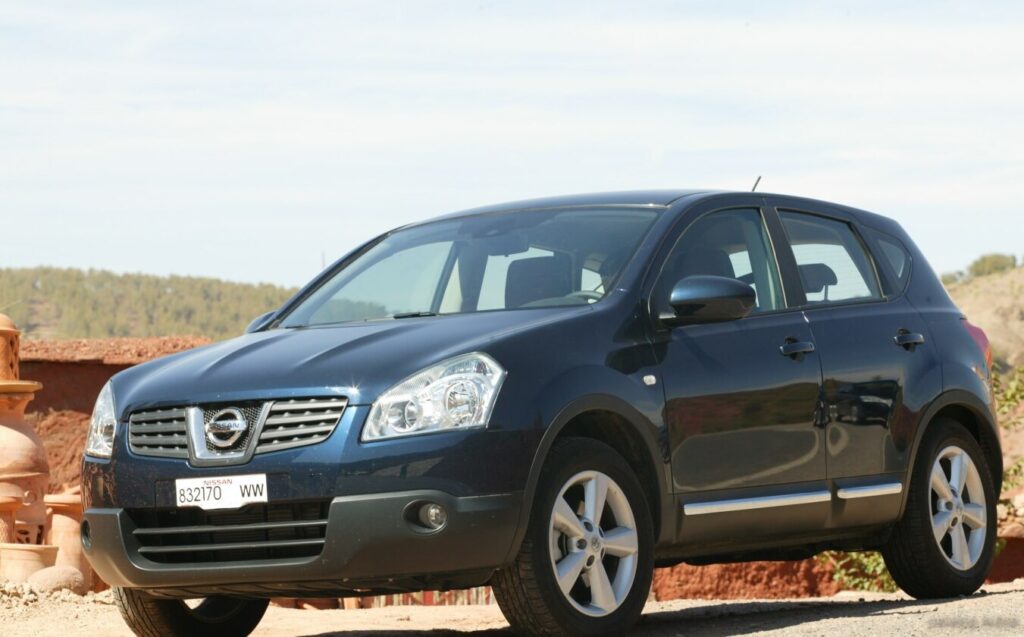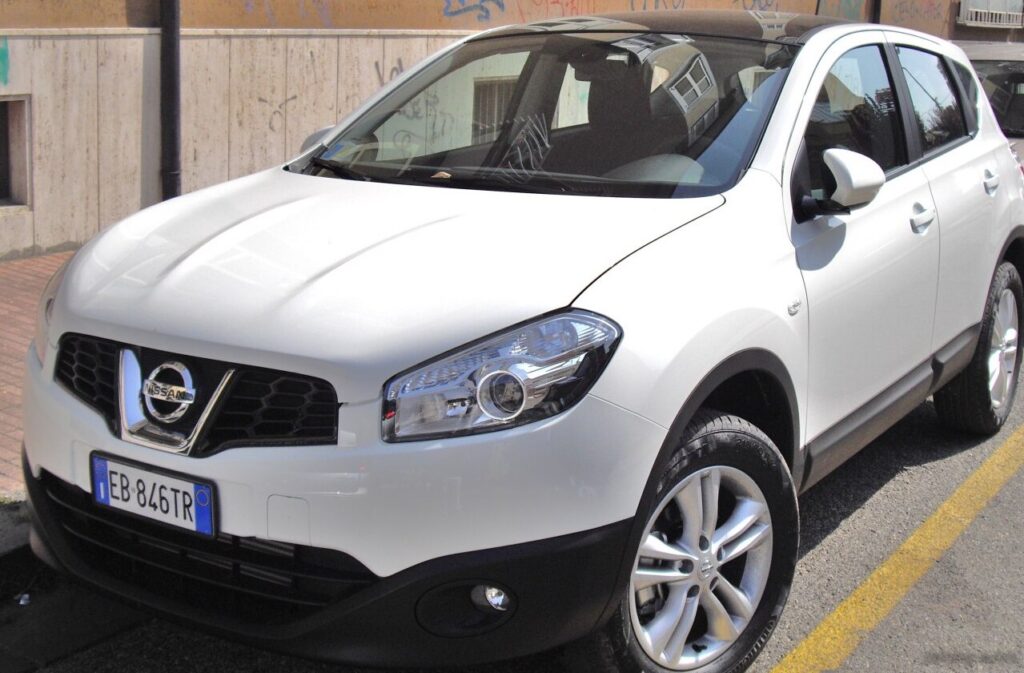
The Nissan Qashqai (known as the Dualis in some markets) is a compact crossover SUV first introduced in 2006. The first generation, designated the J10, received a significant facelift in 2010, bringing updated styling and mechanical refinements. The 2.0-liter (141 hp) 4×4 CVT model, produced from 2010 to 2014, represented a mid-range offering within the Qashqai lineup, positioned above the base 1.6-liter models and below the more performance-oriented options. This variant aimed to provide a balance of practicality, all-weather capability, and reasonable fuel economy for family buyers.
The Qashqai 2.0 4×4 CVT is powered by the MR20DE 2.0-liter inline-four cylinder gasoline engine. This engine utilizes multi-port fuel injection and a dual overhead camshaft (DOHC) valvetrain with four valves per cylinder. The MR20DE is a naturally aspirated engine, meaning it does not employ forced induction like a turbocharger or supercharger. Output is rated at 141 horsepower at 6000 rpm and 196 Nm (144.56 lb-ft) of torque at 4800 rpm. The engine’s design prioritizes smooth operation and reliability over outright performance. The “CVT” designation refers to the Continuously Variable Transmission used in this model. Nissan’s CVT, known as Xtronic CVT, uses a belt and pulley system to provide a theoretically infinite number of gear ratios, optimizing engine efficiency and providing smooth acceleration. The 4×4 system is an electronically controlled all-wheel drive system, typically operating in front-wheel drive mode under normal conditions and engaging the rear wheels when slip is detected.
In real-world driving, the 2.0-liter 4×4 CVT Qashqai offers adequate, but not particularly brisk, performance. Acceleration from 0 to 60 mph takes approximately 10.7 seconds, and 0-100 km/h is achieved in 11.3 seconds. The CVT transmission contributes to smooth acceleration, but can sometimes feel less responsive than a traditional automatic transmission, particularly during quick overtaking maneuvers. The all-wheel drive system provides enhanced traction in slippery conditions, making it a suitable choice for drivers in regions with inclement weather. Compared to the base 1.6-liter models, the 2.0-liter engine provides noticeably more power, while the CVT transmission offers a different driving experience than the available six-speed manual gearbox. It doesn’t match the performance of higher-spec models, but offers a good balance for everyday use.
The 2.0 4×4 CVT Qashqai typically came equipped with a reasonable level of standard features. Interior upholstery was generally cloth, with options for leather upgrades. Standard equipment often included air conditioning, power windows and mirrors, a CD player with auxiliary input, and basic safety features like ABS brakes and front airbags. Higher trim levels, such as the Tekna, added features like automatic climate control, alloy wheels, parking sensors, and a navigation system. The dashboard layout was functional and straightforward, prioritizing ease of use over stylistic flair.
The Qashqai J10 utilizes an independent McPherson strut suspension setup at the front and an independent multi-link suspension at the rear. This configuration provides a comfortable ride quality, absorbing bumps and imperfections in the road surface effectively. Front brakes are ventilated discs, while rear brakes are solid discs. The steering is electrically assisted, providing light and easy steering feel. The 4×4 system adds weight compared to the front-wheel drive models, but the suspension is tuned to handle the increased mass. Stabilizer bars are fitted to both the front and rear axles to reduce body roll during cornering.
Critics generally viewed the 2.0-liter 4×4 CVT Qashqai as a competent and practical crossover SUV. It was praised for its comfortable ride, spacious interior, and all-weather capability. However, some reviewers noted the engine’s lack of outright power and the CVT transmission’s sometimes hesitant response. Fuel economy is rated at approximately 29.4 US mpg combined, which is reasonable for a vehicle of this type and size. Reliability has generally been good, although like any vehicle, regular maintenance is crucial. Compared to the 1.6-liter models, the 2.0-liter offered a noticeable performance improvement, while the CVT transmission provided a smoother, albeit less engaging, driving experience.
| Engine Model/Code | MR20DE |
| Engine Displacement | 1997 cm3 (121.86 cu. in.) |
| Number of Cylinders | 4, Inline |
| Power | 141 Hp @ 6000 rpm |
| Torque | 196 Nm (144.56 lb.-ft.) @ 4800 rpm |
| Fuel Type | Petrol (Gasoline) |
| Transmission | CVT (Continuously Variable Transmission) |
| Drive Type | All Wheel Drive (4×4) |
| Fuel Consumption (Combined) | 8 l/100 km (29.4 US mpg, 35.3 UK mpg) |
| CO2 Emissions | 189 g/km |
| Acceleration 0-60 mph | 10.7 sec |
| Acceleration 0-100 km/h | 11.3 sec |
| Maximum Speed | 181 km/h (112.47 mph) |
| Kerb Weight | 1454 kg (3205.52 lbs) |
| Fuel Tank Capacity | 65 l (17.17 US gal, 14.3 UK gal) |
Today, the 2010-2014 Nissan Qashqai 2.0 4×4 CVT remains a relatively common sight on the used car market. The MR20DE engine is known for its durability, and with proper maintenance, these vehicles can provide many years of reliable service. However, potential buyers should be aware of the potential for CVT transmission issues, and a thorough inspection is recommended before purchase. The Qashqai’s blend of practicality, affordability, and all-weather capability continues to make it an appealing option for buyers seeking a compact crossover SUV.