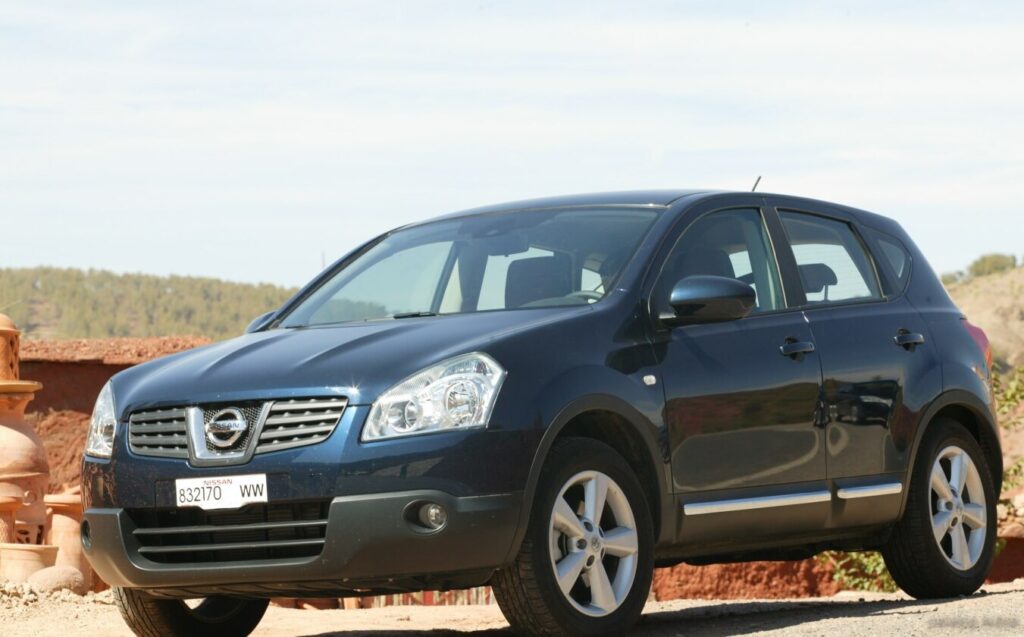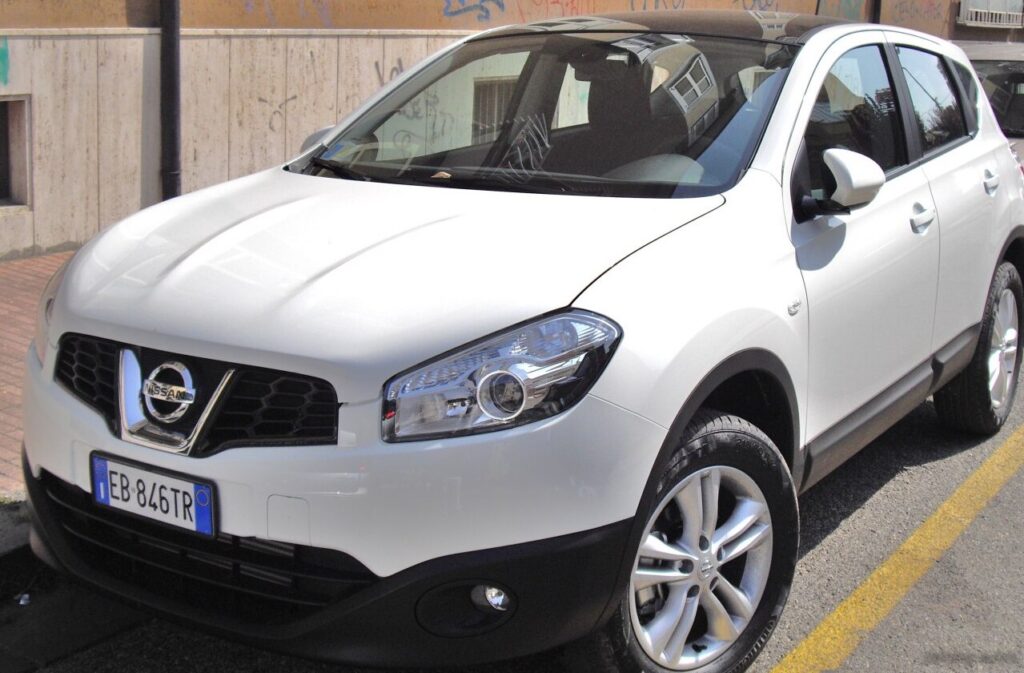
The Nissan Qashqai I (J10), specifically the 2.0 dCi 150 Hp 4×4 Automatic variant produced from 2010 to 2014, represents a mid-cycle refresh of Nissan’s popular crossover SUV. Introduced as part of the J10 facelift, this model aimed to broaden the Qashqai’s appeal by offering a more powerful diesel engine option coupled with the convenience of an automatic transmission and the added capability of all-wheel drive. It sat within the Qashqai range as a higher-specification model, positioned above the base 1.6 petrol variants and often below the range-topping trim levels focused on luxury appointments.
The powertrain is centered around Nissan’s M9R 2.0-liter four-cylinder diesel engine. This engine utilizes a common rail direct injection system, delivering fuel directly into the cylinders at extremely high pressure for optimized combustion. The M9R engine is a turbocharged and intercooled design, enhancing power output and efficiency. The turbocharger forces more air into the engine, while the intercooler cools the compressed air, increasing its density. This particular iteration of the M9R produces 150 horsepower at 4000 rpm and 320 Nm (236 lb-ft) of torque at 2000 rpm. The engine features a cast iron block and aluminum cylinder head, contributing to its durability. The automatic transmission paired with this engine is a six-speed unit, designed to provide smooth gear changes and enhance drivability. While not known for being the sportiest transmission, it was well-suited to the torque characteristics of the diesel engine.
Driving the 2.0 dCi 4×4 Automatic Qashqai provides a comfortable and capable experience. Acceleration from 0 to 100 km/h (0-62 mph) takes approximately 11 seconds, which is respectable for a crossover of this size and weight. The automatic transmission, while smooth, can sometimes feel hesitant during quick acceleration, particularly when compared to the more responsive manual transmission options available in other Qashqai models. The all-wheel-drive system provides enhanced traction in adverse weather conditions and on slippery surfaces, making it a practical choice for drivers in regions with challenging climates. The gear ratios are tuned for fuel efficiency and relaxed cruising, rather than outright performance. The engine delivers strong low-end torque, making it easy to navigate city streets and maintain speed on highways.
Equipment levels for the 2.0 dCi 4×4 Automatic Qashqai were generally generous. Standard features typically included air conditioning, power windows, central locking, an audio system with CD player, and alloy wheels. Higher trim levels added features such as climate control, a touchscreen infotainment system, navigation, parking sensors, and leather upholstery. Interior upholstery was typically cloth on lower trims, with leather options available on higher-spec models. The dashboard layout was functional and user-friendly, with logically placed controls. Optional extras included a panoramic sunroof, heated seats, and advanced safety features like lane departure warning.
The Qashqai’s chassis features independent suspension all around, with a McPherson strut setup at the front and a multi-link arrangement at the rear. This configuration provides a comfortable ride quality and good handling characteristics. Stabilizer bars are fitted to both axles to reduce body roll during cornering. Braking is handled by ventilated discs at the front and discs at the rear, providing adequate stopping power. Anti-lock Braking System (ABS) is standard. The Qashqai’s weight-to-power ratio is approximately 10.7 kg/hp, and the weight-to-torque ratio is 5 kg/Nm, indicating a reasonable balance between power and weight.
Critics generally praised the Qashqai 2.0 dCi 4×4 Automatic for its comfortable ride, spacious interior, and practical features. The diesel engine was noted for its fuel efficiency, achieving combined fuel consumption of around 6.8 l/100 km (34.6 US mpg). However, some reviewers found the automatic transmission to be somewhat sluggish and the overall driving experience less engaging than that of its competitors. Reliability was generally good, although some owners reported issues with the diesel particulate filter (DPF) and the electronic parking brake. Compared to the lower-powered petrol versions, the 2.0 dCi offered significantly improved performance and fuel economy, making it a popular choice for drivers who frequently cover long distances. Compared to the Qashqai+2 (seven-seater version), the standard Qashqai offered better handling due to its lower weight.
| Engine Model/Code | M9R |
| Engine displacement | 1995 cm3 (121.74 cu. in.) |
| Number of cylinders | 4, Inline |
| Power | 150 Hp @ 4000 rpm |
| Torque | 320 Nm @ 2000 rpm (236.02 lb.-ft. @ 2000 rpm) |
| Fuel Type | Diesel |
| Fuel consumption (urban) | 8.7 l/100 km (27 US mpg) |
| Fuel consumption (extra urban) | 5.7 l/100 km (41.3 US mpg) |
| Fuel consumption (combined) | 6.8 l/100 km (34.6 US mpg) |
| CO2 emissions | 179 g/km |
| Acceleration 0-100 km/h | 11 sec |
| Maximum speed | 188 km/h (116.82 mph) |
| Kerb Weight | 1604-1674 kg (3536.21 – 3690.54 lbs.) |
| Fuel tank capacity | 65 l (17.17 US gal) |
| Transmission | 6 gears, automatic transmission |
In the used car market, the Nissan Qashqai 2.0 dCi 4×4 Automatic (2010-2014) remains a popular choice due to its practicality, fuel efficiency, and relatively affordable price. The M9R engine, while generally reliable, requires regular maintenance, including timely DPF regeneration. Potential buyers should check for service history and ensure that the DPF has been properly maintained. Overall, this variant of the Qashqai offers a compelling package for those seeking a comfortable, capable, and economical crossover SUV.