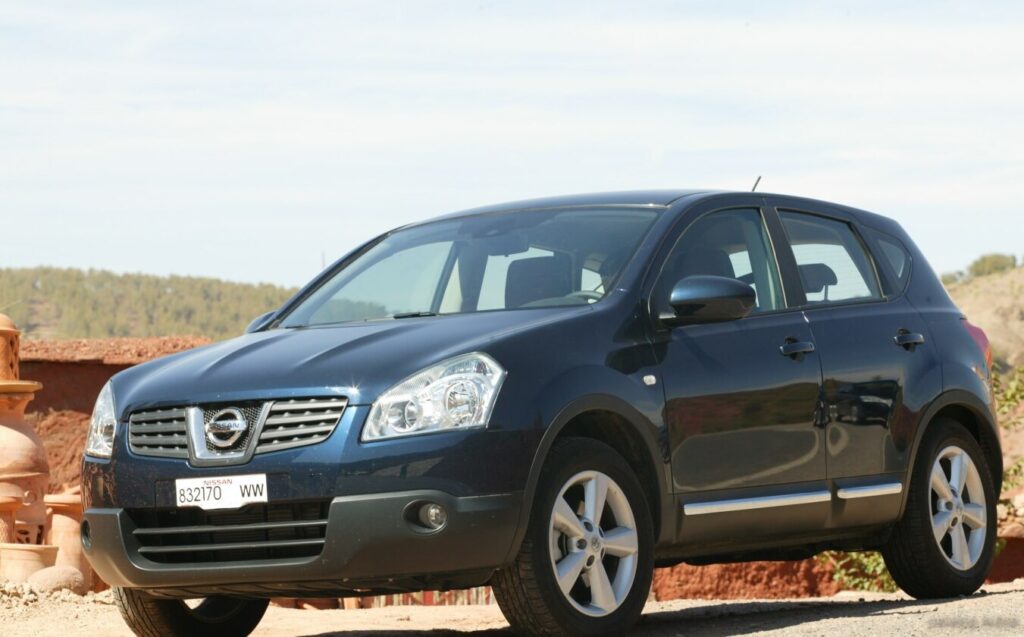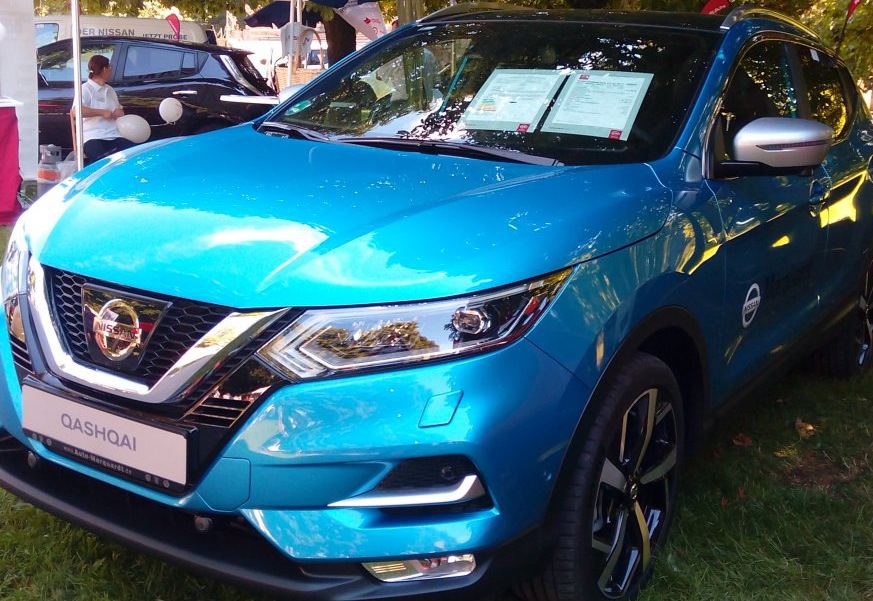
The Nissan Qashqai II (J11), specifically the 1.3i 160 horsepower variant produced from October 2018 to April 2021, represents a mid-range offering within the second generation Qashqai lineup. This model, a five-door, five-seat crossover SUV, was a key component of Nissan’s strategy to capture a significant share of the European compact SUV market. The J11 Qashqai benefited from a substantial facelift in 2017, introducing revised styling, updated technology, and a new engine range, with the 1.3i being a central part of that update. It is built on the CMF-C/D platform, shared with other Renault-Nissan-Mitsubishi Alliance vehicles.
Powertrain & Engine Architecture
The heart of the Qashqai II 1.3i is the HR13DDT, a 1.3-liter turbocharged inline-four cylinder gasoline engine. This engine is part of Nissan’s broader strategy to downsize and turbocharge its engines for improved fuel efficiency and reduced emissions. The HR13DDT utilizes direct fuel injection, a technology that precisely meters fuel directly into the combustion chamber, enhancing combustion efficiency and power output. It also features an intercooler to cool the intake air, further increasing power and reducing the risk of engine knock. The engine produces 160 hp at 5500 rpm and 260 Nm (191.77 lb-ft) of torque at 2000 rpm. The engine’s specific output is 120.1 hp per liter.
While a six-speed manual transmission was available, this article focuses on the variant paired with a continuously variable transmission (CVT). Nissan’s CVT, marketed as Xtronic, is designed to provide smooth, seamless acceleration and optimized fuel economy. Unlike traditional stepped automatic transmissions, a CVT uses a belt and pulley system to provide an infinite number of gear ratios within its operating range. This allows the engine to operate at its most efficient rpm for any given speed and load. The CVT is programmed with simulated shift points to mimic the feel of a conventional automatic transmission for drivers accustomed to that experience.
Engine Specifications
Key engine specifications include a compression ratio of 10.5:1 and a four-valve-per-cylinder configuration. The engine oil capacity is 5.4 liters (5.71 US quarts / 4.75 UK quarts), and the coolant capacity is 5.8 liters (6.13 US quarts / 5.1 UK quarts). The engine meets Euro 6d emission standards, reflecting Nissan’s commitment to reducing its environmental impact.
Driving Characteristics
The Qashqai II 1.3i with the CVT delivers a comfortable and refined driving experience. Acceleration from 0 to 100 km/h (0-62 mph) takes approximately 8.9 seconds, and 0-60 mph is achieved in around 8.5 seconds. While not a performance-oriented vehicle, the 160 hp engine and the CVT provide adequate power for everyday driving situations, including highway merging and overtaking. The CVT’s ability to keep the engine in its optimal power band contributes to a responsive feel. Compared to the lower-powered 1.2-liter engine option, the 1.3i offers a noticeable improvement in performance. However, it doesn’t match the more spirited driving experience of higher-spec models equipped with more powerful engines.
The CVT’s programming prioritizes fuel efficiency, which can sometimes result in a slight delay in response when accelerating hard. Drivers can mitigate this by selecting a “Sport” mode, if equipped, which alters the CVT’s shift mapping for more aggressive acceleration. The overall driving experience is geared towards comfort and ease of use, making it well-suited for urban commuting and long-distance journeys.
Equipment & Trim Levels
The 1.3i 160 hp Qashqai II typically came equipped as a mid-range trim level, offering a balance of features and affordability. Standard equipment generally included air conditioning, a touchscreen infotainment system with smartphone integration (Apple CarPlay and Android Auto), Bluetooth connectivity, and a suite of safety features such as ABS, electronic stability control, and multiple airbags. Higher trim levels added features like navigation, a panoramic sunroof, leather upholstery, and advanced driver-assistance systems (ADAS) such as adaptive cruise control and lane departure warning.
Interior upholstery was typically cloth in the base 1.3i trims, with options for upgraded cloth or leather in higher specifications. The dashboard layout was modern and functional, with a focus on user-friendliness. Optional extras included parking sensors, a rearview camera, and a premium sound system.
Chassis & Braking
The Qashqai II 1.3i utilizes an independent McPherson strut suspension at the front and a torsion beam suspension at the rear. This suspension setup provides a comfortable ride quality and predictable handling characteristics. The front brakes are discs, while the rear brakes are typically discs on higher trim levels, but drums on base models. The steering system is an electric power steering (EPS) rack and pinion, providing light and precise steering feel. Stabilizer bars are fitted to both the front and rear axles to reduce body roll during cornering.
The kerb weight of the Qashqai II 1.3i ranges from 1300 to 1435 kg (2866.01 to 3163.63 lbs), depending on the trim level and optional equipment. This weight influences the vehicle’s handling and braking performance.
Market Reception & Comparison
The Nissan Qashqai II 1.3i was generally well-received by automotive critics. It was praised for its comfortable ride, spacious interior, and fuel efficiency. The 1.3-liter engine was considered a good compromise between performance and economy, although some reviewers noted that it could feel strained when fully loaded or driving uphill. Compared to the lower-powered 1.2-liter engine, the 1.3i offered a noticeable improvement in performance. Fuel economy figures ranged from 5.3 to 5.7 l/100 km (44.4 to 41.3 US mpg / 53.3 to 49.6 UK mpg), making it a competitive option in its class. Reliability reports have been generally positive, with few major issues reported with the HR13DDT engine and CVT transmission.
Technical Specifications
| Body type | SUV, Crossover |
| Engine displacement | 1332 cm3 (81.28 cu. in.) |
| Engine layout | Front, Transverse, Inline-4 |
| Fuel type | Petrol (Gasoline) |
| Power | 160 Hp @ 5500 rpm |
| Torque | 260 Nm (191.77 lb.-ft.) @ 2000 rpm |
| Transmission | Continuously Variable Transmission (CVT) |
| Drive type | Front-wheel drive |
| Acceleration 0-100 km/h | 8.9 sec |
| Maximum speed | 200 km/h (124.27 mph) |
| Fuel consumption (combined) | 5.3-5.7 l/100 km (44.4 – 41.3 US mpg / 53.3 – 49.6 UK mpg) |
| CO2 emissions | 121-130 g/km |
| Kerb weight | 1300-1435 kg (2866.01 – 3163.63 lbs.) |
| Fuel tank capacity | 55 l (14.53 US gal / 12.1 UK gal) |
| Trunk (boot) space (minimum) | 430 l (15.19 cu. ft.) |
| Trunk (boot) space (maximum) | 1598 l (56.43 cu. ft.) |
Legacy
The Nissan Qashqai II 1.3i has proven to be a reliable and popular choice in the used car market. The HR13DDT engine and CVT transmission have demonstrated good long-term durability, with relatively few reports of major mechanical issues. The Qashqai’s reputation for practicality, comfort, and fuel efficiency continues to make it an attractive option for buyers seeking a compact SUV. Its relatively affordable price point and readily available parts contribute to its ongoing appeal. The 1.3i variant, in particular, strikes a good balance between performance and economy, making it a versatile and well-rounded vehicle for a wide range of drivers.