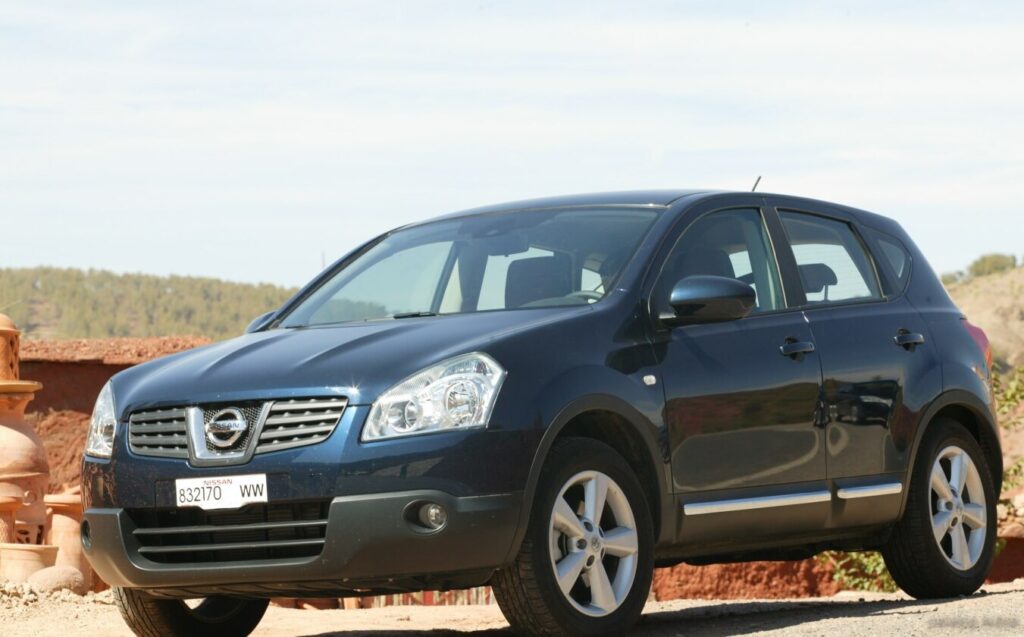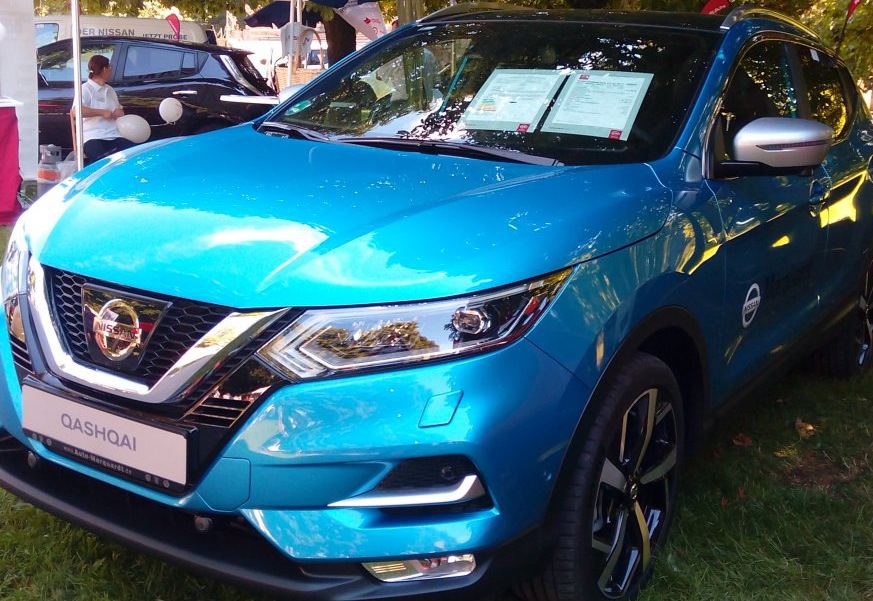
The Nissan Qashqai II (J11), specifically the 1.3i (160 Hp) DCT variant, represents a significant iteration of Nissan’s popular crossover SUV. Introduced in October 2018 as part of the facelifted second-generation Qashqai, this model ran through April 2021. It occupied a mid-range position within the Qashqai lineup, offering a balance between performance, fuel efficiency, and technology, aimed at buyers seeking a practical and modern family vehicle. The J11 Qashqai is built on the CMF-C/D platform, shared with other Renault-Nissan-Mitsubishi Alliance vehicles.
1.3i (160 Hp) DCT: Powertrain & Engine Architecture
The heart of this Qashqai variant is the HR13DDT, a 1.3-liter turbocharged inline-four cylinder gasoline engine. This engine is a product of the Renault-Nissan-Mercedes-Benz cooperation, and is also found in various other models within the Alliance. It produces 160 horsepower at 5500 rpm and 270 Nm (199.14 lb-ft) of torque at 2000 rpm. The engine utilizes direct fuel injection and an intercooled turbocharger to enhance both power and efficiency. The compression ratio is set at 10.5:1, and each cylinder features four valves. Engine oil capacity is 5.4 liters (5.71 US quarts / 4.75 UK quarts), and the recommended coolant capacity is 6.4 liters (6.76 US quarts / 5.63 UK quarts).
Paired with the HR13DDT engine is a 7-speed Dual Clutch Transmission (DCT). This DCT provides quick and smooth gear changes, contributing to a more engaging driving experience compared to traditional automatic transmissions. The DCT’s programming prioritizes fuel efficiency during normal driving conditions, while still offering responsive performance when needed. The drivetrain is front-wheel drive, a standard configuration for this trim level.
Engine Code & Fuel Injection
The HR13DDT engine code signifies a key element of the powertrain. The direct injection system is crucial to the engine’s performance, allowing for precise fuel delivery and optimized combustion. This contributes to improved fuel economy and reduced emissions, meeting Euro 6d emission standards.
Driving Characteristics
The 1.3i (160 Hp) DCT Qashqai delivers a comfortable and refined driving experience. Acceleration from 0 to 100 km/h (0-62 mph) takes approximately 9.9 seconds, with a calculated 0-60 mph time of 9.4 seconds. While not a performance-oriented vehicle, the turbocharger provides ample low-end torque, making it easy to navigate city streets and merge onto highways. The DCT transmission contributes to a responsive feel, with minimal hesitation during acceleration. Compared to the lower-powered 1.2-liter engine options available in the Qashqai range, the 1.3i offers a noticeable improvement in performance. However, it doesn’t match the more spirited driving experience of higher-output variants, such as those equipped with larger displacement engines.
The gear ratios in the 7-speed DCT are tuned for a balance between acceleration and fuel efficiency. Lower gears provide quick off-the-line acceleration, while higher gears allow for relaxed cruising at highway speeds. The power delivery is linear and predictable, making it easy for drivers of all skill levels to control.
Equipment & Trim Levels
The 1.3i (160 Hp) DCT Qashqai typically came equipped with a solid range of standard features. These generally included air conditioning, a touchscreen infotainment system with smartphone integration (Apple CarPlay and Android Auto), Bluetooth connectivity, and a suite of safety features such as ABS, electronic stability control, and multiple airbags. Interior upholstery was typically cloth, with options for leather upgrades available. Dashboard configuration featured a modern design with a focus on user-friendliness.
Optional extras commonly included a panoramic sunroof, heated front seats, a premium audio system, and advanced driver-assistance systems such as adaptive cruise control, lane departure warning, and blind-spot monitoring. Trim levels above the base model often added features like automatic headlights and rain-sensing wipers.
Chassis & Braking
The Qashqai II utilizes an independent McPherson strut suspension setup at the front, providing a comfortable ride and responsive handling. The rear suspension employs a torsion beam configuration, which is a cost-effective and space-efficient solution. The front brakes are discs, while the rear brakes are also discs on most variants, providing adequate stopping power. The steering system is an electric power steering rack and pinion, offering light and precise steering feel. Standard tire sizes ranged from 215/60 R17 to 225/45 R19, depending on the trim level and wheel size. Stabilizer bars are fitted to both the front and rear axles to reduce body roll during cornering.
Market Reception & Comparison
The 1.3i (160 Hp) DCT Qashqai was generally well-received by automotive critics. It was praised for its comfortable ride, spacious interior, and user-friendly technology. The engine was considered a good compromise between performance and fuel economy, although some reviewers noted that it could feel slightly strained when fully loaded or driving uphill. Fuel consumption figures ranged from 5.4 to 5.8 l/100 km (43.6 to 40.6 US mpg / 52.3 to 48.7 UK mpg), making it a competitive option in its class.
Compared to other trims in the Qashqai lineup, the 1.3i DCT offered a more refined driving experience than the lower-powered engine options, while being more affordable than the higher-output variants. Reliability reports suggest that the HR13DDT engine and DCT transmission are generally reliable, although regular maintenance is essential to ensure long-term durability.
Technical Specifications
| Body type | SUV, Crossover |
| Engine Displacement | 1332 cm3 (81.28 cu. in.) |
| Engine Model/Code | HR13DDT |
| Number of Cylinders | 4, Inline |
| Power | 160 Hp @ 5500 rpm |
| Torque | 270 Nm (199.14 lb.-ft.) @ 2000 rpm |
| Fuel Type | Petrol (Gasoline) |
| Transmission | 7-speed DCT |
| Drive Wheels | Front Wheel Drive |
| Acceleration 0-100 km/h | 9.9 sec |
| Acceleration 0-60 mph | 9.4 sec (Calculated) |
| Fuel Consumption (Combined) | 5.4-5.8 l/100 km (43.6-40.6 US mpg) |
| CO2 Emissions | 122-131 g/km |
| Kerb Weight | 1315-1445 kg (2899.08 – 3185.68 lbs.) |
| Fuel Tank Capacity | 55 l (14.53 US gal) |
| Trunk (Boot) Space (Minimum) | 430 l (15.19 cu. ft.) |
| Trunk (Boot) Space (Maximum) | 1598 l (56.43 cu. ft.) |
Legacy
The Nissan Qashqai II 1.3i (160 Hp) DCT has proven to be a relatively reliable and durable vehicle. The HR13DDT engine, while not without its potential issues (like any turbocharged engine, it requires regular oil changes and proper maintenance), has generally held up well over time. The DCT transmission, when properly maintained, is also considered to be a robust unit. In the used car market, this variant represents a good value proposition, offering a blend of practicality, comfort, and fuel efficiency. Its popularity and widespread availability mean that parts and service are readily accessible. As a result, the Qashqai II 1.3i DCT continues to be a popular choice for buyers seeking a well-rounded and affordable crossover SUV.