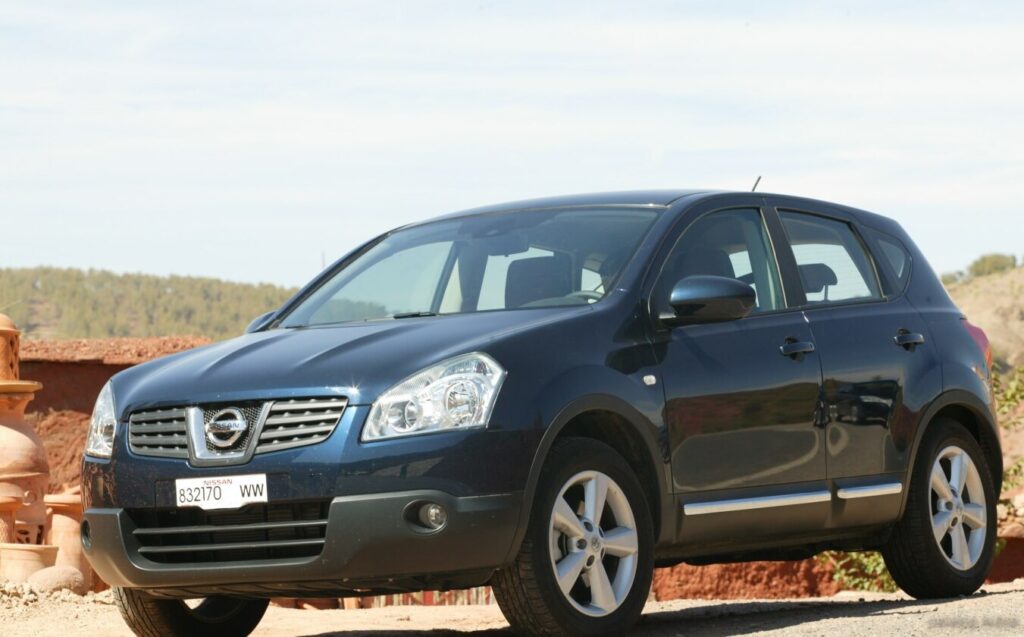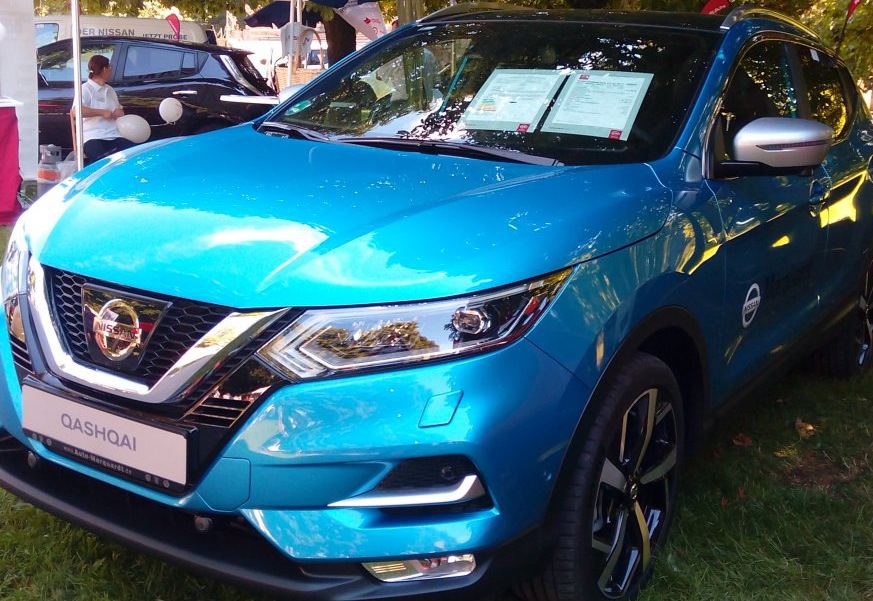
The Nissan Qashqai II (J11), specifically the 1.5 dCi 110 horsepower variant produced from 2017 to October 2018, represents a key entry point into the second generation of Nissan’s popular crossover SUV. This model, part of the J11 series following the 2014 redesign, was positioned as a fuel-efficient and practical option within the Qashqai lineup, appealing to buyers prioritizing economy and everyday usability. The facelift in 2017 brought styling updates and revised equipment levels, further refining the Qashqai’s market appeal. It competed directly with other compact crossovers like the Kia Sportage, Hyundai Tucson, and Renault Kadjar.
1.5 dCi (110 Hp) Powertrain & Engine Architecture
At the heart of this Qashqai variant lies the Renault-Nissan Alliance’s K9K 1.5-liter four-cylinder diesel engine. This engine, designated K9K, is a well-established unit known for its efficiency and durability. The 110 horsepower output is achieved at 4000 rpm, while peak torque of 260 Nm (191.77 lb-ft) is delivered between 1750 and 2500 rpm. This broad torque band provides good low-end responsiveness, making it suitable for everyday driving conditions. The engine features a transverse front-engine layout and utilizes a diesel commonrail fuel injection system, ensuring precise fuel delivery and optimized combustion. A turbocharger with an intercooler further enhances performance. The engine’s configuration is inline with 4 cylinders, a bore of 76mm, a stroke of 80.5mm, and a compression ratio of 15.4:1. It also incorporates a particulate filter to meet Euro 6 emission standards.
The 1.5 dCi 110 Hp Qashqai was primarily offered with a 6-speed manual transmission. While an automatic transmission was available on other Qashqai trims, it was not typically paired with this specific engine output. The manual gearbox provides a direct connection to the engine, contributing to the vehicle’s fuel efficiency and driver engagement. The transmission’s gear ratios are tuned to maximize fuel economy and provide adequate acceleration for typical driving scenarios.
Engine Codes & Variations
The K9K engine family has several variations, but the 110 hp version used in the Qashqai II is a common and relatively straightforward configuration. Different iterations of the K9K engine were used across the Renault-Nissan range, with variations in turbocharger size and engine management software to achieve different power outputs. The 110 hp version represents a balance between performance and fuel economy, making it a popular choice for the Qashqai.
Driving Characteristics
The 1.5 dCi 110 hp Qashqai delivers a comfortable and predictable driving experience. Acceleration from 0 to 100 km/h (0-62 mph) takes approximately 11.9 seconds, and 0-60 mph is achieved in around 11.3 seconds. While not particularly sporty, the engine provides sufficient power for everyday driving, including highway cruising and overtaking. The broad torque band ensures that the vehicle feels responsive in most situations. Compared to higher-output Qashqai variants (like those with more powerful diesel engines or gasoline options), the 1.5 dCi 110 hp model offers a more relaxed and fuel-efficient driving experience. The manual transmission allows for greater driver control, but requires more driver involvement than an automatic. The Qashqai’s suspension is tuned for comfort, absorbing bumps and imperfections in the road surface effectively.
Equipment & Trim Levels
The 1.5 dCi 110 hp Qashqai typically served as a base or mid-range trim level, depending on the specific market and optional extras selected. Standard equipment generally included air conditioning, power windows, power mirrors, a basic audio system with USB connectivity, and steel wheels with wheel covers. Safety features such as ABS (Anti-lock Braking System) and multiple airbags were also standard. Higher trim levels offered upgrades such as alloy wheels, a touchscreen infotainment system with navigation, rear parking sensors, climate control, and cruise control. Interior upholstery was typically cloth, with options for upgraded materials on higher trims. The dashboard layout was functional and user-friendly, with a focus on practicality.
Chassis & Braking
The Qashqai II utilizes a front-wheel-drive chassis with a MacPherson strut front suspension and a multi-link rear suspension. This suspension setup provides a good balance between ride comfort and handling. The steering is electrically assisted, offering light and precise control. Braking duties are handled by disc brakes on all four wheels. The Qashqai’s chassis is designed to provide stability and control in various driving conditions. The kerb weight of this variant is 1320 kg (2910.1 lbs), contributing to its relatively nimble handling. The vehicle’s ride height (ground clearance) is 180 mm (7.09 in), providing adequate clearance for navigating uneven road surfaces.
Market Reception & Comparison
The Nissan Qashqai II, including the 1.5 dCi 110 hp variant, was well-received by critics and consumers alike. It was praised for its stylish design, spacious interior, comfortable ride, and fuel efficiency. The 1.5 dCi engine was particularly noted for its economy, achieving combined fuel consumption of 3.8 l/100 km (61.9 US mpg / 74.3 UK mpg) and CO2 emissions of 99 g/km. Compared to the higher-output diesel and gasoline variants, the 1.5 dCi offered a more affordable entry point into the Qashqai range, making it attractive to budget-conscious buyers. However, some critics noted that the 110 hp engine could feel underpowered when fully loaded or when tackling steep hills. Reliability was generally good, with the K9K engine proving to be a durable and dependable unit.
Technical Specifications
| Brand | Nissan |
| Model | Qashqai |
| Generation | Qashqai II (J11, facelift 2017) |
| Type (Engine) | 1.5 dCi (110 Hp) |
| Start of production | 2017 |
| End of production | October, 2018 |
| Fuel consumption (urban) | 4.2 l/100 km (56 US mpg / 67.3 UK mpg) |
| Fuel consumption (extra urban) | 3.6 l/100 km (65.3 US mpg / 78.5 UK mpg) |
| Fuel consumption (combined) | 3.8 l/100 km (61.9 US mpg / 74.3 UK mpg) |
| CO2 emissions | 99 g/km |
| Fuel Type | Diesel |
| Acceleration 0 – 100 km/h | 11.9 sec |
| Acceleration 0 – 62 mph | 11.9 sec |
| Acceleration 0 – 60 mph | 11.3 sec |
| Maximum speed | 182 km/h (113.09 mph) |
| Emission standard | Euro 6 |
| Power | 110 Hp @ 4000 rpm |
| Torque | 260 Nm @ 1750-2500 rpm (191.77 lb.-ft.) |
| Engine layout | Front, Transverse |
| Engine Model/Code | K9K |
| Engine displacement | 1461 cm3 (89.16 cu. in.) |
| Number of cylinders | 4 |
| Cylinder Bore | 76 mm (2.99 in.) |
| Piston Stroke | 80.5 mm (3.17 in.) |
| Compression ratio | 15.4:1 |
| Kerb Weight | 1320 kg (2910.1 lbs.) |
| Max. weight | 1910 kg (4210.83 lbs.) |
| Trunk (boot) space – minimum | 430 l (15.19 cu. ft.) |
| Trunk (boot) space – maximum | 1585 l (55.97 cu. ft.) |
| Fuel tank capacity | 55 l (14.53 US gal / 12.1 UK gal) |
| Tires size | 215/65 R16; 215/60 R17; 215/55 R18; 225/45 R19 |
Legacy
The 1.5 dCi K9K engine, in its various iterations, has proven to be a reliable and durable powertrain. While diesel engines have faced increased scrutiny in recent years due to emissions concerns, the K9K remains a popular choice in the used car market. The Qashqai II 1.5 dCi 110 hp variant offers a good balance of fuel economy, practicality, and affordability. Common maintenance items include regular oil changes, filter replacements, and timing belt servicing. Potential buyers should be aware of the potential for diesel particulate filter (DPF) issues, particularly if the vehicle has been primarily used for short journeys. Overall, this Qashqai variant represents a sensible and economical choice for buyers seeking a compact crossover SUV.