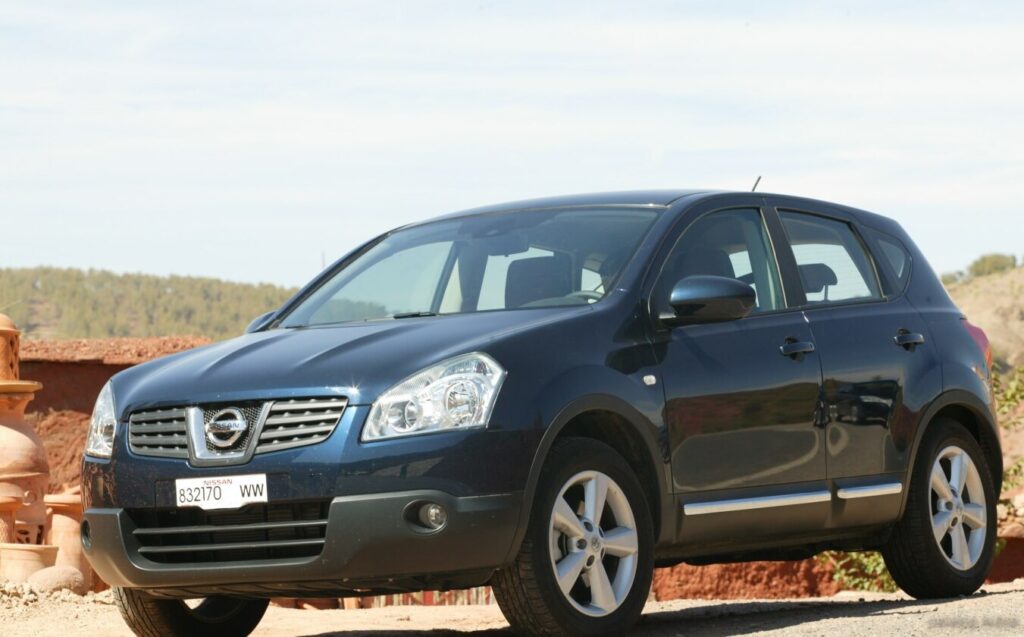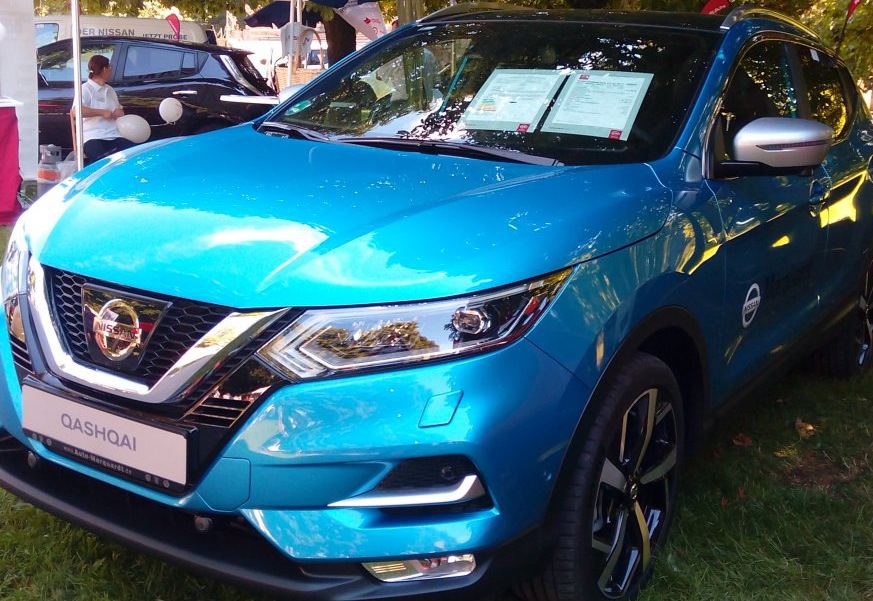
The Nissan Qashqai II (J11), specifically the 1.5 dCi 115 horsepower variant, was a popular compact crossover SUV produced from October 2018 to September 2020, following the 2017 facelift of the second-generation Qashqai. This model occupied a key position in the Qashqai lineup as an efficient and relatively affordable option, appealing to buyers prioritizing fuel economy and practicality over outright performance. It was positioned below the higher-powered diesel and gasoline variants, and above any base-level trims offered in certain markets. The Qashqai II is built on the CMF (Common Module Family) platform, jointly developed by Renault and Nissan, designated as the 1HX0/A3 platform.
1.5 dCi Powertrain & Engine Architecture
The heart of this Qashqai variant is the Renault-Nissan Alliance’s K9K 1.5-liter four-cylinder diesel engine. This engine, a mainstay in many European Renault and Nissan vehicles, is known for its fuel efficiency and robust design. The K9K engine in this application produces 115 horsepower (85.8 kW) at 3750 rpm and 285 Nm (210.21 lb-ft) of torque at 2000 rpm. The engine features a transverse front-engine layout and utilizes a diesel commonrail fuel injection system, delivering precise fuel metering for optimized combustion. It also incorporates a turbocharger with an intercooler to enhance power output and efficiency. The engine’s valvetrain consists of two valves per cylinder (SOHC).
While a six-speed manual transmission was standard, this article focuses on the automatic transmission option. The Qashqai 1.5 dCi 115 hp was paired with a Jatco-supplied continuously variable transmission (CVT). This CVT, while contributing to smoother acceleration and improved fuel economy, differed in driving feel from traditional stepped-gear automatic transmissions. The Jatco CVT featured a belt-and-pulley system, offering a theoretically infinite number of gear ratios within its operating range. This allowed the engine to operate consistently within its optimal power band.
Engine Specifications (K9K)
- Displacement: 1461 cm³ (89.16 cu. in.)
- Bore x Stroke: 76 mm x 80.5 mm (2.99 in x 3.17 in)
- Compression Ratio: 15.4:1
- Fuel Injection: Diesel Commonrail
- Aspiration: Turbocharged, Intercooled
Driving Characteristics
The 1.5 dCi 115 hp automatic Qashqai offered a comfortable and practical driving experience, prioritizing fuel efficiency over sporty performance. Acceleration from 0 to 100 km/h (0-62 mph) took approximately 12.3 seconds, and 0-60 mph was achieved in around 11.7 seconds. The CVT transmission contributed to smooth, linear acceleration, but lacked the immediate response of a traditional automatic or manual gearbox. The engine’s peak torque of 285 Nm, available from 2000 rpm, provided adequate pulling power for everyday driving and highway cruising. However, overtaking maneuvers required careful planning, as the engine could feel strained at higher speeds. Compared to the more powerful 1.6 dCi variants, the 1.5 dCi offered a noticeably less energetic driving experience. The manual transmission version of this engine offered slightly quicker acceleration due to the reduced weight and drivetrain losses.
The CVT’s programming was tuned for fuel economy, often holding the engine at lower RPMs during steady-state cruising. This resulted in a quiet and relaxed driving experience, but could sometimes lead to the engine “hunting” for the optimal gear ratio under hard acceleration. The Qashqai’s suspension was tuned for comfort, providing a compliant ride over most road surfaces.
Equipment & Trim Levels
The 1.5 dCi 115 hp automatic Qashqai typically came equipped with a reasonable level of standard features. These generally included air conditioning, power windows and mirrors, a basic audio system with USB connectivity, Bluetooth hands-free phone system, and alloy wheels. Safety features such as ABS (Anti-lock Braking System), Electronic Stability Control (ESC), and multiple airbags were standard across the range. Higher trim levels, such as Tekna or N-Connecta, added features like a touchscreen infotainment system with navigation, rear parking sensors, a reversing camera, automatic headlights and wipers, and climate control. Interior upholstery was typically cloth, with leather options available on higher trims. Optional extras included panoramic sunroof, heated seats, and advanced driver-assistance systems (ADAS) like lane departure warning and blind-spot monitoring.
Chassis & Braking
The Qashqai II utilized a front-wheel-drive layout. The suspension consisted of MacPherson struts at the front and a multi-link setup at the rear, providing a good balance between ride comfort and handling. The front brakes were ventilated discs, while the rear brakes were typically solid discs, although some base models may have featured drum brakes. The steering system was an electric power-assisted steering rack and pinion, offering light and precise steering feel. The vehicle’s kerb weight of approximately 1460 kg (3218.75 lbs) influenced its handling characteristics, making it feel relatively stable and predictable in corners. Stabilizer bars were fitted to both the front and rear axles to reduce body roll.
Market Reception & Comparison
The Nissan Qashqai II 1.5 dCi 115 hp automatic was generally well-received by critics as a practical and fuel-efficient crossover. Its fuel economy figures of 3.1-3.5 l/100 km (75.9-67.2 US mpg) were particularly praised, making it an attractive option for drivers covering long distances. However, some reviewers criticized the CVT transmission for its lack of responsiveness and the engine’s limited power output. Compared to the higher-powered diesel variants, the 1.5 dCi offered lower performance but significantly better fuel economy. Compared to gasoline-powered Qashqais, the 1.5 dCi provided superior torque and fuel efficiency, but at the cost of increased engine noise and vibration. Reliability was generally good, with the K9K engine proving to be a durable and dependable unit.
Technical Specifications
| Brand | Nissan |
| Model | Qashqai |
| Generation | Qashqai II (J11, facelift 2017) |
| Type (Engine) | 1.5 dCi (115 Hp) |
| Start of production | October, 2018 |
| End of production | September, 2020 |
| Fuel consumption (urban) | 3.5-3.9 l/100 km (67.2 – 60.3 US mpg) |
| Fuel consumption (extra urban) | 2.9-3.2 l/100 km (81.1 – 73.5 US mpg) |
| Fuel consumption (combined) | 3.1-3.5 l/100 km (75.9 – 67.2 US mpg) |
| CO2 emissions | 100-110 g/km |
| Fuel Type | Diesel |
| Acceleration 0 – 100 km/h | 12.3 sec |
| Acceleration 0 – 62 mph | 12.3 sec |
| Acceleration 0 – 60 mph | 11.7 sec |
| Maximum speed | 180 km/h (111.85 mph) |
| Emission standard | Euro 6 d-TEMP |
| Weight-to-power ratio | 12.7 kg/Hp |
| Weight-to-torque ratio | 5.1 kg/Nm |
| Power | 115 Hp @ 3750 rpm |
| Torque | 285 Nm @ 2000 rpm (210.21 lb.-ft. @ 2000 rpm) |
| Engine layout | Front, Transverse |
| Engine Model/Code | K9K |
| Engine displacement | 1461 cm3 (89.16 cu. in.) |
| Number of cylinders | 4 |
| Cylinder Bore | 76 mm (2.99 in.) |
| Piston Stroke | 80.5 mm (3.17 in.) |
| Compression ratio | 15.4:1 |
| Fuel injection system | Diesel Commonrail |
| Engine oil capacity | 5.7 l (6.02 US qt | 5.02 UK qt) |
| Coolant capacity | 7.4 l (7.82 US qt | 6.51 UK qt) |
| Kerb Weight | 1460 kg (3218.75 lbs.) |
| Max. weight | 1955 kg (4310.04 lbs.) |
| Trunk (boot) space – minimum | 430 l (15.19 cu. ft.) |
| Trunk (boot) space – maximum | 1598 l (56.43 cu. ft.) |
| Fuel tank capacity | 55 l (14.53 US gal | 12.1 UK gal) |
| Length | 4394 mm (172.99 in.) |
| Width | 1806 mm (71.1 in.) |
| Height | 1590 mm (62.6 in.) |
| Wheelbase | 2646 mm (104.17 in.) |
Legacy
The Nissan Qashqai II 1.5 dCi 115 hp automatic, while no longer in production, remains a common sight on used car lots across Europe. The K9K engine, despite its age, has proven to be relatively reliable, although regular maintenance is crucial to prevent issues with the turbocharger and fuel injection system. The CVT transmission, while generally dependable, can be susceptible to wear and tear if not properly serviced. Overall, this variant represents a sensible and economical choice for buyers seeking a practical and fuel-efficient compact crossover. Its affordability and low running costs continue to make it an attractive option in the used car market.