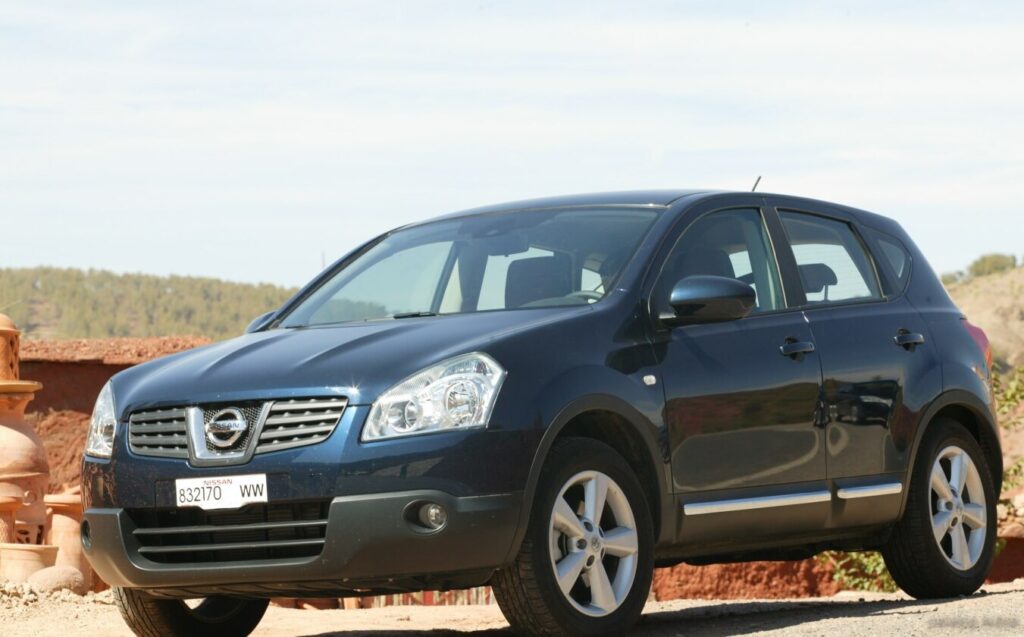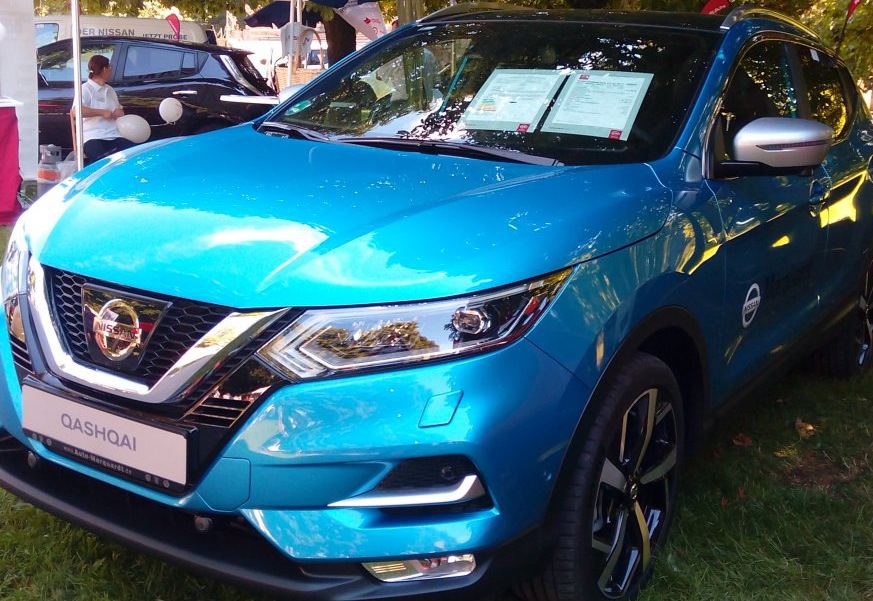
The Nissan Qashqai II (J11), specifically the 1.5 dCi 115 horsepower variant with a Dual Clutch Transmission (DCT), was a popular compact crossover SUV produced from 2019 to September 2020. This version represented a mid-range offering within the facelifted second-generation Qashqai lineup, positioned between the lower-powered diesel options and the more potent gasoline engines. The J11 Qashqai, launched in 2014, benefited from a significant refresh in 2017, and this 1.5 dCi DCT model was a key part of Nissan’s strategy to offer a diverse range of efficient and practical vehicles to the European market.
1.5 dCi DCT Powertrain & Engine Architecture
At the heart of this Qashqai variant lies the Renault-Nissan Alliance’s K9K 1.5-liter four-cylinder diesel engine. This engine, displacing 1461 cc (89.16 cubic inches), is a well-established unit known for its fuel efficiency and relatively robust design. The K9K engine in this application produces 115 hp (85.8 kW) at 3750 rpm and 285 Nm (210.21 lb-ft) of torque at 2000 rpm. The engine utilizes a common rail direct fuel injection system, delivering fuel at extremely high pressure for optimized combustion. A turbocharger with an intercooler is employed to boost power and torque output, mitigating turbo lag and improving responsiveness. The engine features a two-valve per cylinder configuration (total of 8 valves) and a transverse front-engine layout.
The transmission is a crucial component of this variant – a 7-speed Dual Clutch Transmission (DCT). This DCT, sourced from Getrag, offers quicker and smoother gear changes compared to a traditional automatic transmission. It operates by utilizing two separate clutches for odd and even gears, allowing for pre-selection of the next gear and minimizing interruption in power delivery. The DCT contributes significantly to the Qashqai’s fuel efficiency and provides a more engaging driving experience than a conventional torque-converter automatic.
Engine Code & Specifics
The K9K engine code is common across several Renault and Nissan models. Specific variations within the K9K family exist, but the version used in the 2019-2020 Qashqai II 1.5 dCi DCT is tuned for a balance of fuel economy and drivability. The engine incorporates a diesel particulate filter (DPF) to meet stringent Euro 6 d-TEMP emission standards. Oil capacity is rated at 5.7 liters (6.02 US quarts / 5.02 UK quarts), and the recommended coolant capacity is 7.4 liters (7.82 US quarts / 6.51 UK quarts).
Driving Characteristics
The 1.5 dCi 115 hp DCT Qashqai delivers a comfortable and refined driving experience, prioritizing fuel efficiency over outright performance. Acceleration from 0-100 km/h (0-62 mph) takes approximately 13 seconds, and 0-60 mph is achieved in around 12.4 seconds. While not particularly quick, the engine provides sufficient power for everyday driving situations, including highway cruising and overtaking. The DCT transmission contributes to a responsive feel, with quick shifts and minimal hesitation. The gear ratios are optimized for fuel economy, with taller gearing in higher gears to reduce engine speed at cruising speeds. Compared to the higher-output gasoline versions of the Qashqai, this diesel variant feels less eager to rev, but offers significantly better fuel economy. Compared to manual transmission versions of the same engine, the DCT provides added convenience and smoothness, although some drivers may prefer the greater control offered by a manual gearbox.
Equipment & Trim Levels
The 1.5 dCi 115 hp DCT Qashqai typically came equipped with a solid range of standard features. These generally included air conditioning, a touchscreen infotainment system with Bluetooth connectivity, alloy wheels, and a suite of safety features such as ABS, electronic stability control, and multiple airbags. Interior upholstery was typically cloth, with options for higher-grade materials available on higher trim levels. Dashboard configuration was consistent across the range, featuring a modern and functional design. Optional extras commonly included navigation systems, parking sensors, a rearview camera, and advanced driver-assistance systems (ADAS) like lane departure warning and automatic emergency braking. Specific trim levels (e.g., Visia, Acenta, Tekna) offered progressively more features and equipment.
Chassis & Braking
The Qashqai II utilizes a front-wheel-drive platform with a MacPherson strut suspension setup at the front and a torsion beam suspension at the rear. This configuration provides a good balance of ride comfort and handling. The 1.5 dCi variant, being a mid-range model, typically featured disc brakes on all four wheels. ABS (Anti-lock Braking System) was standard, enhancing braking performance and stability. Steering is provided by an electric power steering system, offering light and precise control. Tire size was commonly 215/60 R17, mounted on 7J x 17 inch alloy wheels. Stabilizer bars were fitted to both the front and rear axles to reduce body roll during cornering.
Market Reception & Comparison
The Nissan Qashqai II 1.5 dCi DCT received generally positive reviews from automotive critics. It was praised for its fuel efficiency, comfortable ride, and well-equipped interior. The DCT transmission was also well-received, offering a smooth and responsive driving experience. However, some critics noted that the engine could feel underpowered when fully loaded or when tackling steep hills. In terms of fuel economy, the 1.5 dCi DCT consistently outperformed the gasoline-powered Qashqai variants, achieving a combined fuel consumption of around 4.4 l/100 km (53.5 US mpg / 64.2 UK mpg). Reliability was generally good, although, like all diesel vehicles, the DPF required periodic maintenance to prevent clogging. Compared to other compact crossovers in its class, such as the Kia Sportage and Hyundai Tucson, the Qashqai offered a competitive package with a strong emphasis on practicality and fuel efficiency.
Technical Specifications
| Brand | Nissan |
| Model | Qashqai |
| Generation | Qashqai II (J11, facelift 2017) |
| Type (Engine) | 1.5 dCi (115 Hp) DCT |
| Start of production | 2019 |
| End of production | September, 2020 |
| Fuel consumption (combined) | 4.4 l/100 km (53.5 US mpg / 64.2 UK mpg) |
| CO2 emissions | 106 g/km |
| Fuel Type | Diesel |
| Acceleration 0 – 100 km/h | 13 sec |
| Acceleration 0 – 62 mph | 13 sec |
| Acceleration 0 – 60 mph | 12.4 sec |
| Maximum speed | 183 km/h (113.71 mph) |
| Emission standard | Euro 6 d-TEMP |
| Power | 115 Hp @ 3750 rpm |
| Torque | 285 Nm @ 2000 rpm (210.21 lb.-ft. @ 2000 rpm) |
| Engine layout | Front, Transverse |
| Engine Model/Code | K9K |
| Engine displacement | 1461 cm3 (89.16 cu. in.) |
| Number of cylinders | 4 |
| Engine configuration | Inline |
| Cylinder Bore | 76 mm (2.99 in.) |
| Piston Stroke | 80.5 mm (3.17 in.) |
| Number of valves per cylinder | 2 |
| Fuel injection system | Diesel Commonrail |
| Engine aspiration | Turbocharger, Intercooler |
| Engine oil capacity | 5.7 l (6.02 US qt | 5.02 UK qt) |
| Coolant | 7.4 l (7.82 US qt | 6.51 UK qt) |
| Kerb Weight | 1475 kg (3251.82 lbs.) |
| Max. weight | 1975 kg (4354.13 lbs.) |
| Trunk (boot) space – minimum | 430 l (15.19 cu. ft.) |
| Trunk (boot) space – maximum | 1598 l (56.43 cu. ft.) |
| Fuel tank capacity | 55 l (14.53 US gal | 12.1 UK gal) |
| Drive wheel | Front wheel drive |
| Number of gears and type of gearbox | 7 gears, automatic transmission DCT |
| Front brakes | Disc |
| Rear brakes | Disc |
| Tires size | 215/60 R17 |
| Wheel rims size | 7J x 17 |
| Length | 4394 mm (172.99 in.) |
| Width | 1806 mm (71.1 in.) |
| Height | 1590 mm (62.6 in.) |
Legacy
The 1.5 dCi DCT powertrain in the Qashqai II has proven to be generally reliable, although, as with any diesel engine, proper maintenance is crucial, particularly regarding the DPF. On the used car market, these models represent a good value proposition for buyers seeking a fuel-efficient and practical crossover SUV. The DCT transmission, if properly maintained, is known to be durable. However, potential buyers should be aware of the potential costs associated with DPF replacement or repair. Overall, the 1.5 dCi DCT Qashqai remains a popular choice in the used car market, offering a compelling blend of economy, comfort, and practicality.