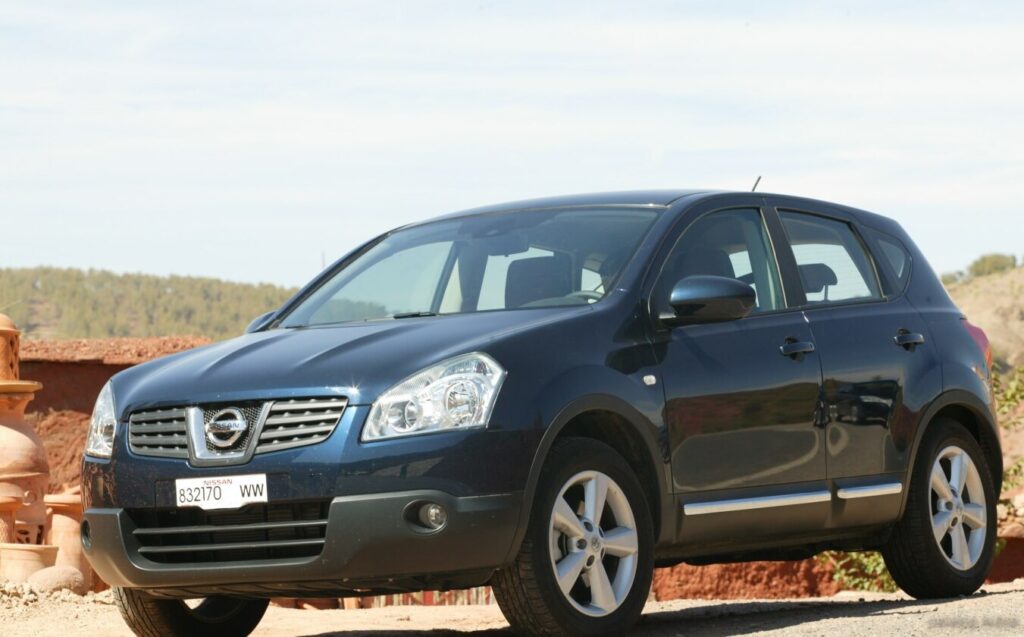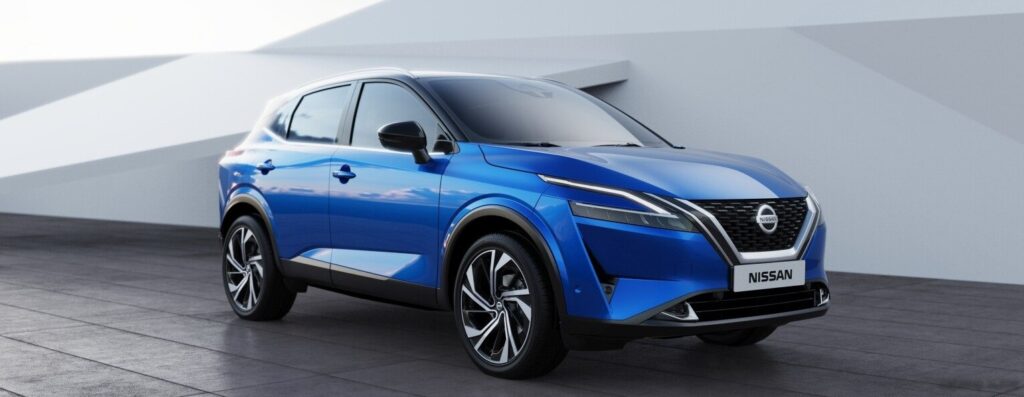
The Nissan Qashqai III (J12) 1.3 DIG-T (158 Hp) Mild Hybrid Xtronic represents a significant iteration in Nissan’s popular crossover lineup, launched in April 2021 and continuing through June 2024. This variant occupies a central position within the third-generation Qashqai (J12) range, built on the CMF-C platform, offering a balance between fuel efficiency, performance, and technology. It aimed to appeal to buyers seeking a modern, practical, and relatively economical family vehicle. The introduction of mild hybrid technology marked a step towards electrification for the Qashqai, enhancing fuel economy and reducing emissions.
1.3 DIG-T Mild Hybrid Powertrain & Engine Architecture
At the heart of the Qashqai III 1.3 DIG-T Xtronic lies the HR13DDT engine, a 1.3-liter inline-four cylinder gasoline engine. This engine utilizes direct fuel injection and is turbocharged with an intercooler, producing 158 horsepower at 5500 rpm and 270 Nm (199.14 lb-ft) of torque between 1800 and 3750 rpm. The engine’s specific output is 118.6 hp per liter. The “DIG-T” designation stands for Direct Injection Gasoline Turbocharger.
The mild hybrid system incorporates a 48V lithium-ion battery and a belt starter generator (BSG). The BSG allows for extended engine-off coasting, regenerative braking to recapture energy, and a smoother start-stop system operation. While not capable of fully electric driving, the mild hybrid system assists the engine during acceleration, reducing the load and improving fuel efficiency. The engine’s compression ratio is 10.5:1, and it meets EURO 6d-ISC-FCM emission standards.
Crucially, this variant is paired exclusively with Nissan’s Xtronic Continuously Variable Transmission (CVT). This transmission is designed to provide smooth, seamless acceleration and optimized fuel economy. Unlike traditional stepped automatic transmissions, the Xtronic CVT utilizes a belt and pulley system to offer an infinite number of gear ratios within its operating range.
Transmission Details: Xtronic CVT
The Xtronic CVT in the Qashqai III is a Jatco-sourced unit, known for its reliability and efficiency. It features a sub-planetary gearset that provides a fixed gear ratio for improved starting acceleration and a more natural driving feel. The CVT is electronically controlled, adapting to driving conditions and driver input to optimize performance and fuel economy. While some drivers may prefer the more direct feel of a traditional automatic, the Xtronic CVT contributes significantly to the Qashqai’s overall efficiency.
Driving Characteristics
The 1.3 DIG-T 158 hp Xtronic combination delivers a respectable, if not particularly exhilarating, driving experience. Acceleration from 0-100 km/h (0-62 mph) takes approximately 9.2 seconds, with a calculated 0-60 mph time of 8.7 seconds. The maximum speed is electronically limited to 199 km/h (123.65 mph). The Xtronic CVT provides smooth and linear acceleration, but can sometimes feel less responsive than a traditional automatic, particularly during sudden acceleration requests.
The mild hybrid system helps to mitigate some of the CVT’s inherent characteristics by providing a small boost during initial acceleration. The engine is relatively quiet and refined at cruising speeds, and the CVT minimizes engine noise during steady-state driving. Compared to higher-output Qashqai variants, such as those with more powerful engines, this version prioritizes fuel economy and comfort over outright performance. It’s geared towards drivers who prioritize efficiency and a relaxed driving experience.
Equipment & Trim Levels
The Qashqai III 1.3 DIG-T 158 hp Xtronic was available in various trim levels, typically including Visia, Acenta, Tekna, and N-Connecta. Standard equipment generally included air conditioning, a touchscreen infotainment system with Apple CarPlay and Android Auto compatibility, Bluetooth connectivity, and a suite of safety features such as automatic emergency braking, lane departure warning, and traffic sign recognition.
Higher trim levels added features such as larger touchscreen displays, navigation systems, a panoramic sunroof, leather upholstery, heated seats, and advanced driver-assistance systems like adaptive cruise control and blind-spot monitoring. Interior upholstery typically consisted of cloth on lower trims, with leather options available on higher-spec models. Dashboard configurations were consistent across the range, featuring a modern and minimalist design.
Chassis & Braking
The Qashqai III utilizes a front-wheel-drive platform with independent suspension at the front and a torsion beam rear suspension. The front suspension features MacPherson struts, while the rear torsion beam provides a compact and cost-effective solution. Stabilizer bars are fitted to both the front and rear axles to reduce body roll during cornering.
Braking duties are handled by ventilated discs at the front and solid discs at the rear. The braking system is equipped with ABS (Anti-lock Braking System), electronic brakeforce distribution (EBD), and brake assist. Steering is provided by an electric power steering system, offering light and precise control. Tire sizes varied depending on the trim level, ranging from 215/65 R17 to 235/50 R19.
Market Reception & Comparison
The Nissan Qashqai III 1.3 DIG-T Mild Hybrid Xtronic was generally well-received by automotive critics. It was praised for its fuel efficiency, comfortable ride, and well-equipped interior. However, some reviewers noted that the CVT transmission could feel less engaging than traditional automatics, and the engine’s performance was considered adequate but not exceptional.
Compared to other trims in the Qashqai lineup, the 1.3 DIG-T Xtronic offered a compelling balance between price and features. It was more affordable than the higher-output engine options, while still providing a respectable level of performance and equipment. Fuel economy figures of 5.5 l/100 km (42.8 US mpg) combined were competitive within its segment. Reliability reports have been generally positive, with the HR13DDT engine proving to be a durable and dependable unit.
Technical Specifications
| Body Type | SUV, Crossover |
| Engine Displacement | 1332 cm3 (81.28 cu. in.) |
| Engine Layout | Inline-4, Front Transverse |
| Engine Code | HR13DDT |
| Fuel Type | Petrol (Gasoline) |
| Power Output | 158 Hp @ 5500 rpm |
| Torque Output | 270 Nm (199.14 lb-ft) @ 1800-3750 rpm |
| Compression Ratio | 10.5:1 |
| Fuel Injection | Direct Injection |
| Turbocharger | Yes, with Intercooler |
| Transmission | Xtronic CVT |
| Drive Type | Front Wheel Drive |
| Acceleration 0-100 km/h | 9.2 sec |
| Maximum Speed | 199 km/h (123.65 mph) |
| Fuel Consumption (Combined) | 5.5 l/100 km (42.8 US mpg, 51.4 UK mpg) |
| CO2 Emissions | 125 g/km |
| Kerb Weight | 1393-1511 kg (3071.04 – 3331.18 lbs.) |
| Fuel Tank Capacity | 55 l (14.53 US gal, 12.1 UK gal) |
Legacy
The Nissan Qashqai III 1.3 DIG-T Mild Hybrid Xtronic represents a key step in Nissan’s transition towards electrified powertrains. The HR13DDT engine, coupled with the Xtronic CVT, has proven to be a reliable and efficient combination. On the used car market, these models are generally sought after for their fuel economy and practicality. While the CVT transmission may require periodic servicing, it is generally considered a durable unit. The Qashqai III continues to be a popular choice in the compact crossover segment, and the 1.3 DIG-T Mild Hybrid Xtronic variant remains a competitive option for buyers seeking a well-rounded and economical vehicle.