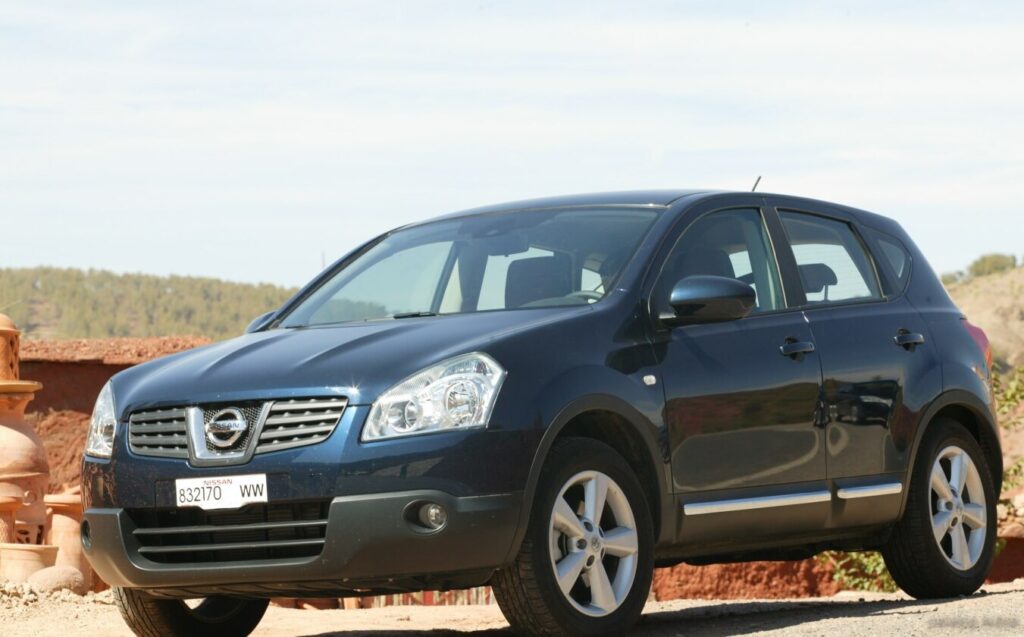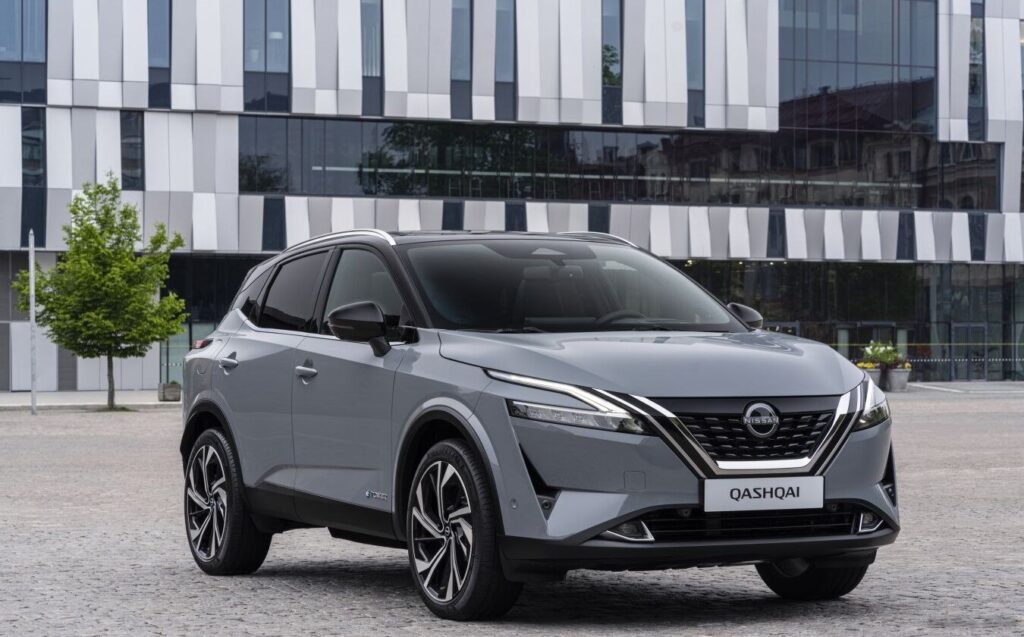
The Nissan Qashqai III (J12) e-POWER 1.5 VC-T, produced from July 2022 to June 2024, represents a significant step in Nissan’s electrification strategy. This variant, positioned as a mid-to-premium offering within the third-generation Qashqai lineup, utilizes a unique full hybrid electric vehicle (FHEV) powertrain dubbed “e-POWER.” Unlike traditional hybrids, the 1.5 VC-T’s gasoline engine doesn’t directly drive the wheels; instead, it functions solely as a generator to charge the battery, which then powers the electric motor that drives the front wheels. This configuration aims to deliver the driving experience of an electric vehicle with the extended range of a gasoline-powered car. The Qashqai III is built on the CMF-CD platform, shared with other Renault-Nissan-Mitsubishi Alliance vehicles.
Powertrain & Engine Architecture
At the heart of the Qashqai III e-POWER lies the KR15DDT, a 1.5-liter inline-three cylinder turbocharged gasoline engine. This engine produces 158 horsepower at 4600 rpm and 250 Nm (184.39 lb-ft) of torque between 2400-4400 rpm. The engine features direct fuel injection and a turbocharger with an intercooler, optimizing for both efficiency and power output. Its compression ratio is 8:1, and it utilizes a four-valve-per-cylinder configuration. The engine’s primary role isn’t propulsion, but rather electricity generation.
The electric motor, located on the front axle, delivers 190 horsepower and 330 Nm (243.4 lb-ft) of torque. This electric motor is powered by a lithium-ion battery pack located under the front seats. The system’s total power output is 190 hp. The transmission is a single-speed automatic, simplifying the drivetrain and contributing to the smooth, EV-like driving experience. The e-POWER system is designed to mimic the responsiveness of a fully electric vehicle, providing instant torque and linear acceleration.
Fuel Injection and Valvetrain
The KR15DDT engine employs a sophisticated direct injection system, allowing for precise fuel delivery and optimized combustion. This contributes to improved fuel efficiency and reduced emissions. The valvetrain utilizes variable valve timing, further enhancing engine performance and responsiveness across a wider range of engine speeds. The engine also incorporates a particulate filter to minimize harmful emissions, meeting stringent EURO 6d-ISC-FCM emission standards.
Driving Characteristics
The Qashqai III e-POWER delivers a unique driving experience. The absence of a direct mechanical link between the engine and the wheels results in a remarkably smooth and quiet ride, closely resembling that of a battery-electric vehicle. Acceleration from 0 to 100 km/h (0-62 mph) takes 7.9 seconds, and 0-60 mph is achieved in approximately 7.5 seconds. While not a performance-oriented vehicle, the e-POWER system provides ample power for everyday driving situations and confident overtaking maneuvers. The single-speed transmission offers seamless acceleration, eliminating the gear shifts typically associated with conventional automatic transmissions. The system prioritizes electric drive whenever possible, only engaging the gasoline engine when the battery charge is low or when additional power is required.
Compared to other Qashqai III variants, such as those with traditional internal combustion engines, the e-POWER model offers a more refined and responsive driving experience. It differs significantly from potential future diesel or plug-in hybrid options in its reliance on the gasoline engine solely for electricity generation, rather than direct propulsion.
Equipment & Trim Levels
The Qashqai III e-POWER 1.5 VC-T typically came well-equipped, reflecting its mid-to-premium positioning. Standard features generally included Nissan’s ProPILOT Assist driver assistance system, a touchscreen infotainment system with smartphone integration (Apple CarPlay and Android Auto), automatic climate control, and a suite of safety features such as automatic emergency braking, lane departure warning, and blind-spot monitoring. Interior upholstery typically consisted of cloth or leatherette, depending on the trim level. Higher trim levels offered features like heated front seats, a panoramic sunroof, and a premium sound system. Optional extras included metallic paint finishes, upgraded wheels, and a 360-degree camera system.
Chassis & Braking
The Qashqai III e-POWER utilizes a front-wheel-drive configuration. The suspension system consists of MacPherson struts at the front and a multi-link setup at the rear, providing a comfortable ride and stable handling. The kerb weight of the vehicle ranges from 1624 to 1728 kg (3580.31 – 3809.59 lbs), influenced by trim level and optional equipment. The braking system features ventilated discs at the front and solid discs at the rear, complemented by ABS (Anti-lock Braking System) and electronic brakeforce distribution. The steering system is an electric power-assisted rack and pinion system, offering precise and responsive steering feel.
Market Reception & Comparison
The Nissan Qashqai III e-POWER received generally positive reviews from automotive critics. Praise was directed towards its unique driving experience, smooth acceleration, and fuel efficiency. Combined fuel consumption, according to WLTP testing, ranges from 5.3 to 5.4 l/100 km (44.4 – 43.6 US mpg, 53.3 – 52.3 UK mpg). Compared to other Qashqai III trims, the e-POWER model offered superior fuel economy in urban driving conditions, thanks to its reliance on electric power. However, fuel consumption increased at higher speeds and under heavy loads. Reliability reports have been generally positive, with the e-POWER system proving to be relatively robust. The Qashqai III e-POWER competed with other hybrid and electric crossovers in the European market, such as the Toyota C-HR and the Kia Niro.
Technical Specifications
| Body type | SUV, Crossover |
| Engine | 1.5L Inline-3 Turbocharged Gasoline (KR15DDT) |
| Engine Displacement | 1477 cm3 (90.13 cu. in.) |
| Engine Power | 158 hp @ 4600 rpm |
| Engine Torque | 250 Nm (184.39 lb-ft) @ 2400-4400 rpm |
| Electric Motor Power | 190 hp |
| Electric Motor Torque | 330 Nm (243.4 lb-ft) |
| System Power | 190 hp |
| System Torque | 330 Nm (243.4 lb-ft) |
| Transmission | Single-Speed Automatic |
| Drive Type | Front-Wheel Drive |
| Acceleration 0-100 km/h | 7.9 sec |
| Acceleration 0-60 mph | 7.5 sec (Calculated) |
| Maximum Speed | 170 km/h (105.63 mph) |
| Fuel Consumption (Combined WLTP) | 5.3-5.4 l/100 km (44.4 – 43.6 US mpg) |
| CO2 Emissions (WLTP) | 120-122 g/km |
| Fuel Tank Capacity | 55 l (14.53 US gal) |
| Kerb Weight | 1624-1728 kg (3580.31 – 3809.59 lbs) |
| Trunk Space (Minimum) | 455 l (16.07 cu. ft.) |
| Trunk Space (Maximum) | 1415 l (49.97 cu. ft.) |
Legacy
The Nissan Qashqai III e-POWER 1.5 VC-T represents a pivotal step in Nissan’s transition towards electrification. The e-POWER system, while not a fully electric vehicle, provides a compelling alternative for drivers seeking the benefits of electric driving without the range anxiety associated with battery-electric vehicles. On the used car market, these models are generally well-regarded, with the e-POWER powertrain proving to be relatively reliable. The unique driving experience and fuel efficiency continue to attract buyers. The long-term durability of the battery pack remains a key consideration for potential buyers, but Nissan’s warranty coverage and the system’s overall robustness provide some reassurance. The Qashqai III e-POWER has paved the way for further electrification efforts from Nissan, solidifying its commitment to a sustainable automotive future.