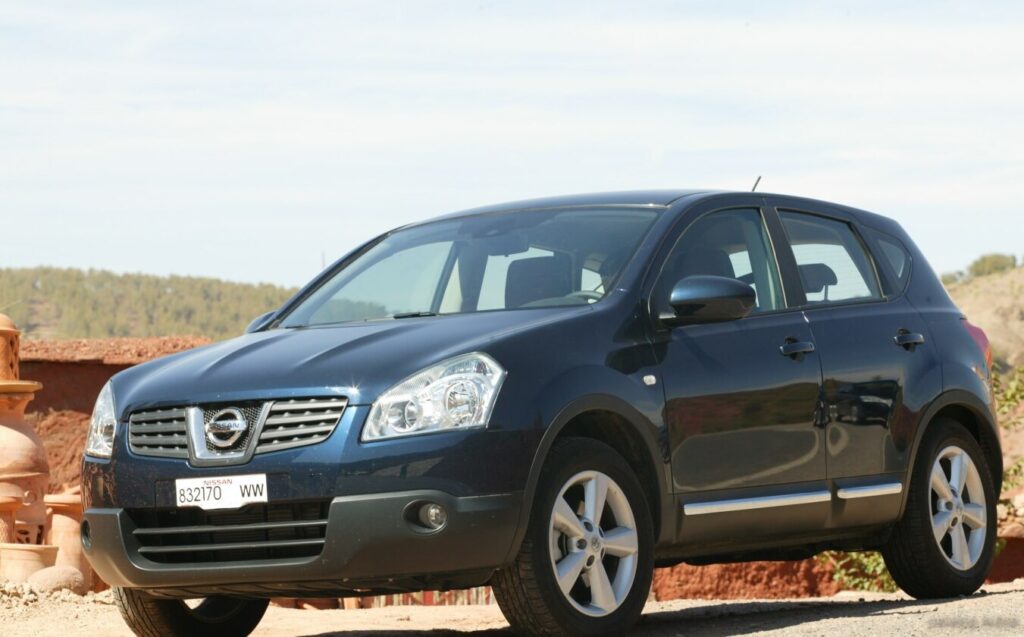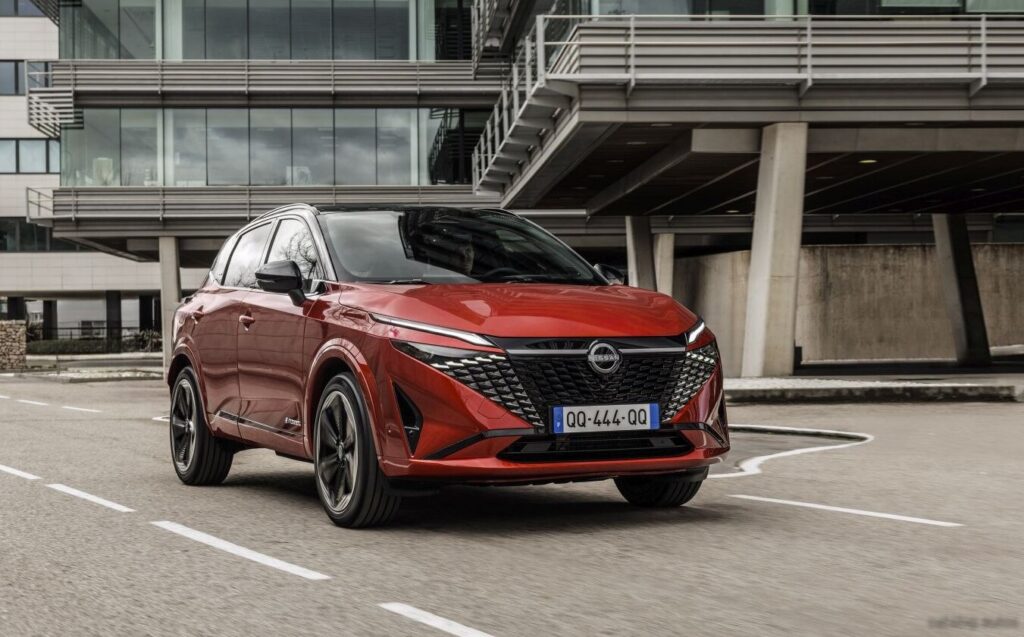
The Nissan Qashqai III, introduced in 2024 (J12 chassis), represents the third generation of Nissan’s popular compact crossover. The e-POWER 1.5 VC-T (190 Hp) Full Hybrid Automatic variant, launched in June 2024, is a significant offering within the Qashqai III lineup. This version utilizes Nissan’s innovative e-POWER system, a series hybrid powertrain, and positions itself as a premium, fuel-efficient option targeting buyers seeking a technologically advanced and comfortable driving experience. It builds upon the foundation of the CMF-CD platform, shared with other Renault-Nissan-Mitsubishi Alliance vehicles.
Nissan Qashqai III e-POWER 1.5 VC-T: An Overview
The Qashqai III e-POWER 1.5 VC-T is characterized by its unique powertrain, which differs substantially from traditional hybrid or gasoline-powered vehicles. Instead of the engine directly driving the wheels, it functions solely as a generator to charge the battery, which then powers the electric motor that drives the front wheels. This configuration provides a driving experience similar to that of a fully electric vehicle, with the 1.5-liter gasoline engine acting as a range extender. The facelifted 2024 model incorporates minor aesthetic updates and potential refinements to the e-POWER system based on initial market feedback.
Powertrain & Engine Architecture
At the heart of the Qashqai III e-POWER 1.5 VC-T lies the KR15DDT, a 1.5-liter inline-3 cylinder turbocharged gasoline engine. This engine produces 158 hp at 4600 rpm and 250 Nm (184.39 lb-ft) of torque between 2400-4400 rpm. It features direct fuel injection and an intercooled turbocharger, contributing to its efficiency and responsiveness. The engine’s primary role isn’t propulsion, but rather electricity generation. The engine is paired with a generator and a lithium-ion battery pack located under the floor and front seats. The electric motor, delivering 190 hp and 330 Nm (243.4 lb-ft) of torque, is mounted on the front axle and provides drive to the front wheels. The transmission is a single-speed automatic, typical of electric vehicle drivetrains, optimized for smooth and efficient power delivery. The e-POWER system is classified as a Full Hybrid Electric Vehicle (FHEV), but its operation differs from conventional hybrids where the engine can directly drive the wheels.
Driving Characteristics
The e-POWER system delivers a distinct driving experience. Acceleration from 0-100 km/h (0-62 mph) takes 7.9 seconds, and 0-60 mph is achieved in approximately 7.5 seconds. The single-speed transmission provides linear acceleration, and the instant torque of the electric motor results in brisk responsiveness. Unlike traditional internal combustion engines, there is no noticeable shift shock, contributing to a smooth and refined ride. The system prioritizes electric drive whenever possible, resulting in quiet operation, especially at lower speeds. The gasoline engine engages seamlessly when the battery charge is low or when additional power is required, such as during hard acceleration or uphill climbs. The lack of a conventional multi-gear transmission means the engine operates within a relatively narrow RPM band when generating electricity, potentially leading to a droning sound under heavy load. Compared to lower-powered Qashqai variants, the e-POWER offers significantly improved acceleration and overall performance.
Equipment & Trim Levels
The e-POWER 1.5 VC-T trim typically represents a higher specification level within the Qashqai III range. Standard features generally include Nissan’s ProPILOT Assist driver assistance system, a digital instrument cluster, a touchscreen infotainment system with smartphone integration (Apple CarPlay and Android Auto), and automatic climate control. Interior upholstery is typically a combination of cloth and synthetic leather, with higher trims offering full leather options. Available optional extras include a panoramic sunroof, premium audio system, heated and ventilated front seats, and advanced safety features such as adaptive cruise control and blind-spot monitoring. The 2024 facelift may introduce new interior color schemes and updated infotainment software.
Chassis & Braking
The Qashqai III utilizes a MacPherson strut front suspension and a multi-link rear suspension, tuned to provide a comfortable ride and responsive handling. The e-POWER variant, due to its battery pack located under the floor, has a slightly lower center of gravity compared to other Qashqai models, potentially enhancing stability. Braking is handled by ventilated discs at the front and solid discs at the rear. Anti-lock Braking System (ABS) is standard, along with Electronic Brakeforce Distribution (EBD) and Brake Assist. Steering is electric power-assisted, providing light and precise control. Tire sizes vary depending on the trim level, ranging from 215/65 R17 to 235/45 R20.
Market Reception & Comparison
The Nissan Qashqai III e-POWER has been generally well-received by automotive critics, praised for its innovative powertrain, smooth driving experience, and fuel efficiency. Combined fuel consumption (WLTP) is rated between 5.1-5.3 l/100 km (46.1-44.4 US mpg), with CO2 emissions ranging from 116-119 g/km. Compared to the standard gasoline-powered Qashqai models, the e-POWER offers superior fuel economy and a more refined driving experience. However, it typically comes at a higher price point. Compared to other hybrid and electric crossovers in the same segment, the Qashqai e-POWER offers a unique proposition with its series hybrid setup. Some critics have noted the engine noise during sustained high-speed driving as a potential drawback. Reliability reports are still emerging, but Nissan has a generally positive reputation for build quality and dependability.
Technical Specifications
| Body Type | SUV, Crossover |
| Engine | 1.5L Inline-3 Turbocharged Gasoline (KR15DDT) |
| Engine Displacement | 1477 cm3 (90.13 cu. in.) |
| Engine Power | 158 hp @ 4600 rpm |
| Engine Torque | 250 Nm (184.39 lb-ft) @ 2400-4400 rpm |
| Electric Motor Power | 190 hp |
| Electric Motor Torque | 330 Nm (243.4 lb-ft) |
| Transmission | Single-Speed Automatic |
| Drive Type | Front Wheel Drive |
| Acceleration 0-100 km/h | 7.9 sec |
| Maximum Speed | 170 km/h (105.63 mph) |
| Fuel Consumption (Combined WLTP) | 5.1-5.3 l/100 km (46.1-44.4 US mpg) |
| CO2 Emissions (WLTP) | 116-119 g/km |
| Fuel Tank Capacity | 55 l (14.53 US gal) |
| Kerb Weight | 1590-1702 kg (3505.35 – 3752.27 lbs.) |
| Trunk Space (Minimum) | 455 l (16.07 cu. ft.) |
| Trunk Space (Maximum) | 1440 l (50.85 cu. ft.) |
Legacy
The e-POWER technology represents a significant step in Nissan’s electrification strategy. The Qashqai III e-POWER 1.5 VC-T is expected to hold its value well in the used car market due to its fuel efficiency, advanced technology, and comfortable driving experience. The long-term reliability of the e-POWER system remains to be fully assessed, but Nissan’s commitment to hybrid and electric vehicle technology suggests a continued focus on refinement and durability. The KR15DDT engine, while primarily used as a generator in this application, is a relatively modern and well-engineered unit, contributing to the overall dependability of the powertrain. As the automotive landscape shifts towards electrification, the Qashqai III e-POWER is poised to become a popular and sought-after model in the compact crossover segment.