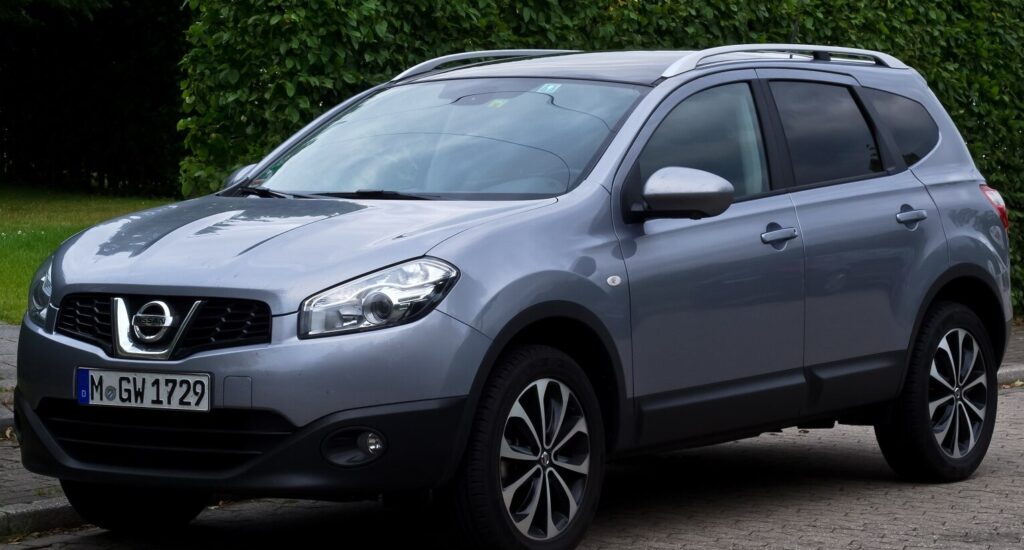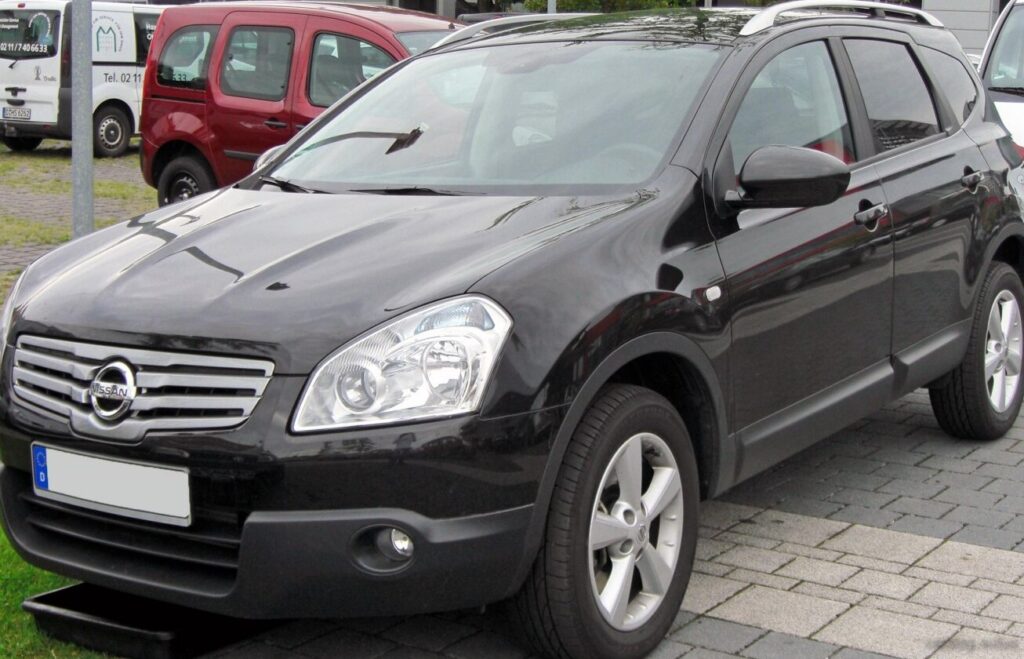
The Nissan Qashqai+2, introduced in 2008 as an extension of the original Qashqai (Dualis in some markets), aimed to provide the practicality of seven-passenger seating within the increasingly popular compact crossover segment. The Qashqai+2 (designated NJ10) differentiated itself from the standard Qashqai primarily through its extended wheelbase and roofline, accommodating the third row of seats. This variant, specifically the 2.0 dCi producing 150 horsepower, represented a mid-range offering within the Qashqai+2 lineup, positioned between the lower-powered diesel options and the gasoline-fueled models. Production of this specific configuration ran from 2008 to 2010, catering primarily to European markets where diesel engines held significant market share and larger families sought affordable, versatile vehicles.
Technical Specifications
| Brand | Nissan |
| Model | Qashqai |
| Generation | Qashqai+2 I (NJ10) |
| Type (Engine) | 2.0 dCi (150 Hp) |
| Start of production | 2008 |
| End of production | 2010 |
| Powertrain Architecture | Internal Combustion engine |
| Body type | SUV, Crossover |
| Seats | 7 |
| Doors | 5 |
| Fuel consumption (urban) | 8.5 l/100 km (27.7 US mpg, 33.2 UK mpg, 11.8 km/l) |
| Fuel consumption (extra urban) | 5.6 l/100 km (42 US mpg, 50.4 UK mpg, 17.9 km/l) |
| Fuel consumption (combined) | 6.7 l/100 km (35.1 US mpg, 42.2 UK mpg, 14.9 km/l) |
| CO2 emissions | 177 g/km |
| Fuel Type | Diesel |
| Acceleration 0 – 100 km/h | 10.9 sec |
| Acceleration 0 – 62 mph | 10.9 sec |
| Acceleration 0 – 60 mph | 10.4 sec |
| Maximum speed | 190 km/h (118.06 mph) |
| Emission standard | Euro 4 |
| Weight-to-power ratio | 10.9 kg/Hp, 92 Hp/tonne |
| Weight-to-torque ratio | 5.1 kg/Nm, 196.2 Nm/tonne |
| Power | 150 Hp @ 4000 rpm |
| Power per litre | 75.2 Hp/l |
| Torque | 320 Nm @ 2000 rpm (236.02 lb.-ft. @ 2000 rpm) |
| Engine layout | Front, Transverse |
| Engine Model/Code | M9R |
| Engine displacement | 1995 cm3 (121.74 cu. in.) |
| Number of cylinders | 4 |
| Engine configuration | Inline |
| Cylinder Bore | 84 mm (3.31 in.) |
| Piston Stroke | 90 mm (3.54 in.) |
| Number of valves per cylinder | 4 |
| Fuel injection system | Diesel Commonrail |
| Engine aspiration | Turbocharger, Intercooler |
| Valvetrain | OHC |
| Engine oil capacity | 7.4 l (7.82 US qt | 6.51 UK qt) |
| Coolant | 8 l (8.45 US qt | 7.04 UK qt) |
| Kerb Weight | 1631 kg (3595.74 lbs.) |
| Max. weight | 2255 kg (4971.42 lbs.) |
| Max load | 624 kg (1375.68 lbs.) |
| Trunk (boot) space – minimum | 130 l (4.59 cu. ft.) |
| Trunk (boot) space – maximum | 1520 l (53.68 cu. ft.) |
| Fuel tank capacity | 65 l (17.17 US gal | 14.3 UK gal) |
| Max. roof load | 75 kg (165.35 lbs.) |
| Permitted trailer load with brakes (12%) | 1400 kg (3086.47 lbs.) |
| Permitted trailer load without brakes | 740 kg (1631.42 lbs.) |
| Permitted towbar download | 75 kg (165.35 lbs.) |
| Length | 4530 mm (178.35 in.) |
| Width | 1780 mm (70.08 in.) |
| Height | 1645 mm (64.76 in.) |
| Wheelbase | 2765 mm (108.86 in.) |
| Front track | 1540 mm (60.63 in.) |
| Rear (Back) track | 1550 mm (61.02 in.) |
| Minimum turning circle | 11 m (36.09 ft.) |
| Drivetrain Architecture | Front wheel drive |
| Number of gears | 6 gears, manual transmission |
| Front suspension | Independent, type McPherson with coil spring and anti-roll bar |
| Rear suspension | Independent multi-link spring suspension with stabilizer |
| Front brakes | Ventilated discs |
| Rear brakes | Disc |
| Assisting systems | ABS (Anti-lock braking system) |
| Steering type | Steering rack and pinion |
| Power steering | Electric Steering |
| Tires size | 215/65 R16; 215/60 R17 |
| Wheel rims size | 5.5J x 16; 6.5J x 17 |
Powertrain & Engine Architecture
The heart of the Qashqai+2 2.0 dCi was the Renault-Nissan Alliance’s M9R engine. This 1995cc inline-four cylinder diesel engine utilized a common rail direct injection system, delivering fuel at extremely high pressures for optimized combustion. The M9R featured a single overhead camshaft (OHC) design and was equipped with a turbocharger and intercooler to boost power and efficiency. The 150 horsepower variant was a step up from the base diesel offerings, providing a noticeable increase in performance. The engine’s durability was generally considered good, though early versions of the M9R were known to have potential issues with timing chain wear, which were addressed in later revisions. The Qashqai+2 2.0 dCi was exclusively offered with a six-speed manual transmission, providing drivers with full control over gear selection.
Driving Characteristics
The 2.0 dCi engine in the Qashqai+2 offered a reasonable balance between performance and fuel economy. While not a sports car, the 150 hp output and 320 Nm (236 lb-ft) of torque provided adequate acceleration for everyday driving and highway cruising. The six-speed manual transmission allowed for efficient gear changes, and the engine’s torque curve meant that strong pulling power was available from relatively low engine speeds. Compared to the lower-powered 1.5 dCi versions, the 2.0 dCi felt significantly more responsive, particularly when fully loaded with passengers and luggage. However, it didn’t offer the same level of refinement or outright performance as some of its competitors with larger displacement engines.
Equipment & Trim Levels
The Qashqai+2 2.0 dCi typically came equipped with a respectable level of standard features. These included air conditioning, electric front and rear windows, a CD player with auxiliary input, and ABS brakes. Higher trim levels, such as the Tekna, added features like alloy wheels, climate control, parking sensors, and a more sophisticated audio system. Interior upholstery was typically cloth, with options for leather available on higher-spec models. The third row of seats in the Qashqai+2 was best suited for occasional use or smaller passengers, as space was somewhat limited.
Chassis & Braking
The Qashqai+2 utilized an independent McPherson strut suspension at the front and an independent multi-link suspension at the rear, providing a comfortable ride quality. The suspension was tuned to prioritize comfort over sporty handling. Braking duties were handled by ventilated discs at the front and solid discs at the rear, providing adequate stopping power for the vehicle’s weight. ABS (Anti-lock Braking System) was standard, enhancing safety during emergency braking situations.
Market Reception & Comparison
The Qashqai+2 2.0 dCi was generally well-received by automotive critics as a practical and versatile family vehicle. Its fuel economy was a strong selling point, particularly in Europe where diesel fuel was often cheaper than gasoline. Compared to other seven-seater options in its price range, the Qashqai+2 offered a more stylish and modern design. However, some critics noted that the third row of seats was cramped and that the overall driving experience wasn’t as engaging as some of its competitors. The 2.0 dCi engine offered a good compromise between performance and economy, but it wasn’t as refined or powerful as some of the larger diesel engines available in other vehicles.
Legacy
The Nissan Qashqai+2, and specifically the 2.0 dCi variant, has proven to be a relatively reliable vehicle in the used car market. The M9R engine, while having some potential issues in early iterations, generally holds up well with proper maintenance. Regular oil changes and timely replacement of the timing chain (if necessary) are crucial for long-term reliability. Today, the Qashqai+2 represents an affordable option for families seeking a versatile and fuel-efficient vehicle. Its compact size and relatively low running costs make it a popular choice for urban drivers and those looking for a practical second car.