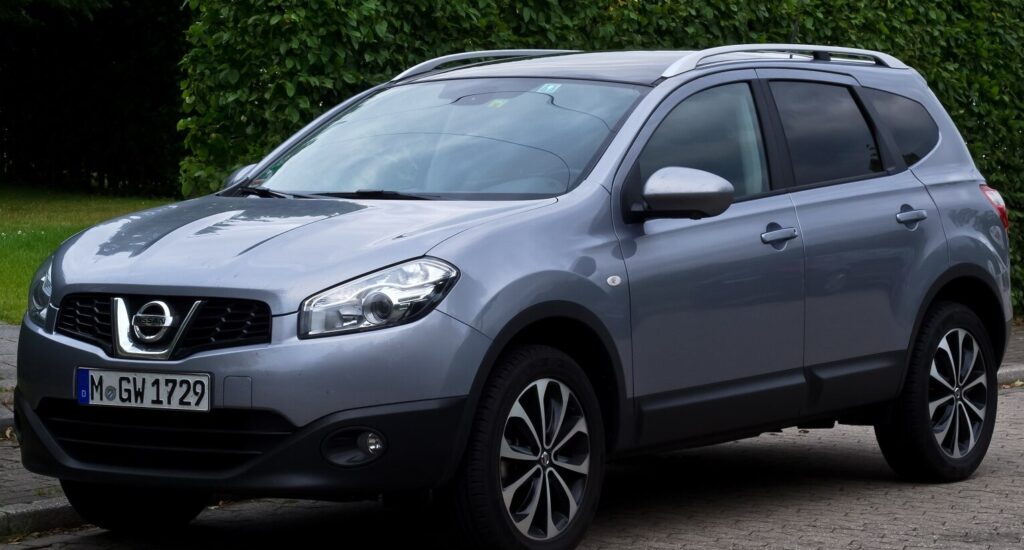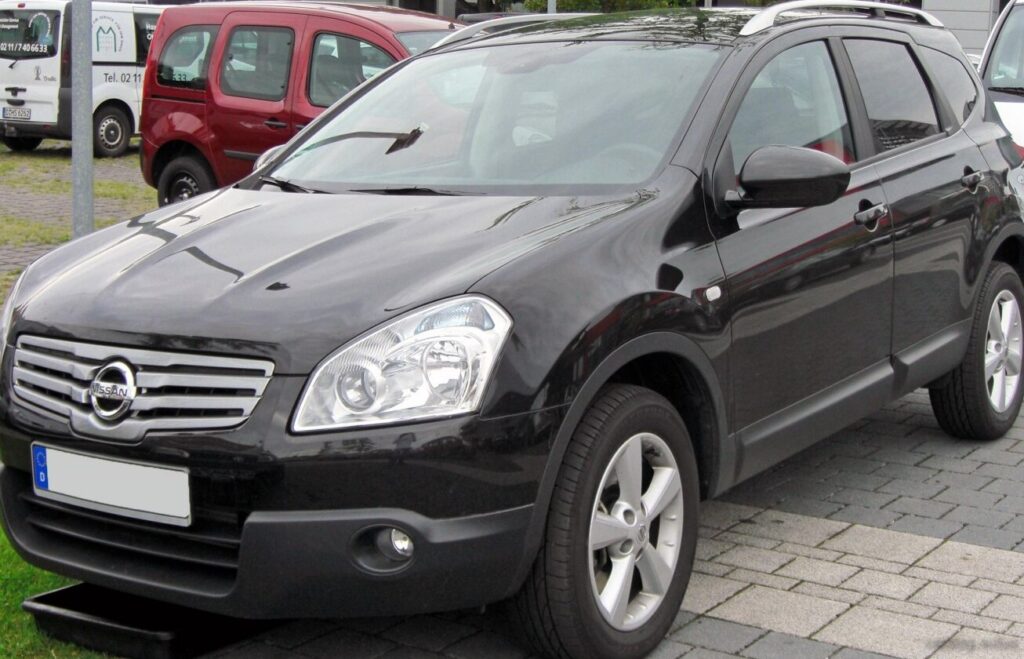
The Nissan Qashqai+2 I (NJ10) 2.0 dCi 150 hp 4×4 Automatic, produced between 2008 and 2010, represented a significant expansion of the popular Qashqai range. Adding a third row of seats, the “+2” variant aimed to provide compact SUV practicality with seven-passenger capability. This particular configuration, combining the 2.0-liter diesel engine with an automatic transmission and all-wheel drive, occupied a mid-to-high position within the Qashqai+2 lineup, offering a balance of performance, comfort, and all-weather capability. It was primarily marketed in Europe, where compact crossovers with diesel engines and automatic transmissions were gaining considerable traction.
Technical Specifications
| Brand | Nissan |
| Model | Qashqai |
| Generation | Qashqai+2 I (NJ10) |
| Type (Engine) | 2.0 dCi (150 Hp) 4×4 Automatic |
| Start of production | 2008 |
| End of production | 2010 |
| Powertrain Architecture | Internal Combustion engine |
| Body type | SUV, Crossover |
| Seats | 7 |
| Doors | 5 |
| Fuel consumption (urban) | 10 l/100 km (23.5 US mpg, 28.2 UK mpg, 10 km/l) |
| Fuel consumption (extra urban) | 6.6 l/100 km (35.6 US mpg, 42.8 UK mpg, 15.2 km/l) |
| Fuel consumption (combined) | 7.9 l/100 km (29.8 US mpg, 35.8 UK mpg, 12.7 km/l) |
| CO2 emissions | 209 g/km |
| Fuel Type | Diesel |
| Acceleration 0 – 100 km/h | 12.4 sec |
| Acceleration 0 – 62 mph | 12.4 sec |
| Acceleration 0 – 60 mph | 11.8 sec |
| Maximum speed | 183 km/h (113.71 mph) |
| Emission standard | Euro 4 |
| Weight-to-power ratio | 11.5 kg/Hp, 86.6 Hp/tonne |
| Weight-to-torque ratio | 5.4 kg/Nm, 184.8 Nm/tonne |
| Power | 150 Hp @ 4000 rpm |
| Power per litre | 75.2 Hp/l |
| Torque | 320 Nm @ 2000 rpm (236.02 lb.-ft. @ 2000 rpm) |
| Engine layout | Front, Transverse |
| Engine Model/Code | M9R |
| Engine displacement | 1995 cm3 (121.74 cu. in.) |
| Number of cylinders | 4 |
| Engine configuration | Inline |
| Cylinder Bore | 84 mm (3.31 in.) |
| Piston Stroke | 90 mm (3.54 in.) |
| Compression ratio | 15.6:1 |
| Number of valves per cylinder | 4 |
| Fuel injection system | Diesel Commonrail |
| Engine aspiration | Turbocharger, Intercooler |
| Valvetrain | DOHC |
| Engine oil capacity | 7.4 l (7.82 US qt | 6.51 UK qt) |
| Coolant | 8.8 l (9.3 US qt | 7.74 UK qt) |
| Kerb Weight | 1732 kg (3818.41 lbs.) |
| Max. weight | 2356 kg (5194.09 lbs.) |
| Max load | 624 kg (1375.68 lbs.) |
| Trunk (boot) space – minimum | 130 l (4.59 cu. ft.) |
| Trunk (boot) space – maximum | 1520 l (53.68 cu. ft.) |
| Fuel tank capacity | 65 l (17.17 US gal | 14.3 UK gal) |
| Max. roof load | 75 kg (165.35 lbs.) |
| Permitted trailer load with brakes (12%) | 1350 kg (2976.24 lbs.) |
| Permitted trailer load without brakes | 750 kg (1653.47 lbs.) |
| Permitted towbar download | 75 kg (165.35 lbs.) |
| Length | 4530 mm (178.35 in.) |
| Width | 1780 mm (70.08 in.) |
| Height | 1645 mm (64.76 in.) |
| Wheelbase | 2765 mm (108.86 in.) |
| Front track | 1540 mm (60.63 in.) |
| Rear (Back) track | 1550 mm (61.02 in.) |
| Minimum turning circle | 11 m (36.09 ft.) |
| Drivetrain Architecture | All wheel drive (4×4). ICE drives front wheels, rear driven via clutch. |
| Number of gears and type of gearbox | 6 gears, automatic transmission |
Powertrain & Engine Architecture
The heart of this Qashqai+2 variant is the Renault-Nissan Alliance’s M9R 2.0-liter four-cylinder diesel engine. This engine, known for its robust construction and relatively refined operation, utilizes a common-rail direct injection system, delivering fuel at extremely high pressure for optimized combustion. The M9R features a single overhead camshaft (SOHC) design per cylinder bank (DOHC overall) and a turbocharger with an intercooler to boost power output. The 150 hp version of the M9R was a common output, offering a good balance between fuel efficiency and performance. The automatic transmission paired with this engine is a six-speed unit, designed to provide smooth shifts and enhance drivability. This transmission isn’t known for being particularly sporty, prioritizing comfort and ease of use over rapid gear changes.
Driving Characteristics
The 2.0 dCi 150 hp Automatic 4×4 Qashqai+2 delivers adequate, but not exhilarating, performance. Acceleration from 0-60 mph takes around 11.8 seconds, and the top speed is approximately 114 mph. The automatic transmission, while smooth, can feel somewhat sluggish, especially when attempting quick overtaking maneuvers. The all-wheel-drive system provides enhanced traction in slippery conditions, making it a capable vehicle for year-round use. The gear ratios are tuned for fuel economy and relaxed cruising, rather than outright speed. Compared to the manual transmission versions of the same engine, the automatic sacrifices some responsiveness. Higher-output versions of the 2.0 dCi (typically 173 hp) offered noticeably more punch, but at the expense of fuel economy.
Equipment & Trim Levels
The Qashqai+2 in this configuration typically came with a reasonable level of standard equipment. This included air conditioning, electric windows and mirrors, a CD player with auxiliary input, and alloy wheels. Safety features such as ABS, electronic brakeforce distribution (EBD), and multiple airbags were also standard. Optional extras included a panoramic sunroof, leather upholstery, satellite navigation, and rear parking sensors. Trim levels varied by market, but generally, this 2.0 dCi Automatic 4×4 sat in the mid-range, offering a step up in comfort and convenience compared to the base models.
Chassis & Braking
The Qashqai+2 utilizes an independent McPherson strut suspension at the front and an independent multi-link suspension at the rear, providing a comfortable ride quality. The all-wheel-drive system adds to the vehicle’s stability and handling. Braking duties are handled by ventilated discs at the front and solid discs at the rear. The braking system is assisted by ABS and EBD. Stabilizer bars are fitted to both the front and rear axles to reduce body roll during cornering. The suspension tuning is geared towards comfort, prioritizing a smooth ride over sporty handling.
Market Reception & Comparison
The Qashqai+2, and this variant in particular, was generally well-received by critics. It was praised for its practicality, spacious interior (for its class), and comfortable ride. The 2.0 dCi engine was considered a good compromise between performance and fuel economy. However, the automatic transmission was sometimes criticized for its lack of responsiveness. Compared to other compact crossovers with seven seats, such as the Citroën C4 Grand Picasso, the Qashqai+2 offered a more SUV-like appearance and driving experience. Fuel economy figures of around 30 mpg combined were competitive for the time, and the M9R engine proved to be relatively reliable.
Legacy
The Nissan Qashqai+2, including the 2.0 dCi 150 hp 4×4 Automatic, remains a popular used car choice. The M9R engine, while not without its potential issues (such as turbocharger and injector problems), is generally considered durable if properly maintained. The automatic transmission is also reasonably reliable. However, potential buyers should be aware of the possibility of wear and tear on the all-wheel-drive system. Today, these vehicles offer a relatively affordable and practical option for families needing seven seats and all-weather capability. The Qashqai+2 helped solidify Nissan’s position as a major player in the European crossover market, paving the way for future generations of the Qashqai.