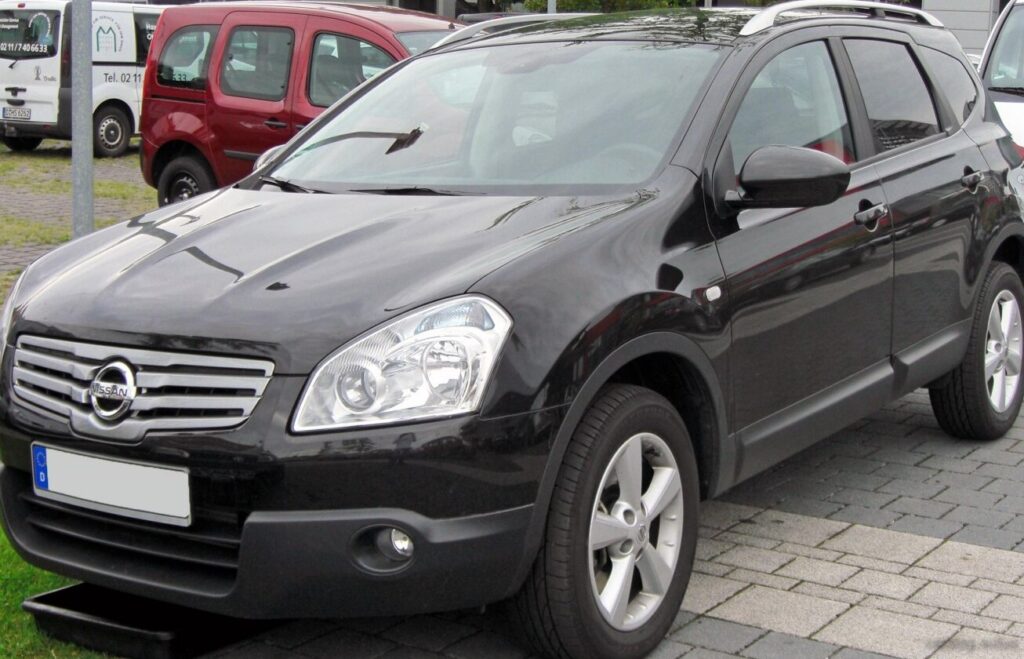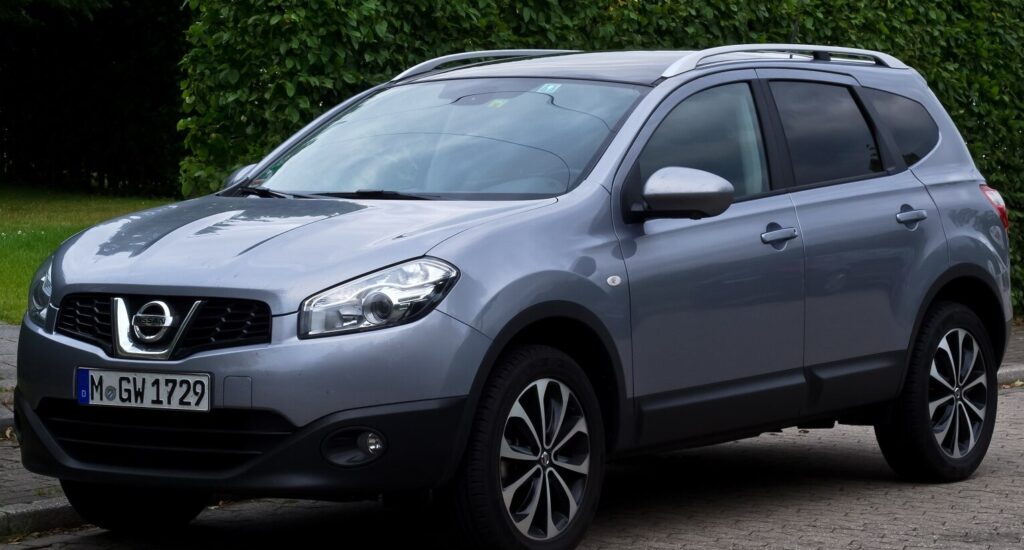
The Nissan Qashqai+2 I (NJ10, facelift 2010) 1.6 dCi, producing 131 horsepower, was a significant variant within the Qashqai range offered primarily in the European market from 2011 to 2013. Positioned as a mid-range option, it aimed to balance fuel efficiency with acceptable performance for family transport, offering the added practicality of seven seats. This model represented Nissan’s continued effort to cater to the growing crossover SUV segment, providing a more versatile alternative to traditional hatchbacks and estates. The Qashqai+2, distinguished by its extended wheelbase and third-row seating, built upon the success of the original Qashqai, addressing the need for more passenger space.
Technical Specifications
| Brand | Nissan |
| Model | Qashqai |
| Generation | Qashqai+2 I (NJ10, facelift 2010) |
| Type (Engine) | 1.6 dCi (131 Hp) |
| Start of production | 2011 |
| End of production | 2013 |
| Powertrain Architecture | Internal Combustion engine |
| Body type | SUV, Crossover |
| Seats | 7 |
| Doors | 5 |
| Fuel consumption (urban) | 5.6 l/100 km (42 US mpg, 50.4 UK mpg, 17.9 km/l) |
| Fuel consumption (extra urban) | 4.1 l/100 km (57.4 US mpg, 68.9 UK mpg, 24.4 km/l) |
| Fuel consumption (combined) | 4.7 l/100 km (50 US mpg, 60.1 UK mpg, 21.3 km/l) |
| CO2 emissions | 123 g/km |
| Fuel Type | Diesel |
| Acceleration 0 – 100 km/h | 10.9 sec |
| Acceleration 0 – 62 mph | 10.9 sec |
| Acceleration 0 – 60 mph | 10.4 sec |
| Maximum speed | 189 km/h (117.44 mph) |
| Emission standard | Euro 5 |
| Weight-to-power ratio | 12.4 kg/Hp, 80.6 Hp/tonne |
| Weight-to-torque ratio | 5.1 kg/Nm, 196.8 Nm/tonne |
| Power | 131 Hp @ 4000 rpm |
| Power per litre | 82 Hp/l |
| Torque | 320 Nm @ 1750 rpm (236.02 lb.-ft. @ 1750 rpm) |
| Engine layout | Front, Transverse |
| Engine Model/Code | R9M |
| Engine displacement | 1598 cm3 (97.52 cu. in.) |
| Number of cylinders | 4 |
| Engine configuration | Inline |
| Cylinder Bore | 80 mm (3.15 in.) |
| Piston Stroke | 79.5 mm (3.13 in.) |
| Compression ratio | 15.4:1 |
| Number of valves per cylinder | 4 |
| Fuel injection system | Diesel Commonrail |
| Engine aspiration | Turbocharger, Intercooler |
| Engine oil capacity | 5.5 l (5.81 US qt | 4.84 UK qt) |
| Coolant | 8 l (8.45 US qt | 7.04 UK qt) |
| Kerb Weight | 1626-1685 kg (3584.72 – 3714.79 lbs.) |
| Max. weight | 2255 kg (4971.42 lbs.) |
| Max load | 570-629 kg (1256.63 – 1386.71 lbs.) |
| Trunk (boot) space – minimum | 130 l (4.59 cu. ft.) |
| Trunk (boot) space – maximum | 1520 l (53.68 cu. ft.) |
| Fuel tank capacity | 65 l (17.17 US gal | 14.3 UK gal) |
| Permitted trailer load with brakes (12%) | 1400 kg (3086.47 lbs.) |
| Permitted trailer load without brakes | 750 kg (1653.47 lbs.) |
| Permitted towbar download | 75 kg (165.35 lbs.) |
| Length | 4541 mm (178.78 in.) |
| Width | 1780 mm (70.08 in.) |
| Height | 1645 mm (64.76 in.) |
| Wheelbase | 2765 mm (108.86 in.) |
| Front track | 1540 mm (60.63 in.) |
| Rear (Back) track | 1550 mm (61.02 in.) |
| Minimum turning circle | 11 m (36.09 ft.) |
| Drivetrain Architecture | The Internal combustion engine (ICE) drives the front wheels. |
| Drive wheel | Front wheel drive |
| Number of gears and type of gearbox | 6 gears, manual transmission |
| Front suspension | Independent, type McPherson with coil spring and anti-roll bar |
| Rear suspension | Independent multi-link spring suspension with stabilizer |
| Front brakes | Ventilated discs |
| Rear brakes | Ventilated discs |
| Assisting systems | ABS (Anti-lock braking system) |
| Steering type | Steering rack and pinion |
| Power steering | Electric Steering |
| Tires size | 215/65 R16; 215/60 R17; 215/55R18 |
| Wheel rims size | 6.5J x 16; 6.5J x 17; 6.5J x 18 |
Powertrain & Engine Architecture
The heart of the Qashqai+2 1.6 dCi is the Renault-Nissan Alliance’s R9M engine. This 1.6-liter, inline-four cylinder diesel engine utilizes a common-rail direct injection system, delivering fuel at extremely high pressure for optimized combustion. The engine benefits from a turbocharger with an intercooler, enhancing power output and efficiency. The R9M engine is known for its relatively compact design and robust construction. It features four valves per cylinder and a variable geometry turbocharger (VGT) to improve responsiveness across the rev range. The 131 horsepower and 320 Nm (236 lb-ft) of torque are respectable figures for this displacement, providing adequate performance for everyday driving. The engine also incorporates a diesel particulate filter (DPF) to meet stringent Euro 5 emission standards. The six-speed manual transmission was the standard offering, chosen for its balance of fuel economy and driver engagement.
Driving Characteristics
The 1.6 dCi engine in the Qashqai+2 offered a noticeable step up in performance compared to the lower-powered 1.5 dCi variants. While not a sports car, the 131 hp engine provided sufficient power for comfortable cruising and overtaking maneuvers. The torque peak of 320 Nm available from 1750 rpm meant that strong pulling power was readily accessible, making it well-suited for carrying passengers and luggage. The six-speed manual transmission allowed drivers to keep the engine in its optimal power band. Compared to the petrol engines, the diesel offered significantly better fuel economy, making it a popular choice for long-distance drivers. However, the diesel engine was noticeably louder and less refined than the petrol alternatives. The added weight of the +2 model, due to the seven-seat configuration, did slightly impact acceleration and handling compared to the standard Qashqai.
Equipment & Trim Levels
The 1.6 dCi trim typically fell into the mid-range of the Qashqai+2 lineup. Standard equipment generally included air conditioning, electric front and rear windows, a CD player with auxiliary input, and alloy wheels. Safety features such as ABS, electronic brakeforce distribution (EBD), and front and side airbags were also standard. Higher trim levels offered options like climate control, a touchscreen infotainment system with navigation, rear parking sensors, and automatic headlights and wipers. Interior upholstery was typically cloth, with higher trims offering partial leather options. The dashboard layout was functional and user-friendly, with a focus on practicality rather than luxury.
Chassis & Braking
The Qashqai+2 utilized a McPherson strut front suspension and a multi-link rear suspension, providing a comfortable ride quality. The suspension was tuned to prioritize comfort over sporty handling. The +2 model featured slightly stiffer springs and dampers compared to the standard Qashqai to cope with the increased weight. Braking duties were handled by ventilated discs on all four wheels, providing adequate stopping power. ABS (Anti-lock Braking System) was standard, enhancing safety during emergency braking situations. The steering was electrically assisted, offering light and precise control.
Market Reception & Comparison
The Qashqai+2 1.6 dCi was generally well-received by automotive critics. It was praised for its fuel efficiency, spacious interior, and practical seven-seat configuration. However, some reviewers noted that the engine could be somewhat noisy and that the handling wasn’t as engaging as some of its rivals. Compared to the 1.5 dCi, the 1.6 dCi offered a noticeable improvement in performance, making it a more suitable choice for drivers who frequently carried passengers or drove on motorways. Compared to the petrol engines, the 1.6 dCi provided superior fuel economy, but at the cost of some refinement. The 1.6 dCi was a strong competitor in the compact crossover segment, offering a compelling blend of practicality, efficiency, and affordability.
Legacy
The R9M engine, while generally reliable, has been known to exhibit issues with the DPF (Diesel Particulate Filter) and the EGR (Exhaust Gas Recirculation) valve, particularly if not maintained properly. Regular servicing and the use of high-quality diesel fuel are crucial for ensuring long-term reliability. Today, the Qashqai+2 1.6 dCi can be found on the used car market at relatively affordable prices. It remains a practical and economical choice for families seeking a versatile crossover SUV. Its reputation for fuel efficiency and spaciousness continues to make it a popular option, although potential buyers should be aware of the potential maintenance issues associated with the diesel engine and its emissions control systems.