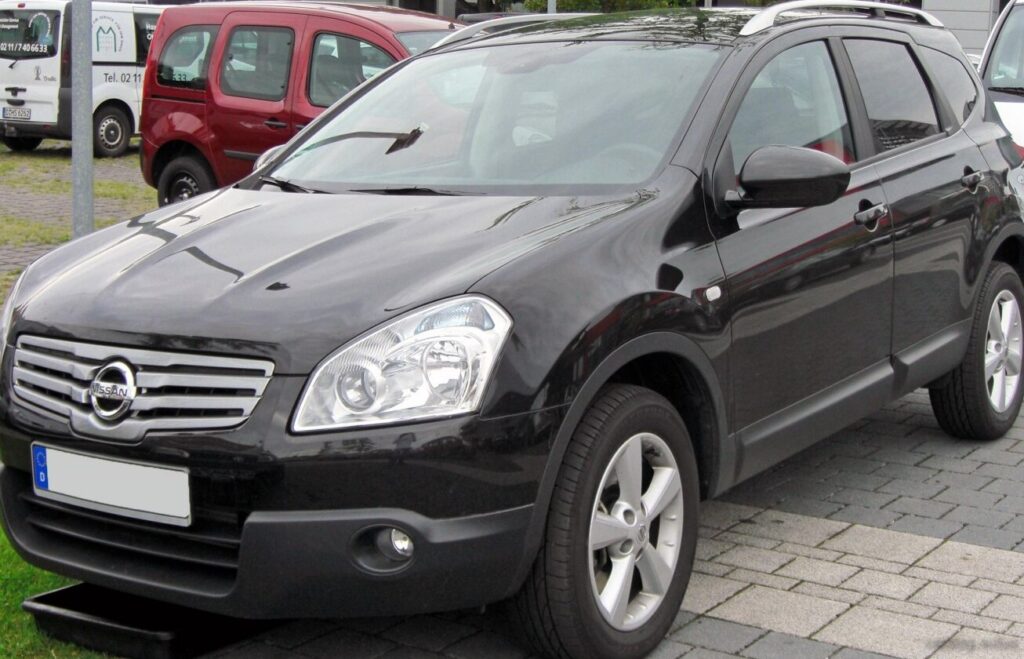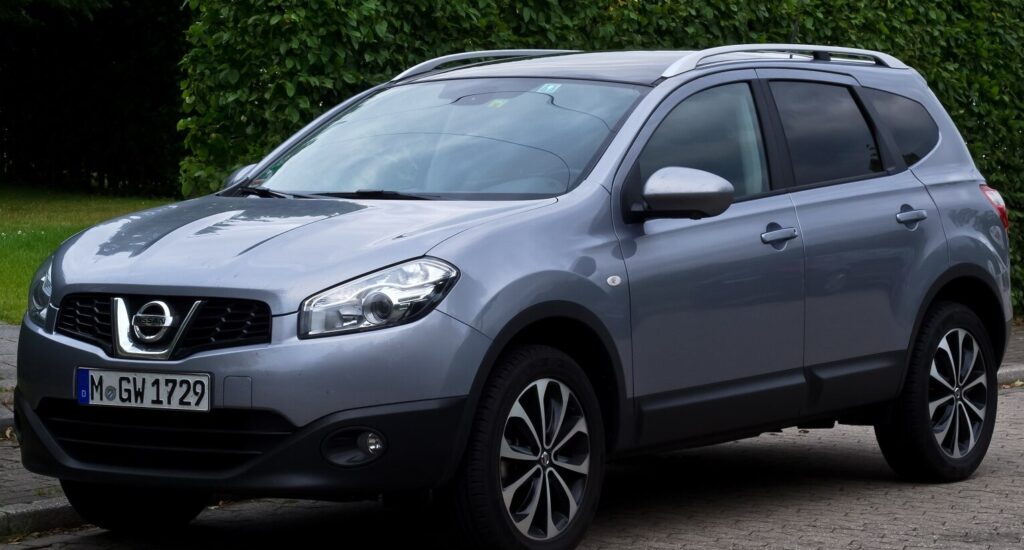
The Nissan Qashqai+2, specifically the first generation (NJ10) facelift model produced from 2010 to 2013, represented Nissan’s entry into the compact crossover segment with optional seven-passenger seating. The 2.0 dCi variant, producing 150 horsepower, was a significant offering within the Qashqai+2 lineup, positioned as a mid-range option balancing fuel efficiency, performance, and practicality. This model aimed to appeal to families needing flexible space and reasonable running costs, primarily targeting the European market where compact crossovers were gaining immense popularity. The Qashqai+2, and this variant in particular, helped establish Nissan as a key player in this burgeoning segment.
Technical Specifications
| Brand | Nissan |
| Model | Qashqai |
| Generation | Qashqai+2 I (NJ10, facelift 2010) |
| Type (Engine) | 2.0 dCi (150 Hp) |
| Start of production | 2010 |
| End of production | 2013 |
| Powertrain Architecture | Internal Combustion engine |
| Body type | SUV, Crossover |
| Seats | 7 |
| Doors | 5 |
| Fuel consumption (urban) | 7.7 l/100 km (30.5 US mpg) |
| Fuel consumption (extra urban) | 5.1 l/100 km (46.1 US mpg) |
| Fuel consumption (combined) | 6 l/100 km (39.2 US mpg) |
| CO2 emissions | 159 g/km |
| Fuel Type | Diesel |
| Acceleration 0 – 100 km/h | 10.1 sec |
| Acceleration 0 – 62 mph | 10.1 sec |
| Acceleration 0 – 60 mph | 9.6 sec |
| Maximum speed | 193 km/h (119.92 mph) |
| Emission standard | Euro 5 |
| Weight-to-power ratio | 10.9 kg/Hp |
| Weight-to-torque ratio | 5.1 kg/Nm |
| Power | 150 Hp @ 4000 rpm |
| Torque | 320 Nm @ 2000 rpm (236.02 lb.-ft. @ 2000 rpm) |
| Engine layout | Front, Transverse |
| Engine Model/Code | M9R |
| Engine displacement | 1995 cm3 (121.74 cu. in.) |
| Number of cylinders | 4 |
| Engine configuration | Inline |
| Cylinder Bore | 84 mm (3.31 in.) |
| Piston Stroke | 90 mm (3.54 in.) |
| Compression ratio | 15.6:1 |
| Number of valves per cylinder | 4 |
| Fuel injection system | Diesel Commonrail |
| Engine aspiration | Turbocharger, Intercooler |
| Engine oil capacity | 7.4 l (7.82 US qt | 6.51 UK qt) |
| Coolant capacity | 8.4 l (8.88 US qt | 7.39 UK qt) |
| Kerb Weight | 1631 kg (3595.74 lbs.) |
| Max. weight | 2255 kg (4971.42 lbs.) |
| Max load | 624 kg (1375.68 lbs.) |
| Trunk (boot) space – minimum | 130 l (4.59 cu. ft.) |
| Trunk (boot) space – maximum | 1520 l (53.68 cu. ft.) |
| Fuel tank capacity | 65 l (17.17 US gal | 14.3 UK gal) |
| Permitted trailer load with brakes (12%) | 1400 kg (3086.47 lbs.) |
| Permitted trailer load without brakes | 750 kg (1653.47 lbs.) |
| Permitted towbar download | 75 kg (165.35 lbs.) |
| Length | 4541 mm (178.78 in.) |
| Width | 1780 mm (70.08 in.) |
| Height | 1645 mm (64.76 in.) |
| Wheelbase | 2765 mm (108.86 in.) |
| Front track | 1540 mm (60.63 in.) |
| Rear track | 1550 mm (61.02 in.) |
| Minimum turning circle | 11 m (36.09 ft.) |
| Drivetrain Architecture | Front wheel drive |
| Number of gears | 6 |
| Gearbox type | Manual transmission |
| Front suspension | Independent, McPherson with coil spring and anti-roll bar |
| Rear suspension | Independent multi-link with stabilizer |
| Front brakes | Ventilated discs |
| Rear brakes | Ventilated discs |
| Assisting systems | ABS (Anti-lock braking system) |
| Steering type | Steering rack and pinion |
| Power steering | Electric |
| Tires size | 215/60 R17 |
| Wheel rims size | 6.5J x 17 |
INTRODUCTION
The Nissan Qashqai+2 (NJ10) facelift, launched in 2010, built upon the success of the original Qashqai by adding a third row of seats, increasing its practicality for larger families. The 2.0 dCi 150 hp variant was a key component of the range, offering a balance between performance and economy. This engine, part of Nissan’s M9R series, was a popular choice in Europe, known for its robust nature and relatively good fuel efficiency. The Qashqai+2 aimed to bridge the gap between traditional compact hatchbacks and larger, more expensive SUVs, offering a versatile and affordable option for buyers.
Powertrain & Engine Architecture
The heart of the Qashqai+2 2.0 dCi is the M9R engine, a 1995cc inline-four cylinder diesel. This engine utilizes a common rail direct injection system, delivering fuel at extremely high pressure for optimized combustion. The M9R engine featured a turbocharger with an intercooler, boosting power output and improving torque delivery. The 150 hp version of the M9R was a detuned variant, prioritizing fuel economy and longevity over outright performance. The engine’s valvetrain consists of four valves per cylinder, contributing to efficient gas exchange. Paired with this engine was a six-speed manual transmission, providing a good balance of fuel efficiency and driver control. While an automatic transmission was available on other Qashqai models, the 2.0 dCi 150 hp was primarily offered with the manual gearbox.
Driving Characteristics
The 2.0 dCi 150 hp Qashqai+2 offered a competent, if not particularly exciting, driving experience. Acceleration from 0-60 mph took around 9.6 seconds, making it adequate for everyday driving but not a performance leader. The engine delivered a healthy 320 Nm (236 lb-ft) of torque at 2000 rpm, providing good pulling power for overtaking and carrying a full load of passengers. The six-speed manual transmission was well-matched to the engine, allowing for comfortable cruising on the highway. Compared to the lower-powered 1.5 dCi variants, the 2.0 dCi offered noticeably more punch, especially when fully loaded. However, it didn’t possess the outright performance of the petrol-powered models. The Qashqai+2’s ride quality was generally comfortable, absorbing bumps and imperfections in the road reasonably well.
Equipment & Trim Levels
The Qashqai+2 2.0 dCi typically came equipped with a reasonable level of standard features. These included air conditioning, electric front and rear windows, a CD player with auxiliary input, and alloy wheels. Higher trim levels, such as Tekna, added features like climate control, a touchscreen infotainment system, rear parking sensors, and automatic headlights and wipers. Interior upholstery was typically cloth, with leather options available on higher trims. The seven-seat configuration offered flexibility, although the third-row seats were best suited for children or shorter journeys. Optional extras included a panoramic sunroof, satellite navigation, and a premium sound system.
Chassis & Braking
The Qashqai+2 utilized a McPherson strut front suspension and a multi-link rear suspension, providing a good balance of ride comfort and handling. The chassis was reinforced to accommodate the additional weight of the third row of seats. Braking duties were handled by ventilated discs on all four wheels, providing adequate stopping power. Anti-lock Braking System (ABS) was standard, enhancing safety. The steering was electrically assisted, offering a light and easy driving experience. Stabilizer bars were fitted to both the front and rear axles to reduce body roll during cornering.
Market Reception & Comparison
The Nissan Qashqai+2 2.0 dCi was generally well-received by critics, who praised its practicality, fuel efficiency, and comfortable ride. However, some reviewers noted that the third-row seats were cramped and best suited for occasional use. Compared to the 1.5 dCi variants, the 2.0 dCi offered a significant performance improvement, making it a more suitable choice for those who frequently carried passengers or drove on the highway. Fuel economy was competitive, averaging around 39.2 US mpg in combined driving. Reliability was generally good, although some owners reported issues with the diesel particulate filter (DPF) system, a common problem with modern diesel engines.
Legacy
The Nissan Qashqai+2 2.0 dCi has proven to be a relatively reliable and durable vehicle. The M9R engine, while not without its quirks, is generally considered to be a robust unit. On the used car market, these models represent good value for money, offering a practical and affordable family vehicle. However, potential buyers should be aware of the potential for DPF issues and ensure that the vehicle has been properly maintained. The Qashqai+2, and the 2.0 dCi variant in particular, played a significant role in establishing Nissan as a major player in the compact crossover segment, paving the way for future generations of the Qashqai.