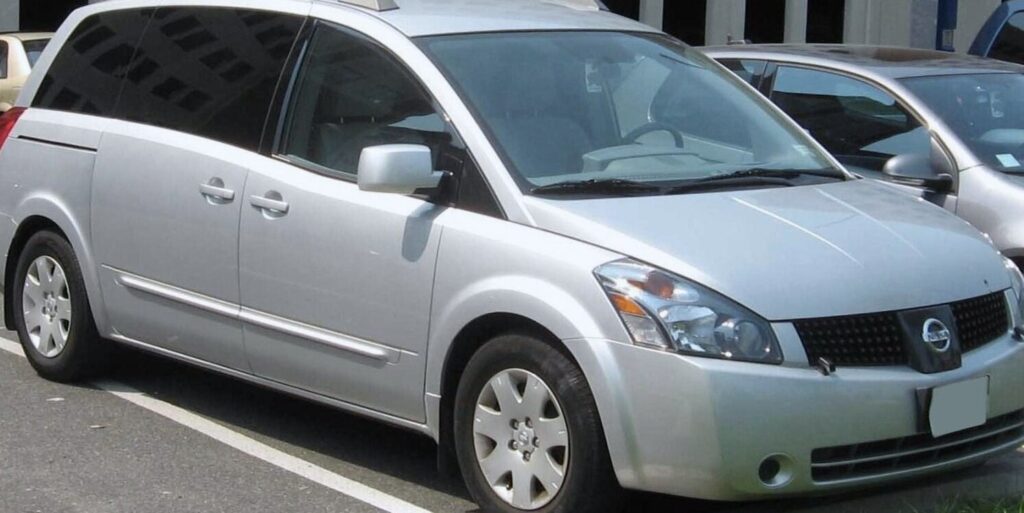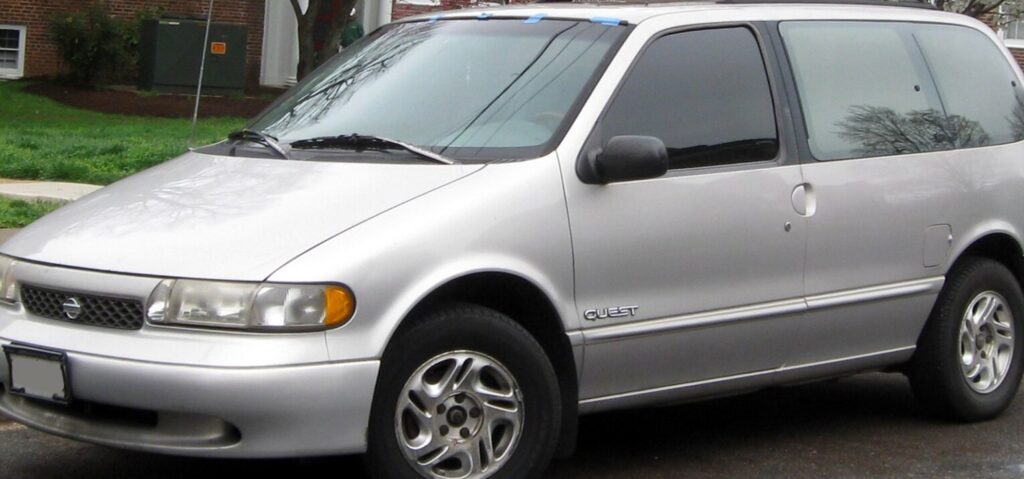
The Nissan Quest (DN11) 3.0i, produced from 1992 to 2002, represented Nissan’s initial foray into the minivan segment in North America. This first-generation Quest, built in partnership with Ford (who marketed a similar vehicle as the Mercury Villager), aimed to provide a comfortable and practical family vehicle. The 3.0i variant, equipped with a 3.0-liter V6 engine producing 151 horsepower, served as a mid-range offering within the Quest lineup, positioned between the base model and potentially higher-trim levels that might have included additional features. The DN11 Quest was based on the Nissan U platform, shared with the Maxima, and represented a significant departure for Nissan, traditionally known for its sedans and sports cars.
Powertrain & Engine Architecture
The heart of the Quest 3.0i is the VG30E 3.0-liter V6 engine. This engine, part of Nissan’s well-regarded VG series, is a 60-degree V-engine with a displacement of 2,960 cubic centimeters (180.63 cubic inches). It features a cast iron block and aluminum cylinder heads. The engine utilizes a multi-port fuel injection system, delivering fuel directly to each intake port for improved efficiency and power delivery. The valvetrain consists of a single overhead camshaft (OHC) per cylinder bank, operating two valves per cylinder (intake and exhaust). The compression ratio is 9:1.
The 3.0i Quest was exclusively offered with a 4-speed automatic transmission. This transmission, a Jatco unit, was chosen for its smooth operation and ease of use, catering to the target audience of families seeking a convenient driving experience. The automatic transmission features electronically controlled torque converter lock-up for improved fuel economy at highway speeds. While not known for sporty performance, the transmission was generally considered reliable and well-suited to the engine’s characteristics.
Engine Codes and Variations
The VG30E engine code is specific to this 3.0-liter V6 configuration in the Quest. While the VG series was used in other Nissan vehicles, slight variations existed. The Quest’s VG30E was tuned for smooth, reliable power delivery rather than outright performance. The engine’s design prioritized durability and low maintenance costs, making it a practical choice for a family minivan.
Driving Characteristics
The 151 horsepower and 173.33 lb-ft of torque produced by the VG30E engine provided adequate, but not exhilarating, performance for the Quest 3.0i. Acceleration from a standstill was moderate, and passing maneuvers required careful planning. The 4-speed automatic transmission contributed to a smooth driving experience, but its limited number of gears meant that the engine often operated at higher RPMs during highway cruising, potentially impacting fuel economy. The gear ratios were optimized for everyday driving and hauling passengers and cargo, rather than sporty acceleration. Compared to potential higher-output versions (which were not widely available on the Quest), the 3.0i prioritized fuel efficiency and a comfortable ride over raw power. The front-wheel-drive configuration provided predictable handling in most conditions, although it wasn’t designed for aggressive cornering.
Equipment & Trim Levels
The Quest 3.0i typically came standard with features considered essential for a family minivan in the early 1990s. These included air conditioning, power windows and locks, an AM/FM stereo, and cloth upholstery. Seating for seven passengers was standard, with a 2-3-2 configuration (two front seats, three in the middle row, and two in the rear). Optional extras included a power sunroof, upgraded audio systems, and alloy wheels. Higher trim levels, if available, might have added features like leather upholstery, woodgrain interior trim, and a rear entertainment system. The interior design was functional and focused on practicality, with ample storage compartments and cupholders.
Chassis & Braking
The Quest 3.0i utilized a front-wheel-drive layout with an independent wishbone suspension in the front and a trailing arm suspension in the rear. This suspension setup aimed to provide a comfortable ride and reasonable handling characteristics. The front suspension featured coil springs and a stabilizer bar to reduce body roll. The rear suspension also used coil springs. Braking duties were handled by ventilated discs in the front and drum brakes in the rear. Anti-lock braking system (ABS) was included as a standard safety feature. The steering system was a rack-and-pinion setup with hydraulic power steering, providing relatively light and easy steering effort. The Quest 3.0i rode on 215/70 R15 tires.
Market Reception & Comparison
The Nissan Quest was generally well-received by critics as a competent and practical minivan. However, it faced stiff competition from established players like the Dodge Caravan/Plymouth Voyager and the Honda Odyssey. The 3.0i variant was praised for its smooth engine and comfortable ride, but some reviewers noted its lack of outright power compared to some competitors. Fuel economy was considered average for its class. Reliability was generally good, although some owners reported minor issues with the automatic transmission over time. Compared to the base model Quest, the 3.0i offered a noticeable improvement in performance, making it a more appealing option for those who frequently carried passengers or cargo. The Quest’s partnership with Ford (and the resulting Mercury Villager) allowed Nissan to quickly establish a presence in the minivan market, but it also meant that the Quest shared some components and design elements with its Ford counterpart.
Technical Specifications
| Body Type | Minivan, 4 Doors, 7 Seats |
| Engine Type | Petrol (Gasoline) |
| Engine Displacement | 3.0 l / 2960 cm3 / 180.63 cu. in. |
| Number of Cylinders | 6, V-engine |
| Cylinder Bore | 87 mm / 3.43 in. |
| Piston Stroke | 83 mm / 3.27 in. |
| Compression Ratio | 9:1 |
| Fuel Injection System | Multi-port manifold injection |
| Engine Aspiration | Naturally aspirated |
| Power | 151 Hp @ 4800 rpm |
| Torque | 235 Nm @ 4400 rpm / 173.33 lb.-ft. @ 4400 rpm |
| Power per Liter | 51 Hp/l |
| Weight-to-Power Ratio | 12 kg/Hp |
| Weight-to-Torque Ratio | 7.7 kg/Nm |
| Drivetrain | Front wheel drive |
| Gearbox | 4 gears, automatic transmission |
| Kerb Weight | 1811 kg / 3992.57 lbs. |
| Max. Weight | 2300 kg / 5070.63 lbs. |
| Fuel Tank Capacity | 76 l / 20.08 US gal | 16.72 UK gal |
| Length | 4823 mm / 189.88 in. |
| Width | 1872 mm / 73.7 in. |
| Height | 1717 mm / 67.6 in. |
| Wheelbase | 2850 mm / 112.2 in. |
| Trunk Space (min/max) | 196 – 2102 l / 6.92 – 74.23 cu. ft. |
Legacy
The Nissan Quest (DN11) 3.0i, while not a groundbreaking vehicle, played an important role in establishing Nissan as a competitor in the minivan segment. The VG30E engine proved to be a reliable and durable powerplant, and many examples of the Quest 3.0i remain on the road today. In the used car market, these Quests are often sought after by budget-conscious buyers looking for a practical and spacious family vehicle. While maintenance costs can increase with age, the VG30E engine is generally considered relatively easy to work on, and parts are still readily available. The Quest’s legacy lies in its contribution to Nissan’s expansion into new vehicle segments and its provision of affordable and reliable transportation for families throughout the 1990s and early 2000s.