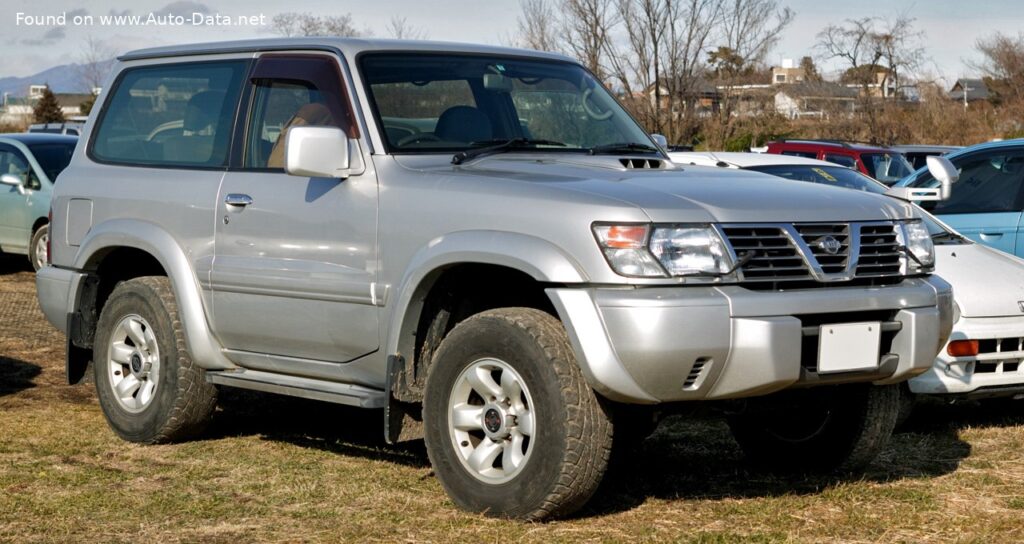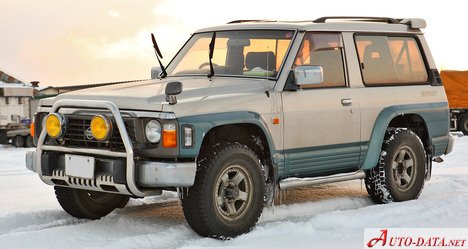
The Nissan Safari (Y60), particularly the facelifted version produced from 1995 to 1997, represented a significant iteration of Nissan’s long-running, body-on-frame SUV. This generation, known as the Y60, continued the Safari’s reputation as a robust and capable off-road vehicle, appealing to those needing a durable and spacious 4×4. The 4.2 TD variant, equipped with a 4.2-liter turbocharged diesel engine producing 145 horsepower, occupied a middle ground in the Y60 lineup, offering a balance between power, fuel efficiency, and towing capacity. It was positioned as a workhorse option, suitable for both commercial and recreational use, and served as a step up from the naturally aspirated diesel engines offered in lower trims.
Nissan Safari Y60 (1995-1997) 4.2 TD: An Overview
The Y60 Safari facelift, introduced in 1995, brought subtle but important updates to the exterior and interior, enhancing its appeal and modernizing its design. These changes included revised front-end styling, updated interior trim, and improvements to the vehicle’s overall refinement. The 4.2 TD model was a key component of this facelift, offering a more powerful diesel option for buyers who required greater performance for towing, hauling, or navigating challenging terrain. The Safari competed with other large, body-on-frame SUVs like the Toyota Land Cruiser, Mitsubishi Pajero, and Isuzu Trooper.
Powertrain & Engine Architecture
The heart of the 1995-1997 Nissan Safari 4.2 TD is the TD42 engine, a 4.2-liter inline-six cylinder diesel. This engine, designated as the TD42T when turbocharged, is renowned for its durability and relatively simple mechanical design. The TD42T utilizes a precombustion chamber injection system, a common diesel technology of the era, where fuel is injected into a precombustion chamber connected to the main cylinder, promoting more complete combustion. The engine boasts a displacement of 4169 cc (254.41 cubic inches) and a compression ratio of 22.8:1. Bore and stroke are both 96mm (3.78 inches). The turbocharger significantly boosts power output, bringing it to 145 hp at 4000 rpm and 331 Nm (244.13 lb-ft) of torque at 2000 rpm. The engine is longitudinally mounted in the front of the vehicle.
Paired with the TD42T engine is a 4-speed automatic transmission. While not known for its sophistication, this transmission was chosen for its robustness and ability to handle the engine’s torque. The automatic transmission provided ease of use, particularly appealing to drivers who frequently encountered stop-and-go traffic or challenging off-road conditions. Gear ratios were optimized for both on-road cruising and low-speed off-road crawling.
Driving Characteristics
The 4.2 TD automatic Safari offered a distinct driving experience. The turbocharged diesel engine delivered ample low-end torque, making it well-suited for towing and climbing steep inclines. While 145 horsepower isn’t a large figure by modern standards, the TD42T’s torque output provided strong acceleration from a standstill and effortless cruising at highway speeds. The automatic transmission, while not offering the driver engagement of a manual, simplified operation and reduced driver fatigue. Compared to the naturally aspirated diesel versions, the 4.2 TD provided a noticeable performance improvement, particularly when fully loaded or tackling challenging terrain. However, it lacked the outright speed and responsiveness of the gasoline-powered Safari models.
Equipment & Trim Levels
The 1995-1997 Nissan Safari 4.2 TD typically came equipped with a relatively standard set of features, reflecting its positioning as a utilitarian SUV. Standard equipment generally included power steering, air conditioning, and basic instrumentation. Interior upholstery was typically vinyl or cloth, designed for durability and ease of cleaning. The Safari’s spacious interior comfortably accommodated seven passengers across three rows of seating. Optional extras included power windows, upgraded audio systems, and a sunroof. Higher trim levels might have featured leather upholstery and additional convenience features. The dashboard layout was functional and straightforward, prioritizing practicality over aesthetics.
Chassis & Braking
The Nissan Safari Y60 utilized a traditional body-on-frame construction, providing exceptional strength and durability. The front suspension consisted of coil springs, while the rear suspension employed a dependent spring suspension system, designed to handle heavy loads and provide good off-road articulation. The braking system featured ventilated discs on all four wheels, providing adequate stopping power for the vehicle’s weight. Tires were typically 265/70 R16, mounted on 8JJ x 16 inch wheel rims, offering a good balance between on-road comfort and off-road traction. The Safari’s robust chassis and suspension system allowed it to navigate rough terrain with confidence.
Market Reception & Comparison
The Nissan Safari 4.2 TD was generally well-received by buyers seeking a reliable and capable off-road vehicle. Critics praised its durable engine, spacious interior, and robust construction. However, the automatic transmission was sometimes criticized for its lack of responsiveness and fuel efficiency compared to the manual transmission options. Compared to other trims in the Y60 lineup, the 4.2 TD offered a significant performance upgrade over the naturally aspirated diesel models, but it was less fuel-efficient and more expensive. Against competitors like the Toyota Land Cruiser and Mitsubishi Pajero, the Safari offered a compelling value proposition, providing similar capabilities at a potentially lower price point.
Technical Specifications
| Brand | Nissan |
| Model | Safari |
| Generation | Safari (Y60, facelift 1995) |
| Type (Engine) | 4.2 TD (145 Hp) |
| Start of production | 1995 year |
| End of production | 1997 year |
| Powertrain Architecture | Internal Combustion engine |
| Body type | Off-road vehicle |
| Seats | 7 |
| Doors | 5 |
| Fuel Type | Diesel |
| Power | 145 Hp @ 4000 rpm |
| Torque | 331 Nm @ 2000 rpm / 244.13 lb.-ft. @ 2000 rpm |
| Engine layout | Front, Longitudinal |
| Engine displacement | 4169 cm3 / 254.41 cu. in. |
| Number of cylinders | 6 |
| Engine configuration | Inline |
| Cylinder Bore | 96 mm / 3.78 in. |
| Piston Stroke | 96 mm / 3.78 in. |
| Compression ratio | 22.8:1 |
| Number of valves per cylinder | 2 |
| Fuel injection system | Precombustion chamber injection |
| Engine aspiration | Turbocharger |
| Max. weight | 2300 kg / 5070.63 lbs |
| Fuel tank capacity | 95 l / 25.1 US gal | 20.9 UK gal |
| Length | 4845 mm / 190.75 in. |
| Width | 1930 mm / 75.98 in. |
| Height | 1805 mm / 71.06 in. |
| Wheelbase | 2970 mm / 116.93 in. |
| Front track | 1580 mm / 62.2 in. |
| Rear (Back) track | 1585 mm / 62.4 in. |
| Minimum turning circle | 13.4 m / 43.96 ft. |
| Number of gears and type of gearbox | 4 gears, automatic transmission |
| Front suspension | Coil spring |
| Rear suspension | dependent spring suspension |
| Front brakes | Ventilated discs |
| Rear brakes | Ventilated discs |
| Tires size | 265/70 R16 |
| Wheel rims size | 8JJ x 16 |
Legacy
The Nissan Safari Y60 4.2 TD has earned a reputation for exceptional reliability and longevity. The TD42 engine, in particular, is highly regarded for its durability and ability to withstand years of hard use. Today, these vehicles are sought after by enthusiasts and collectors, particularly those who appreciate their ruggedness and simplicity. While finding parts can sometimes be a challenge, the TD42 engine is relatively easy to maintain and repair. The 4.2 TD automatic Safari remains a capable and dependable off-road vehicle, offering a unique driving experience and a lasting legacy as a true workhorse SUV.