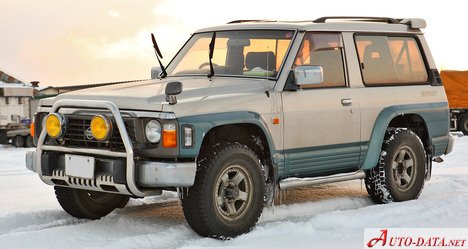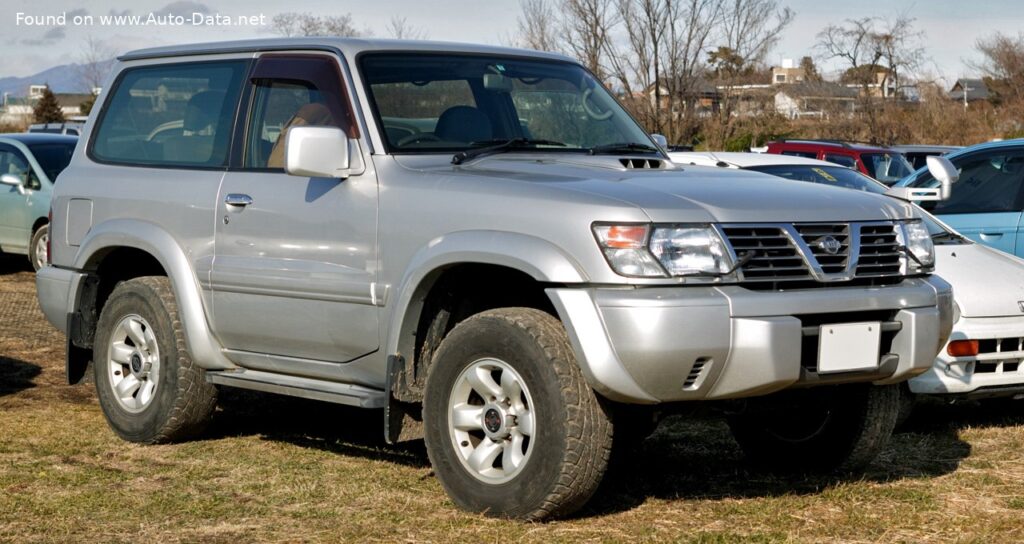
The Nissan Safari (Y61), produced from 1997 to 2010, represented a significant evolution in Nissan’s long line of rugged, body-on-frame SUVs. The 2.8 TD (5 dr) variant, specifically those manufactured between 2000 and 2002, occupied a middle ground within the Y61 lineup, offering a balance between affordability, capability, and fuel efficiency. This model was primarily aimed at buyers seeking a durable and practical off-road vehicle for both work and recreational purposes, particularly in markets outside of North America where diesel engines were favored. It served as a more accessible alternative to the petrol-powered variants and the later, more sophisticated turbo-diesel options.
Nissan Safari Y61 2.8 TD: An Overview
The Y61 Safari was a direct descendant of the earlier Patrol series, continuing the tradition of a robust, reliable, and highly capable four-wheel-drive vehicle. The 2.8 TD model was characterized by its naturally aspirated 2.8-liter diesel engine, a five-speed manual transmission, and a five-door body style. This configuration was popular in regions like Australia, South America, and parts of Asia, where its combination of durability and relatively low running costs made it a compelling choice for rural users and off-road enthusiasts. The Y61 platform itself was known for its strong chassis and solid axles, providing excellent off-road performance and load-carrying capacity.
Powertrain & Engine Architecture
The heart of the 2.8 TD Safari is the RD28ETi1 engine, a 2.8-liter inline-six cylinder diesel. This engine utilizes a precombustion chamber injection system, a design common in older diesel engines, which improves combustion efficiency and reduces noise compared to direct injection systems. The RD28ETi1 produces 135 horsepower at 4000 rpm and 292 Nm (215.37 lb-ft) of torque at 2000 rpm. While not a high-output engine by modern standards, the torque delivery is strong and consistent, making it well-suited for off-road driving and towing. The engine is longitudinally mounted in the engine bay, contributing to a balanced weight distribution. The five-speed manual transmission is a robust unit designed to handle the engine’s torque and the demands of off-road use. Gear ratios are relatively low, prioritizing low-speed crawling ability over high-speed acceleration.
Driving Characteristics
The driving experience in the 2.8 TD Safari is characterized by its ruggedness and practicality. Acceleration is modest, with a 0-100 km/h (0-62 mph) time of approximately 15.7 seconds. However, the engine’s strong low-end torque provides ample pulling power for navigating challenging terrain or hauling loads. The manual transmission requires a deliberate shift action, but it offers precise control and a direct connection to the engine. The Safari’s suspension, featuring coil springs front and rear, provides a comfortable ride on paved roads, while also offering sufficient articulation for off-road obstacles. The vehicle’s weight (1850 kg / 4078.55 lbs) is noticeable, but it also contributes to its stability and planted feel. Compared to later Y61 models equipped with turbo-diesel engines, the 2.8 TD offers less outright power but is generally considered more reliable and simpler to maintain.
Equipment & Trim Levels
The 2.8 TD Safari typically came with a relatively basic level of equipment, reflecting its positioning as a workhorse vehicle. Standard features generally included power steering, air conditioning (often optional depending on the market), and a basic audio system. Interior upholstery was typically vinyl or cloth, designed for durability and ease of cleaning. Dashboard configuration was functional and straightforward, with clearly labeled controls. Optional extras could include power windows, central locking, and upgraded audio systems. The focus was on providing a practical and reliable vehicle rather than luxurious amenities. The five-door body style offered ample space for passengers and cargo, with a trunk capacity ranging from 305 liters (10.77 cu. ft.) with the rear seats up to 2226 liters (78.61 cu. ft.) with the seats folded down.
Chassis & Braking
The Y61 Safari’s chassis is a traditional body-on-frame construction, providing exceptional strength and durability. The front suspension utilizes coil springs and a stabilizer bar, while the rear suspension also employs coil springs. Braking duties are handled by ventilated discs at the front and discs at the rear. An Anti-lock Braking System (ABS) was often included as standard equipment, enhancing safety and control, particularly on slippery surfaces. The Safari’s tires are typically 265/70 R16, providing a good balance between on-road comfort and off-road traction. The vehicle’s robust chassis and suspension system allow for a maximum weight of 2920 kg (6437.5 lbs) and a maximum load capacity of 1070 kg (2358.95 lbs).
Market Reception & Comparison
The 2.8 TD Safari was generally well-received in markets where diesel-powered SUVs were popular. Critics praised its durability, off-road capability, and relatively low running costs. However, some noted its lack of refinement and modest performance compared to more modern vehicles. Compared to the petrol-powered Safari variants, the 2.8 TD offered significantly better fuel economy (around 9 l/100 km or 26.1 US mpg) and a more robust engine. Compared to later turbo-diesel versions, the 2.8 TD was considered less powerful but more reliable and easier to maintain. Its simplicity and durability made it a favorite among those who prioritized practicality and longevity over outright performance.
Technical Specifications
| Brand | Nissan |
| Model | Safari |
| Generation | Safari (Y61) |
| Type (Engine) | 2.8 TD (5 dr) (135 Hp) |
| Start of production | 2000 year |
| End of production | 2002 year |
| Fuel consumption (urban) | 9 l/100 km (26.1 US mpg) |
| Fuel Type | Diesel |
| Acceleration 0 – 100 km/h | 15.7 sec |
| Acceleration 0 – 62 mph | 15.7 sec |
| Acceleration 0 – 60 mph | 14.9 sec |
| Maximum speed | 150 km/h (93.21 mph) |
| Weight-to-power ratio | 13.7 kg/Hp |
| Weight-to-torque ratio | 6.3 kg/Nm |
| Power | 135 Hp @ 4000 rpm |
| Torque | 292 Nm @ 2000 rpm (215.37 lb.-ft. @ 2000 rpm) |
| Engine layout | Front, Longitudinal |
| Engine Model/Code | RD28ETi1 |
| Engine displacement | 2826 cm3 (172.45 cu. in.) |
| Number of cylinders | 6 |
| Engine configuration | Inline |
| Number of valves per cylinder | 2 |
| Fuel injection system | Precombustion chamber injection |
| Engine aspiration | Turbocharger |
| Valvetrain | OHC |
| Engine oil capacity | 6.4 l (6.76 US qt | 5.63 UK qt) |
| Coolant capacity | 11.6 l (12.26 US qt | 10.21 UK qt) |
| Kerb Weight | 1850 kg (4078.55 lbs.) |
| Max. weight | 2920 kg (6437.5 lbs.) |
| Max load | 1070 kg (2358.95 lbs.) |
| Trunk (boot) space – minimum | 305 l (10.77 cu. ft.) |
| Trunk (boot) space – maximum | 2226 l (78.61 cu. ft.) |
| Fuel tank capacity | 95 l (25.1 US gal | 20.9 UK gal) |
| Length | 4910 mm (193.31 in.) |
| Width | 1930 mm (75.98 in.) |
| Height | 1865 mm (73.43 in.) |
| Wheelbase | 2970 mm (116.93 in.) |
| Front track | 1605 mm (63.19 in.) |
| Rear track | 1625 mm (63.98 in.) |
| Drive wheel | All wheel drive (4×4) |
| Number of gears | 5 gears, manual transmission |
| Front suspension | Coil spring |
| Rear suspension | Coil spring |
| Front brakes | Ventilated discs |
| Rear brakes | Disc |
| Assisting systems | ABS (Anti-lock braking system) |
| Power steering | Hydraulic Steering |
| Tires size | 265/70 R16 |
Legacy
The Nissan Safari Y61 2.8 TD remains a popular choice in the used car market, particularly among those seeking a reliable and capable off-road vehicle. The RD28ETi1 engine is known for its durability and relatively simple maintenance requirements. While parts availability may be limited in some regions, the engine’s robust design and straightforward mechanics make it relatively easy to repair. The Y61 Safari’s strong chassis and solid axles ensure that it can withstand years of hard use. Today, these vehicles are often found in the hands of off-road enthusiasts, farmers, and those who require a dependable workhorse for challenging conditions. The 2.8 TD variant, in particular, is valued for its simplicity, reliability, and relatively affordable price point.