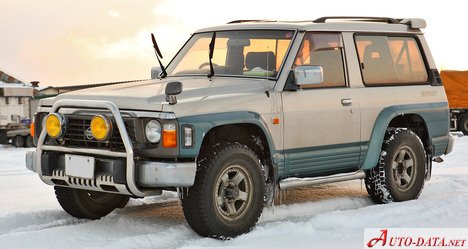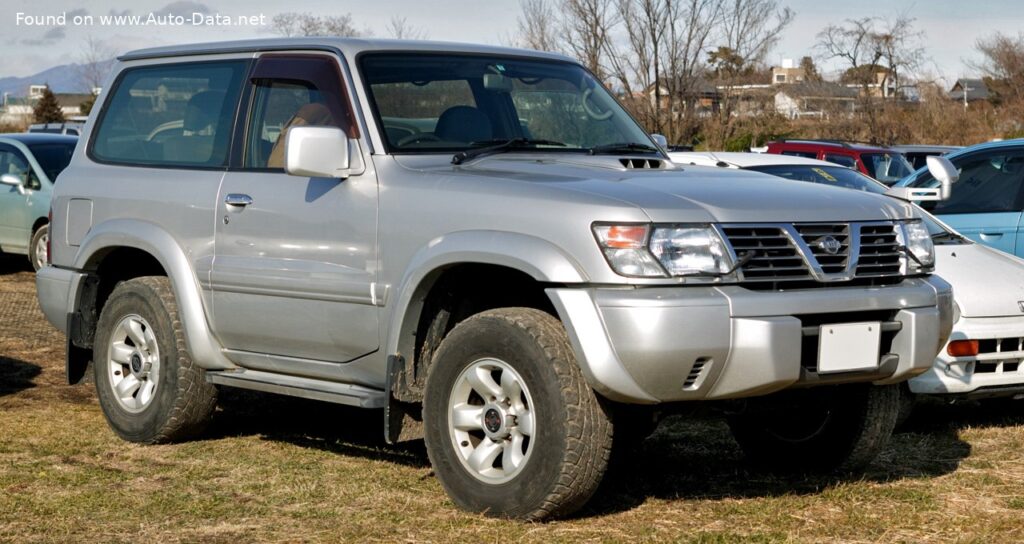
The Nissan Safari (Y61), produced from 1997 to 2010, represented a significant evolution in Nissan’s long line of rugged, body-on-frame SUVs. The 2.8 TD (5 dr) Automatic variant, specifically manufactured between 2000 and 2002 for many markets, occupied a middle ground within the Y61 range. It offered a balance between capability, comfort, and affordability, appealing to buyers seeking a versatile vehicle for both on and off-road use. This version was positioned below the more powerful petrol-engined models and the later, more refined turbo-diesel options, making it a popular choice for those prioritizing fuel efficiency and robust dependability over outright performance. The Y61 Safari was a direct descendant of the earlier Patrol series, continuing the tradition of a durable and capable four-wheel-drive vehicle.
Nissan Safari Y61 2.8 TD Automatic: An Overview
The Y61 Safari, sold under various names globally (including Ford Maverick in Europe), was designed with a focus on off-road prowess. The 2.8 TD Automatic model combined a 2.8-liter turbocharged diesel engine with a four-speed automatic transmission, offering a relatively accessible entry point into the Safari lineup. This configuration was particularly popular in regions where diesel fuel was readily available and where the vehicle’s off-road capabilities were highly valued. The five-door body style provided ample space for passengers and cargo, further enhancing its practicality.
Powertrain & Engine Architecture
At the heart of the 2.8 TD Automatic Safari lies the RD28ETi1 engine, a 2.8-liter inline-six cylinder diesel. This engine utilizes a precombustion chamber injection system, a common design for diesel engines of its era. This system involves injecting fuel into a precombustion chamber connected to the main cylinder, promoting more complete combustion and reducing noise. The RD28ETi1 is naturally aspirated, but features a turbocharger to boost power output to 135 horsepower at 4000 rpm and 292 Nm (215.37 lb-ft) of torque at 2000 rpm. The turbocharger significantly improves low-end torque, crucial for off-road driving and towing. The engine’s valvetrain employs an Overhead Camshaft (OHC) configuration.
The four-speed automatic transmission paired with the RD28ETi1 was chosen for its ease of use and suitability for a wider range of drivers. While not offering the efficiency of more modern transmissions, it provided smooth shifts and adequate performance for the vehicle’s intended purpose. The transmission’s gear ratios were optimized for both on-road cruising and low-speed off-road maneuvering. The drivetrain is a robust four-wheel-drive system, featuring selectable 4-High and 4-Low ranges for tackling challenging terrain.
Driving Characteristics
The 2.8 TD Automatic Safari delivers a driving experience characterized by its robust torque and comfortable ride. Acceleration is not its strong suit, with a 0-100 km/h (0-62 mph) time of approximately 15.7 seconds. However, the engine’s ample torque makes it well-suited for climbing steep inclines and navigating rough terrain. The automatic transmission contributes to a relaxed driving experience, particularly in urban environments. Compared to the manual transmission versions of the same engine, the automatic offers less driver involvement but greater convenience. Compared to the petrol-powered Safaris, the 2.8 TD Automatic provides significantly better fuel economy and a more durable powertrain, albeit with less overall power. The vehicle’s weight of 1850 kg (4078.55 lbs) does impact its agility, but the strong chassis and suspension system provide a stable and controlled ride.
Equipment & Trim Levels
The 2.8 TD Automatic Safari typically came equipped with a range of standard features designed to enhance comfort and convenience. These included power steering, air conditioning, and basic instrumentation. Interior upholstery was generally cloth, with durable plastic trim. Optional extras varied depending on the market, but commonly included power windows, central locking, and an upgraded audio system. Higher trim levels might have featured leather upholstery, woodgrain interior accents, and additional convenience features. The five-door configuration provided ample space for five passengers, with a relatively spacious cargo area that could be expanded by folding down the rear seats. Trunk space ranged from 305 liters (10.77 cu. ft.) with the rear seats up to 2226 liters (78.61 cu. ft.) with them folded down.
Chassis & Braking
The Y61 Safari utilizes a traditional body-on-frame construction, providing exceptional durability and off-road capability. The suspension system consists of coil springs at both the front and rear, offering a comfortable ride and good articulation for off-road use. The front brakes are ventilated discs, providing strong stopping power, while the rear brakes are discs. The vehicle is equipped with an Anti-lock Braking System (ABS) as a standard safety feature. The front track measures 1605 mm (63.19 in), while the rear track is slightly wider at 1625 mm (63.98 in). The tires are typically 265/70 R16, providing a good balance between on-road comfort and off-road traction.
Market Reception & Comparison
The 2.8 TD Automatic Safari was generally well-received by critics and consumers alike. It was praised for its robust build quality, off-road capability, and fuel efficiency. However, some reviewers noted its relatively slow acceleration and the somewhat dated technology of the four-speed automatic transmission. Compared to other trims in the Y61 lineup, the 2.8 TD Automatic offered a more affordable and practical option for buyers who didn’t require the extra power of the petrol engines or the refinement of the later turbo-diesel models. Fuel economy was a key selling point, with reported urban consumption of 9 l/100 km (26.1 US mpg). Reliability was also a strong suit, with the RD28ETi1 engine proving to be a durable and long-lasting powerplant.
Technical Specifications
| Brand | Nissan |
| Model | Safari |
| Generation | Safari (Y61) |
| Type | 2.8 TD (5 dr) (135 Hp) Automatic |
| Start of production | 2000 |
| End of production | 2002 |
| Engine | RD28ETi1 |
| Engine Displacement | 2826 cm3 (172.45 cu. in.) |
| Number of Cylinders | 6 (Inline) |
| Power | 135 Hp @ 4000 rpm |
| Torque | 292 Nm @ 2000 rpm (215.37 lb.-ft. @ 2000 rpm) |
| Fuel Type | Diesel |
| Transmission | 4-speed Automatic |
| Drive | All Wheel Drive (4×4) |
| Kerb Weight | 1850 kg (4078.55 lbs.) |
| Max. Weight | 2920 kg (6437.5 lbs.) |
| Fuel Tank Capacity | 95 l (25.1 US gal | 20.9 UK gal) |
| Length | 4910 mm (193.31 in.) |
| Width | 1930 mm (75.98 in.) |
| Height | 1865 mm (73.43 in.) |
| Wheelbase | 2970 mm (116.93 in.) |
Legacy
The Nissan Safari Y61 2.8 TD Automatic has proven to be a remarkably durable and reliable vehicle. Many examples are still in use today, often having accumulated significant mileage. The RD28ETi1 engine, while not particularly powerful by modern standards, is known for its longevity and relatively simple maintenance requirements. The four-speed automatic transmission, while not the most efficient, has also proven to be robust. In the used car market, these Safaris are often sought after by enthusiasts and those looking for a capable and affordable off-road vehicle. Parts availability can be a concern in some regions, but a dedicated aftermarket support network exists. The Y61 Safari, and particularly the 2.8 TD Automatic variant, remains a testament to Nissan’s commitment to building rugged and dependable vehicles.