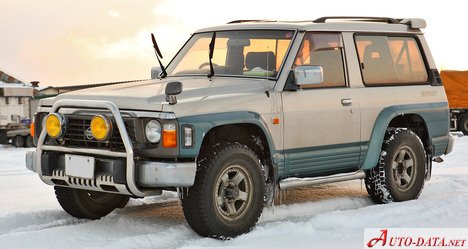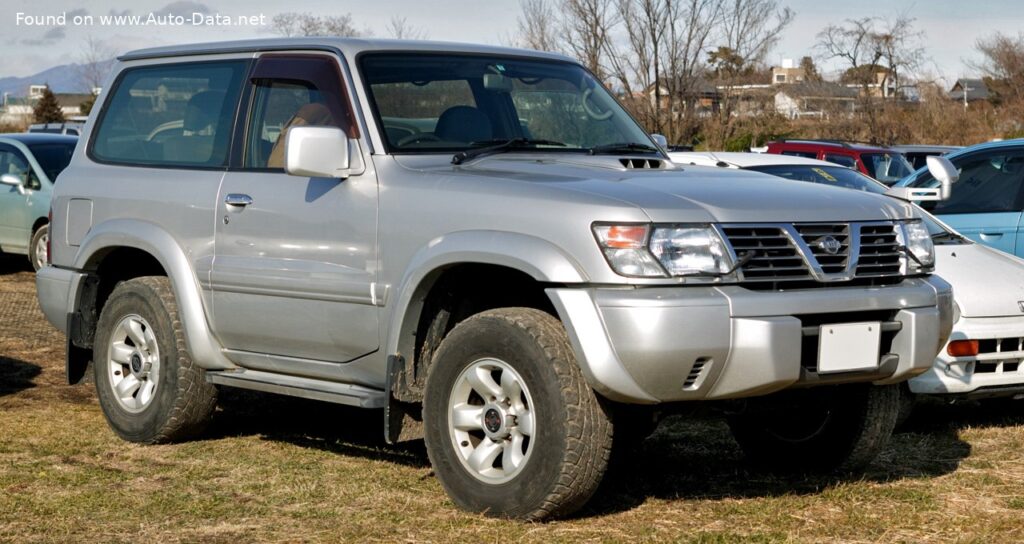
The Nissan Safari (Y61), specifically the 3.0 Di variant with 170 horsepower, was a three-door off-road vehicle produced between 1997 and 2002. This model represented a continuation of Nissan’s long-standing tradition of producing capable and rugged four-wheel-drive vehicles, building upon the success of previous Safari generations. The Y61 series, while sharing the “Safari” name, was a significant redesign compared to its predecessor, incorporating a more modern chassis and updated mechanical components. The 3.0 Di trim occupied a middle ground in the Y61 lineup, offering a balance between performance, fuel efficiency, and cost, positioned below the more powerful gasoline-powered options and above the base diesel models.
Nissan Safari Y61 3.0 Di: Overview and Positioning
The Y61 Safari was designed primarily for off-road enthusiasts and those requiring a durable and reliable vehicle for challenging terrain. The three-door configuration, combined with the 3.0-liter diesel engine and automatic transmission, made it a popular choice for recreational users and professionals alike. It was marketed towards individuals and businesses needing a robust vehicle for work or leisure activities in areas with limited road infrastructure. The Safari competed with other dedicated off-road vehicles like the Toyota Land Cruiser Prado and the Mitsubishi Pajero, offering a distinct blend of capability and practicality.
Powertrain & Engine Architecture
At the heart of the Y61 3.0 Di was the Nissan TD30 engine, a 2,953 cc (180.2 cu. in.) inline-four cylinder diesel engine. This engine utilized a robust cast iron block and aluminum cylinder head, contributing to its durability and longevity. The TD30 featured a single overhead camshaft (SOHC) valvetrain with four valves per cylinder, optimizing airflow for improved combustion efficiency. A key feature of this engine was its diesel common rail fuel injection system, which allowed for precise fuel delivery and reduced emissions compared to older diesel injection technologies. The turbocharger, integrated into the engine’s design, significantly boosted power output, bringing it to 170 hp at 3600 rpm and 363 Nm (267.74 lb-ft) of torque at 1800 rpm. The engine’s longitudinal front-engine layout facilitated a more traditional four-wheel-drive system.
The 3.0 Di was exclusively paired with a four-speed automatic transmission. This transmission was chosen to provide ease of use, particularly in challenging off-road conditions where precise clutch control can be difficult. While the four-speed automatic offered convenience, it wasn’t as fuel-efficient or responsive as the available five-speed manual transmission found in other Y61 Safari variants. The automatic transmission was designed to handle the engine’s substantial torque output, providing smooth and reliable gear changes under various load conditions.
Driving Characteristics
The Y61 3.0 Di with the automatic transmission delivered a driving experience focused on capability and robustness rather than outright speed. The 170 hp engine provided adequate power for on-road driving, but acceleration was modest. The automatic transmission, while convenient, resulted in a slightly less engaging driving experience compared to the manual versions. However, the engine’s strong low-end torque – 363 Nm (267.74 lb-ft) available from 1800 rpm – proved invaluable for off-road driving, allowing the Safari to confidently navigate steep inclines and traverse difficult terrain. The automatic transmission’s gear ratios were optimized for torque delivery, prioritizing pulling power over high-speed performance. The Safari’s substantial weight (2130 kg / 4695.85 lbs) also contributed to a more deliberate and stable driving feel.
Equipment & Trim Levels
The Y61 3.0 Di typically came equipped with a relatively basic level of standard features, reflecting its focus on functionality and durability. Standard equipment generally included power steering, air conditioning, and a basic audio system. The interior featured durable cloth upholstery and a functional dashboard layout. The three-door configuration meant limited rear passenger space, making it less suitable for families. Optional extras included power windows, central locking, and upgraded audio systems. Some models also featured a tilt sunroof and alloy wheels. The overall interior design prioritized practicality and ease of cleaning, catering to the vehicle’s intended use as a rugged off-road vehicle.
Chassis & Braking
The Y61 Safari utilized a body-on-frame construction, providing exceptional strength and durability. The chassis was designed to withstand the stresses of off-road driving, with reinforced components and a robust suspension system. The front suspension consisted of coil springs, while the rear also employed coil springs, offering a comfortable ride both on and off-road. The braking system featured ventilated discs on the front wheels and solid discs on the rear, providing adequate stopping power for the vehicle’s weight. An Anti-lock Braking System (ABS) was included as standard, enhancing safety and control during emergency braking situations. The Safari’s tires were typically 265/70 R16, chosen for their balance of on-road comfort and off-road traction.
Market Reception & Comparison
The Nissan Safari Y61 3.0 Di received generally positive reviews for its off-road capability, durability, and reliability. Critics praised the TD30 engine for its robust construction and ample torque, making it well-suited for challenging terrain. However, the four-speed automatic transmission was often criticized for its lack of responsiveness and relatively low fuel economy compared to the manual transmission. Compared to the gasoline-powered Safari variants, the 3.0 Di offered better fuel efficiency and a more practical torque curve for off-road driving. However, the gasoline engines provided more horsepower and a more refined driving experience. In terms of reliability, the TD30 engine proved to be exceptionally durable, with many examples exceeding high mileage with minimal issues.
Technical Specifications
| Brand | Nissan |
| Model | Safari |
| Generation | Safari (Y61) |
| Type | 3.0 Di (3 dr) (170 Hp) |
| Start of production | 1997 |
| End of production | 2002 |
| Engine Type | Internal Combustion engine |
| Body Type | Off-road vehicle |
| Seats | 5 |
| Doors | 3 |
| Fuel Consumption (Urban) | 10.8 l/100 km (21.8 US mpg) |
| Fuel Consumption (Extra Urban) | 6 l/100 km (39.2 US mpg) |
| Fuel Type | Diesel |
| Weight-to-Power Ratio | 12.5 kg/Hp |
| Weight-to-Torque Ratio | 5.9 kg/Nm |
| Power | 170 Hp @ 3600 rpm |
| Torque | 363 Nm @ 1800 rpm (267.74 lb.-ft. @ 1800 rpm) |
| Engine Layout | Front, Longitudinal |
| Engine Displacement | 2953 cm3 (180.2 cu. in.) |
| Number of Cylinders | 4 |
| Engine Configuration | Inline |
| Cylinder Bore | 96 mm (3.78 in.) |
| Piston Stroke | 102 mm (4.02 in.) |
| Compression Ratio | 17.9:1 |
| Number of Valves per Cylinder | 4 |
| Fuel Injection System | Diesel Commonrail |
| Engine Aspiration | Turbocharger |
| Valvetrain | DOHC |
| Kerb Weight | 2130 kg (4695.85 lbs.) |
| Max. Weight | 2405 kg (5302.12 lbs.) |
| Max Load | 275 kg (606.27 lbs.) |
| Trunk Space (Min) | 620 l (21.9 cu. ft.) |
| Trunk Space (Max) | 1652 l (58.34 cu. ft.) |
| Fuel Tank Capacity | 95 l (25.1 US gal) |
| Length | 4340 mm (170.87 in.) |
| Width | 1930 mm (75.98 in.) |
| Height | 1855 mm (73.03 in.) |
| Wheelbase | 2400 mm (94.49 in.) |
| Front Track | 1605 mm (63.19 in.) |
| Rear Track | 1625 mm (63.98 in.) |
| Drive Wheel | All wheel drive (4×4) |
| Number of Gears | 4 |
| Gearbox Type | Automatic transmission |
| Front Suspension | Coil spring |
| Rear Suspension | Coil spring |
| Front Brakes | Ventilated discs |
| Rear Brakes | Disc |
| Assisting Systems | ABS (Anti-lock braking system) |
| Power Steering | Hydraulic Steering |
| Tire Size | 265/70 R16 |
Legacy
The Nissan Safari Y61 3.0 Di remains a popular choice in the used car market, particularly among off-road enthusiasts. The TD30 engine’s reputation for reliability and durability has ensured a strong demand for well-maintained examples. While the four-speed automatic transmission isn’t considered the most modern, it has proven to be relatively reliable. The Y61 Safari’s robust construction and capable four-wheel-drive system continue to make it a viable option for those seeking a rugged and dependable off-road vehicle. Parts availability remains good, and a thriving aftermarket supports the Y61 with a wide range of accessories and upgrades. The 3.0 Di variant, in particular, is valued for its balance of performance, fuel efficiency, and affordability, solidifying its place as a respected and capable vehicle in Nissan’s history.