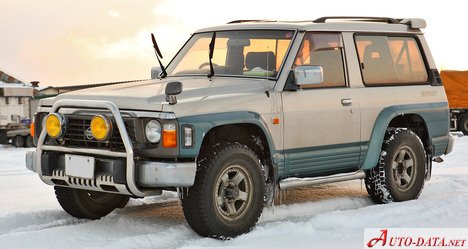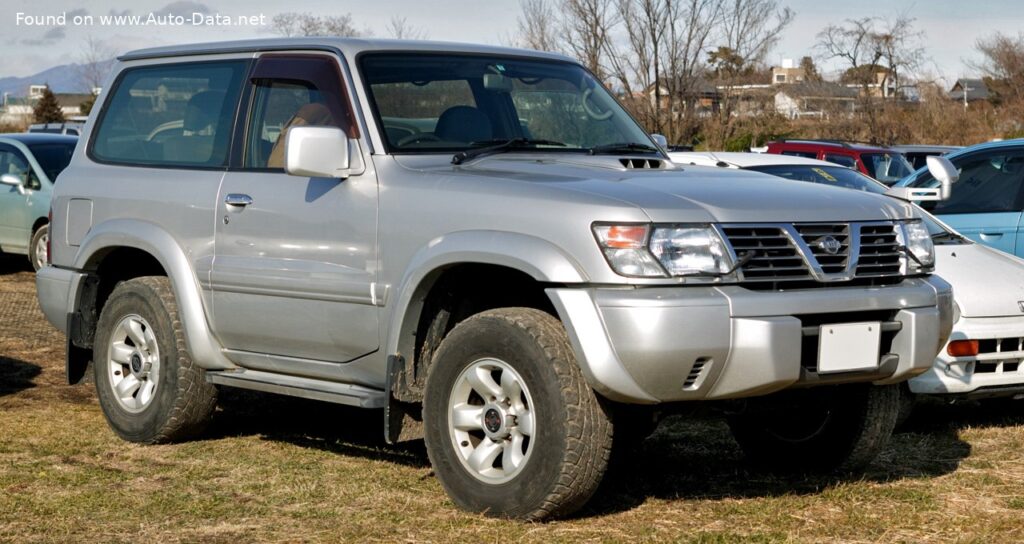
The Nissan Safari (Y61) 4.5i, produced from October 1997 to August 2002, represents a significant iteration of Nissan’s long-running Safari series, a vehicle renowned for its robust off-road capability. The Y61 generation, introduced in 1997, continued the Safari’s tradition as a body-on-frame, four-wheel-drive vehicle, but incorporated updated styling and mechanical components. The 4.5i variant, equipped with a 4.5-liter inline-six engine producing 200 horsepower, occupied a position as a higher-end trim within the Y61 lineup, offering a balance of power, comfort, and off-road prowess. It was positioned above the smaller-engined models and served as a stepping stone to more specialized, performance-oriented Safari configurations.
Powertrain & Engine Architecture
The heart of the Safari 4.5i is the TB45E engine, a 4.479-liter (273.33 cubic inches) inline-six cylinder gasoline engine. This naturally aspirated engine utilizes a cast iron block and aluminum cylinder head, a common configuration for durability and weight reduction. The engine features a single overhead camshaft (SOHC) valvetrain with two valves per cylinder. Fuel delivery is managed by a multi-port fuel injection system, providing precise fuel metering for optimal combustion. The compression ratio is set at 8.5:1. The TB45E engine is known for its relatively simple design, contributing to its reliability and ease of maintenance.
The 4.5i was exclusively offered with a 5-speed manual transmission. This transmission was chosen to complement the engine’s torque characteristics and provide drivers with full control in challenging off-road situations. The transmission features a robust design, capable of handling the engine’s 348 Nm (256.67 lb-ft) of torque. The gearbox ratios are geared towards low-end torque, prioritizing off-road capability over outright acceleration.
Engine Specifications
The TB45E engine delivers a maximum power output of 200 hp at 4400 rpm and a peak torque of 348 Nm (256.67 lb-ft) at 3600 rpm. This provides a good balance of power for both on-road driving and demanding off-road conditions. The engine’s power-to-liter ratio is 44.7 hp/liter, indicating a respectable output for a naturally aspirated engine of this displacement.
Driving Characteristics
The Nissan Safari 4.5i delivers a driving experience focused on capability and robustness rather than sporty performance. The 4.5-liter engine provides adequate power for highway cruising and tackling moderate inclines, but acceleration is not its strong suit. The 0-100 km/h (0-62 mph) time is approximately 13.7 seconds. The manual transmission allows for precise gear selection, enabling drivers to maintain optimal engine speed for various terrains. The Safari’s high ground clearance and four-wheel-drive system make it exceptionally capable off-road, allowing it to navigate challenging obstacles with relative ease. The vehicle’s weight (2190 kg / 4828.12 lbs) is noticeable, particularly during braking and cornering, but contributes to its stability and durability. The steering, while hydraulically assisted, is not particularly quick, prioritizing feel and control over responsiveness.
Equipment & Trim Levels
The Safari 4.5i typically included a relatively basic level of equipment, reflecting its focus on functionality and off-road use. Standard features generally included air conditioning, power steering, and basic instrumentation. Interior upholstery was typically cloth, with durable materials chosen to withstand the rigors of off-road driving. The dashboard layout is functional and straightforward, prioritizing ease of use. Optional extras available for the 4.5i could include power windows, power door locks, and upgraded audio systems. Some models also featured a tilt sunroof. The Safari 4.5i was often purchased by individuals and organizations requiring a reliable and capable off-road vehicle, such as forestry services, agricultural operations, and outdoor enthusiasts.
Chassis & Braking
The Nissan Safari Y61 utilizes a traditional body-on-frame construction, providing exceptional strength and durability. The chassis is designed to withstand significant torsional stress, making it well-suited for off-road use. The front suspension consists of coil springs, while the rear suspension also utilizes coil springs. This setup provides a comfortable ride on paved roads while maintaining sufficient articulation for off-road travel. The braking system features ventilated discs on the front wheels and discs on the rear wheels. An Anti-lock Braking System (ABS) was included as a standard safety feature. The Safari 4.5i is equipped with 265/70 R16 tires, providing a good balance of on-road comfort and off-road traction.
Market Reception & Comparison
The Nissan Safari Y61 4.5i was generally well-received by critics and consumers alike, particularly in markets where a robust and capable off-road vehicle was highly valued. The 4.5-liter engine was praised for its reliability and adequate power, while the manual transmission was appreciated for its control and durability. Compared to smaller-engined Safari models, the 4.5i offered a noticeable improvement in performance, making it more suitable for highway driving and towing. However, it was less fuel-efficient than the smaller-engined versions, with urban fuel consumption rated at 18.1 l/100 km (13 US mpg / 15.6 UK mpg). Compared to other off-road vehicles of the time, such as the Toyota Land Cruiser, the Safari 4.5i offered a more affordable price point, making it an attractive option for budget-conscious buyers.
Technical Specifications
| Brand | Nissan |
| Model | Safari |
| Generation | Safari (Y61) |
| Type (Engine) | 4.5 i (200 Hp) |
| Start of production | October, 1997 |
| End of production | August, 2002 |
| Powertrain Architecture | Internal Combustion engine |
| Body type | Off-road vehicle |
| Seats | 5 |
| Doors | 5 |
| Fuel consumption (urban) | 18.1 l/100 km (13 US mpg / 15.6 UK mpg) |
| Fuel Type | Petrol (Gasoline) |
| Acceleration 0 – 100 km/h | 13.7 sec |
| Acceleration 0 – 62 mph | 13.7 sec |
| Acceleration 0 – 60 mph | 13 sec |
| Maximum speed | 160 km/h (99.42 mph) |
| Weight-to-power ratio | 11 kg/Hp |
| Weight-to-torque ratio | 6.3 kg/Nm |
| Power | 200 Hp @ 4400 rpm |
| Torque | 348 Nm @ 3600 rpm (256.67 lb.-ft. @ 3600 rpm) |
| Engine layout | Front, Longitudinal |
| Engine displacement | 4479 cm3 (273.33 cu. in.) |
| Number of cylinders | 6 |
| Engine configuration | Inline |
| Cylinder Bore | 99.5 mm (3.92 in.) |
| Piston Stroke | 96 mm (3.78 in.) |
| Compression ratio | 8.5:1 |
| Number of valves per cylinder | 2 |
| Fuel injection system | Multi-port manifold injection |
| Engine aspiration | Naturally aspirated engine |
| Kerb Weight | 2190 kg (4828.12 lbs.) |
| Max. weight | 2920 kg (6437.5 lbs.) |
| Max load | 730 kg (1609.37 lbs.) |
| Trunk (boot) space – minimum | 305 l (10.77 cu. ft.) |
| Trunk (boot) space – maximum | 2226 l (78.61 cu. ft.) |
| Fuel tank capacity | 95 l (25.1 US gal | 20.9 UK gal) |
| Length | 4910 mm (193.31 in.) |
| Width | 1930 mm (75.98 in.) |
| Height | 1865 mm (73.43 in.) |
| Wheelbase | 2970 mm (116.93 in.) |
| Front track | 1605 mm (63.19 in.) |
| Rear (Back) track | 1625 mm (63.98 in.) |
| Drive wheel | All wheel drive (4×4) |
| Number of gears and type of gearbox | 5 gears, manual transmission |
| Front suspension | Coil spring |
| Rear suspension | Coil spring |
| Front brakes | Ventilated discs |
| Rear brakes | Disc |
| Assisting systems | ABS (Anti-lock braking system) |
| Power steering | Hydraulic Steering |
| Tires size | 265/70 R16 |
Legacy
The Nissan Safari Y61 4.5i has proven to be a remarkably durable and reliable vehicle. The TB45E engine, while not particularly sophisticated, is known for its longevity and relatively low maintenance costs. Many examples of the Y61 4.5i remain in service today, often having accumulated significant mileage. In the used car market, the Safari 4.5i commands a reasonable price, reflecting its reputation for reliability and off-road capability. It remains a popular choice for those seeking a robust and capable four-wheel-drive vehicle for work or recreational purposes. The Y61 generation, and the 4.5i variant in particular, has cemented its place as a classic off-road vehicle, appreciated by enthusiasts for its simplicity, durability, and unwavering capability.