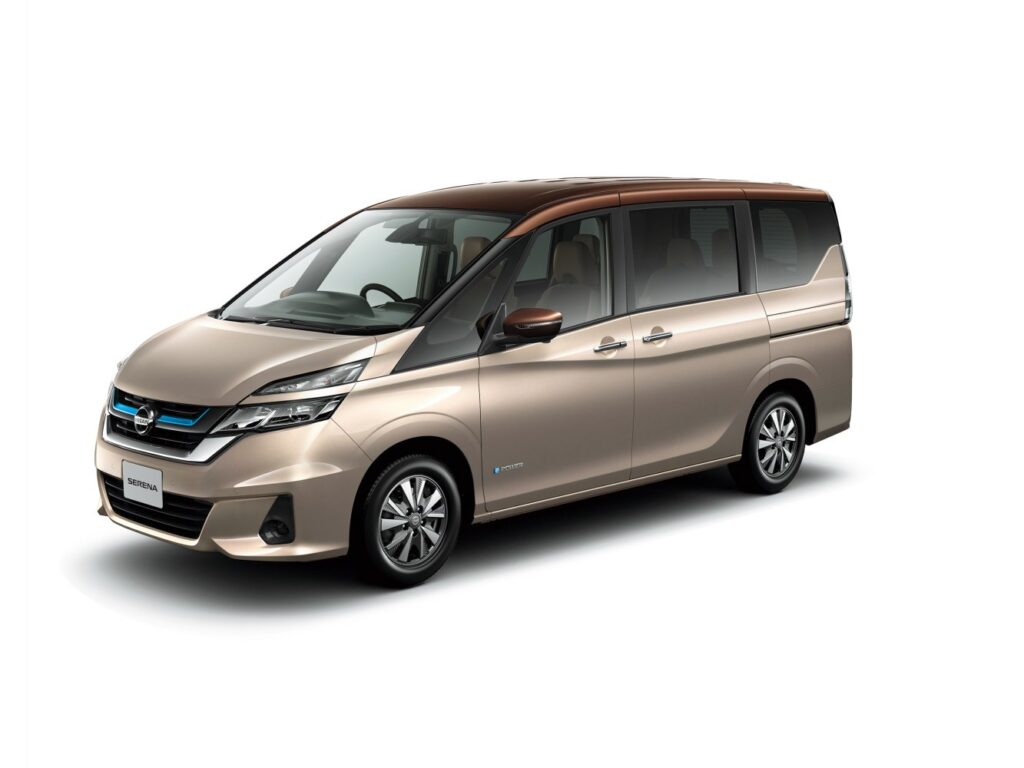
The Nissan Serena C27 2.0 (150 Hp) S-Hybrid CVT is a minivan produced by Nissan from 2016 to 2019. This variant occupied a mid-range position within the C27 Serena lineup, offering a balance between fuel efficiency, practicality, and affordability. It was positioned above the base models and below the more premium trims, targeting families seeking a spacious and economical vehicle for daily use. The C27 generation represented a significant redesign for the Serena, focusing on improved interior space, comfort, and the integration of Nissan’s e-Power hybrid technology, with the S-Hybrid being a more conventional mild-hybrid system.
Powertrain & Engine Architecture
The heart of the Serena C27 2.0 S-Hybrid is the MR20DD 2.0-liter inline-four cylinder gasoline engine. This engine utilizes direct fuel injection and a double overhead camshaft (DOHC) valvetrain with four valves per cylinder. The engine produces a maximum power output of 150 horsepower at 6000 rpm and 200 Nm (147.51 lb-ft) of torque at 4400 rpm. The specific engine code, MR20DD, denotes a Nissan engine designed for fuel efficiency and smooth operation. The compression ratio is set at 12.5:1, contributing to the engine’s thermal efficiency.
The “S-Hybrid” designation indicates a mild hybrid electric vehicle (MHEV) system. This system incorporates a small electric motor (3 hp and 48 Nm / 35.4 lb-ft of torque) that assists the gasoline engine during acceleration and provides regenerative braking capabilities. The electric motor doesn’t power the vehicle independently for extended periods; instead, it supplements the internal combustion engine to improve fuel economy and reduce emissions. The system utilizes a 12V lithium-ion battery to store energy recovered during braking. The powertrain is coupled with a Continuously Variable Transmission (CVT), which provides seamless gear changes and optimizes engine efficiency.
Transmission Details
The CVT used in the Serena C27 2.0 S-Hybrid is a Nissan-developed unit designed for smooth and efficient power delivery. CVTs, unlike traditional automatic transmissions with fixed gear ratios, use a belt and pulley system to provide an infinite number of gear ratios within a specific range. This allows the engine to operate at its most efficient rpm regardless of vehicle speed. While CVTs are known for their fuel efficiency, some drivers may perceive a slight difference in driving feel compared to traditional automatics, often described as a “rubber band” effect during hard acceleration.
Driving Characteristics
The Serena C27 2.0 S-Hybrid CVT offers a comfortable and practical driving experience. The 150 hp engine, combined with the electric motor assist, provides adequate power for everyday driving situations, including city commutes and highway cruising. Acceleration is not particularly sporty, but it is sufficient for a family-oriented minivan. The CVT contributes to smooth and linear acceleration, although it may not offer the same level of responsiveness as a traditional automatic transmission. The weight-to-power ratio of 11 kg/hp (90.9 hp/tonne) reflects the vehicle’s focus on efficiency rather than outright performance.
The S-Hybrid system provides a subtle boost during acceleration, enhancing the overall driving experience. The regenerative braking system helps to recapture energy during deceleration, further improving fuel economy. The Serena’s suspension is tuned for comfort, providing a smooth ride over various road surfaces. The steering is light and easy to use, making it well-suited for urban driving. Overall, the driving experience is geared towards practicality and comfort rather than sporty handling.
Equipment & Trim Levels
The Serena C27 2.0 S-Hybrid CVT typically came equipped with a range of standard features designed to enhance comfort, convenience, and safety. These included power windows and locks, air conditioning, a basic audio system with USB connectivity, and standard safety features such as ABS (Anti-lock Braking System) and airbags. Interior upholstery was typically cloth, with options for upgraded materials available on higher trim levels. The dashboard layout was functional and user-friendly, with a focus on providing easy access to essential controls.
Optional extras available for this trim could include a touchscreen infotainment system with navigation, a rearview camera, automatic climate control, and alloy wheels. Some models also offered features such as keyless entry, push-button start, and advanced safety technologies like lane departure warning and automatic emergency braking. The Serena’s spacious interior was a key selling point, offering comfortable seating for up to eight passengers depending on the configuration.
Chassis & Braking
The Serena C27 2.0 S-Hybrid CVT features an independent McPherson strut suspension system at the front, providing a comfortable and controlled ride. The rear suspension utilizes a torsion beam setup, which is a cost-effective and space-efficient solution for minivans. The front brakes are ventilated discs, offering good stopping power and heat dissipation. The rear brakes are discs as well, providing balanced braking performance. The vehicle’s curb weight ranges from 1650 to 1690 kg (3637.63 – 3725.81 lbs), depending on the specific configuration and optional equipment.
The steering system is a rack and pinion type with electric power steering, providing light and precise steering control. The tires are typically sized 195/65 R15, mounted on 15-inch steel or alloy wheels. The vehicle’s ride height (ground clearance) is 160 mm (6.3 inches), providing adequate clearance for most road conditions. The minimum turning circle is 11 meters (36.09 ft), making it relatively easy to maneuver in tight spaces.
Market Reception & Comparison
The Nissan Serena C27 2.0 S-Hybrid CVT was generally well-received by critics and consumers alike. It was praised for its spacious interior, comfortable ride, and good fuel economy. The S-Hybrid system was seen as a positive addition, offering a modest improvement in fuel efficiency without significantly impacting performance. Compared to other trims in the Serena lineup, the 2.0 S-Hybrid CVT offered a good balance between price and features. It was more affordable than the higher-end trims with the e-Power system, while still providing a more refined driving experience than the base models.
In terms of fuel economy, the Serena C27 2.0 S-Hybrid CVT achieved a combined fuel consumption of 5.8-6 l/100 km (40.6 – 39.2 US mpg, 48.7 – 47.1 UK mpg, 17.2 – 16.7 km/l). This was competitive with other minivans in its class. Reliability was generally good, with few reported issues specific to the 2.0 S-Hybrid powertrain. However, like all vehicles, regular maintenance is essential to ensure long-term reliability.
Technical Specifications
| Brand | Nissan |
| Model | Serena |
| Generation | Serena (C27) |
| Type | 2.0 (150 Hp) S-Hybrid CVT |
| Start of production | 2016 |
| End of production | 2019 |
| Engine Model/Code | MR20DD |
| Engine displacement | 1997 cm3 (121.86 cu. in.) |
| Number of cylinders | 4 |
| Engine configuration | Inline |
| Power | 150 Hp @ 6000 rpm |
| Torque | 200 Nm @ 4400 rpm (147.51 lb.-ft. @ 4400 rpm) |
| Fuel Type | Petrol (Gasoline) |
| Fuel consumption (combined) | 5.8-6 l/100 km (40.6 – 39.2 US mpg) |
| Kerb Weight | 1650-1690 kg (3637.63 – 3725.81 lbs.) |
| Max. weight | 2090-2130 kg (4607.66 – 4695.85 lbs.) |
| Transmission | CVT Automatic |
Legacy
The Nissan Serena C27 2.0 S-Hybrid CVT remains a popular choice in the used car market, particularly among families seeking a spacious and economical minivan. The MR20DD engine is known for its reliability and relatively low maintenance costs. The S-Hybrid system, while not as advanced as the e-Power system, provides a noticeable improvement in fuel economy. As with any used vehicle, it is important to have a pre-purchase inspection performed by a qualified mechanic to ensure that the vehicle is in good condition. Overall, the Serena C27 2.0 S-Hybrid CVT represents a practical and reliable option for those seeking a comfortable and fuel-efficient family vehicle.