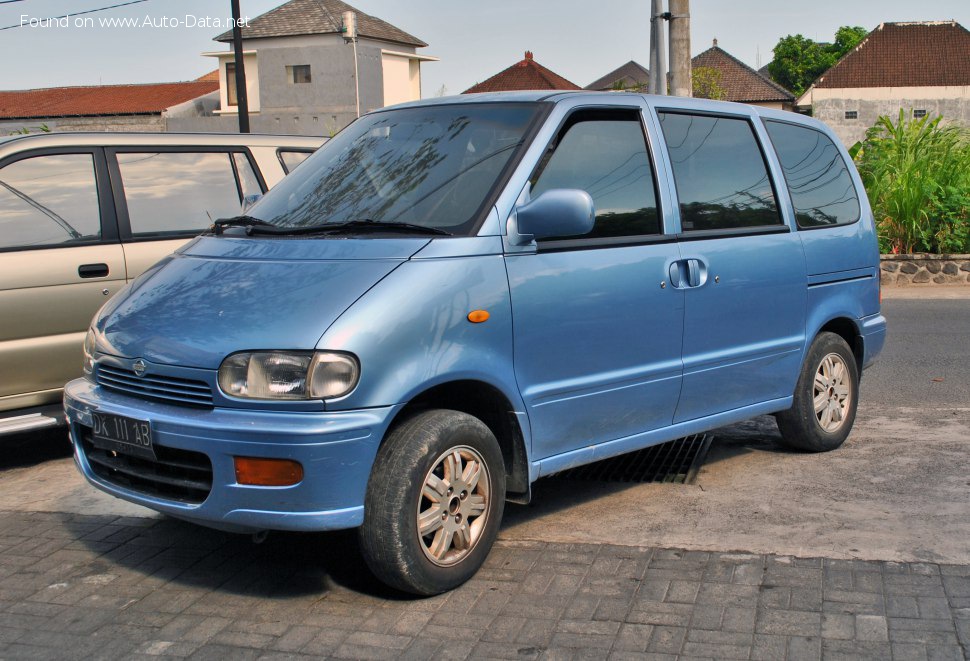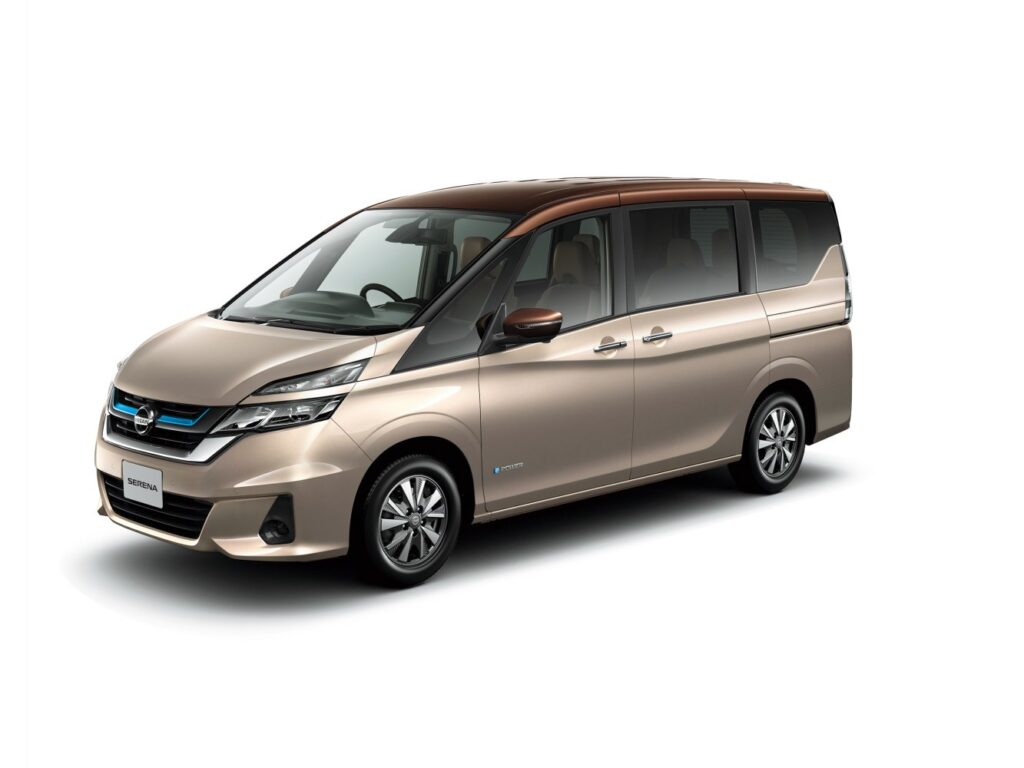
The Nissan Serena (C27) Highway Star 1.2 (136 Hp) e-POWER Hybrid represents a significant evolution in the highly competitive Japanese and broader Asian minivan segment. Introduced in 2018 as part of the C27 generation, this particular variant showcased Nissan’s innovative e-POWER full hybrid electric vehicle (FHEV) powertrain, offering a unique blend of electric vehicle driving dynamics with the extended range and convenience of a gasoline engine. Positioned as a versatile family vehicle, the Serena C27 aimed to deliver exceptional fuel efficiency, spacious comfort, and advanced technology, making it a compelling choice in its primary markets where minivans are a staple for family transport.
Powertrain & Engine Architecture
At the heart of the Nissan Serena (C27) Highway Star 1.2 (136 Hp) e-POWER Hybrid lies Nissan’s groundbreaking e-POWER system, a series hybrid architecture that fundamentally redefines the driving experience. Unlike conventional hybrids where the internal combustion engine (ICE) can directly drive the wheels, the e-POWER system utilizes the 1.2-liter HR12DE gasoline engine solely as a generator to produce electricity. This electricity then powers an advanced EM57 electric motor, which is the sole propulsion unit for the front wheels.
The 1198 cc (73.11 cubic inches) three-cylinder, inline gasoline engine is naturally aspirated and features a Double Overhead Camshaft (DOHC) configuration with Twin Variable Valve Timing Control (VTC). It produces 84 horsepower at 6000 rpm and 75.97 lb-ft of torque between 3200-5200 rpm. Its primary role is to efficiently charge the Lithium-ion battery pack and provide power to the electric motor, ensuring consistent electric propulsion without the need for external charging. This setup allows the vehicle to operate with an electric vehicle-like response, characterized by instant torque and quiet operation, while eliminating range anxiety.
The electric motor, a synchronous type, is the true workhorse, delivering a robust 136 horsepower and an impressive 236.02 lb-ft of torque. This system power provides brisk acceleration and confident cruising for a minivan of its size. The direct, electric-motor-driven acceleration contributes to a smooth and refined driving experience, particularly in urban environments. The e-POWER system doesn’t utilize a traditional multi-gear automatic transmission; instead, the electric motor provides a single-speed reduction gear, simplifying the powertrain and enhancing efficiency.
Driving Characteristics
The Serena C27 1.2 e-POWER Hybrid offers a distinctly different driving experience compared to traditional gasoline-powered minivans or even those with conventional automatic transmissions. The instant torque delivery of the electric motor provides surprisingly quick acceleration, especially from a standstill. While not a performance vehicle, the 136 hp system power is adequate for everyday driving and highway merging. Compared to other Serena trims equipped with larger gasoline engines, the e-POWER variant prioritizes efficiency and smoothness over outright speed.
The single-speed reduction gear of the electric motor means there are no traditional gear shifts, resulting in a seamless and linear power delivery. This contrasts with the stepped acceleration of a conventional automatic transmission. The weight-to-power ratio of 12.8 kg/Hp (78.2 Hp/tonne) indicates a respectable level of performance for its segment. The e-POWER system also allows for regenerative braking, which helps to recapture energy during deceleration and further improve fuel economy.
Equipment & Trim Levels
The “Highway Star” trim level of the Nissan Serena C27 was positioned as a mid-to-upper range offering. It typically included features designed to appeal to families seeking a blend of practicality and style. Standard equipment generally included power sliding doors, a low step-in height for easy access, and a flexible seating configuration with seven seats. Interior upholstery was typically a combination of cloth and synthetic leather, with options for full leather available.
The dashboard configuration featured a modern design with a central infotainment screen, multi-zone climate control, and various connectivity options. Optional extras available for the Highway Star trim could include a navigation system, a rearview camera, parking sensors, and advanced driver-assistance systems (ADAS) such as lane departure warning and automatic emergency braking. The exterior styling of the Highway Star variant was also more distinctive, with a unique front grille, aerodynamic body kit elements, and specific alloy wheel designs.
Chassis & Braking
The Nissan Serena (C27) Highway Star 1.2 (136 Hp) e-POWER Hybrid utilizes an independent McPherson strut suspension at the front, providing a comfortable and controlled ride. The rear suspension employs a torsion beam setup, which is a cost-effective and space-efficient solution for minivans. The suspension is tuned to prioritize ride comfort and stability, making it well-suited for both city driving and longer highway journeys.
The braking system features ventilated disc brakes at the front and disc brakes at the rear, ensuring reliable stopping power. The vehicle is equipped with an Anti-lock Braking System (ABS) as standard, enhancing safety during emergency braking situations. Electric power steering provides light and precise steering feel, and the tight turning circle (36.09 – 37.4 ft) contributes to its maneuverability in crowded urban settings.
Market Reception & Comparison
The Nissan Serena (C27) Highway Star 1.2 (136 Hp) e-POWER Hybrid was generally well-received by critics and consumers in its primary markets. The e-POWER system was praised for its unique driving experience, combining the benefits of an electric vehicle with the convenience of a gasoline engine. Fuel economy was a standout feature, with a combined rating of 61.9 US mpg (3.8 liters per 100 km), which was significantly better than comparable gasoline-powered minivans.
Compared to other Serena trims, the e-POWER variant offered a more refined and efficient driving experience, albeit with slightly less outright power. In terms of reliability, the e-POWER system has proven to be generally robust, with few reported issues. However, the complexity of the hybrid powertrain may result in higher maintenance costs compared to a traditional gasoline engine. The Serena competed directly with rivals such as the Toyota Noah/Voxy and Honda Stepwgn, offering a compelling alternative with its innovative e-POWER technology.
Technical Specifications
| Category | Specification |
| General Information | |
| Brand | Nissan |
| Model | Serena |
| Generation | Serena (C27) |
| Type (Engine) | Highway Star 1.2 (136 Hp) e-POWER Hybrid |
| Start of production | 2018 year |
| End of production | 2019 year |
| Powertrain Architecture | FHEV (Full Hybrid Electric Vehicle) |
| Body type | Minivan |
| Seats | 7 |
| Doors | 5 |
| Performance Specs | |
| Fuel consumption (economy) – combined | 3.8 l/100 km / 61.9 US mpg |
| Fuel Type | Petrol (Gasoline) |
| Weight-to-power ratio | 12.8 kg/Hp / 78.2 Hp/tonne |
| Weight-to-torque ratio | 5.4 kg/Nm / 183.9 Nm/tonne |
| Electric Cars and Hybrids Specs | |
| Battery technology | Lithium-ion (Li-Ion) |
| Electric motor 1 power | 136 Hp |
| Electric motor Torque | 320 Nm / 236.02 lb.-ft. |
| Electric motor model/code | EM57 |
| Electric motor type | Synchronous |
| System power | 136 Hp |
| System torque | 320 Nm / 236.02 lb.-ft. |
| Internal Combustion Engine Specs | |
| Power | 84 Hp @ 6000 rpm. |
| Power per liter | 70.1 Hp/l |
| Torque | 103 Nm @ 3200-5200 rpm. / 75.97 lb.-ft. @ 3200-5200 rpm. |
| Engine layout | Front, Transverse |
| Engine Model/Code | HR12DE |
| Engine displacement | 1198 cm3 / 1.2 liters (73.11 cu. in.) |
| Number of cylinders | 3 |
| Engine configuration | Inline |
| Cylinder Bore | 78 mm / 3.07 in. |
| Piston Stroke | 83.6 mm / 3.29 in. |
| Compression ratio | 12:1 |
| Number of valves per cylinder | 4 |
| Fuel injection system | Multi-port manifold injection |
| Engine aspiration | Naturally aspirated engine |
| Valvetrain | DOHC, Twin VTC |
| Engine oil capacity | 3.4 l / 3.59 US qt |
| Engine systems | Start & Stop System |
| Space, Volume and Weights | |
| Kerb Weight | 1740-1780 kg / 3836.04 – 3924.23 lbs. |
| Max. weight | 2125-2165 kg / 4684.82 – 4773.01 lbs. |
| Max load | 385 kg / 848.78 lbs. |
| Dimensions | |
| Length | 4770 mm / 187.8 in. |
| Width | 1740 mm / 68.5 in. |
| Height | 1865 mm / 73.43 in. |
| Wheelbase | 2860 mm / 112.6 in. |
| Front track | 1485 mm / 58.46 in. |
| Rear (Back) track | 1485 mm / 58.46 in. |
| Ride height (ground clearance) | 140 mm / 5.51 in. |
| Minimum turning circle (turning diameter) | 11-11.4 m / 36.09 – 37.4 ft. |
| Drivetrain, Brakes and Suspension Specs | |
| Drivetrain Architecture | The Internal combustion engine (ICE) drives the generator only, with no mechanical connection to the drive. An electric motor drives the front wheels. |
| Drive wheel | Front wheel drive |
| Number of gears and type of gearbox | 1 gears, automatic transmission |
| Front suspension | Independent type McPherson |
| Rear suspension | Torsion |
| Front brakes | Ventilated discs |
| Rear brakes | Disc |
| Assisting systems | ABS (Anti-lock braking system) |
| Steering type | Steering rack and pinion |
| Power steering | Electric Steering |
| Tires size | 195/60 R16 |
| Wheel rims size | 16 |
Legacy
The Nissan Serena (C27) Highway Star 1.2 (136 Hp) e-POWER Hybrid has established a strong reputation for reliability, particularly regarding the e-POWER powertrain. While the system is complex, Nissan has addressed early concerns through software updates and improved component durability. In the used car market, these models generally command a premium compared to similarly equipped gasoline-powered Serena variants, reflecting the desirability of the e-POWER system and its fuel efficiency benefits.
The long-term reliability of the Lithium-ion battery pack is a key consideration for potential buyers. However, Nissan offers a warranty on the battery, and reports suggest that the packs have proven to be relatively durable. The Serena C27 e-POWER Hybrid remains a popular choice for families seeking a spacious, efficient, and technologically advanced minivan, and its legacy as a pioneer in hybrid technology in the Asian market is secure. While not sold in North America, its influence on the development of future hybrid and electric vehicles is undeniable.