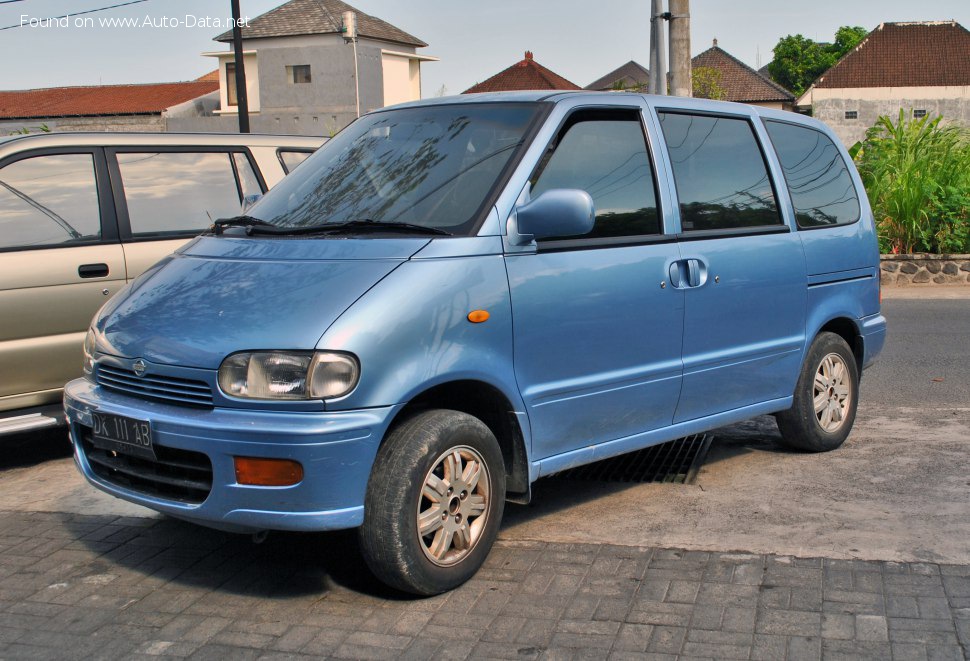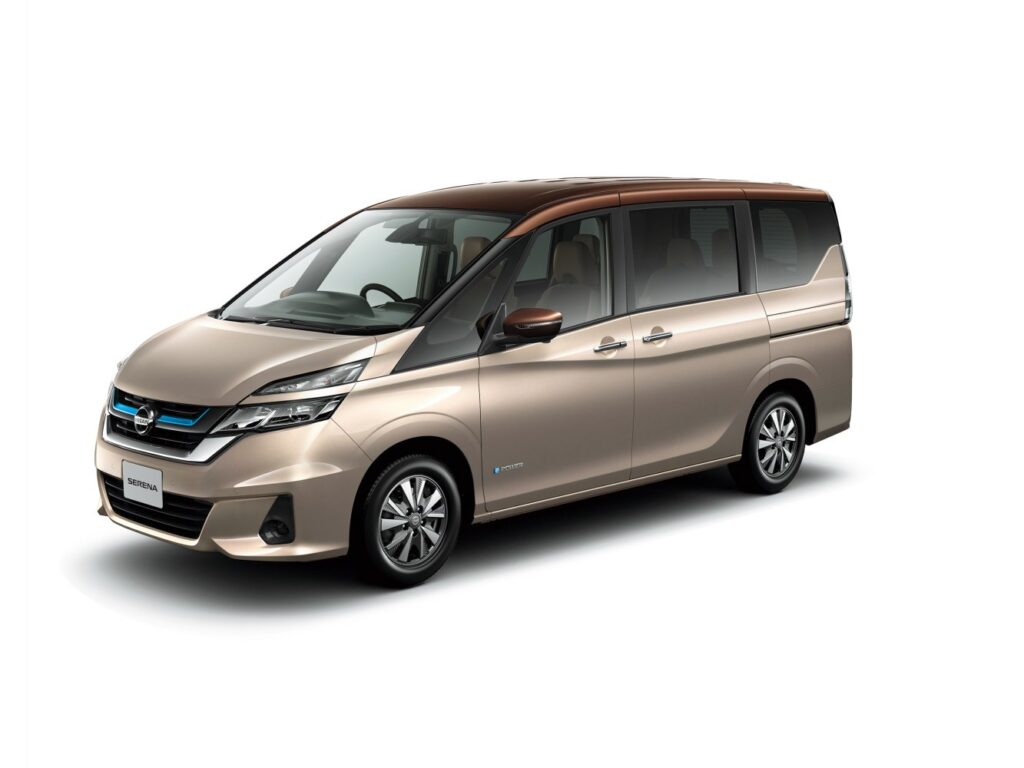
The Nissan Serena (C27) represents the fifth generation of Nissan’s highly successful minivan, a staple in the Japanese Domestic Market (JDM) and various other Asian regions. Launched in 2016 and produced through 2019 for this specific iteration, the Serena (C27) continued the model’s legacy of offering exceptional passenger comfort, versatile interior space, and a strong emphasis on family-friendly features. This particular variant, the Highway Star 2.0 (150 Hp) S-Hybrid CVT, was a popular choice, blending a stylish aesthetic with practical efficiency. As a vehicle primarily designed for markets outside North America, the Serena (C27) showcases Nissan’s approach to compact yet spacious people movers, adapting to tighter urban environments while still delivering on the demands of modern families for comfort and technology. Its mild-hybrid powertrain was a key technological advancement, offering improved fuel economy and reduced emissions, a crucial factor in its target markets.
Engineering and Performance of the Nissan Serena (C27)
Powertrain Architecture and the S-Hybrid System
At the heart of the Nissan Serena (C27) Highway Star 2.0 S-Hybrid CVT lies a sophisticated MHEV (Mild Hybrid Electric Vehicle) powertrain. This system, often referred to as a power-assist or battery-assisted hybrid vehicle (BAHV), strategically integrates an internal combustion engine (ICE) with a compact electric motor. Unlike full hybrids that can operate solely on electric power for significant distances, the S-Hybrid system’s electric motor primarily functions to assist the gasoline engine during acceleration, provide energy regeneration during deceleration, and enable a smoother, more efficient engine start-stop function. This architecture is particularly effective in improving fuel economy in stop-and-go city traffic and reducing the overall carbon footprint without the added complexity and cost of a larger battery or plug-in capability.
The internal combustion engine is a 2.0-liter (1997 cm3 or 121.86 cu. in.) MR20DD inline four-cylinder unit. This engine is designed for efficiency and smooth power delivery, featuring a DOHC (Double Overhead Camshaft) valvetrain and direct injection fuel system. It produces a respectable 150 horsepower at 6000 rpm, which for a minivan of its size, provides ample power for daily driving and highway cruising. Torque output stands at 147.51 lb.-ft. (200 Nm) at 4400 rpm, ensuring responsive acceleration, especially when aided by the electric motor. The mild hybrid electric motor, though modest in power at 3 horsepower, contributes a significant 35.4 lb.-ft. (48 Nm) of torque, primarily at lower RPMs, which greatly enhances initial acceleration and overall drivability.
Power is transmitted to the front wheels via a Continuously Variable Transmission (CVT). Nissan has long been a proponent of CVT technology, refining it to deliver seamless acceleration without the traditional shifts of a geared automatic transmission. This contributes to a smoother ride quality and further optimizes fuel efficiency, making the most of the engine and electric motor’s output. The combined fuel economy for this variant is an impressive 39.2 US mpg (6 liters per 100 km), a critical selling point for families seeking to minimize running costs. With a curb weight ranging from 3681.72 to 3769.9 lbs. (1670-1710 kg), the weight-to-power ratio is 11.1 kg/Hp (89.8 Hp/tonne), indicating a well-balanced performance for its class.
Highway Star 2.0 S-Hybrid CVT: Positioning and Comparison
The Highway Star 2.0 S-Hybrid CVT occupied a mid-range position within the Serena (C27) lineup. It was positioned above the base “X” trim, offering more styling enhancements and features, but below the more luxurious “e-Power” variants which featured a more advanced, fully integrated electric drive system. Compared to lower trims, the Highway Star offered a more visually appealing exterior with unique grille designs, alloy wheels, and often, more premium interior appointments. Against the e-Power models, the 2.0 S-Hybrid offered a more conventional, and generally less expensive, powertrain option. The e-Power models prioritized electric driving experience and even greater fuel efficiency, appealing to buyers willing to pay a premium for that technology. The 2.0 S-Hybrid struck a balance between affordability, fuel economy, and a more sporty aesthetic.
Compared to other engine options available in the C27 Serena, the 2.0L engine offered a good compromise between performance and efficiency. While Nissan offered other engine choices, the 2.0L S-Hybrid was often favored for its smooth operation and adequate power for typical family use. It was less powerful than the e-Power variants, but offered a more traditional driving experience for those less interested in the complexities of a fully electric drive system. Maintenance on the 2.0L engine and CVT transmission was generally considered straightforward and relatively inexpensive, making it an attractive option for budget-conscious buyers.
Design and Features
The Nissan Serena (C27) Highway Star Aesthetic and Interior Versatility
The Nissan Serena (C27) boasts a distinctive minivan silhouette, characterized by its practical yet appealing design. The “Highway Star” trim level, a popular designation within Nissan’s JDM lineup, typically signifies a sportier and more upscale aesthetic. This often includes unique front grilles, redesigned bumpers, side skirts, and specific alloy wheel designs, giving the minivan a more dynamic and premium appearance compared to standard trims. The vehicle’s dimensions, measuring 187.8 inches (4770 mm) in length, 68.5 inches (1740 mm) in width, and 73.43 inches (1865 mm) in height, are optimized for maneuverability in congested urban environments while maximizing interior volume. The generous 112.6-inch (2860 mm) wheelbase contributes to a stable ride and expansive cabin space.
Inside, the Serena (C27) is a masterclass in spatial efficiency and flexibility. Designed to comfortably seat up to eight passengers across three rows, it offers numerous seating configurations to adapt to varying passenger and cargo needs. Features such as sliding second-row seats, fold-flat third-row seats, and multiple storage compartments underscore its family-oriented design. For a vehicle produced between 2016 and 2019, the Serena (C27) would have incorporated modern amenities such as advanced infotainment systems, connectivity options, and a suite of driver-assistance technologies. While specific details on every feature are not provided, the presence of ABS (Anti-lock Braking System) is confirmed, and it’s reasonable to expect other standard safety features for its era, such as multiple airbags, electronic stability control, and potentially more advanced systems like automatic emergency braking or lane departure warning, depending on the trim and market.
The driving experience is further enhanced by an electric power steering system and a steering rack and pinion setup, ensuring light and precise handling, particularly beneficial in tight parking situations. The suspension system comprises an independent McPherson type at the front and a torsion beam at the rear, a common and effective setup for minivans that balances ride comfort with load-carrying capability. Braking is handled by ventilated discs at the front and solid discs at the rear, providing reliable stopping power. Tire options included 195/65 R15 or 195/60 R16, mounted on 15-inch or 16-inch wheel rims, respectively, chosen to optimize ride comfort and fuel efficiency.
Chassis & Braking
The Serena (C27) Highway Star 2.0 S-Hybrid CVT utilized a front-wheel-drive configuration. The front suspension employed an independent McPherson strut setup, providing a comfortable ride and reasonable handling characteristics. The rear suspension utilized a torsion beam axle, a cost-effective and space-efficient solution commonly found in minivans. The braking system featured ventilated discs on the front wheels for improved heat dissipation and solid discs on the rear wheels. ABS (Anti-lock Braking System) was standard, enhancing safety during emergency braking situations. The steering system was an electric power-assisted rack and pinion, offering light and precise steering feel, particularly useful for maneuvering in urban environments. Stabilizer bars were included both front and rear to reduce body roll during cornering, contributing to a more stable driving experience.
Market Reception & Comparison
The Nissan Serena (C27) Highway Star 2.0 S-Hybrid CVT was generally well-received by critics and consumers in its target markets. Reviewers praised its spacious interior, comfortable ride, and fuel-efficient powertrain. The mild-hybrid system was seen as a positive step towards reducing emissions and improving fuel economy without the added cost and complexity of a full hybrid system. However, some critics noted that the 2.0-liter engine could feel slightly underpowered when fully loaded with passengers and luggage, particularly on inclines. Compared to competitors like the Toyota Noah and Honda Stepwgn, the Serena offered a compelling combination of features, fuel efficiency, and value. Its unique styling and spacious interior were also cited as key strengths. Reliability reports generally indicated that the MR20DD engine and CVT transmission were relatively reliable, although regular maintenance was essential to ensure long-term durability.
Technical Specifications: Nissan Serena (C27) Highway Star 2.0 (150 Hp) S-Hybrid CVT
| Brand | Nissan |
| Model | Serena |
| Generation | Serena (C27) |
| Type (Engine) | Highway Star 2.0 (150 Hp) S-Hybrid CVT |
| Start of Production | 2016 year |
| End of Production | 2019 year |
| Powertrain Architecture | MHEV (Mild Hybrid Electric Vehicle, power-assist hybrid, battery-assisted hybrid vehicles, BAHV) |
| Body Type | Minivan |
| Seats | 8 |
| Doors | 5 |
| Fuel Consumption (Combined) | 6 l/100 km (39.2 US mpg, 47.1 UK mpg, 16.7 km/l) |
| Fuel Type | Petrol (Gasoline) |
| Weight-to-Power Ratio | 11.1 kg/Hp (89.8 Hp/tonne) |
| Weight-to-Torque Ratio | 8.4 kg/Nm (119.8 Nm/tonne) |
| Electric Motor 1 Power | 3 Hp |
| Electric Motor Torque | 48 Nm (35.4 lb.-ft.) |
| Internal Combustion Engine Power | 150 Hp @ 6000 rpm |
| Power per Liter | 75.1 Hp/l |
| Internal Combustion Engine Torque | 200 Nm @ 4400 rpm (147.51 lb.-ft. @ 4400 rpm) |
| Engine Layout | Front, Transverse |
| Engine Model/Code | MR20DD |
| Engine Displacement | 1997 cm3 (121.86 cu. in.) |
| Number of Cylinders | 4 |
| Engine Configuration | Inline |
| Cylinder Bore | 84 mm (3.31 in.) |
| Piston Stroke | 90.1 mm (3.55 in.) |
| Compression Ratio | 12.5:1 |
| Number of Valves per Cylinder | 4 |
| Fuel Injection System | Direct injection |
| Valvetrain | DOHC |
| Kerb Weight | 1670-1710 kg (3681.72 – 3769.9 lbs.) |
| Max. Weight (GVWR) | 2110-2150 kg (4651.75 – 4739.94 lbs.) |
| Max Load | 440 kg (970.03 lbs.) |
| Length | 4770 mm (187.8 in.) |
| Width | 1740 mm (68.5 in.) |
| Height | 1865 mm (73.43 in.) |
| Wheelbase | 2860 mm (112.6 in.) |
| Front Track | 1480 mm (58.27 in.) |
| Rear (Back) Track | 1485 mm (58.46 in.) |
| Ride Height (Ground Clearance) | 160 mm (6.3 in.) |
| Minimum Turning Circle (Turning Diameter) | 11-11.4 m (36.09 – 37.4 ft.) |
| Drivetrain Architecture | The Internal combustion engine (ICE) and electric motor drive the front wheels of the car with the ability to work only in mixed mode. |
| Drive Wheel | Front wheel drive |
| Number of Gears and Type of Gearbox | Automatic transmission CVT |
| Front Suspension | Independent type McPherson |
| Rear Suspension | Torsion |
| Front Brakes | Ventilated discs |
| Rear Brakes | Disc |
| Assisting Systems | ABS (Anti-lock braking system) |
| Steering Type | Steering rack and pinion |
| Power Steering | Electric Steering |
| Tires Size | 195/65 R15; 195/60 R16 |
| Wheel Rims Size | 15; 16 |
Legacy
The Nissan Serena (C27) Highway Star 2.0 S-Hybrid CVT has established itself as a reliable and practical family vehicle in the used car market. The MR20DD engine, when properly maintained, is known for its durability and longevity. The CVT transmission, while requiring regular fluid changes, has also proven to be relatively reliable. The S-Hybrid system, being a mild-hybrid, doesn’t suffer from the same battery degradation concerns as full hybrid or electric vehicles, contributing to its long-term reliability. Today, these vehicles are often sought after for their spacious interiors, fuel efficiency, and relatively affordable price point. The C27 generation Serena continues to be a popular choice for families seeking a comfortable and versatile minivan, demonstrating the enduring appeal of Nissan’s design and engineering in this segment.