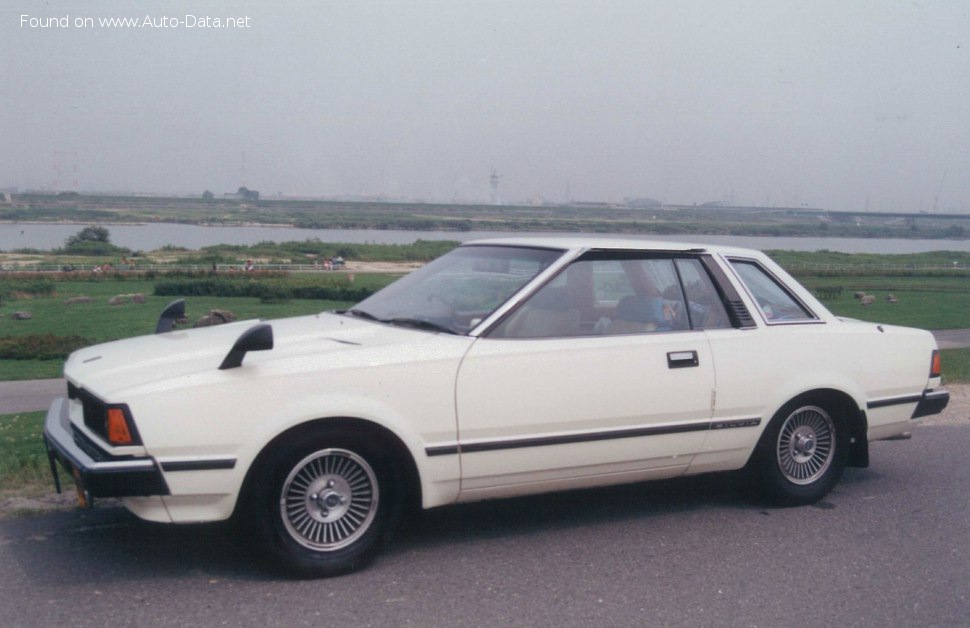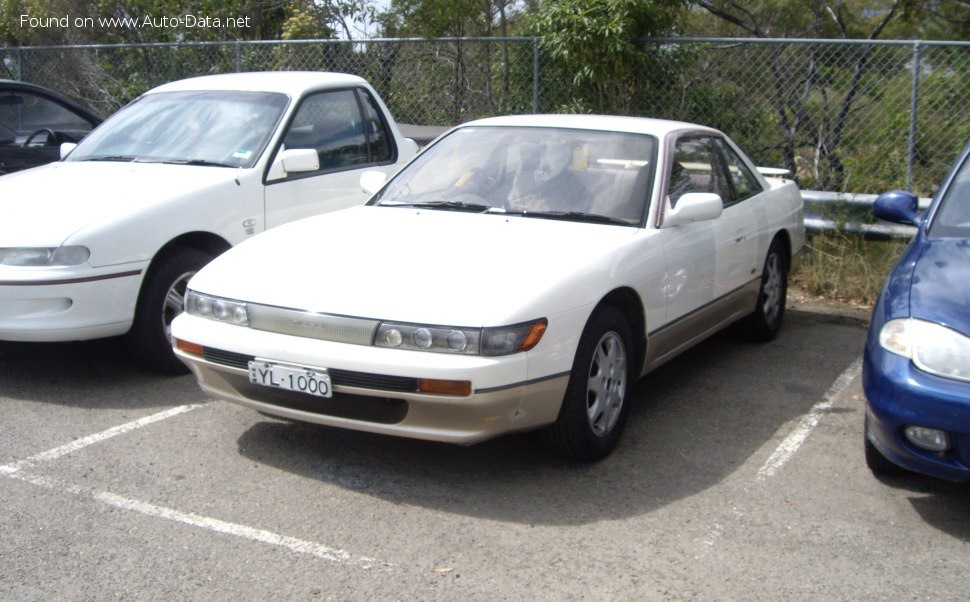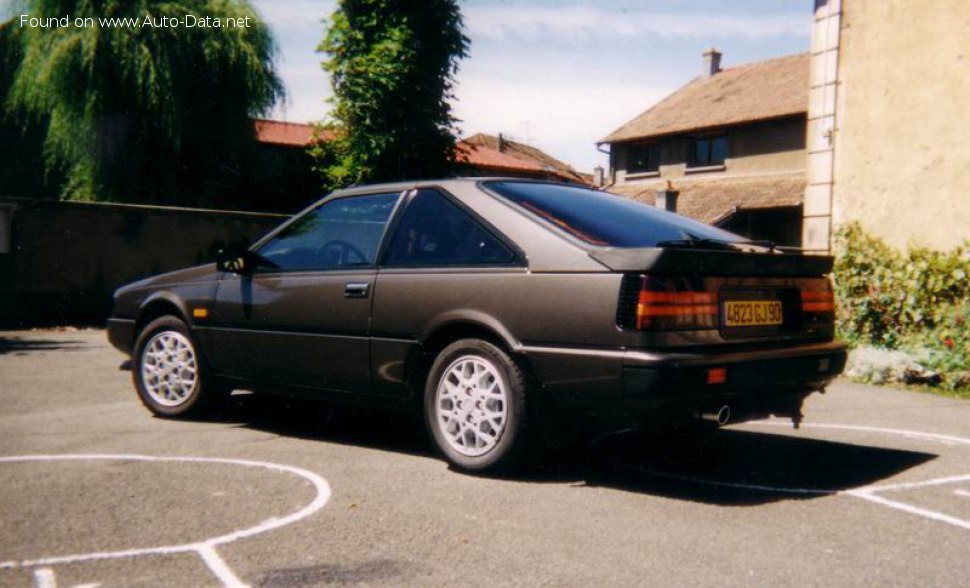
The Nissan Silvia (S12) represents the fourth generation of Nissan’s popular Silvia line of compact sports coupes, produced from 1984 to 1988. While known as the Silvia in its native Japan and many international markets, this generation was marketed in North America as the Nissan 200SX. The S12 series built upon the rear-wheel-drive heritage of its predecessors, offering a blend of sporty performance, distinctive 1980s styling, and a range of engine options. Among these, the 1.8 Turbo variant, specifically with the 135 horsepower (Hp) CA18ET engine, stood out as a performance-oriented choice, embodying the era’s growing fascination with forced induction technology. The Nissan Silvia (S12) aimed to capture the essence of an affordable, engaging driver’s car, competing in a segment that valued both style and dynamic capability.
The 1.8 Turbo: Positioning and Overview
Positioned as a mid-range performance option within the S12 lineup, the 1.8 Turbo offered a significant step up from the naturally aspirated 1.6L and 1.8L models. It wasn’t quite the premium offering – that distinction belonged to the later, more powerful variants available in Japan – but it provided a compelling balance of performance and affordability. The 1.8 Turbo was aimed at drivers who desired more than basic transportation but weren’t willing to pay the higher price for the top-of-the-line models. It appealed to a younger demographic seeking a sporty, stylish coupe with a bit of extra punch. Compared to the standard 1.8L, the turbocharger added a noticeable performance boost, while remaining more accessible and less complex than potential future upgrades.
Powertrain & Engine Architecture
At the core of the Nissan Silvia (S12) 1.8 Turbo lay the CA18ET engine, an inline four-cylinder unit with a displacement of 1.8 liters (1809 cubic centimeters). This engine was a key component of Nissan’s CA engine family, known for its durability and potential for modification. The CA18ET featured a single overhead camshaft (SOHC) valvetrain with two valves per cylinder, a common and reliable design for the time. The defining feature, of course, was its turbocharger, a Garrett T25 unit in most applications, coupled with a multi-port fuel injection system. This combination significantly increased power and torque output compared to the naturally aspirated versions.
The fuel injection system utilized a Bosch Jetronic system, providing precise fuel delivery for optimal combustion. The turbocharger itself was relatively small, designed to minimize turbo lag and provide a responsive power delivery. The engine’s compression ratio was 8:1, a compromise between performance and reliability when utilizing forced induction. Power was transferred to the rear wheels through a five-speed manual transmission, the most common configuration. A four-speed automatic transmission was also available, though it was less favored by enthusiasts due to its impact on performance and driving engagement.
Driving Characteristics
The 1.8 Turbo-equipped S12 offered a noticeable performance improvement over its naturally aspirated counterparts. The turbocharger provided a distinct surge of power in the mid-range, making overtaking and highway merging considerably easier. While not a high-revving engine, the CA18ET delivered a respectable 135 Hp at 6000 rpm and 191 Newton-meters (140.87 lb.-ft.) of torque at 4000 rpm. This torque characteristic made the car feel surprisingly quick in everyday driving situations.
Compared to the five-speed manual, the four-speed automatic transmission dulled the driving experience somewhat. The automatic’s gear ratios were optimized for fuel economy and comfort rather than outright performance, resulting in slower acceleration times and a less engaging feel. The manual transmission, however, allowed drivers to fully exploit the engine’s powerband and maintain greater control over the vehicle. The S12’s rear-wheel-drive layout contributed to balanced handling, although the relatively soft suspension tuning of the era meant it wasn’t as sharp or precise as more modern sports coupes.
Equipment & Trim Levels
The 1.8 Turbo variant of the S12 typically came with a higher level of standard equipment than the base models. Interior features often included upgraded cloth upholstery, a more comprehensive instrument cluster, and power windows. Optional extras included air conditioning, a sunroof, upgraded audio systems, and alloy wheels. The dashboard layout was typical of 1980s Japanese cars, featuring a functional but somewhat dated design. The steering wheel was often a two-spoke design, and the interior trim was generally available in shades of gray, blue, or black.
North American 200SX models, in particular, often featured a more luxurious trim package than their Japanese counterparts, reflecting the different market preferences. These models often included features like cruise control and upgraded sound systems as standard equipment. The availability of options varied depending on the specific market and year of production.
Chassis & Braking
The Nissan Silvia (S12) utilized a front-engine, rear-wheel-drive (FR) layout, providing a balanced weight distribution and contributing to its handling characteristics. The front suspension consisted of an independent McPherson strut setup with coil springs and an anti-roll bar, offering a good balance of ride comfort and handling precision. The rear suspension employed a semi-trailing arm design with coil springs and a transverse stabilizer, further enhancing stability and control.
Braking duties were handled by ventilated discs at the front and solid discs at the rear. While adequate for the car’s performance, the braking system wasn’t particularly sophisticated by modern standards. Power steering was standard, providing a reasonable level of assistance without sacrificing too much road feel. The S12 rode on 185/60R14 or 195/60R15 tires, depending on the trim level and market. The relatively lightweight construction of the S12 – around 2557 lbs (1160 kg) – contributed to its agile handling and favorable power-to-weight ratio.
Market Reception & Comparison
The Nissan Silvia (S12) 1.8 Turbo received generally positive reviews from automotive critics. It was praised for its sporty styling, engaging driving dynamics, and the added performance provided by the turbocharger. However, some critics noted that the engine’s power output wasn’t particularly high compared to other turbocharged cars of the era. Fuel economy was considered reasonable for a turbocharged engine, with figures around 22 mpg in the city and 37 mpg on the highway.
Compared to the naturally aspirated S12 models, the 1.8 Turbo offered a significant performance advantage. It was also more competitive against rivals like the Toyota Celica and Honda Prelude. However, the S13 generation Silvia (240SX) quickly surpassed the S12 in terms of popularity and performance, becoming the dominant force in the Japanese sports car scene. The S12’s relative simplicity and affordability made it an attractive option for those seeking a fun, customizable, and reliable sports coupe.
Technical Specifications
| Category | Specification |
| Brand | Nissan |
| Model | Silvia |
| Generation | Silvia (S12) |
| Type (Engine) | 1.8 Turbo (135 Hp) |
| Production Years | 1984 – 1988 |
| Body Type | Coupe |
| Seats | 4 |
| Doors | 2 |
| Performance Specs | |
| Fuel Consumption (Urban) | 10.8 l/100 km (21.8 US mpg) |
| Fuel Consumption (Extra Urban) | 6.4 l/100 km (36.8 US mpg) |
| Fuel Type | Petrol (Gasoline) |
| Acceleration 0 – 60 mph | 9.1 sec |
| Maximum Speed | 200 km/h (124.27 mph) |
| Weight-to-Power Ratio | 8.6 kg/Hp (116.4 Hp/tonne) |
| Engine Specs | |
| Power | 135 Hp @ 6000 rpm |
| Torque | 191 Nm (140.87 lb.-ft.) @ 4000 rpm |
| Engine Layout | Front, Longitudinal |
| Engine Model/Code | CA18ET |
| Engine Displacement | 1809 cm3 (1.8 L / 110.39 cu. in.) |
| Number of Cylinders | 4 |
| Engine Configuration | Inline |
| Cylinder Bore | 83 mm (3.27 in.) |
| Piston Stroke | 83.6 mm (3.29 in.) |
| Compression Ratio | 8:1 |
| Valves per Cylinder | 2 |
| Fuel Injection System | Multi-port manifold injection |
| Engine Aspiration | Turbocharger |
| Valvetrain | SOHC |
| Engine Oil Capacity | 3.8 L (4.02 US qt) |
| Coolant Capacity | 8.6 L (9.09 US qt) |
| Dimensions, Volume, and Weights | |
| Kerb Weight | 1160 kg (2557.36 lbs) |
| Max. Weight | 1635 kg (3604.56 lbs) |
| Max Load | 475 kg (1047.2 lbs) |
| Fuel Tank Capacity | 53 L (14 US gal) |
| Length | 4350 mm (171.26 in.) |
| Width | 1660 mm (65.35 in.) |
| Height | 1330 mm (52.36 in.) |
| Wheelbase | 2430 mm (95.67 in.) |
| Front Track | 1400 mm (55.12 in.) |
| Rear Track | 1425 mm (56.1 in.) |
| Drivetrain, Brakes, and Suspension | |
| Drivetrain Architecture | Rear-wheel drive (Internal Combustion Engine) |
| Gearbox | 5 gears, Manual Transmission |
| Front Suspension | Independent, McPherson with coil spring and anti-roll bar |
| Rear Suspension | Transverse stabilizer, Trailing arm |
| Front Brakes | Ventilated Discs |
| Rear Brakes | Discs |
| Steering Type | Rack and pinion |
| Power Steering | Hydraulic Steering |
| Front Tires Size | 195/60 R15 |
| Rear Tires Size | 195/60 R15 |
| Front Wheel Rims Size | 6J x 15 |
| Rear Wheel Rims Size | 6J x 15 |
Legacy
The Nissan Silvia (S12) 1.8 Turbo, while often overshadowed by its successors, remains a respected and sought-after classic among enthusiasts. The CA18ET engine, despite its age, is known for its durability and potential for modification, making it a popular choice for those seeking a project car. The S12’s rear-wheel-drive layout and relatively lightweight chassis continue to appeal to drivers who value a pure and engaging driving experience. In the used car market, well-maintained examples of the 1.8 Turbo command a premium, reflecting their rarity and desirability. The S12’s legacy is one of a capable, affordable, and stylish sports coupe that laid the foundation for the iconic Silvia generations that followed.