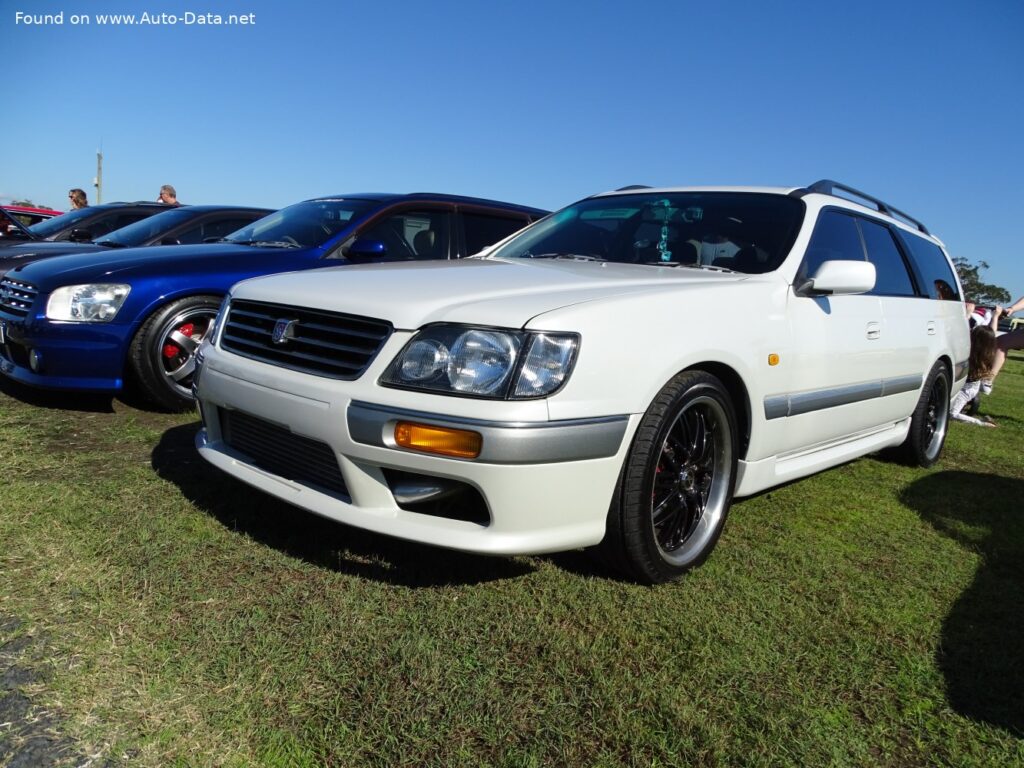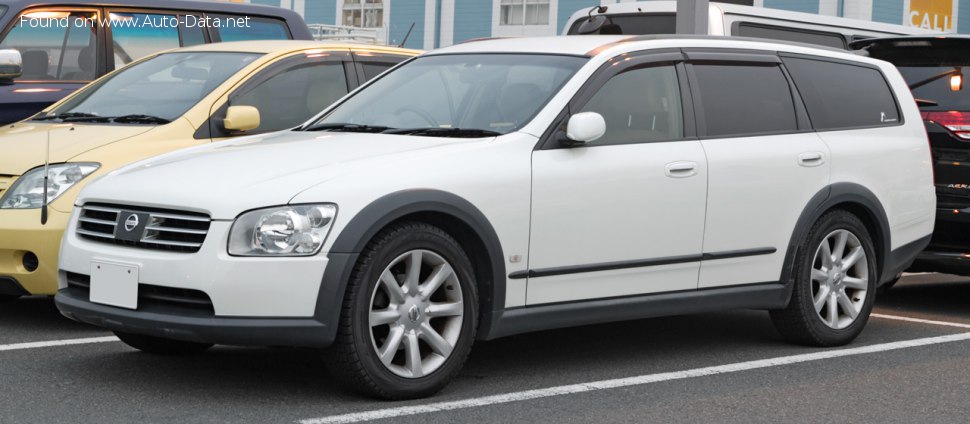
The Nissan Stagea II, known internally as the M35 generation, represents a significant evolution in Nissan’s approach to the performance luxury wagon segment. Produced from 2001 to 2007, this iteration of the Stagea departed from its predecessor’s direct lineage with the R34 Skyline, instead embracing Nissan’s advanced FM (Front Midship) platform, which also underpinned the V35 Skyline (marketed as the Infiniti G35 in North America). The particular variant under scrutiny, the Nissan Stagea II (M35) 3.0 V6 24V (260 Hp), stood out in its primary markets, predominantly Japan, Australia, and New Zealand, as a sophisticated and powerful five-door station wagon. It combined the practicality of a family vehicle with the engaging driving dynamics and premium features typically associated with luxury sedans of its era, all while maintaining a distinctive Japanese aesthetic and engineering philosophy.
Unlike many vehicles of its type available globally, the M35 Stagea was not officially imported to the United States. Its role was to cater to a discerning domestic Japanese market that appreciated high-performance, rear-wheel-drive (or all-wheel-drive in other variants) wagons that offered both utility and a sporty driving experience. This model served as a compelling alternative to more traditional sedans and SUVs, carving out a niche for itself among enthusiasts and families alike who desired a blend of performance, space, and a touch of exclusivity.
Engine & Performance
At the heart of the Nissan Stagea II (M35) 3.0 V6 24V (260 Hp) lies a potent 3.0-liter V6 engine, part of Nissan’s renowned VQ engine family. This naturally aspirated, multi-port fuel injected powertrain was engineered to deliver a robust 260 horsepower at 6400 rpm, a substantial output for a naturally aspirated 3.0-liter engine during its production run. Complementing this power was a healthy torque figure of 238.97 lb.-ft. available at 4800 rpm, ensuring strong acceleration and responsive throttle input across a wide rev range. The engine’s DOHC (Double Overhead Camshaft) valvetrain with 4 valves per cylinder contributed to its efficiency and high-revving capability, while a compression ratio of 11:1 further optimized combustion.
Power was channeled to the rear wheels via a smooth and efficient 5-speed automatic transmission, reflecting the car’s dual nature of performance and everyday usability. This drivetrain architecture, coupled with the engine’s longitudinal front placement, contributed to a balanced weight distribution and the engaging, rear-wheel-drive handling characteristics that enthusiasts often seek. The Stagea II (M35) was capable of reaching a top speed of 142.92 mph, a testament to its performance credentials as a high-speed cruiser.
Despite its performance focus, Nissan also considered the practicalities of daily driving. The fuel consumption figures, while not groundbreaking by modern standards, were respectable for a vehicle of its size and power from that era. It achieved an estimated 15.7 US mpg in urban driving conditions and a more efficient 23.5 US mpg on extra-urban cycles. With a curb weight of 3505.35 lbs., the car boasted a favorable weight-to-power ratio of 6.1 kg/Hp (or 163.5 Hp/tonne), underlining its agile and spirited performance.
Design & Features
The design of the Nissan Stagea II (M35) represented a significant departure from its more angular, R34 Skyline-influenced predecessor. The M35 adopted a sleeker, more rounded aesthetic, aligning it with the contemporary V35 Skyline/Infiniti G35 sedan and coupe. Its five-door station wagon body style was both functional and stylish, featuring smooth lines and a somewhat understated elegance that allowed it to blend seamlessly into both urban and highway environments. With a length of 187.6 inches, a width of 69.29 inches, and a height of 59.45 inches, the Stagea offered a substantial road presence without being overtly bulky.
Inside, the Stagea was designed to accommodate five occupants in comfort, with a wheelbase of 112.2 inches providing ample cabin space. The interior styling borrowed heavily from its Skyline/G35 stablemates, featuring high-quality materials and a driver-focused cockpit. Practicality was a key selling point, with a generous minimum trunk space of 17.66 cu. ft. (500 liters), making it highly suitable for families or individuals requiring significant cargo capacity. The 80-liter (21.13 US gal) fuel tank capacity provided a decent cruising range.
In terms of chassis and safety, the Stagea II (M35) was well-equipped for its time. It featured a robust suspension system with coil springs at both the front and rear, designed to provide a comfortable ride while maintaining dynamic handling. Braking power was supplied by ventilated discs at the front and solid discs at the rear, augmented by an Anti-lock Braking System (ABS) for enhanced safety. Steering was handled by a hydraulic rack and pinion system, offering direct feedback and a natural feel. The car rode on 215/55 R17 tires, providing a good balance of grip and ride comfort. These features collectively underscored Nissan’s commitment to delivering a vehicle that was not only powerful but also safe and enjoyable to drive.
Nissan Stagea II (M35) Technical Specifications
| Category | Specification |
| Brand | Nissan |
| Model | Stagea |
| Generation | Stagea II (M35) |
| Engine Type | 3.0 V6 24V (260 Hp) |
| Production Start | 2001 |
| Production End | 2007 |
| Powertrain Architecture | Internal Combustion Engine (ICE) |
| Body Type | Station Wagon (Estate) |
| Seats | 5 |
| Doors | 5 |
| Fuel Consumption (Urban) | 15.7 US mpg |
| Fuel Consumption (Extra Urban) | 23.5 US mpg |
| Fuel Type | Petrol (Gasoline) |
| Maximum Speed | 142.92 mph |
| Weight-to-Power Ratio | 6.1 kg/Hp (163.5 Hp/tonne) |
| Weight-to-Torque Ratio | 4.9 kg/Nm (203.8 Nm/tonne) |
| Power | 260 Hp @ 6400 rpm |
| Power per Liter | 87 Hp/l |
| Torque | 238.97 lb.-ft. @ 4800 rpm |
| Engine Layout | Front, Longitudinal |
| Engine Displacement | 2987 cm3 (182.28 cu. in.) |
| Number of Cylinders | 6 |
| Engine Configuration | V-engine |
| Cylinder Bore | 3.66 in. (93 mm) |
| Piston Stroke | 2.89 in. (73.3 mm) |
| Compression Ratio | 11:1 |
| Valves per Cylinder | 4 |
| Fuel Injection System | Multi-port manifold injection |
| Engine Aspiration | Naturally aspirated engine |
| Valvetrain | DOHC |
| Curb Weight | 3505.35 lbs. (1590 kg) |
| Trunk Space (Minimum) | 17.66 cu. ft. (500 l) |
| Fuel Tank Capacity | 21.13 US gal (80 l) |
| Length | 187.6 in. (4765 mm) |
| Width | 69.29 in. (1760 mm) |
| Height | 59.45 in. (1510 mm) |
| Wheelbase | 112.2 in. (2850 mm) |
| Front Track | 59.45 in. (1510 mm) |
| Rear Track | 59.45 in. (1510 mm) |
| Drive Wheel | Rear Wheel Drive |
| Gearbox | 5 gears, Automatic Transmission |
| Front Suspension | Coil spring |
| Rear Suspension | Coil spring |
| Front Brakes | Ventilated discs |
| Rear Brakes | Disc |
| Assisting Systems | ABS (Anti-lock braking system) |
| Steering Type | Steering rack and pinion |
| Power Steering | Hydraulic Steering |
| Tires Size | 215/55 R17 |
Legacy and Market Impact
The Nissan Stagea II (M35) 3.0 V6 24V (260 Hp) carved out a distinctive niche in the Japanese domestic market and select export regions like Australia and New Zealand. Its primary appeal lay in offering the practicality of a station wagon without sacrificing the performance and driving engagement typically found in Nissan’s sportier sedan offerings, particularly the V35 Skyline. This blend made it a unique proposition, competing indirectly with other performance wagons such as the Subaru Legacy Wagon GT-B and the Toyota Caldina GT-Four, though the Stagea offered a more luxurious and rear-wheel-drive oriented experience.
The M35 Stagea is often affectionately referred to by enthusiasts as the “Skyline wagon” due to its shared FM platform and numerous mechanical components with the V35 Skyline. This association lent it a degree of credibility and desirability among those who appreciated the Skyline’s performance heritage but required greater utility. Its powerful VQ engine, coupled with a well-tuned chassis, made it a capable grand tourer and a surprisingly agile vehicle for its size. The rear-wheel-drive setup, especially in this powerful naturally aspirated variant, offered a driving feel that resonated with driving purists.
Despite its qualities, the Stagea was ultimately a product of its specific market demands. Nissan chose not to bring the M35 Stagea to the North American market, likely due to the limited demand for performance wagons at the time, where SUVs and crossovers were rapidly gaining popularity. This decision, while understandable from a business perspective, meant that American enthusiasts missed out on a compelling blend of Japanese engineering, luxury, and performance.
Today, the Nissan Stagea II (M35) maintains a cult following, particularly among JDM enthusiasts. Its robust VQ engine, adaptable platform, and spacious interior make it a sought-after vehicle for those looking for a unique daily driver or a platform for modifications. The 3.0 V6 24V (260 Hp) variant, with its strong naturally aspirated power, represents a refined and potent chapter in the Stagea lineage, embodying Nissan’s ability to blend practicality with genuine driving excitement.