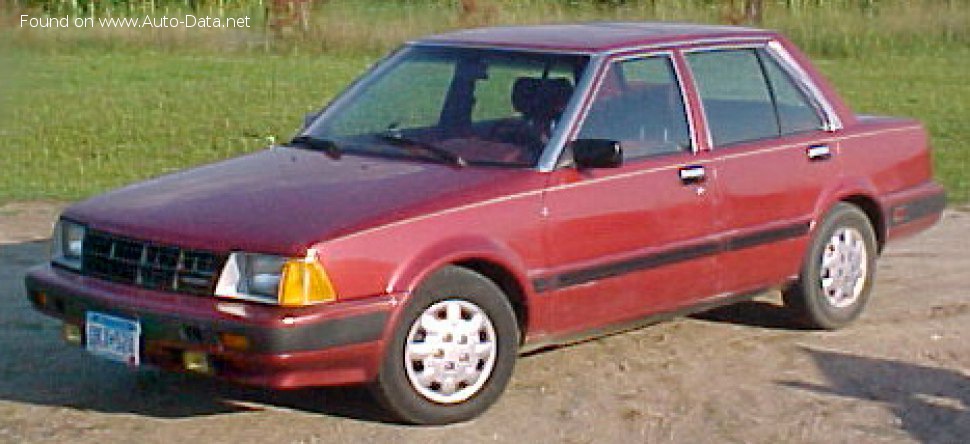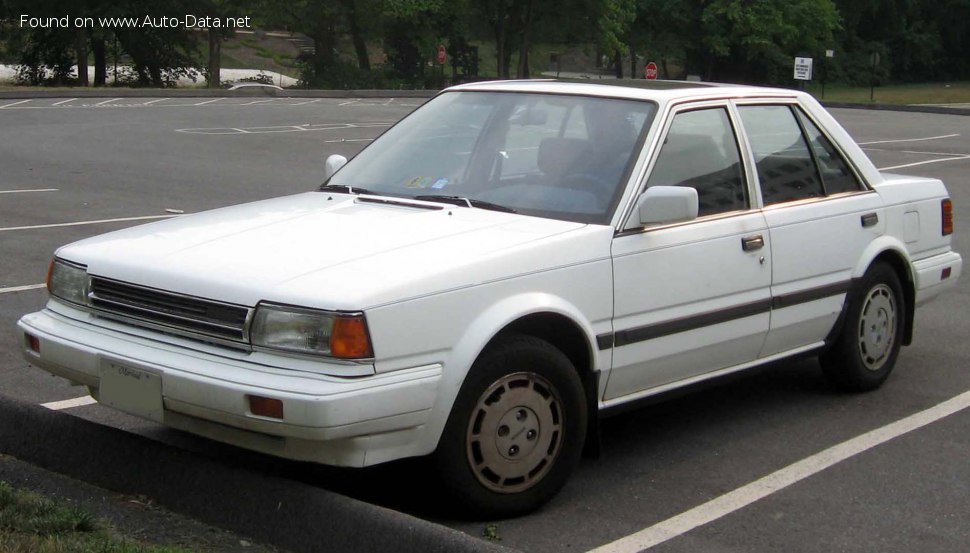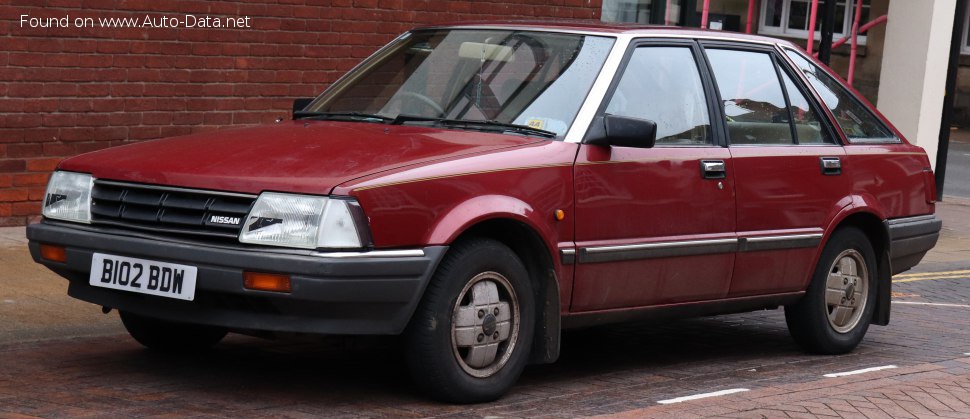
The Nissan Stanza Hatchback (T11) represents a significant chapter in Nissan’s global strategy during the early 1980s, particularly in the North American market. Produced from 1981 to 1985, this generation of the Stanza, known internally by its T11 chassis code, marked a pivotal shift for Nissan towards front-wheel-drive platforms in its compact car offerings. Positioned as a practical and economical family vehicle, the Stanza T11 aimed to compete in a fiercely contested segment, offering reliability, fuel efficiency, and a no-nonsense approach to motoring. While sharing its platform with the Nissan Bluebird in other international markets, the Stanza nameplate was specifically tailored for regions like North America, where it carved out a niche for sensible transportation.
The Nissan Stanza Hatchback (T11): A Detailed Overview
The Stanza T11 was a key component of Nissan’s efforts to gain market share in the burgeoning compact car segment. During this period, consumers were increasingly demanding fuel-efficient and reliable vehicles, a response to the oil crises of the 1970s. Nissan responded with the Stanza, a vehicle designed to meet these needs while offering a practical and affordable option for families and commuters. The adoption of a front-wheel-drive layout was a crucial step, aligning the Stanza with the direction the market was heading and allowing for improved interior space and handling characteristics.
Engine & Performance
The Nissan Stanza Hatchback (T11) was typically powered by a 1.8-liter (1770 cc) naturally aspirated gasoline engine, producing 90 horsepower. This engine, likely from Nissan’s CA-series – potentially the CA18S with a single carburetor – was a four-cylinder, overhead-camshaft design. The engine prioritized smooth operation and long-term durability over outright performance. For a compact car of the era, 90 horsepower provided sufficient power for everyday driving, including commuting and highway travel.
The naturally aspirated configuration ensured predictable power delivery and minimized mechanical complexity. Fuel economy was a primary design consideration, reflecting the economic climate of the early 1980s. The Stanza was available with either a five-speed manual transmission or an optional three- or four-speed automatic transmission. The front-wheel-drive system enhanced traction, particularly in inclement weather, and contributed to the car’s improved interior packaging compared to older, rear-wheel-drive designs. This drivetrain configuration became increasingly common in the compact car class, and the Stanza’s adoption of it demonstrated Nissan’s commitment to modern automotive engineering.
Design & Features
The design of the Nissan Stanza Hatchback (T11) emphasized functionality and practicality. The hatchback body style provided a versatile cargo area, accessible through a large rear liftgate, making it suitable for families and individuals needing flexible hauling capabilities. The exterior styling was typical of early 1980s Japanese automotive design – characterized by clean lines, a somewhat boxy silhouette, and a focus on maximizing interior space within a compact footprint. While not particularly aerodynamic by today’s standards, the Stanza incorporated subtle design elements to reduce drag and improve fuel efficiency.
The interior of the Stanza T11 prioritized durability and user-friendliness. Materials were selected for their hard-wearing qualities, with cloth or vinyl upholstery options. The dashboard layout was logical and intuitive, placing essential controls within easy reach of the driver. Standard features generally included an AM/FM radio, a heater/defroster, and manual windows. Higher trim levels could be equipped with optional features such as air conditioning, power steering, and a cassette player. Safety features were relatively basic for the time, consisting primarily of three-point seatbelts for front occupants and lap belts for rear passengers, reflecting the safety standards of the early 1980s. The Stanza’s cabin was designed to be a comfortable and reliable environment for its occupants, prioritizing ease of use and dependability.
Technical Specifications
| Attribute | Specification |
| Brand | Nissan |
| Model | Stanza |
| Generation | Stanza Hatchback (T11) |
| Engine Type | 1.8 (90 Hp) |
| Start of Production | 1981 |
| End of Production | 1985 |
| Powertrain Architecture | Internal Combustion Engine (Front-Engine, Front-Wheel-Drive) |
| Body Type | Hatchback |
| Fuel Type | Petrol (Gasoline) |
| Power | 90 Horsepower |
| Engine Aspiration | Naturally Aspirated Engine |
| Engine Displacement | 1.8 Liters (approx. 1770 cc) |
| Cylinders | 4-cylinder (In-line) |
The Nissan Stanza Hatchback (T11) played a vital role in Nissan’s strategy to establish a strong foothold in the competitive compact car market. Its introduction signified a significant technological advancement for Nissan, transitioning from rear-wheel-drive platforms to the more efficient and traction-advantageous front-wheel-drive layout. This shift was essential for competing with rivals that had already adopted or were moving towards FWD, such as the Honda Accord, Toyota Camry (which adopted FWD in 1982), and various European and American models like the Volkswagen Rabbit (Golf) and Ford Escort.
In the North American market, the Stanza was positioned as a dependable, no-frills alternative for buyers seeking economical transportation. It earned a reputation for being a durable and long-lasting vehicle, often exceeding the lifespan of many of its competitors due to Nissan’s engineering and manufacturing quality. While it didn’t achieve the same level of enthusiast appeal as some sportier models, its popularity stemmed from its reliability and low operating costs. The hatchback body style, in particular, offered a level of practicality that resonated with consumers, making it a versatile choice for small families or individuals with active lifestyles.
The Stanza T11 faced competition from a diverse range of vehicles in the compact segment. Japanese rivals like the Toyota Corolla, Mazda 626, and Mitsubishi Tredia offered similar propositions of economy and reliability. European models such as the Volkswagen Jetta and Audi 4000 (80) provided more premium, though often more expensive, alternatives. Domestic manufacturers countered with models like the Chevrolet Cavalier and Plymouth Reliant, which also focused on economy but often struggled to match the perceived quality and longevity of their Japanese counterparts.
The Stanza nameplate continued through subsequent generations, evolving in design and technology, eventually being replaced by the Altima in North America. The Altima carried forward the Stanza’s legacy of providing practical and reliable family transportation. However, the T11 generation remains significant for its role in establishing Nissan’s front-wheel-drive credentials and contributing to the brand’s reputation for building dependable, value-oriented vehicles during a transformative era in the automotive industry. It was a car that perfectly embodied the shift towards efficiency, practicality, and modern engineering that characterized the early to mid-1980s.