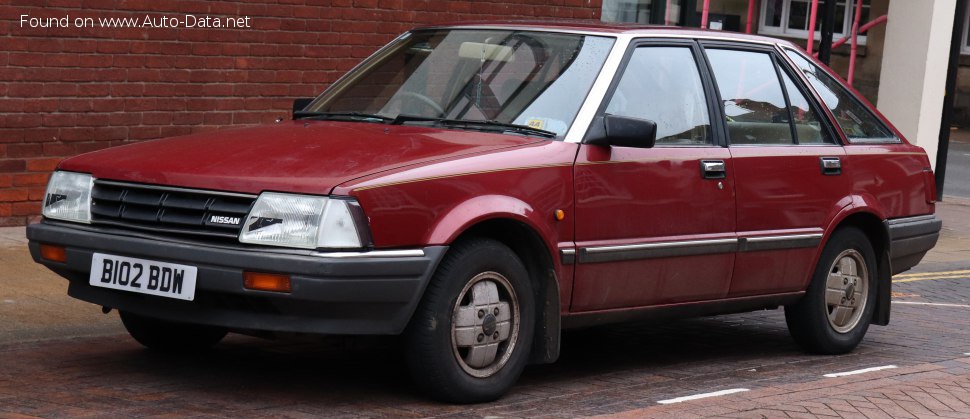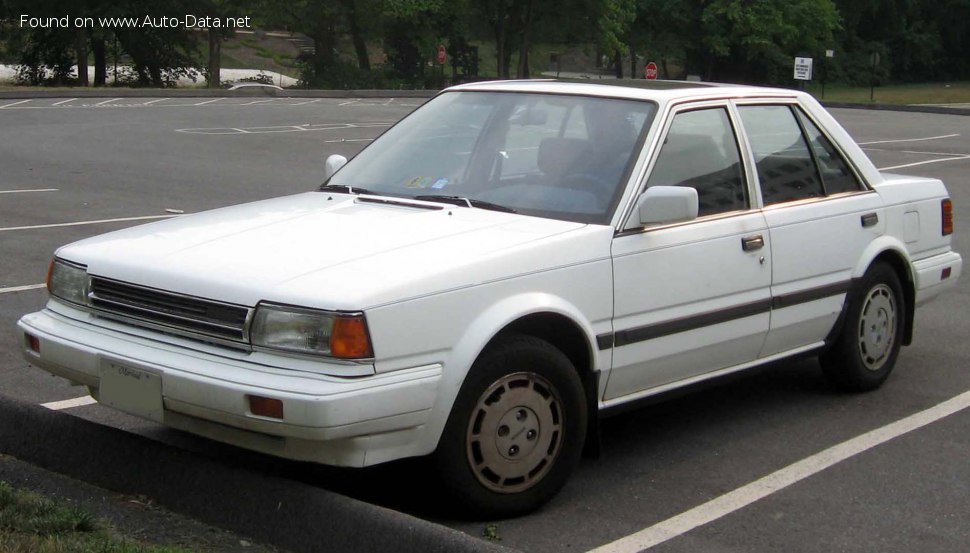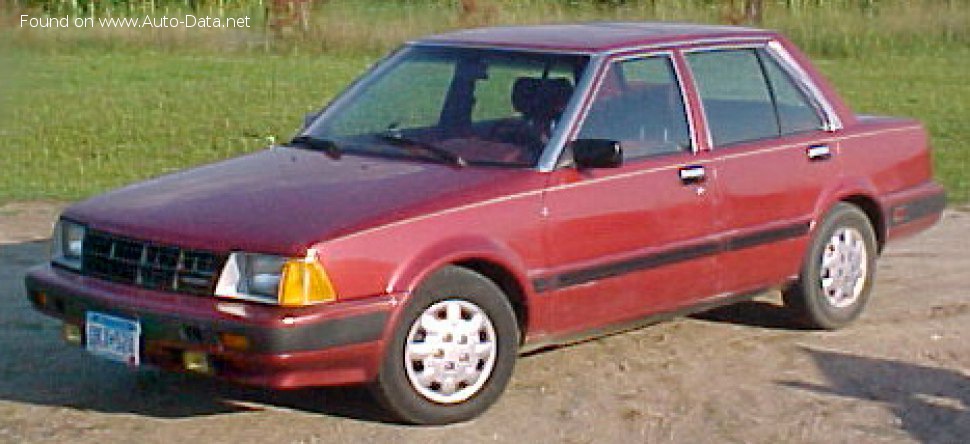
The Nissan Stanza (T11) 1.6 (82 Hp) represents a significant chapter in Nissan’s history, particularly in its expansion within the competitive compact car segment during the early 1980s. Introduced in 1981, the T11 generation marked Nissan’s decisive move towards front-wheel drive (FWD) – a configuration rapidly gaining traction for its packaging efficiency and enhanced traction. The 1.6-liter, 82-horsepower variant exemplified the era’s emphasis on practicality, fuel economy, and overall reliability. Marketed globally under various names – Stanza in North America, Auster in Japan, and Bluebird in select international markets – this vehicle showcased Nissan’s strategy to deliver a versatile and dependable family sedan to a diverse range of automotive landscapes.
The Nissan Stanza (T11): A Global Compact
Positioned as a mainstream compact sedan, the Stanza (T11) competed directly with established rivals from Toyota, Honda, Mazda, and numerous European and American manufacturers. It appealed to buyers prioritizing an economical, uncomplicated vehicle suitable for daily commutes and basic family transportation. Production spanned from 1981 to 1985, with minor evolutions, but the core identity of the Stanza remained consistently a straightforward, dependable compact car. The 1.6-liter engine, while not focused on high performance, provided sufficient power for its intended use, embodying the durability and efficiency characteristic of Japanese engineering during that period.
Engine & Performance Characteristics
The Nissan Stanza (T11) 1.6 (82 Hp) was powered by a naturally aspirated gasoline engine designed for efficiency and longevity. The 1.6-liter engine (approximately 98 cubic inches) produced 82 horsepower. In the early 1980s, this output was considered respectable for a compact sedan, especially considering the car’s relatively light weight and the growing demand for fuel-efficient vehicles following the 1970s oil crises.
The engine’s naturally aspirated design, relying solely on atmospheric pressure for air intake, was a simpler and more cost-effective approach than the turbocharged or supercharged systems less common in mainstream compacts of the time. This simplicity contributed to its reputation for reliability and ease of maintenance. Utilizing a conventional four-stroke cycle, the powertrain architecture was typical of the vast majority of passenger vehicles.
While precise torque figures are unavailable, an 82-horsepower 1.6-liter engine from this era typically generated between 90 and 100 lb-ft of torque, peaking at mid-range RPMs. This provided adequate low-end power for city driving and highway cruising without overstressing the engine. The emphasis was on smooth, predictable power delivery rather than rapid acceleration. Fuel economy was a key selling point, with the Stanza 1.6 achieving mileage comparable to its competitors, making it an attractive option for budget-conscious buyers and those facing rising fuel costs. The Stanza (T11) 1.6 (82 Hp) was engineered as a practical daily driver, capable of handling routine commutes with minimal issues.
Design and Features of the Early 1980s Sedan
The Nissan Stanza (T11) featured a conventional sedan body style, reflecting the prevailing automotive design trends of the early 1980s. Its aesthetic was characterized by clean, straight lines and a somewhat boxy silhouette, prioritizing interior space and aerodynamic efficiency over flamboyant styling. This design language was common among Japanese compacts, aiming for broad appeal and functional practicality. The sedan configuration offered four doors and a separate trunk, providing comfortable seating for four adults and a reasonable cargo capacity, making it suitable for families and individuals.
The interior of the Stanza (T11) was designed with ergonomics and user-friendliness in mind. While luxury features were limited, the cabin included durable cloth or vinyl upholstery, straightforward instrumentation, and easily accessible controls. Standard features included manual windows, manual door locks, and a basic AM/FM radio. Air conditioning was often an optional upgrade, particularly in warmer climates. The dashboard layout was functional, with clear gauges displaying speed, fuel level, and engine temperature.
Safety features, by contemporary standards, were rudimentary but typical for the early 1980s. These included three-point seatbelts for front occupants and lap belts for rear passengers, along with a robust steel body structure. Anti-lock braking systems (ABS) and airbags were still decades away from becoming standard in this segment. The Stanza’s design prioritized a comfortable and secure environment through solid construction and sensible interior packaging, embodying the philosophy of a reliable and unassuming family car. Its compact exterior dimensions enhanced maneuverability in urban settings, while its relatively long wheelbase contributed to a stable ride on highways.
Technical Specifications: Nissan Stanza (T11) 1.6 (82 Hp)
| Category | Specification |
| Brand | Nissan |
| Model | Stanza |
| Generation | Stanza (T11) |
| Engine Type | 1.6 (82 Hp) |
| Start of Production | 1981 |
| End of Production | 1985 |
| Powertrain Architecture | Internal Combustion engine |
| Body type | Sedan |
| Fuel Type | Petrol (Gasoline) |
| Power | 82 Hp |
| Engine Aspiration | Naturally aspirated engine |
| Drivetrain | Front-Wheel Drive |
Legacy and Market Impact
The Nissan Stanza (T11) played a significant, though often understated, role in Nissan’s global strategy during the early to mid-1980s. It represented a pivotal moment for the brand, being one of the first Nissan models to fully embrace front-wheel drive, a layout that would become dominant in compact and mid-size cars for decades. This transition was crucial for Nissan to compete with rivals like the Honda Accord and Toyota Corona (later Camry), which were also adopting FWD for its benefits in space utilization, fuel efficiency, and traction.
In North America, where it was sold as the Stanza, it established itself as a reliable, economical, and uncomplicated compact sedan. While not a segment leader in sales or critical acclaim, often overshadowed by more popular Japanese competitors, it consistently offered a dependable option for buyers seeking practical transportation. Its reputation was built on Nissan’s growing image for quality construction and mechanical durability, which helped Japanese imports gain a strong foothold in the U.S. market during this period.
Globally, the T11 platform was versatile, underpinning not only the Stanza but also the Nissan Auster in Japan and contributing to the Bluebird lineup in other international markets. This platform sharing allowed Nissan to achieve economies of scale and offer a consistent product across various regions, adapting badging and minor specifications to suit local preferences. The Stanza’s competitors included the Honda Accord, Toyota Corolla/Corona, Mazda 626, Ford Tempo, Chevrolet Cavalier, and various European models like the Volkswagen Jetta. In this competitive landscape, the Stanza stood out for its solid engineering, sensible design, and value proposition.
Although the Nissan Stanza (T11) lacks the iconic status of some vehicles from its era, its legacy is important as a reliable workhorse and a testament to Nissan’s engineering capabilities during a period of rapid technological change. It helped solidify Nissan’s presence in the compact sedan segment and paved the way for future successful FWD models. Surviving examples are now cherished by enthusiasts who appreciate its straightforward mechanics and its place in Nissan’s history as a practical, everyday vehicle that faithfully served millions of drivers worldwide. Its impact was less about groundbreaking innovation and more about consistent, dependable performance – a legacy many automakers strive to achieve.