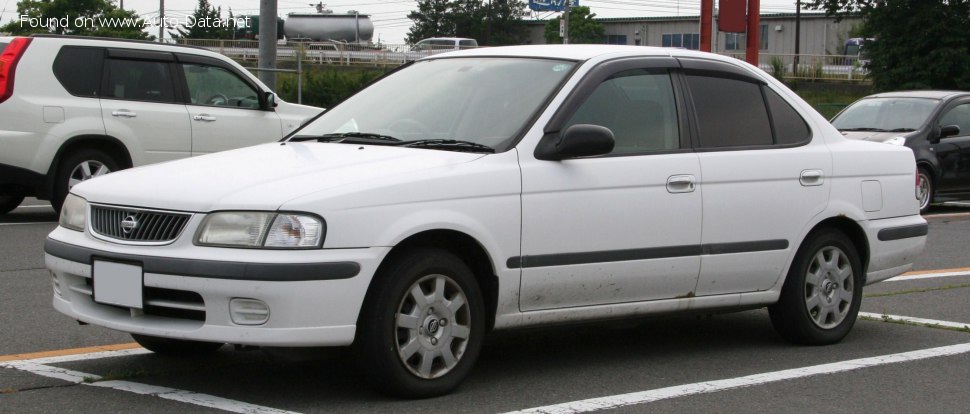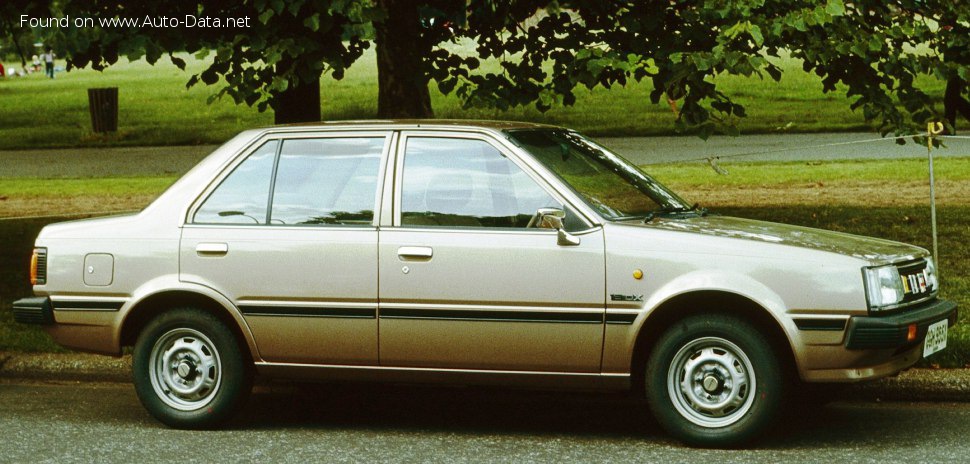
The Nissan Sunny (140Y, 150Y) represents a pivotal era in Nissan’s history, spanning a production run from 1970 to 1982. This particular generation, often identified by the chassis codes B210 for its core models, built upon the success of its predecessors to establish Nissan (and its Datsun brand in many export markets, including the United States) as a formidable player in the global compact car segment. Known for its robust engineering, economic operation, and practical design, the Sunny (140Y, 150Y) was a workhorse that resonated with consumers seeking dependable and affordable transportation during a period of significant change in the automotive industry, particularly in the wake of the 1970s energy crises.
The Nissan Sunny (140Y, 150Y): A Global Compact Car
While the broader “Sunny” nameplate encompassed several generations during this long production window, the 140Y and 150Y designations typically referred to specific engine variants and market configurations within the B210 series, which was largely produced from 1973 to 1978. In the North American market, this generation was famously marketed as the Datsun B210, becoming one of the best-selling import cars of its time and a cornerstone of Nissan’s burgeoning presence. This article will focus on the characteristics of the 1.4 (HBL310) variant, a common and representative powertrain for this reliable sedan.
Engine & Performance: The 1.4-Liter Powertrain
At the core of the Nissan Sunny (140Y, 150Y) 1.4 (HBL310) sedan was its dependable 1.4-liter internal combustion engine. This powerplant, part of Nissan’s renowned A-series engine family, was a naturally aspirated gasoline unit designed with an emphasis on durability, fuel efficiency, and straightforward maintenance. Producing 65 horsepower, this engine delivered performance that was entirely appropriate for its market segment and the prevailing automotive standards of the 1970s.
While 65 horsepower might seem modest by today’s standards, it was more than adequate for the lightweight Sunny sedan. The engine provided sufficient thrust for daily commuting, city driving, and moderate highway cruising. Its strength lay not in outright speed, but in its unwavering reliability and economical operation. The A-series engines were celebrated for their robust construction and ability to withstand hundreds of thousands of miles with proper care, a characteristic that greatly contributed to the Sunny’s reputation.
The naturally aspirated design meant a simpler mechanical setup, reducing manufacturing costs and complexity for owners. This simplicity also translated into easier diagnostics and repairs, making the Sunny a favorite among budget-conscious consumers and mechanics alike. Furthermore, as global concerns about fuel consumption escalated during the 1970s, the Sunny’s inherent efficiency, powered by engines like the 1.4-liter HBL310, became a significant competitive advantage, drawing buyers away from larger, less efficient domestic vehicles.
Design & Features: Functionality and Form
The Nissan Sunny (140Y, 150Y) 1.4 (HBL310) was offered primarily as a sedan, a body style that perfectly encapsulated the utilitarian and family-oriented nature of the vehicle. Its design language was typical of Japanese compact cars of the early to mid-1970s: clean, unpretentious lines, a relatively boxy silhouette, and an emphasis on maximizing interior space within a compact footprint. The sedan body offered practical four-door access and a conventional trunk, making it an ideal choice for families and individuals needing versatile cargo capacity.
Aesthetically, the Sunny (140Y, 150Y) featured a no-nonsense approach. Its styling prioritized visibility, ease of manufacturing, and aerodynamic efficiency (to the extent understood at the time) over extravagant flourishes. Depending on the specific market and year, details such as grille designs, headlight configurations (round or rectangular), and bumper treatments might have varied, contributing to the distinct 140Y and 150Y designations. Despite these minor variations, the core identity remained one of a dependable, honest compact car.
Inside, the Sunny offered a straightforward and functional cabin. Materials were durable, designed to withstand years of use. While luxury amenities were minimal, the focus was on ergonomics and practicality. Seating was comfortable for four adults, and the controls were intuitively placed. Safety features, by the standards of the 1970s, included basic seatbelts and a sturdy body structure. The overall design philosophy was about providing reliable, affordable transportation without unnecessary frills, a formula that proved incredibly successful worldwide.
Market Variations
The Sunny/B210 was adapted for various global markets. In Europe, it provided affordable transportation in a segment increasingly dominated by European manufacturers. The Datsun branding in North America was crucial for establishing a foothold against established domestic brands. The vehicle’s adaptability and relatively low price point allowed it to gain traction in diverse economic climates.
Technical Specifications
| Attribute | Specification |
| Brand | Nissan |
| Model | Sunny |
| Generation | Sunny (140Y, 150Y) |
| Type (Engine) | 1.4 (HBL310) (65 Hp) |
| Start of Production | 1970 |
| End of Production | 1982 |
| Powertrain Architecture | Internal Combustion engine |
| Body Type | Sedan |
| Fuel Type | Petrol (Gasoline) |
| Power | 65 Hp |
| Engine Aspiration | Naturally aspirated engine |
Legacy and Market Impact
The Nissan Sunny (140Y, 150Y), particularly in its Datsun B210 guise for North America, carved out an indelible legacy in the automotive world. Its long production run, stretching from 1970 to 1982, underscores its enduring appeal and adaptability. This generation arrived at a crucial juncture for the automotive industry, coinciding with rising fuel prices and increasing demand for smaller, more efficient vehicles. The Sunny was perfectly positioned to meet this demand, becoming a symbol of reliable, economical transportation.
In the United States, the Datsun B210 became a household name. It competed fiercely with other rising Japanese imports like the Toyota Corolla and Honda Civic, as well as domestic compacts such as the Ford Pinto and Chevrolet Vega. What set the Sunny/B210 apart was its consistent reputation for bulletproof reliability and low ownership costs. While American compacts of the era often suffered from quality issues, the B210 consistently delivered a dependable experience, helping to cement the perception of Japanese automotive quality in the minds of American consumers.
The 1.4-liter engine, as highlighted, was a key contributor to this success. Its fuel efficiency was a major selling point during the energy crises of the 1970s, offering a much-needed alternative to larger, thirstier cars. This practical approach, combined with a relatively spacious interior for its class and a sturdy build, made the Sunny a popular choice for first-time car buyers, small families, and anyone prioritizing value and longevity.
Beyond its commercial success, the Nissan Sunny (140Y, 150Y) played a significant role in shaping Nissan’s global brand image. It demonstrated Nissan’s engineering prowess in producing high-volume, high-quality compact cars that could compete effectively across diverse international markets. Its impact can be seen in the subsequent generations of the Sunny and Sentra, which continued to build on the foundation of reliability and efficiency established by this generation.
Today, the Nissan Sunny (140Y, 150Y) and its Datsun B210 counterpart are remembered as classic examples of the era’s compact car revolution. While not typically collector’s items in the same vein as high-performance sports cars, they are cherished by enthusiasts for their historical significance, mechanical simplicity, and the nostalgic connection they provide to a transformative period in automotive history. The Nissan Sunny (140Y, 150Y) stands as a testament to Nissan’s ability to deliver practical, durable, and globally relevant vehicles.